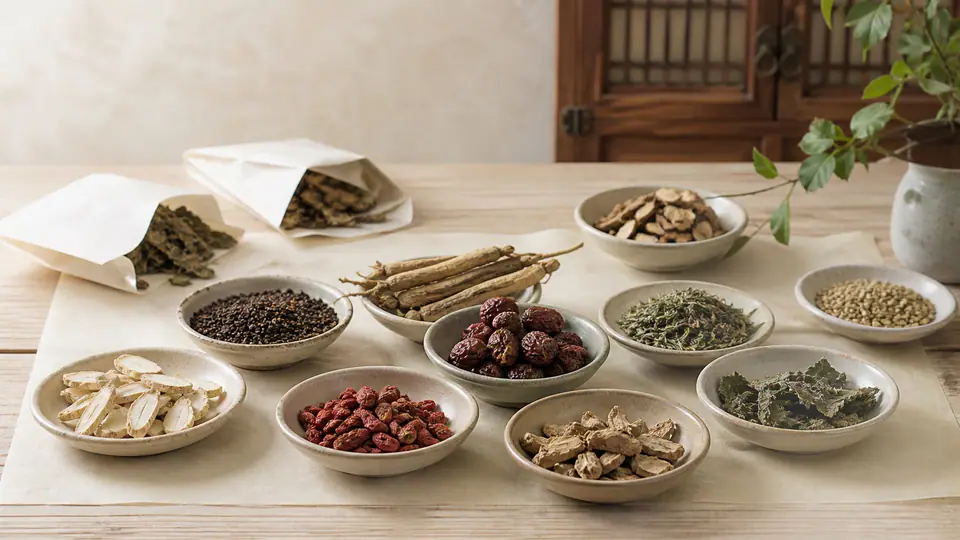
Heukjima (Black Sesame), a Rich Tonic from Afar
Homa (Sesame), already recorded in the 《Shennong Bencao Jing》, literally means 'sesame from the barbarians (Hu).' 'Hu' referred to the Western and Northern regions from the perspective of the Central Plains, and 'Ma' was a general term for oily and fibrous plants such as hemp, flax, and black hemp. Among these, Homa was called 'Geoma' or 'Gyogeo' because it was the richest in oil and had a refined taste. Black seeds were classified as Heukjima (Black Sesame) and white seeds as Baekjima (White Sesame). The 《Dongui Bogam》 states that Heukjima "promotes longevity, makes one look youthful, and boosts the Qi of the kidneys." Its properties are described as sweet and neutral with no toxicity, targeting the liver, kidneys, and large intestine. The classical description that black seeds help with gray hair, hair loss, blurred vision and hearing, and the smooth passage of stool aligns with the common modern perception of sesame as a 'brain food' and 'gut health food.'
However, if we look beyond that common perception, it becomes clear that Homa is not merely a tonic food. The External Form section of the 《Dongui Bogam》 lists a prescription called 'Homasan,' which combines 93.75 g of Heukjima with Sophora flavescens, Polygonum multiflorum, Schizonepeta, Chrysanthemum, Licorice, Fructus Ligustici lucidi, Saposhnikovia, Astragalus membranaceus, Acorus calamus, Arctium lappa, and Clematis root, ground into a powder and taken with peppermint decoction. It is used to treat whole-body itching and hives caused by wind-heat, as well as purple-white epilepsy. In other words, unlike the simple image of a 'tonic for the head and gut,' Homa was a central medicinal ingredient in prescriptions dealing with the skin and wind-heat. Additionally, in the Miscellaneous Diseases section of the 《Dongui Bogam》, 'Gamigosan-hwan' includes sesame along with Sophora flavescens, Saposhnikovia, Schizonepeta, Xanthium, Gleditsia, Fructus Ligustici lucidi, Lycium chinense, and Polygonum multiflorum to treat leprosy. The fact that a single oily seed holds a prominent place in prescriptions for deep-seated skin diseases is the first reversal of Homa's image.
The second reversal lies opposite the intuition that 'oily is always good.' According to records from the Traditional Knowledge Portal, Heukjima is "rich in oil and lubrication," so it is avoided by those with spleen weakness and diarrhea, and those with Yin deficiency and loose stools should not consume it. Baekjima and sesame oil also require caution for those with a constitution prone to loose stools. This means that even a tonic can further loosen the bowels if it does not match one's constitution. Therefore, Homa is a medicinal ingredient where the dosage, the user, and the method of use are particularly important. We will outline those criteria step-by-step below.
Summary at a Glance
Homa (Sesame) is a medicinal ingredient that has traveled a long path, much like its name suggests. The key characteristics are summarized in the table below.
| Category | Content |
|---|---|
| Origin | Chinese name: Hu Ma. Black seeds (Heizhi Ma) or white seeds (Baizhi Ma) of sesame, an annual herb of the sesame family. Harvested from August to September and dried in the sun before use. |
| Properties and Meridian Tropism | Heukjima: Sweet, Neutral, Non-toxic; Liver, Kidney, Large Intestine meridians. Baekjima/Sesame Oil: Sweet, Neutral; Liver, Kidney meridians. |
| Representative Aliases | Geoma, Gyogeo |
| Efficacy Recorded in Literature | Toning the liver and kidneys, filling the essence and marrow, lubricating the five viscera, benefiting the small and large intestines, darkening the beard and hair, brightening the eyes and ears, lubricating dryness to ease constipation, relieving pain, detoxifying, etc. |
| Main Ingredients | Widely known as an edible seed rich in oil and containing protein, fats, vitamin E, calcium, and iron. |
| Combinations and Contraindications | Due to its oily and lubricating nature, caution is advised for those with spleen weakness and loose stools or Yin deficiency and loose stools. When combined with tonics for Yang or Yin deficiency, be cautious of excessive tonifying and lubricating effects. |
Is this medicinal herb right for me?
While sesame is common as an everyday food, in Korean medicine, it is a medicinal ingredient with lubricating and tonifying properties. Because of these properties, it is not suitable for everyone. We provide guidance on when it is appropriate and when caution is needed.
- Generally suitable casesAppropriate: Traditionally considered for those with deficiencies in essence, blood, and body fluids, accompanied by dizziness, blurred vision, tinnitus, gray hair, hair loss, or constipation. Prescriptions using Heukjima are also common for those with dry skin or deficiency patterns due to aging.
- Cases requiring cautionCaution: Caution is required for those with a weak stomach, poor digestion, or a tendency toward loose stools. Because Heukjima is rich in oil, it may cause diarrhea or abdominal discomfort in those with weak spleen and stomach functions. Additionally, if you have a sesame allergy or are taking anticoagulants such as warfarin, you must consult a Korean medicine doctor regarding potential interactions.
- Cases to avoidContraindicated: As a rule, those with Yin deficiency and loose stools or spleen weakness and diarrhea should not consume it. Raw sesame oil is also unsuitable for those with spleen weakness and loose stools. Since judgments vary based on individual constitution and symptoms during pregnancy, breastfeeding, or when taking other medications, please obtain a prescription from a Korean medicine doctor.
Practical Q&A
We have gathered frequently asked questions from clinical practice. While sesame is familiar as a food, its purpose, form, and precautions differ slightly when used in Korean medicine. The following questions are designed to clarify those differences.
Can I eat sesame every day?
Many people consume sesame, sesame oil, and toasted sesame salt as part of their daily diet. In Korean medicine, its sweet, neutral, and lubricating properties have been traditionally used to tonify the essence, marrow, liver, and kidneys. However, depending on your constitution, excessive daily intake may cause abdominal discomfort or changes in stool consistency. Those with weak digestion or frequent diarrhea should adjust the amount and frequency.
Does it help with hair loss or gray hair?
Classical texts state that Heukjima "promotes longevity, makes one look youthful, and boosts the Qi of the kidneys," and record its effect to "darken the beard and hair." There are also prescriptions like sesame oil or Homasan used primarily for hair loss. However, since the causes of hair loss and gray hair vary by individual, simply eating sesame will not work the same for everyone. A consultation is necessary to determine your specific condition.
What is the difference between black sesame and white sesame?
Both fall under Homa. Black seeds are called Heukjima and white seeds are called Baekjima. Heukjima tends to be used more for filling essence and marrow, tonifying the liver and kidneys, darkening hair, and brightening eyes and ears. Baekjima is more often used for clearing 'five yellows' (jaundice/paleness), treating baldness, lubricating dryness to ease constipation, and detoxifying. In clinical practice, they are selected based on symptoms and constitution, and both may be used in the same prescription.
Can sesame oil be considered a medicine?
Sesame oil is classified as Homa-yu, which is categorized as a medicinal ingredient in Korean medicine. Its properties are recorded as sweet and neutral, targeting the liver and kidney meridians, with effects such as lubricating the five viscera, easing constipation, relieving pain, reducing swellings, and detoxifying. However, please note that records indicate raw sesame oil is not suitable for those with spleen weakness and loose stools.
How is it used in herbal medicine prescriptions?
Homa (sesame) is more frequently used in combinations than alone. A representative example is Homasan, listed in the Dongui Bogam, which consists of Homa seeds, Sophora flavescens, Polygonum multiflorum, Schizonepeta tenuifolia, Chrysanthemum indicum, Glycyrrhiza uralensis, Saposhnikovia divaricata, and others; it was used for hives, whole-body itching, and purple-white epilepsy caused by wind-heat. In Gamigosan-hwan, sesame (Homa) is included in prescriptions related to leprosy. Since these prescriptions have clear symptom-treatment purposes, it is appropriate to use them under the prescription of a Korean medicine doctor.
Can I take it during pregnancy or breastfeeding?
While sesame is widely used as an everyday food, caution is required depending on the individual's condition if you are pregnant, breastfeeding, or taking other medications. There is no evidence of specific pregnancy or breastfeeding contraindications for Homa in Korean medicine classics or official sources, but this requires verification as modern safety data is insufficient. Please inquire during your consultation regarding specific intake.
Relationship with Other Medicinal Herbs (Yakdae/Pairing)
Homa (sesame) becomes more effective when paired with other medicinal herbs rather than when used alone. In traditional medicine, such pairs are called "Yakdae." The moisturizing and nourishing properties of Homa appear alongside other herbs in prescriptions dealing with wind-heat, toxins, and skin symptoms. Below are representative combinations recorded in the classics.
- Homa + Sophora flavescens + Polygonum multiflorum + Schizonepeta tenuifolia, etc., Homasan: A prescription found in the External Diseases section of the Dongui Bogam. It consists of 93.75 g of Homa seeds, 37.5 g each of Sophora flavescens, Polygonum multiflorum, and Schizonepeta tenuifolia, with the addition of Chrysanthemum indicum, Glycyrrhiza uralensis, Xanthium strumarium, Saposhnikovia divaricata, Tribulus terrestris, Acorus calamus, Semen Aesculi, and Clematis montana; it is powdered and taken with peppermint decoction. It has been traditionally used for hives, whole-body itching, and vitiligo (紫白癲風) caused by wind-heat.
- Homa + Sophora flavescens + Saposhnikovia divaricata + Schizonepeta tenuifolia + Xanthium strumarium, etc., Gamigosan-hwan: A prescription recorded in the Miscellaneous Diseases section of the Dongui Bogam, using 160 g of Sophora flavescens as the primary herb combined with various other herbs including Homa (sesame). It is known as a prescription for treating leprosy.
- Homa + White Polygonum multiflorum + Chrysanthemum indicum, Glycyrrhiza uralensis, Saposhnikovia divaricata, etc., Homasan variation: A composition found in the Changyang Gyeongheom Jeonseo and Bangyak Happyeon. Based on 93.75 g of Homa, 37.5 g each of Sophora flavescens, White Polygonum multiflorum, and Schizonepeta tenuifolia are added, along with Chrysanthemum indicum, Glycyrrhiza uralensis, Xanthium strumarium, Saposhnikovia divaricata, Tribulus terrestris, Acorus calamus, Arctium lappa, and Clematis montana. It can be taken as a powder mixed with peppermint decoction or divided into 10 doses and decocted in water.
Homa has a mild nature and is not toxic, but because it is oily and rich in fats, it tends to soften the stool. Therefore, caution is necessary regardless of the combination for those with a weak spleen and stomach who are prone to diarrhea, or those with loose stools due to yin deficiency.
In what form is it consumed?
Homa (sesame) is used in various forms both in Korean medicine prescriptions and on the daily dining table. However, please note first that "not all forms provide the same effect." The usage varies by form, and when used for the purpose of treating symptoms, it must be prescribed by a Korean medicine doctor.
- Tea form Applicable. The classic prescription Homasan is passed down as a method of mixing powder into peppermint decoction. There is a tradition of mixing sesame powder into water or other medicinal decoctions.
- Food form Applicable. Toasted sesame salt, sesame oil, black sesame, and black sesame seeds are widely used as everyday foods and are also listed in the RDA Food Bogam.
- Decoction form Varies by prescription. Some records of Homasan mention "dividing into 10 doses and decocting in water," but Homa itself is primarily used in powder, raw, or oil forms. Decoction is not the general method for taking it alone.
- Professional prescription form Applicable. It is included in classic prescriptions such as Homasan, Gamigosan-hwan, and Homaja-hwan for purposes such as wind-heat hives, skin itching, toxic symptoms, and nourishment. These uses must be prescribed after a consultation with a Korean medicine doctor.
Interactions and Safety During Use
Homa (sesame) is a common ingredient on the dining table, but when used in Korean medicine, it may or may not be suitable depending on the individual's constitution and symptoms. In particular, as it is a medicinal herb with strong moisturizing and oily properties, caution is required for those with weak digestive functions or cold symptoms.
The main contraindications identified in Korean medicine classics are as follows:
- Those with loose stools due to yin deficiency: Do not take if you have a constitution where stools are loose and you are prone to diarrhea.
- Diarrhea due to weak spleen: In cases of weak digestive function and frequent diarrhea, black sesame is avoided due to its oily and moisturizing properties.
- Raw sesame oil: It is not suitable for those with a weak spleen and loose stools.
The following points have been confirmed regarding modern safety.
- Sesame allergy: While it may be a potential food allergen, there is currently insufficient evidence directly confirmed by official domestic sources.
- Pregnancy and Breastfeeding: No specific contraindications have been identified in Korean medicine classics or official sources. However, caution is required depending on individual constitution and the presence of allergies.
- Interactions with Western Medicine: Concerns may be raised regarding interactions with anticoagulants or warfarin as sesame may contain vitamin K, but direct academic evidence has not been secured.
- Excessive intake: Due to its oily and moisturizing properties, there is a possibility of diarrhea or abdominal discomfort, but official sources for specific clinical cases require verification.
As such, while sesame is familiar as an everyday food, please be sure to consult a Korean medicine doctor when using it for the purpose of treating symptoms or when using it long-term or in high doses. The appropriate form and dosage may vary depending on your constitution, current medications, and dietary situation, so please inquire during your consultation.
If you experience these symptoms
Sesame is familiar as an everyday food, but in Korean medicine, it is a medicinal herb with strong moisturizing and tonic properties. Therefore, it may cause discomfort for those with weak digestive functions or cold-type constitutions. The following signals are major warnings found in Korean medicine classics regarding the intake of sesame. If these symptoms appear, it is better to inform your attending Korean medicine doctor rather than adjusting the dose yourself.
- When experiencing frequent bowel movements or watery stools Black sesame, white sesame, and raw sesame oil possess oily and moisturizing properties, which may induce diarrhea in those with a weak spleen and stomach. Korean medicine classics record that it is contraindicated for those with 'spleen weakness and diarrhea' or 'spleen weakness and loose stools'.
- When the abdomen is cold and digestion is poor Because the moisturizing properties can further burden digestive function, caution is needed in states accompanied by abdominal coldness or loss of appetite.
- In cases of loose stools due to a Yin-deficient constitution The Korea Traditional Knowledge Portal records that those with 'Yin deficiency and loose stools' do not take black sesame. It is not suitable for states where body fluids are deficient yet stools are loose.
- When abdominal discomfort or diarrhea persists after excessive intake Although specific official clinical cases have not been confirmed, the possibility of indigestion or diarrhea upon excessive intake can be inferred from a Korean medicine perspective due to the oily nature of sesame.
If symptoms are severe or persist, please visit a nearby emergency medical institution or your attending Korean medicine doctor.
Differences from other restorative medicines
Sesame falls under the category of 'tonic' in Korean medicine, but its nature differs slightly from typical tonics like Gongjindan or Gyeongokgo. The core of sesame lies in tonifying the liver and kidney, filling the essence and marrow, and moisturizing the five internal organs. In other words, the emphasis is on gently filling dryness and deficiency within the body rather than significantly boosting energy.
Gongjindan and Gyeongokgo are representative tonics made by blending various precious medicinal herbs. They are primarily used to greatly tonify Qi and blood or to treat aging and frailty. In contrast, sesame uses common seeds such as black sesame or white sesame as medicinal herbs, and its properties are sweet and neutral, so it does not strongly heat the body. Therefore, sesame is used more naturally in deficiency syndromes accompanied by Yin deficiency and dryness, such as constipation, hair loss, dry skin, or blurred vision.
Additionally, sesame is used in prescriptions that handle skin symptoms or itching caused by wind-heat, most notably in Homasan, where it is used alongside herbs such as Kushen, Heshouwu, and Jingjie. In this regard, sesame is a medicinal herb with a dual nature, not just a simple tonic, but one that 'tonifies and moisturizes while releasing toxins and heat'.
Therefore, whether Homa is necessary or if Gongjindan or Gyeongokgo would be more appropriate depends on the severity of your symptoms and your body constitution. Rather than choosing based solely on feeling 'weak' or wanting to 'prevent aging,' it is best to consult with a doctor of Korean medicine to determine the right direction for your specific condition.
References
- Evidence material regarding Homa 1: Korea Citation Index academic paper.
- Evidence material regarding Homa 2: Korea Citation Index academic paper.
- Evidence material regarding Homa 3: Korea Citation Index academic paper.
If you would like to check if this medicinal herb is right for you or which prescription it should be used with, please leave a medical inquiry. For those who find it difficult to visit the clinic, non-face-to-face consultations are available; we will provide guidance after first reviewing your current condition and current medications.

Medical Staff Review
Director Choi Yeon-seung
Chief Director of Baekrokdam Korean Medicine ClinicHoma Dictionary Entry, reviewed the safety of expressions and the scope of verification before administration.
Review Scope: Clinical Accuracy, Pharmacology, Contraindications, Combinations, QA · Last Reviewed 2026-08-16
- Graduated from Kyung Hee University College of Korean Medicine
- Providing Korean medicine treatment since 2010
- Consultations for Gongjindan, Gyeongokgo, Nokyong (Deer Antler) restorative medicine, and customized restorative herbal medicine