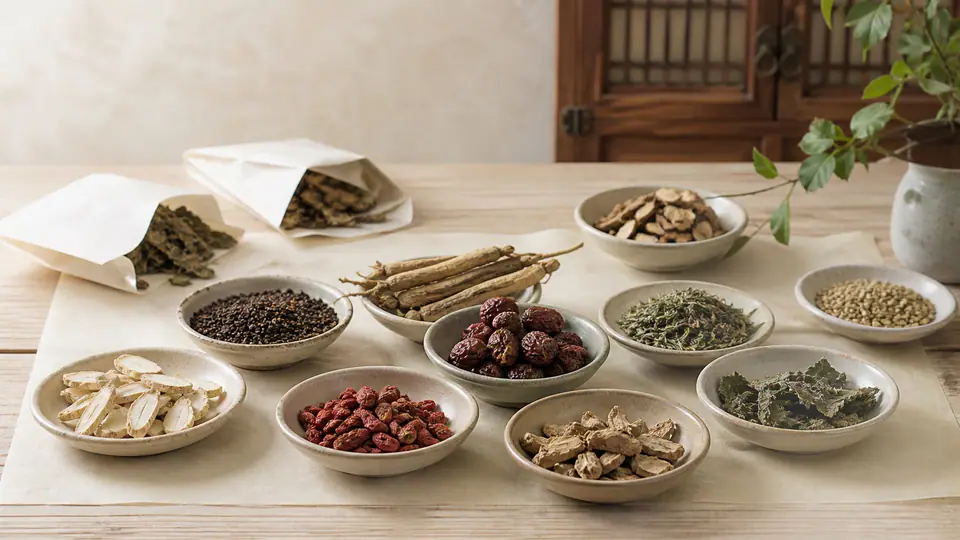
A plant whose stems intertwine at night, The name and story behind Hasuo (He Shou Wu)
It is said that the name of this plant first appeared in the Kaibao Ben Cao. 'Hasuo' is the name of a person named 'Suo' with the surname 'Ha'. According to legend, an elderly man named Suo took this root for a long time, and his white hair turned black again and he stopped aging; thus, it came to be called Hasuo after his surname. This origin is also recorded in the Bencao Gangmu, and the Dongui Bogam describes this medicinal herb as "neutral in nature, warm, bitter and astringent [some say sweet], and non-toxic," recording its effects as "supplementing blood and qi, strengthening muscles and bones, filling the essence and marrow, blackening the hair, brightening the complexion, and prolonging youth and life." In other words, it means it supplements blood and qi, strengthens bones and tendons, turns hair black, and improves the complexion.
Due to these records, Hasuo is commonly known as a 'restorative medicine that blackens hair and slows aging.' However, the Hasuo we encounter in clinical practice is far more complex than that image. The term 'non-toxic' in the Dongui Bogam does not carry the same meaning as modern safety evaluations, and traditional contraindications frequently record 'loose stools' and 'damp-phlegm.' Above all, there are records stating that this medicinal herb should be used cautiously with radish, various blood-related substances, and iron utensils. The simple perception of it as a 'natural restorative' does not accurately fit Hasuo.
Therefore, using Hasuo is a matter that requires as much caution as the beauty of its origin story. The key to determining both efficacy and safety lies in how much is used, for whom, and how it is administered. Below, we will guide you through the traditional combinations and prescriptions of Hasuo, as well as the currently identified precautions.
Summary at a Glance
Hasuo carries an ancient story within its name alone. In the table below, we have summarized the origin, properties, representative aliases, traditional effects, and precautions for use of this medicinal herb.
| Category | Content |
|---|---|
| Origin | Hanja name: He Shou Wu, Scientific name: Polygonum multiflorum Thunb. The tuberous root of the Polygonaceae family is used medicinally. |
| Properties and Meridian Tropism | Bitter, sweet, astringent, and warm; acts on the liver, heart, and kidneys. |
| Representative Aliases | Many aliases are recorded, including Ye-gyo-jeung-geun, Ji-jeong, San-jeong, Red Hasuo, Suo, San-ong, and San-ga. |
| Efficacy Recorded in Literature | Supplementing the liver, nourishing the blood, and benefiting the kidneys. It is said to supplement blood and qi, strengthen bones and tendons, fill the essence and marrow, and blacken the beard and hair. |
| Main Indications | Traditionally mentioned for liver and kidney yin deficiency, premature graying of hair, weakness of the lower back and knees, nocturnal emission, abnormal uterine bleeding/leukorrhea, chronic dysentery, chronic malaria, muscle and bone soreness, boils/abscesses, hemorrhoids, and dizziness due to blood deficiency. |
| Combinations and Contraindications | Not suitable for those with loose stools or a damp-phlegm constitution; avoid concurrent use with radish or iron utensils. |
Is this medicinal herb right for me?
Hasuo has traditionally been used as a medicinal herb to tonify the liver and kidneys and nourish the blood. However, just because it is considered a 'restorative tonic' does not mean it is suitable for everyone. Since the choice depends on your constitution, symptoms, and other concurrent medications, it is recommended to review the criteria below first.
-
Generally suitable cases: It may be considered for those with a tendency toward weakness traditionally described as liver and kidney yin deficiency, premature graying of hair, weakness in the lower back and knees, aching of muscles and bones, or dizziness due to blood deficiency. The Dongui Bogam records the efficacy of this herb as "increasing blood and qi, strengthening muscles and bones, filling the essence and marrow, darkening the hair, brightening the complexion, and prolonging youth and life."
-
Cases requiring caution: Consultation with a Korean medicine doctor is essential if you have a tendency toward loose stools, a constitution characterized by damp-phlegm, are taking other medications, or are pregnant or breastfeeding. As data verifiable through official or academic sources regarding specific interactions with Western medicines or safety during pregnancy and breastfeeding has not been secured, please review these points during your consultation.
-
Cases to avoid: Traditionally, its use is recorded as contraindicated for those with clear symptoms of loose stools and damp-phlegm, or when used together with radish or ironware. Furthermore, as Hasuo is classified as a medicinal herb, self-administration without a prescription is not recommended.
Practical Q&A
Hasuo is a medicinal herb that sparks as much curiosity as its name suggests. Since it is known as a restorative tonic for black hair, there are many inquiries regarding who it is suitable for, who should avoid it, and how it interacts with regularly taken medications or health supplements. The following information is summarized based on verified traditional medical data from frequent questions encountered in clinical practice. Because the answer may vary depending on an individual's constitution and condition, please consult a Korean medicine doctor to determine whether to take it.
Who is Hasuo suitable for?
Traditionally, Hasuo is classified as a medicinal herb that tonifies the liver and kidneys and nourishes the blood. The Dongui Bogam records that it "increases blood and qi, strengthens muscles and bones, fills the essence and marrow, and darkens the hair," and thus it has been considered for those with deficient blood and qi, weak bones and marrow, or a tendency toward premature graying of the hair. However, being a 'restorative tonic' does not mean it fits everyone. It may not be suitable for those judged to have loose stools or a damp-phlegm constitution, so this should be verified during a consultation.
Can I take it directly for black hair or hair loss?
It is true that Hasuo has been traditionally used in relation to black hair. Examples of its use for gray hair and strengthening kidney function can be seen in the "darkening of hair" records of the Dongui Bogam, as well as in Gakro-osugeonyangdan from the Uihakipmun and Chilseondan from the Dansimjipseong. However, from the perspective of Korean medicine, there are various causes for hair loss or graying. Entirely different prescriptions may be required depending on whether the cause is blood deficiency or heat and damp-phlegm. Therefore, rather than taking Hasuo alone, it is more appropriate to identify the cause first and then include it in a prescription.
Can I take it along with Western medicines I usually take?
Verified official or academic evidence regarding specific interactions between Hasuo and particular Western medicines has not been secured. However, since Hasuo is a medicinal herb traditionally used in relation to the liver, it is safest for those taking medications that may affect liver function or those with a history of liver disease to decide after consulting a Korean medicine doctor.
Can it be taken during pregnancy or breastfeeding?
Official and academic evidence regarding the safety of Hasuo (Polygonum multiflorum) during pregnancy and lactation has not been established. Since extreme caution is required when taking medicinal herbs during these periods, please consult a specialist to determine whether it is appropriate for you.
Is it okay to consume Hasuo as a tea or health food?
Among traditional prescriptions, Gagum-hasuo-san is recorded as being dissolved in tea water with honey, indicating that consumption in tea form has traditionally existed. However, in Korea, Hasuo is managed as a crude drug and Korean herbal medicine ingredient; official permission standards for its use as a general food ingredient were not confirmed at the time of writing this section. Furthermore, as Hasuo is classified as a medicinal herb, it is advisable to use it under a specialist's prescription rather than self-administering.
Which other medicinal herbs is it used with?
Hasuo is often used in combination with other medicinal herbs rather than alone. In Hasuo-san, used for treating scabies, tinea, and itching, it is used with Schizonepeta spike, Clematis root, Cnidium fruit, Sophora flavescens, Saposhnikovia root, and Licorice. In Gakro-osu-geon-yang-dan, used for gray hair and strengthening kidney function, it is combined with Achyranthes root, Poria, Cuscuta seed, and Psoralea fruit. In Chil-seon-dan, it is composed with Ginseng, raw Rehmannia root, processed Rehmannia root, Ophiopogon tuber, Asparagus tuber, white Poria, and Fennel. Additionally, please note that traditional records advise avoiding concurrent use with radish or ironware.
Relationship with Other Medicinal Herbs (Yakdae/Pairing)
Hasuo is not used alone. Its true value is revealed when paired with other medicinal herbs, a concept referred to in tradition as "Yak-dae" (medicinal pairs). While maintaining its properties of nourishing the liver and kidneys and enriching the blood, the prescription transforms into an action of supplementing moisture and releasing toxins, or focuses on black hair and complexion, depending on the direction of the pairing herb. Below are the confirmed traditional combinations and their sources.
- Hasuo + Schizonepeta spike, Clematis root, Licorice, etc. — Hasuo-san: A prescription found in the "Dansim Jipseong"; equal parts of Hasuo, Schizonepeta spike, Clematis root, Cnidium fruit, Sophora flavescens, Saposhnikovia root, and Licorice are powdered, and 8g is dissolved in warmed wine for consumption. It has been traditionally used for scabies, tinea, and itching.
- Hasuo + Sophora flavescens, Schizonepeta, Goji berry, etc. — Gagum-hasuo-san: A prescription recorded in the "Bencao Gangmu". Equal parts of Hasuo, Cnidium fruit, Acorus gramineus, Schizonepeta spike, Sophora flavescens, Clematis root, dried chrysanthemum, and Goji berry are powdered, and 12g is dissolved in tea water with honey. It has been traditionally used for tinea versicolor, tinea alba, scabies, and tinea.
- Hasuo + Poria, Cuscuta seed, Psoralea fruit, etc. — Gakro-osu-geon-yang-dan: A prescription found in the "Uihak Ipmun"; red Hasuo, white Hasuo, Achyranthes root (steamed 3 times with black bean juice), red and white Poria, Cuscuta seed, and Psoralea fruit are kneaded with honey into pills the size of an egg yolk. One pill is taken twice a day dissolved in warmed wine. It is recorded as a traditional prescription for gray hair and kidney function.
- Hasuo + Ginseng, raw Rehmannia root, processed Rehmannia root, Ophiopogon tuber, etc. — Chil-seon-dan: This is a prescription from the 《Dansim Jipseong (丹心集性)》. It is made by mixing 120g of Hasuo (processed 9 times and steamed 9 times) with 60g each of Ginseng, Raw Rehmannia Root, Prepared Rehmannia Root, Ophiopogon Root, Asparagus Root, Poria Cocos, and Fennel, kneading them with honey, and forming them into pills the size of a small egg. It has been traditionally used to nourish the mind and body, brighten the eyes, and promote black hair.
It is also helpful to remember combination contraindications. Traditionally, Hasuo is radish and blood-related substances and ironwarerecorded as not to be used concurrently, and loose stoolsor damp-phlegmmay not be suitable for those who have this.
In what form is it consumed?
Hasu-o (Polygonum multiflorum) has traditionally been consumed in various forms. However, the method of administration and dosage are as important as the form itself. Below are four common forms of intake.
- Consumption as tea This is a traditionally recorded method of administration. The Gagam-hasu-osan (Modified Hasu-o Powder) listed in the Bencao Gangmu states it should be "mixed with honey in warm tea water." However, even for commercially available Hasu-o tea, it is recommended to consult a professional before deciding on long-term or high-dose consumption.
- Food/Health Food — requires verification. In Korea, Hasu-o is managed as a crude drug or Korean herbal medicine ingredient; official permission standards for its use as a general food ingredient were not secured at the time of writing this section. Please inquire during your consultation.
- Decoction (Boiling) This is the primary administration method for traditional prescriptions. Hasu-osan, Gyeokro-osugeon-yangdan, and Chilseondan have been used in the form of decoctions, steamed preparations, or pills.
- Self-administration — Not common. Hasu-o is classified as a medicinal herb, and due to traditional contraindications (loose stools, damp-phlegm constitution, concurrent use with radish, use of iron cookware, etc.), consumption without a prescription from a Korean medicine doctor is not recommended.
Interactions and Safety During Use
Hasu-o is traditionally used as a restorative medicine (Boyak), but it is equally important to verify your constitution and potential drug interactions before use. In particular, since many modern people use Western medicines or health functional foods, you should examine actual concurrent use situations as well as traditional contraindications.
Contraindications and Precautions in Traditional Medicine
- Loose stools (Daebyeon-dangseol) and Damp-Phlegm (Seupdam): Due to the properties of Hasu-o, it is not suitable for individuals with loose stools or those with damp-phlegm in the body.
- Radish (Nabok): Traditionally recorded as something to avoid using concurrently.
- Various blood-related agents (Je-hyeol) and Ironware (Cheol-gi): Recorded as contraindications for concurrent use in the Red and White Hasu-o sections.
“大便溏泄及濕痰者不宜。忌萊菔、諸血、鐵器。” Traditional Knowledge Portal, Hasu-o entry
Suitability for Constitution
- So-eumin (Less Yin type): In the Dongui Suse Bowon, Hasu-o is recorded as a suitable medicinal herb for the So-eumin constitution.
- There is a lack of confirmed traditional literature regarding specific suitability or unsuitability criteria for other constitutions.
Concurrent Use with Western Medicine, Pregnancy, and Breastfeeding
- Interactions with Western Medicine: Specific interaction data between Hasuo (Polygonum multiflorum) and certain Western medicines has not been secured from official or academic sources.
- Pregnancy and Breastfeeding: Official safety data regarding use during pregnancy or breastfeeding also needs to be verified.
This part requires verification. If you are taking any Western medicines or health functional supplements, please be sure to mention them during your consultation.
Please check before taking
Hasuo is a medicinal herb with effects and precautions as distinct as its name. Rather than starting it easily for the purpose of darkening hair or general body tonification, it is safer to decide after a comprehensive evaluation of your current constitution, symptoms, and medications. Please consult a Korean medicine doctor to individually verify the specific method of administration, dosage, and whether it can be taken with other medications.
If you experience these symptoms
Hasuo is traditionally used as a restorative medicine to tonify the liver and kidneys and nourish the blood, but its properties do not act in the same direction for everyone. In particular, it may not be appropriate for those with a constitution prone to dampness or phlegm, or those with loose stools, and traditional medicine lists these as contraindications. If any of the following signs appear during use, do not reduce the dose yourself or continue taking it; please notify your attending Korean medicine doctor immediately.
- When stools become loose or diarrhea recurs It is traditionally recorded that Hasuo is not suitable for constitutions with loose stools or damp-phlegm.
- When abdominal discomfort or a feeling of indigestion persists In constitutions where restorative properties can cause damp-phlegm to linger, symptoms may worsen.
- In case of skin itching, rash, jaundice, or darkening of urine color Since cases of liver damage related to Hasuo are mentioned in modern reports, you must stop use immediately and visit a medical institution if these signs appear.
- When general fatigue, nausea, or loss of appetite occurs If accompanied by systemic symptoms different from usual, it is safer to stop taking it and seek a consultation.
If symptoms are severe or progress rapidly, please visit an emergency medical institution or a nearby hospital. Hasuo can be useful depending on the prescription and constitution, but it is equally important to carefully observe changes during use.
Differences from other restorative medicines
Even under the name of restorative medicine, each medicinal herb has a different direction of action. Hasuo is a herb focused on tonifying the liver and kidneys and nourishing the blood; in traditional medicine, it is often considered for situations where symptoms such as premature graying of hair, dizziness due to blood deficiency, or weakness in the lower back and knees appear. Conversely, its starting point is different from restorative medicines used simply for fatigue recovery or to raise the overall energy of the body.
Representative restorative medicines such as Gongjindan or Gyeongokgo aim to treat general deficiency syndromes by combining several precious medicinal herbs. Herbs with a similar direction to Hasuo may be included in these prescriptions, but Gongjindan tends to focus on the overall replenishment of Qi and Blood, while Gyeongokgo emphasizes more sophisticated blood nourishment and calming the spirit. Hasuo is focused on a narrower and more specific point, problems with hair, complexion, waist, and knees resulting from a deficiency of liver and kidney yin and blood.
Additionally, while Hasuo is a restorative medicine, it also appears in prescriptions used for boils, scrofula, and various skin itches. Looking at Hasuo-san from the Dansim Jipseong or Gagum-hasuo-san from the Bencao Gangmu, it is used to resolve wind, dampness, and toxins while utilizing its blood-nourishing properties. This is a different aspect compared to herbs that purely tonify Qi, such as Ginseng or Astragalus.
Therefore, whether Hasuo is appropriate cannot be decided solely by a general feeling that 'a restorative medicine is needed.' One must examine the condition of the hair and complexion, the state of the waist and knees, the form of the stools, and currently taken medications. It is safer to verify through a consultation how Hasuo relates to Gongjindan or Gyeongokgo and which one is more suitable for you.
References
- Evidence material related to Hasuo 1: Korea Institute of Korean Medicine official data.
- Evidence material related to Hasuo 2: Korea Institute of Korean Medicine official data.
- Evidence material related to Hasuo 3: Korea Institute of Korean Medicine official data.
- Supporting evidence for Hasuo 4: Crude drug data from the National Institute of Food and Drug Safety Evaluation.
- Supporting evidence for Hasuo 5: Korea Citation Index academic paper.
- Supporting evidence for Hasuo 6: Korea Citation Index academic paper.
- Supporting evidence for Hasuo 7: Korea Citation Index academic paper.
If you would like to check if this medicinal herb is right for you or which prescription it should be used with, please leave a medical inquiry. For those who find it difficult to visit the clinic, non-face-to-face consultations are available; we will provide guidance after first reviewing your current condition and current medications.

Medical Staff Review
Director Choi Yeon-seung
Chief Director of Baekrokdam Korean Medicine ClinicHasuo Dictionary Entry, reviewed the safety of expressions and the scope of verification before administration.
Review Scope: Clinical Accuracy, Pharmacology, Contraindications, Combinations, QA · Last Reviewed 2026-08-16
- Graduated from Kyung Hee University College of Korean Medicine
- Providing Korean medicine treatment since 2010
- Consultations for Gongjindan, Gyeongokgo, Nokyong (Deer Antler) restorative medicine, and customized restorative herbal medicine