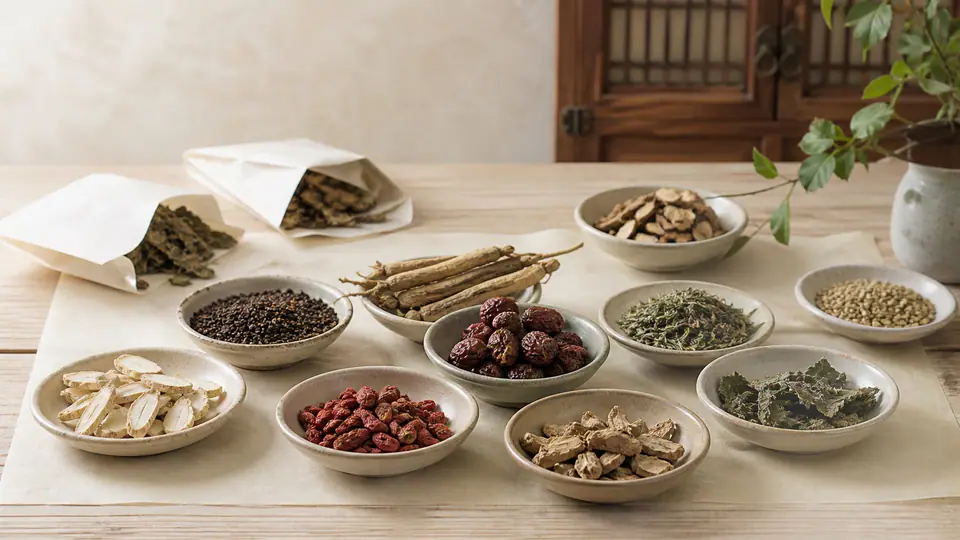
Gaso (Pseudo-Perilla), the grass that brushes against the wind
The Dongui Bogam provides the following description of Schizonepeta (Hyeonggae): “Because its smell and taste are similar to Perilla (So), it is called Gaso (Pseudo-Perilla).” Perilla, specifically Perilla leaf (Jasoyeop), is a representative diaphoretic medicine known for its strong grassy scent and aroma. While Schizonepeta resembles it in scent and taste, it is a medicinal herb that follows a different therapeutic path. The Annals of King Sejong's Geography records that it was produced as a local product in Gyeonggi, Chungcheong, Hwanghae, Gangwon, and Pyeongan provinces, suggesting it was a familiar wild grass to the people of the Joseon Dynasty.
While it is commonly known simply as a 'grass that chases away the wind,' the actual role of Schizonepeta is more detailed. The Bongyeong records that it 'treats alternating chills and fever, suppurated lymphadenitis, Qi stagnation, blood stasis (eo-hyeol), and numbness caused by dampness (seup-sa),' and the Jinjanggi states that it 'repels pathogenic factors (sa-gi) and treats thirst, coldness of the body, and sweating caused by weakness.' In other words, it was not merely a 'cold remedy grass,' but a multipurpose medicinal herb used to resolve stagnant Qi, blood stasis, and dampness within the body, and to expel pathogenic factors from the exterior (pyo-bu). Additionally, according to the Traditional Knowledge Portal of Korea, its nature is acrid and warm, acting on the liver and lungs, and when charred (cho-tan, carbonized by roasting), it possesses hemostatic (blood-stopping) properties. This is a representative case where the direction of the effect changes completely depending on whether the herb is used raw or charred.
However, this medicinal herb is not suitable for light brewing as a tea. Due to its acrid and warm nature, it may actually worsen discomfort in individuals with constitutions or symptoms such as exterior deficiency with sweating (pyo-heo-yu-han), fever due to blood deficiency (hyeol-heo-bal-yeol), or yin deficiency with flourishing fire (eum-heo-hwa-seong). While there are records of extracting juice by boiling it in water, the appropriate dosage as a Korean herbal medicine and the contraindications for specific constitutions are clear; therefore, self-administration without a prescription is not recommended. Thus, how much, for whom, and how Schizonepeta is used is critical, and that is exactly what this page covers.
Summary at a Glance
For those who wish to quickly understand what kind of medicinal herb Schizonepeta is, we have summarized the core points. The table below provides an overview of its origin, properties, traditional efficacy, and precautions for use.
| Category | Content |
|---|---|
| Origin | 荊芥, Schizonepeta tenuifolia (Benth.) Briq. / In Korea, mainly the flower spikes (hwa-su) are used medicinally; in China, the whole plant (jeon-cho) is used. |
| Properties and Meridian Tropism | Acrid (辛), Warm (溫), Non-toxic; Liver (肝), Lungs (肺) |
| Representative Aliases | Gaso (Pseudo-Perilla), Recorded in the Dongui Bogam as “called Gaso because its smell and taste are similar to Perilla (So).” |
| Efficacy Recorded in Literature | Diaphoretic (pyo-bal), Wind-dispersing (san-pung), Promoting eruption of rashes (tu-jin), Benefiting the throat (i-in-hu), Promoting digestion (so-sik), Sobering (seong-ju); Hemostatic (blood-stopping) when charred (cho-tan) |
| Main Ingredients | Aromatic components such as (+)-menthone, (-)-menthone, (-)-pulegone, and 1-octen-3-ol have been identified via chemical fingerprinting. |
| Combinations and Contraindications | Caution for exterior deficiency with sweating (pyo-heo-yu-han), fever due to blood deficiency (hyeol-heo-bal-yeol), and yin deficiency with flourishing/excess fire (eum-heo-hwa-seong/eum-heo-hwa-wang); interaction with Western medicines needs to be verified. |
Is this medicinal herb right for me?
Schizonepeta is a medicinal herb that aids in diaphoretic (pyo-bal) and wind-dispersing (san-pung) actions. Literally, it possesses the efficacy to release wind and alternating chills/fever residing on the body's exterior, which is why it has been traditionally used during the early stages of a cold or during the process of skin rashes appearing. However, since this power works by opening the exterior of the body, there is a clear distinction between those for whom it is suitable and those for whom it is not, depending on their constitution and current symptoms. Detailed guidance is provided below.
-
Generally suitable casesSuitable: Traditionally considered for cases where chills and fever appear alternately in the early stages of a cold, or when accompanied by throat (in-hu) symptoms such as swelling and loss of voice. Hyeonggae-tang from the Sam-in is a prescription that decocts Platycodon, Licorice, and Schizonepeta spikes together to treat throat discomfort. There are also records of its use to help promote the eruption of rashes (tu-jin) when red spots or itching appear on the skin.
-
Cases requiring cautionCaution: Caution is required in cases where fever is severe but chills are minimal and sweating has already begun, evening fever due to blood deficiency (hyeol-heo), or facial flushing, headache, and sore throat due to yin deficiency (eum-heo). Because Schizonepeta has an acrid and warm nature that opens the exterior, it may cause energy to drain further rather than alleviating symptoms in these constitutions. Additionally, if you are pregnant or taking Western medicines, any Korean herbal medicine prescription including Schizonepeta must be decided after consulting a Korean medicine doctor.
-
Cases to avoid: As a general rule, avoid use in cases of Pyo-heo-yu-han (a constitution where the exterior is weak, leading to frequent sweating), blood deficiency fever, Yin deficiency with excessive internal heat (Yin-heo-hwa-seong/Yin-heo-hwa-wang), or when accompanied by head wind and facial flushing. Using Schizonepeta (Hyeong-gae) in these conditions may increase heat or worsen sweating and dizziness. Since Schizonepeta is a Korean herbal medicine that requires decoction and has clear dosage guidelines and contraindications based on constitution, self-administration without a prescription is not recommended. As there is insufficient official evidence regarding specific interactions with Western medicines, please be sure to inform your doctor of any medications you are currently taking when visiting a clinic.
Practical Q&A
We have gathered the most frequently asked questions from clinical practice. While Schizonepeta is known as a herb that aids in diaphoretic and wind-dispersing actions, it is important to know when and with whom it is used, and in which cases it is unsuitable. The following answers are based on common inquiries in our clinic and contain only verified facts.
Is Schizonepeta only used in the early stages of a cold?
The most common context of use is early cold symptoms, but that is not all. Schizonepeta is traditionally recorded for its diaphoretic (pyo-bal), wind-dispersing (san-pung), rash-promoting (tu-jin), and throat-benefiting (i-in-hu) actions. In other words, it has been used to release wind and alternating chills/fever on the body's exterior, assist the process of rash eruption, and alleviate swelling and pain in the throat. Hyeonggae-tang from the Sam-in is used when the throat is swollen and the voice is weak, and Bu-pyeong-san from the Ui-gam is an example of a prescription combining Schizonepeta to induce sweating along with the treatment of scabies, tinea, and great wind sores. Therefore, it can appear as part of a prescription for various situations, including skin rashes and throat symptoms, not just colds.
Can I brew and drink Schizonepeta like a tea?
While there are records of 'brewing and drinking it like tea,' self-administration without a prescription is not recommended because the appropriate dosage as a Korean herbal medicine and the contraindications for specific constitutions are clear. Schizonepeta is a medicinal herb with an acrid and warm nature that works to open the exterior of the body. Depending on the person, it may be suitable or unsuitable even for the same symptoms. It is safest to determine the specific dosage and duration of intake under the diagnosis of a Korean medicine doctor.
Are there constitutions or symptoms for which it is unsuitable?
Traditional contraindications include exterior deficiency with sweating (pyo-heo-yu-han: severe fever but minimal chills and presence of sweating), fever due to blood deficiency (hyeol-heo-bal-yeol: fever caused by lack of blood), yin deficiency with flourishing/excess fire (eum-heo-hwa-seong/eum-heo-hwa-wang: headache, sore throat, and facial flushing due to lack of yin), and head wind with facial redness (du-pung-myeon-jeok). These are all cases where the 'exterior-opening' effect may further expose internal deficiency (heo) or stimulate a state that already has a febrile tendency. Whether these apply to you personally must be confirmed through consultation and pulse diagnosis.
How is Schizonepeta paired with other medicinal herbs?
Schizonepeta performs a more specific role when combined with other herbs in a prescription rather than when used alone. In Hyeonggae-tang from the Sam-in, it was used for throat symptoms along with Platycodon and Licorice. In Jingyo-byeolgap-san from the Deuk-hyo, it was combined with Pueraria, Fritillaria, Peucedanum, Bupleurum, Notopterygium, tortoise plastron, and Licorice for deficiency-fatigue (heo-ro), tidal fever (jo-yeol), and night sweats (do-han). In modern practice, Hyeonggae-yeon-gyo-tang is known as a prescription used for clearing heat, detoxifying, and hemostasis, combining a wide variety of herbs including Angelica, Peony, Cnidium, Rehmannia, Coptis, Scutellaria, Phellodendron, Gardenia, Forsythia, Licorice, Saposhnikovia, Mint, Aurantii Fructus Immaturus, Angelica Dahurica, Platycodon, and Bupleurum. The role of Schizonepeta changes depending on which herbs it is paired with.
Can I take this with Western medicine or other restorative herbal medicines?
There is a lack of confirmed official evidence regarding the specific interactions between Western medicine and herbal medicine prescriptions containing Schizonepeta, or with restorative medicines such as Gongjindan or Gyeongokgo. If you are currently taking any Western medicine or restorative herbal medicine, it is important to inform your Korean medicine doctor before the prescription. We will review the possibility of concurrent use during your consultation.
Is it okay to take it for a long period?
Further verification is needed regarding specific warning signs that appear during excessive or long-term human consumption of Schizonepeta. Herbs used for inducing perspiration and dispelling wind are generally used for short periods according to the stage of symptoms; if continuous consumption is required, it is advisable to adjust the dosage while monitoring your condition through regular follow-up visits. A specific determination regarding the duration of intake will be provided during the consultation after a comprehensive evaluation of your symptoms and constitution.
Relationship with Other Medicinal Herbs (Yakdae/Pairing)
Schizonepeta is rarely used alone. The potency of this herb is realized only when paired with other herbs, a pairing referred to as 'Yakdae' in traditional medicine. Because Schizonepeta possesses properties that help induce perspiration and dispel wind, it is used in different ways depending on whether it is paired with Platycodon, Licorice, Saposhnikovia, Mint, or Forsythia. In some combinations, it works to soothe the throat, while in others, it manages skin rashes or expels wind from the body surface.
Below are representative examples of prescriptions where Schizonepeta forms a core combination, as found in confirmed literary records.
- Schizonepeta + Platycodon + Licorice, Hyunggaetang : A prescription found in the 'Samin', where 80g of Platycodon, 40g of Licorice, and 20g of Schizonepeta spikes are decocted with ginger and taken in small doses. It has been traditionally used for situations where the throat is swollen and painful, and the voice does not come out well.
- Schizonepeta + Forsythia + Angelica, Peony, Coptis, etc., Hyunggaeyeongyotang : An 'Ilgwandang' prescription, traditionally used for the purpose of clearing heat, detoxifying, and stopping bleeding. It uses a combination of Angelica, Peony, Cnidium, Rehmannia, Coptis, Scutellaria, Phellodendron, Gardenia, Forsythia, Licorice, Schizonepeta, Saposhnikovia, Mint, Aurantii Fructus Immaturus, Angelicae Dahuricae Radix, Platycodon, and Bupleurum.
- Schizonepeta + Saposhnikovia + Licorice, etc., Hasuosan : A prescription recorded in 'Dansim', where equal amounts of Schizonepeta spikes, Clematis, Fructus Cnidii, Stephania, Polygonum multiflorum, Saposhnikovia, and Licorice are mixed and taken with warmed wine. It has been traditionally used for cases where the whole body is itchy due to scabies or tinea.
- Schizonepeta + Lemna, Angelica, Cnidium, Red Peony, Ephedra, Licorice, Bupyeongsan : A prescription from 'Uigam', where plantain banana root and medicinal scissor grass are decocted to induce sweating. It has been traditionally used for various types of scabies, tinea, and large wind-sores.
- Schizonepeta + Cnidium, Mint, Prescriptions related to Seantang : A facial-related prescription recorded in 'Bogam', where Cnidium, Schizonepeta spikes, and Mint are soaked in water and then decocted with other medicines.
We also provide guidance on combination contraindications based on confirmed traditional records. Since Schizonepeta has distinct properties for inducing perspiration and dispelling wind, it may not be suitable for those with Pyo-heo-yu-han (severe fever with little chills and presence of sweat), Hyeol-heo-bal-yeol (fever caused by blood deficiency), or Eum-heo-hwa-seong/Eum-heo-hwa-wang (headache, throat pain, or facial flushing caused by yin deficiency). For those with these constitutional or symptomatic backgrounds, it is safe to consult a Korean medicine doctor before using a prescription containing Schizonepeta.
In what form is it consumed?
As a herbal medicine, Schizonepeta is typically administered in the form of a decoction (boiled extract). While records of drinking it as a tea can be found in traditional literature, self-administration without a prescription is not recommended because the appropriate dosage as a medicinal herb and contraindications by constitution are clear.
- Tea: There are records of boiling it in water to drink the extract, but this is not common today.
- Food: Not common.
- Decoction: Most Korean medicine prescriptions containing Schizonepeta are taken in decoction form.
- Professional Prescription: It is included in prescriptions under the diagnosis of a Korean medicine doctor for purposes such as inducing perspiration, dispelling wind, erupting rashes, soothing the throat, reducing swelling, and clearing the voice. When charred (cho-tan), it is also used for the purpose of stopping bleeding.
Interactions and Safety During Use
Due to its properties that help induce perspiration and dispel wind, Schizonepeta is frequently used in the early stages of a cold or during skin rashes, but there are clearly cases where it is not suitable depending on the constitution and symptoms. We provide guidance based on the contraindications organized in traditional medicine.
- Pyo-heo-yu-han (Surface deficiency with sweating): It is not suitable for those who have a high fever but little chills and are sweating. The force to further open the surface may instead deplete the vital energy of the body surface.
- Hyeol-heo-bal-yeol (Fever due to blood deficiency): For fever caused by blood deficiency, the diaphoretic and wind-dispersing effects of Schizonepeta (Hyeonggae) are not appropriate.
- Yin Deficiency with Fire/Yin Deficiency with Hyperactive Fire (Eumheohwa-seong/Eumheohwa-wang): Caution should be exercised when using this for headaches, sore throats, facial flushing, etc., caused by Yin deficiency.
- Head Wind with Facial Flushing (Dupungmyeonjeok): It is also recorded as a caution under the Gaso (False Perilla) entry.
There is currently a lack of official evidence regarding specific interactions with Western medicines or restorative herbal medicines such as Gongjindan and Gyeongokgo, as well as warning signs for overdose or long-term human consumption. It is advisable to take prescriptions containing Schizonepeta under the diagnosis of a Korean medicine doctor. If you experience any adverse reactions or have existing medical conditions or medications, please be sure to consult your doctor.
If you experience these symptoms
This section summarizes the signs that may appear while taking Schizonepeta. Because Schizonepeta has properties that aid in diaphoretic and wind-dispersing actions, it works by opening the surface of the body and releasing sweat. Therefore, if symptoms worsen or new discomfort appears during use, it is important to notify your attending Korean medicine doctor first rather than reducing the dose or stopping the medication on your own.
- Increased sweating or feeling fatigued more easily: Schizonepeta is a medicinal herb that works to open the surface (Pyo). If you experience excessive sweating or feel more fatigued than usual during use, it may not be suitable for your constitution or current symptoms, so please inform your attending Korean medicine doctor.
- Increased swelling of the neck or face, or worsening facial flushing: While Schizonepeta is also used to soothe the throat, it may actually aggravate symptoms in those with a constitution of Yin Deficiency with Hyperactive Fire (Eumheohwaseong) or Head Wind with Facial Flushing (Dupungmyeonjeok).
- Fever does not subside, and chills worsen: In a state of surface deficiency with sweating (Pyohyeoyuhan), where fever is not severe but sweating occurs, if Schizonepeta is not suitable, chills may worsen or you may feel more depleted.
- Skin rashes or itching actually worsen: Schizonepeta helps in promoting the eruption of rashes (Tujin), but depending on the constitution or stage of the disease, the rash may spread further or itching may intensify.
If abnormal symptoms appear, or if your general condition deteriorates rapidly, such as shortness of breath, chest tightness, or clouded consciousness, after taking the medicine, please visit an emergency medical institution immediately or contact 119. Since Schizonepeta is generally used as a decocted herbal medicine according to a prescription, please consult the Korean medicine doctor who issued the prescription regarding any discomfort during use.
Differences from other restorative medicines
Schizonepeta does not fall into the category of restorative medicines (Boyak). Rather, it is a medicinal herb with strong 'diaphoretic and wind-dispersing' properties, which send external influences such as wind, cold, and heat remaining in the body outward. Restorative medicines used to supplement energy or fill the blood, such as Gongjindan or Gyeongokgo, are intended to treat constitutions that are deficient or in a state of long-term deficiency. In contrast, Schizonepeta is used for short periods when symptoms are manifest on the surface, such as chills and fever in the early stages of a cold, throat swelling, or skin rashes.
Therefore, there is currently a lack of official evidence regarding the specific interaction of using Gongjindan or Gyeongokgo together with Schizonepeta. If you are taking restorative medicine, please consult your attending Korean medicine doctor before using a prescription containing Schizonepeta. It is important to determine which treatment is more appropriate based on the stage of symptoms and your constitution.
References
- Evidence material 1 regarding Schizonepeta: Korea Institute of Korean Medicine official data.
- Evidence material 2 regarding Schizonepeta: Korea Citation Index academic paper.
- Evidence material 3 regarding Schizonepeta: Korea Citation Index academic paper.
If you would like to check if this medicinal herb is right for you or which prescription it should be used with, please leave a medical inquiry. For those who find it difficult to visit the clinic, non-face-to-face consultations are available; we will provide guidance after first reviewing your current condition and current medications.

Medical Staff Review
Director Choi Yeon-seung
Chief Director of Baekrokdam Korean Medicine ClinicSchizonepeta Dictionary Entry, reviewed the safety of expressions and the scope of verification before administration.
Review Scope: Clinical Accuracy, Pharmacology, Contraindications, Combinations, QA · Last Reviewed 2026-08-16
- Graduated from Kyung Hee University College of Korean Medicine
- Providing Korean medicine treatment since 2010
- Consultations for Gongjindan, Gyeongokgo, Nokyong (Deer Antler) restorative medicine, and customized restorative herbal medicine