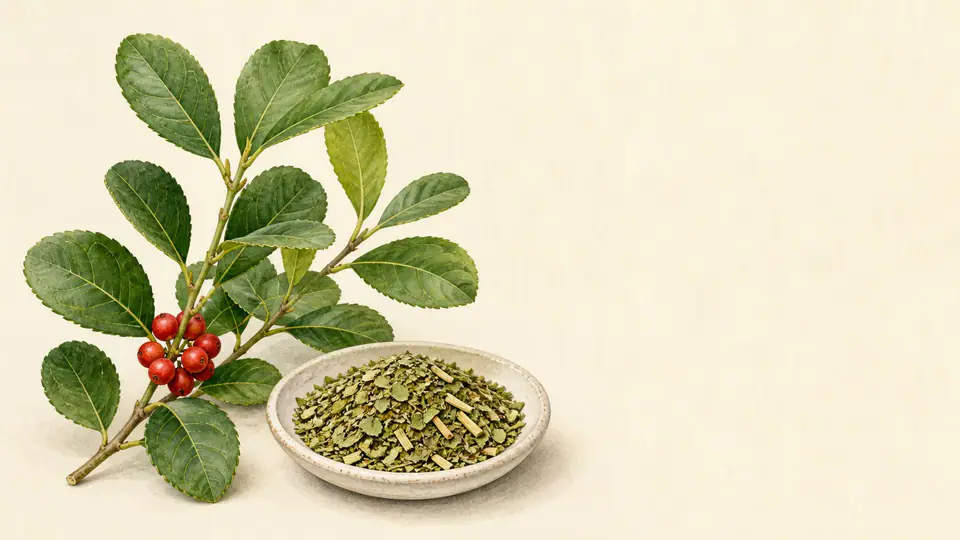
As leaf tea shared from one vessel split into cans and capsules
Can I drink yerba mate every day for diet and focus, and is it okay to drink it very hot? To start with the conclusion, whether you can drink it daily depends on the total caffeine intake and your individual health status, and repeatedly drinking it very hot, exceeding 65°C, is not recommended. This is because traditional tea, cold drinks, concentrated extracts, and processed canned drinks are all mixed under the same name, so safety cannot be determined by the word "mate" alone.
Yerba mate is a South American plant of the Aquifoliaceae family Ilex paraguariensisIt is a caffeinated beverage made by steeping the dried leaves and young twigs. Traditionally, hot water was poured over the same leaves multiple times, and several people shared one vessel and a straw. However, as this leaf tea moved into energy/diet cans and capsules, it split into several categories. Traditional beverages versus extracts, caffeine alertness versus body fat reduction, and mate itself versus heat damage exceeding 65 degrees have become different stories.
Same Name, Different Cups: The Four Branches of Mate
There are actually various products under the name mate. Traditional mate involves repeatedly pouring water over leaves, tea bags are steeped once, and cold tereré is a variation using the same plant with cold water. Concentrated extracts are contained in a single drop of liquid or a capsule, and sweetened canned drinks add sugars and processed ingredients to the caffeine. These all differ in caffeine concentration, sugar content, potential for processing contamination, and temperature.
In particular, because traditional mate involves pouring water over the same leaves multiple times, it is difficult to estimate total caffeine based on a single cup's label. A single-steeped tea bag, repeated pouring, and one concentrated extract pill can mean entirely different levels of alertness exposure. Therefore, simply saying "I drink mate" does not reveal what or how much is being consumed.
Caffeine levels are determined by the brewing method, not the weight of the leaves
Alertness exposure cannot be determined by the total mg of mate leaves or extracts alone. This is because caffeine content varies by brewing method, the number of repeated pours, and the product form. Even with the same amount of leaves, the amount of dissolved caffeine changes depending on water temperature, steeping time, and how many times the leaves are reused. Concentrated extracts make this difference even more extreme.
NIDDK LiverTox describes yerba mate as a traditional South American beverage containing caffeine, theobromine, and theophylline, noting that general health claims have not been confirmed by sufficiently large, rigorous trials. In other words, while caffeine-like components may provide a sense of alertness, there is insufficient confirmed evidence for other health benefits.
Antioxidant and metabolic mechanisms are interesting, but not definitive evidence
A 2023 systematic review gathered 32 studies, of which 22 had a high risk of bias, and the certainty of evidence ranged from moderate to very low. While antioxidant components and metabolic mechanisms are experimentally interesting, they cannot be definitively linked to weight loss or the prevention of diabetes and cardiovascular disease.
Although the word "mate" carries expectations such as body fat reduction or improved concentration, the studies varied in product form and design, and many were of low quality. These expectations are based on component theories, not results consistently proven in human subjects.
Hot cups vs. cold cups: Temperature determines carcinogenicity
The IARC classified very hot beverages exceeding 65°C as Group 2A in relation to esophageal cancer. However, it stated that mate itself, when not very hot, cannot be classified for carcinogenicity. This is an important distinction. In the IARC evaluation, the risk criterion was more clearly linked to the drinking temperature than to the name mate itself.
Warm mate, cold tereré, and very hot mate use the same plant, but the heat exposure to the esophagus differs. The habit of repeatedly passing liquids exceeding 65°C through the esophagus is associated with tissue damage. Therefore, the safety standard is to let it cool sufficiently before drinking.
Alertness increases when combined with other caffeine sources
Insomnia, restlessness, throbbing, headaches, and gastrointestinal discomfort may occur, and symptoms may worsen if combined with other caffeine or stimulants. You should first check the total caffeine intake when combined with coffee, energy drinks, and pre-workout products.
If you have an arrhythmia, uncontrolled hypertension, or an anxiety disorder, you should consult a medical professional regarding your total caffeine intake. The same applies to those who are pregnant, breastfeeding, or to children. This is a general precaution regarding caffeine, not a specific contraindication for mate. However, since the caffeine content of mate varies by product, extra caution is necessary.
The first question to ask is in what form it is consumed
If so, what should you look for? First, determine if it is a warm tea, a cold tereré, a canned beverage, or a concentrated extract. Next, check the amount of caffeine and sugars. Evaluate the total daily caffeine intake when combined with coffee or energy drinks, whether you have insomnia, anxiety, arrhythmia, or hypertension, if the drinking temperature is very hot (above 65°C), or if you have a habit of consuming it with cigarettes or alcohol.
Canned beverages may have added sugars in addition to caffeine, and concentrated extracts may have a different concentration than a traditional cup of tea. These should not be conflated with the safety of traditional mate.
Check signals from your body without delay
If chest pain, fainting, persistent palpitations, difficulty swallowing, or vomiting blood occur, you must be evaluated immediately. These are common signals that suggest caffeine overdose or esophageal issues, not limited to mate. If mild insomnia or restlessness occurs, reduce or stop intake and monitor the progress.
Mate itself and products containing mate lead to different conclusions
In other words, traditional mate that is not very hot cannot be classified as carcinogenic, but very hot mate is associated with the possibility of esophageal cancer. The antioxidant components of mate are subjects of research, but they have not been confirmed for weight loss or disease prevention. Caffeine can provide alertness, but the dosage varies greatly depending on the product and brewing method.
When these three factors are entangled, it leads to simple statements like "mate is healthy" or "mate is dangerous." In reality, the answer varies depending on the form, temperature, dosage, and individual condition.
Criteria to Check Today
Rather than the name "natural energy tea," check the total caffeine, sugars, formulation, and temperature. Do not cover very hot consumption and concentrated extracts with the safety of a traditional cup of tea. Even if the cups have the same name, the contents inside can be entirely different.
References
- NIDDK LiverTox: Yerba Mate.
- IARC: Drinking coffee, mate and very hot beverages.
- IARC Q&A: Mate and very hot beverages.
- Physiological effects of yerba mate systematic review.
This text explains the origin of the raw materials, the scope of research, and precautions before consumption. As this cannot replace individual diagnosis or treatment, please consult a medical professional if you are taking medication or if symptoms persist. If sudden and severe symptoms such as difficulty breathing or decreased consciousness occur after consumption, seek help from 119 or the emergency room.

Medical Staff Review
Director Choi Yeon-seung
Chief Director of Baekrokdam Korean Medicine ClinicYerba Mate Dictionary Entry, reviewed the safety of expressions and the scope of verification before administration.
Review scope: Ingredient origin, human studies, concomitant medications, safety of intake · Last reviewed 2026-08-17
- Graduated from Kyung Hee University College of Korean Medicine
- Providing Korean medicine treatment since 2010
- Consultations for Gongjindan, Gyeongokgo, Nokyong (Deer Antler) restorative medicine, and customized restorative herbal medicine