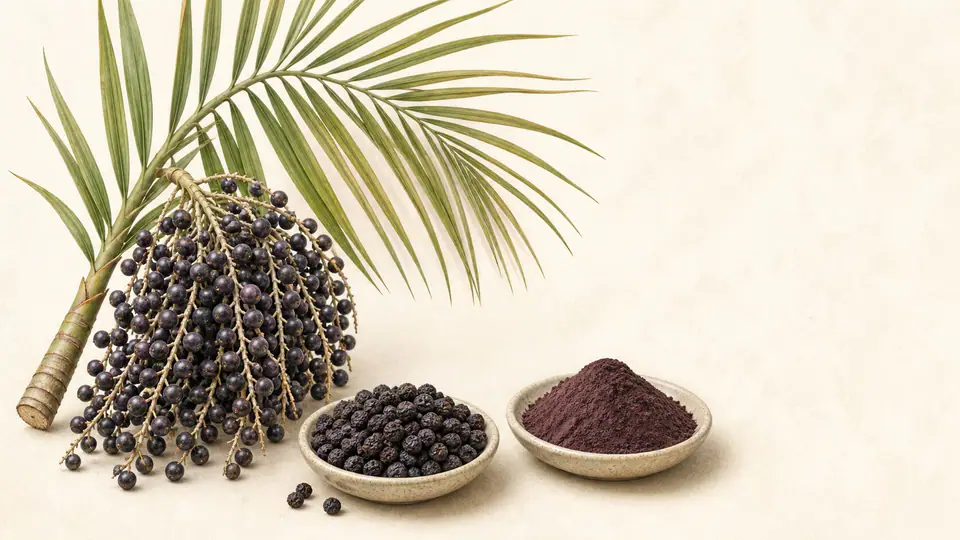
From Amazon's purple berry to a health food
Acai berries are said to be good for antioxidants and dieting; do they actually help with weight loss and vascular health when consumed as bowls or powders?
It is difficult to conclude so based on human studies conducted to date. While acai is widely known as a purple fruit, the academic community concludes that there is a lack of reliable information to support effects such as weight loss or the prevention of cardiovascular disease and cancer. This article explores what has been confirmed and what remains distant between the name and the image, as well as what differences to look for when choosing a product.
Where the questions begin
When searching for acai berries, words like 'antioxidant,' 'diet,' and 'superfood' often appear together. The question itself starts from a state where product imagery and research results are already mixed together. The NCCIH concludes that there is insufficient reliable information to determine for which health purposes acai is useful because human studies are very limited. In other words, expectations were formed first, and the clinical evidence to support those expectations has not yet followed.
The identity obscured by the name
Unlike its commercial name 'berry,' acai is a palm fruit. The dark purple fruit of the Amazonian palm Euterpe oleracea is the acai berry. Locally, there is a culture of eating the pulp by grinding the fruit with water. However, as this raw material is transformed into frozen pulp, sweetened acai bowls/juices, and freeze-dried powders/capsules, the amounts of sugar, fiber, fat, and actual fruit pulp vary. In effect, several different foods exist under the same name 'acai.'
Expectations brought by the purple color
The deep purple color brings to mind components such as anthocyanins. Antioxidant capacity measured in test tubes also appears high. However, this purple color and test-tube antioxidant capacity are not clinical results in humans, such as weight loss, anti-aging, or cancer prevention. The way color suggests health naturally connects marketing and science, but whether that link has actually been proven is a separate matter.
The Other Side of a Single Bowl
The healthy image of acai bowls does not reflect the sugar and calories from the syrups, fruits, and granola added to the actual product. The clinical effects of acai itself are distinct from the nutritional value of an acai bowl, and results vary depending on added sugars, toppings, and serving size. Even with the same raw material, a product based on unsweetened frozen pulp is a different food than one based on sweetened juice. Therefore, the statement 'acai is good for health' only becomes meaningful when you first ask what form of acai is being consumed and in what quantity.
What Do Human Studies Show?
In a 60-day randomized trial involving 69 overweight adults with dyslipidemia, acai pulp altered some oxidative stress markers but did not improve blood lipids or blood glucose. Changes in antioxidant defenses or inflammatory markers in small studies do not prove weight loss or the prevention of cardiovascular disease and cancer. Due to an NCCIH assessment stating that there have been no peer-reviewed studies supporting weight loss claims in humans over the last 5 years, acai cannot be definitively labeled as a diet food. In other words, it is still a long way off to conclude that weight loss or the prevention of vascular disease occurs simply because a few biomarkers shifted.
Differences by Product Form
When choosing acai, you must check whether it is unsweetened frozen pulp, sweetened juice, an acai bowl, freeze-dried powder, or a complex capsule, and verify the actual amount of acai. For each form, you should consider the sugar content, calories per serving, and the overall composition of a single meal, including granola, honey, syrup, and other fruit toppings. Sweetened acai bowls and juices can be high in sugar and calories to the point that they may not align with blood sugar and weight goals, so you must check the labels and the overall composition.
| Category | Points to Check |
|---|---|
| Unsweetened frozen pulp | Actual fruit pulp content, sugars, and whether it has undergone hygienic processing |
| Sweetened acai bowls/juices | Added sugar, toppings, calories per serving |
| Freeze-dried powder/capsules | Actual acai content and complex ingredients |
Combinations and Individual Circumstances
When taking acai with other supplements or medications, it is advisable to consider your current medications, especially whether you are taking diabetes medication. Additionally, check if you are pregnant, breastfeeding, or scheduled for a gastrointestinal MRI soon. Since it has been reported that acai intake may affect gastrointestinal MRI results, you must inform your medical team if you are consuming it before a scan. While acai pulp was used for up to 3 months in clinical research, data on long-term safety and safety during pregnancy and breastfeeding are insufficient.
Distinguishing Safety
Unpasteurized raw juice from the place of origin has been linked to outbreaks of acute Chagas disease caused by Trypanosoma cruzi contamination. Therefore, it is important to choose products that are hygienically managed, pasteurized, or safely distributed as frozen products. If persistent fever, severe throbbing, difficulty breathing, facial swelling, or changes in consciousness occur after consumption, stop using the product and seek help from medical staff, 119, or the emergency room.
Similar Names, Different Things
Acai is often compared to common berries with names similar to the fruit of Euterpe oleracea. However, they are different types of raw materials. Furthermore, even with the same raw material, unsweetened frozen pulp differs from sweetened acai bowls, juices, powders, and capsules in terms of processing methods and nutritional composition. While anthocyanins and antioxidant markers may seem linked to weight, blood glucose, and cardiovascular disease, they are clinically different issues. Hygienically managed frozen/pasteurized products and unpasteurized raw juice from the origin may both be grouped under the name 'acai,' but they must be distinguished in terms of safety.
Criteria to Check Today
Rather than focusing on the purple color and the name 'superfood,' check the actual fruit pulp content, added sugars, calories per serving, and hygienic processing, and first consider the gap between antioxidant markers and actual weight or disease outcomes. There is still insufficient human-based evidence to definitively state what purpose acai serves. So, what should you look for? The form, content, sugars, calories, hygienic processing, and your own individual circumstances. By checking these six things first, you can see what the product actually is, rather than the illusion created by its name.
References
- NCCIH: Acai usefulness and safety.
- Acai pulp with a hypoenergetic diet: randomized placebo-controlled trial.
- Acute Chagas disease associated with contaminated acai or palm fruit juice.
This text explains the origin of the raw materials, the scope of research, and precautions before consumption. As this cannot replace individual diagnosis or treatment, please consult a medical professional if you are taking medication or if symptoms persist. If sudden and severe symptoms such as difficulty breathing or decreased consciousness occur after consumption, seek help from 119 or the emergency room.

Medical Staff Review
Director Choi Yeon-seung
Chief Director of Baekrokdam Korean Medicine ClinicAcai Berry Dictionary Entry, reviewed the safety of expressions and the scope of verification before administration.
Review scope: Ingredient origin, human studies, concomitant medications, safety of intake · Last reviewed 2026-08-17
- Graduated from Kyung Hee University College of Korean Medicine
- Providing Korean medicine treatment since 2010
- Consultations for Gongjindan, Gyeongokgo, Nokyong (Deer Antler) restorative medicine, and customized restorative herbal medicine