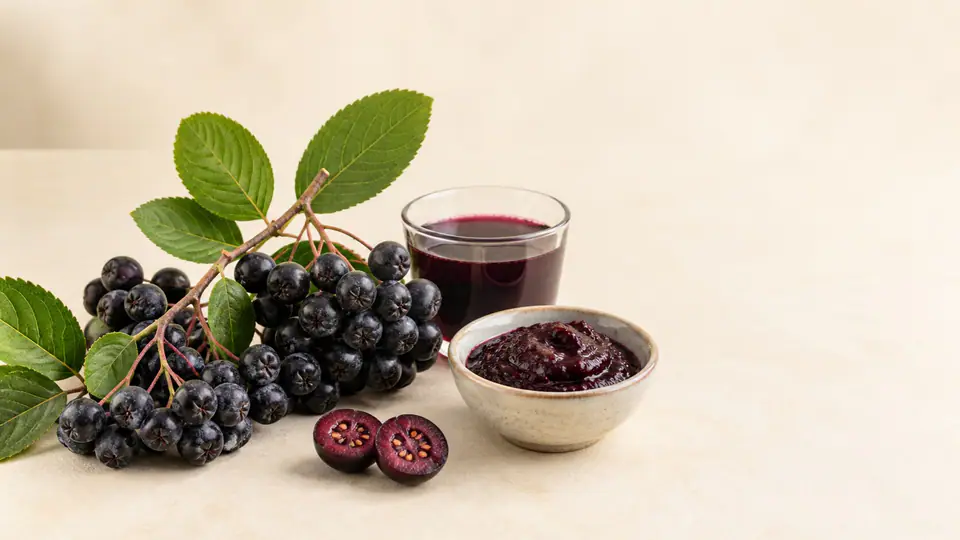
Can astringent black berries be an alternative for blood pressure and cholesterol?
Can I try aronia juice or powder for my blood pressure or cholesterol? In short, while it can be approached as a food ingredient, there is no evidence to replace your current medication. This is because a black color and high antioxidant levels do not automatically translate to improvements in blood pressure or cholesterol levels.
This ingredient illustrates the process of trying to establish itself as a cardiovascular health supplement from an astringent black berry. The tension arises from confusion with other plants with similar names, differences in product forms, and the neutral and uncertain results shown in recent studies.
Two plants with similar names
Aronia is the black berry Aronia melanocarpaof a shrub in the Rosaceae family. Kew classifies this species as a recognized species within the Rosaceae Aronia family. It is also called black chokeberry in English. However, due to the name chokeberry, it is often confused with chokecherry. Although the names are similar, they are different plants. This is why it is important to first verify the exact scientific name and species information when choosing an ingredient.
The gap between the impression of the black color and actual ingredients
The background of aronia gaining attention as a cardiovascular health ingredient is its deep black color and polyphenol components such as anthocyanins. However, the mere fact that certain components are present does not mean that blood pressure, cholesterol, or blood glucose levels will improve. The presence of ingredients and clinical results are on different levels.
Fresh berries, juice, powder, and extracts are not the same product
There are several ways to consume aronia. Fresh berries, dried powder, juice, concentrates, and standardized extracts are not the same products. Their anthocyanin content, sugar levels, and single serving sizes are all different. The experience of eating fresh berries daily cannot be directly applied to the long-term safety of concentrates or high-potency extracts. Research results from one product cannot be applied to another. First, check the product label to see if it indicates anthocyanin standardization, the single serving size, and sugar content.
Why research results are conflicting
Human study results for aronia vary by analysis. A 2022 review of 17 studies found no distinct effect on weight, triglycerides, total cholesterol, HDL, or blood pressure, with only a small signal of reduction in blood glucose. However, it added that more long-term, high-quality trials are needed.
A 2025 meta-analysis of 10 randomized trials involving 666 people showed that cardiovascular metabolic outcomes in general adults did not significantly improve. Some signals appearing in subgroups had a high risk of bias and most results had very low certainty, so they could not be interpreted as therapeutic effects. Because results for blood pressure, blood glucose, and lipid levels vary by analysis, aronia cannot be viewed as a substitute for prescription treatment.
In other words, neutral efficacy results do not guarantee safety. One must distinguish between consuming it as food and expecting a therapeutic effect, and understand that there is currently no consistent evidence sufficient to replace medication.
Information to share with medical staff when using concurrently
If you are taking medication for blood pressure, diabetes, or lipid-lowering agents, it is necessary to inform your medical staff that you have added an aronia product to your routine. It is fundamental not to adjust your medication arbitrarily. Additionally, the consultation will be more specific if you check and provide information on what form of aronia you are consuming, the product's single serving size, and whether there are labels for anthocyanin standardization and sugar content.
If new gastrointestinal discomfort or skin/respiratory symptoms occur after consumption, stop use and it is recommended to record the product name and form for consultation.
Similar names, different ingredients
Aronia and chokecherry are often compared due to their names, but they are different plants. Also, fresh berries/juice and concentrated extracts have different compositions and exposure levels even if they come from the same raw material. High antioxidant content does not necessarily mean actual cardiovascular outcomes improve. These three comparisons help prevent common misconceptions when choosing aronia.
Criteria to Check Today
Then, what should you look for? First, the exact identity of the plant. Aronia melanocarpaCheck whether it is being confused with chokecherry. Second, the product form and labeling. Check whether it is in the form of fresh fruit, juice, powder, or extract, and whether the anthocyanin standardization, sugar content, and serving size per dose are indicated. Third, the level of expectation. Remember first the low certainty of recent randomized trial syntheses rather than the black color and antioxidant levels, and approach it as a food while maintaining your current treatment.
Aronia is an astringent but interesting ingredient. However, that interest does not provide a basis for replacing medication.
References
- Kew Plants of the World Online: Aronia melanocarpa.
- USDA NRCS plant guide: Black chokeberry.
- Aronia and cardiometabolic diseases: systematic review.
- Chokeberry cardiometabolic outcomes: systematic review and meta-analysis.
This text explains the origin of the raw materials, the scope of research, and precautions before consumption. As this cannot replace individual diagnosis or treatment, please consult a medical professional if you are taking medication or if symptoms persist. If sudden and severe symptoms such as difficulty breathing or decreased consciousness occur after consumption, seek help from 119 or the emergency room.

Medical Staff Review
Director Choi Yeon-seung
Chief Director of Baekrokdam Korean Medicine ClinicAronia Dictionary Entry, reviewed the safety of expressions and the scope of verification before administration.
Review scope: Ingredient origin, human subject research, concomitant medications, intake safety · Last reviewed 2026-08-16
- Graduated from Kyung Hee University College of Korean Medicine
- Providing Korean medicine treatment since 2010
- Consultations for Gongjindan, Gyeongokgo, Nokyong (Deer Antler) restorative medicine, and customized restorative herbal medicine