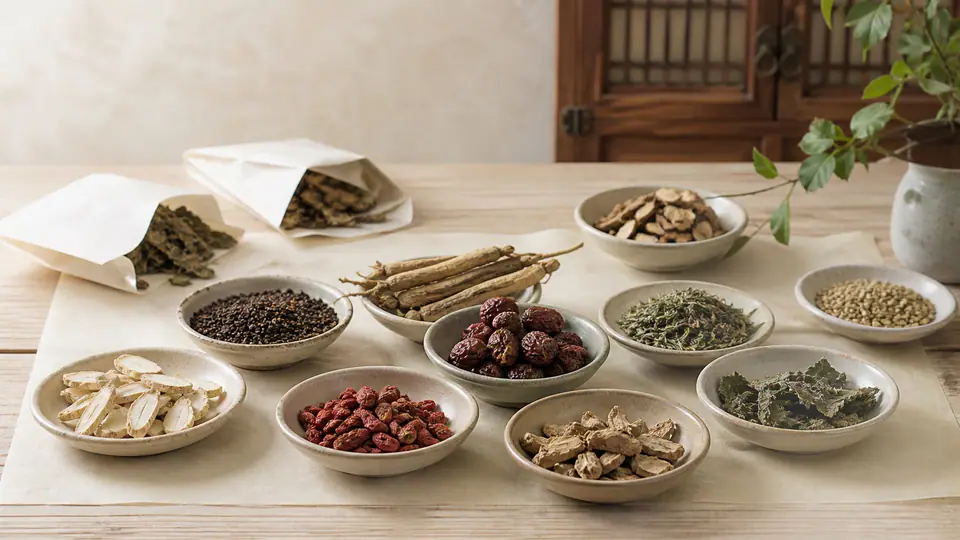
Gui-no (貴老): The peel that becomes more precious with age
The Bencao Gangmu (Compendium of Materia Medica) says the following about Jinpi (dried tangerine peel). "As its toxicity lingers, it dissipates, and its nature becomes mild. Since those that are long-aged are superior, it is called Gui-no." ‘Gwino’ means ‘an elderly person who becomes more precious as they age.’ While it is a somewhat formal expression for the peel of a single tangerine, the meaning is clear. It means that not fresh tangerine peel, but peel that has been aged over time, qualifies as a medicinal herb. The 《Dongui Bogam》 also states, “十月採, 以陳者爲良”, that those harvested in October and aged are superior.
Today, Jinpi is commonly known only as a fragrant tea ingredient or a seasoning. It is common to dry the leftover peels from supermarket tangerines to brew tea. However, traditional medicine strictly distinguished between 'fresh' and 'aged' peels, and in fact, viewed fresh peels as contraindicated. This is because as time passes, the bitterness and irritants decrease, and a mild nature that helps soothe the spleen and stomach emerges. In other words, the value of Jinpi lies not in being 'freshly picked,' but in being 'long-aged.'
Due to these characteristics, Jinpi shows its true value when paired with other herbs in a prescription. Erchen-tang (Two-Chen Decoction) from the Taiping Huimin Huajifang is passed down as a representative prescription for treating damp-phlegm along with Banha (Pinellia), Bokryeong (Poria), and Gamcho (Licorice). In the Dongui Bogam, it is also established as a supporting herb in various prescriptions such as Mokhyang-san, Samryeong-yeonchul-san, and Seokryeon-san. It plays the role of soothing the stomach, resolving phlegm, and gently regulating the energy of the entire prescription.
However, this 'mildness' does not apply equally to everyone. The nature of Jinpi is close to warm and drying (溫燥); therefore, for those with Qi deficiency (氣虛), Yin deficiency with dry cough (陰虛燥咳), or those lacking body fluids with excess heat (實熱), it may further deplete body fluids. Caution is also required in cases of hematemesis (vomiting blood). The more a medicinal herb becomes precious with age, the more important it becomes who uses it, how much is used, and with which prescription. The content of this page covers those criteria.
Summary at a Glance
Jinpi is a medicinal herb made from the long-aged peel of the tangerine tree fruit. The table below summarizes the key points from origin to precautions.
| Category | Content |
|---|---|
| Origin | Hanja name: 陳皮, Scientific name Citrus unshiu Markovich. Dried and long-aged peels of ripe tangerine fruits are used. |
| Properties and Meridian Tropism | Properties: Acrid (辛) and Bitter (苦), Warm (溫). Acts on the Spleen and Lungs. |
| Representative Aliases | Gui-no (貴老), Hwang-gyulpi (Yellow tangerine peel) |
| Efficacy Recorded in Literature | Dries dampness and transforms phlegm (燥濕化痰), regulates Qi and strengthens the Spleen (理氣健脾). The Dongui Bogam records that it "treats Qi in the chest, stimulates appetite, stops dysentery, and eliminates phlegm." |
| Main Ingredients | Specific active ingredient information was not obtained from the research notes. Please inquire during your consultation. |
| Combinations, Contraindications, and Precautions | Combined with Banha, Bokryeong, Gamcho, etc., in prescriptions such as Erchen-tang. Not suitable for Qi deficiency (氣虛) or Yin deficiency with dry cough (陰虛燥咳); use with caution for hematemesis (吐血證) and fluid deficiency with excess heat (津虧實熱). |
Is this medicinal herb right for me?
Jinpi is a medicinal herb often considered when digestion feels slow or when the chest and abdomen feel tight. However, as the name 'Gui-no' suggests, while its long-aged mildness is an advantage, it may increase discomfort in a body that already has heat or dryness. Please check based on the following three criteria first.
- Generally suitable casesSuitable: Traditionally considered for cases of bloating or indigestion after meals, tightness in the chest or abdomen, or cough with phlegm. It is relatively safe to use if the body is not typically cold and if dry mouth or constipation is not severe.
- Cases requiring cautionCaution: For those who fatigue easily due to lack of energy, frequently experience dry mouth and throat, or have a feeling of heat, symptoms may be aggravated due to the warm and drying (溫燥) nature of Jinpi. Caution is also needed if there is a tendency for bleeding, such as hematemesis or bloody stools. If you are taking Western medications or are pregnant/breastfeeding, you must consult a healthcare provider.
- Cases to avoidContraindicated: It is recommended not to use it in states of Qi deficiency (氣虛), Yin deficiency with dry cough (陰虛燥咳), or fluid deficiency with excess heat (津虧實熱). Those with galactose intolerance, Lapp lactase deficiency, or glucose-galactose malabsorption should avoid Jinpi preparations containing lactose.
These criteria may vary depending on an individual's constitution and current symptoms. If you wish to receive Jinpi as part of a Korean herbal medicine prescription, we recommend scheduling a consultation first.
Practical Q&A
Since Jinpi is enjoyed as a tea and frequently appears in prescriptions, you may have many questions. However, as the name 'Gui-no' implies, its long-aged mildness is its strength, so it is important when and for whom it is appropriate. We will answer based on verified facts, focusing on questions we frequently receive in clinical practice.
Is Jinpi tea the same as the Jinpi found in pharmacies?
Although they share the commonality of coming from tangerine peels, their uses and standards differ. Chenpi (dried tangerine peel) as a medicinal herb refers to aged tangerine peel, which the 《Dongui Bogam》 describes as “十月採, 以陳者爲良”, those harvested in October and aged are superior. Gyulpi used for tea is often dried simply at home, and some refer to those aged for 3 years or more as ‘Chenpi.’ However, as there are concerns regarding pesticide residues, it is recommended to wash and dry them thoroughly before use. If you have symptoms, it is appropriate to consult a Korean medicine doctor regarding a prescription that includes Chenpi as a medicinal herb.
Does Jinpi (dried citrus peel) help with indigestion?
Jinpi has traditionally been used for 'Igi-geonbi', the action of boosting the energy of the stomach and strengthening the spleen and stomach. The OASIS Traditional Medicine Information Portal records it as a primary treatment for symptoms related to indigestion or tightness in the chest and abdomen, such as 'vomiting and reflux, inability to eat, and abdominal bloating.' However, it may increase discomfort in individuals with constitutions characterized by Qi deficiency (Gi-heo), Yin deficiency with dry cough (Eum-heo-jo-hae), or fluid deficiency with excess heat (Jin-hyu-sil-yeol), so it is safer to use after a consultation.
In which prescriptions is Jinpi most commonly used?
A representative prescription is Er-Chen-Tang (Ijin-tang). It consists of Pinellia, Jinpi, Poria, and Licorice, and has been traditionally used for conditions where damp-phlegm has accumulated. Additionally, in the Dongui Bogam, Jinpi is included as a supporting or harmonizing herb in prescriptions such as Mokhyang-san, Samryeon-yeochul-san, Seokryeon-san, Dogi-jigak-hwan, Insam-gupye-san, and Cheonghwa-hwadam-tang. In modern medicines, it is formulated in products such as Hanshin Bojungikgi-tang Ex Granules and Benachio Pro Liquid.
Can I take Jinpi for a long period of time?
Long-term use should be approached with caution. Because the nature of Jinpi is warm and drying, it may deplete body fluids in those with Qi deficiency, Yin deficiency, or fluid deficiency with excess heat. It should also be used with caution in cases of hematemesis (vomiting blood). Even for Jinpi Ex Powder, an over-the-counter medicine, it is specified to 'consult a healthcare professional if symptoms persist.' If symptoms do not improve or if dry mouth, constipation, or abdominal discomfort persists after intake, we recommend visiting a clinic.
Can I use Jinpi while taking Western medicine?
Official or academic evidence regarding specific interactions with Western medicine currently requires further verification. However, we recommend consulting a healthcare provider even when taking Korean herbal medicine alone; in particular, you must consult a Korean medicine doctor or a pharmacist when using it in combination with anticoagulants, blood pressure medications, or diabetes medications. Regarding safety during pregnancy and lactation, official clinical guidelines have not been secured and further verification is required.
What signs should I look for after taking Jinpi that indicate I should go to a hospital?
Medical evaluation is necessary if diarrhea or vomiting persists, or if abdominal or chest pain worsens after intake. Please visit a medical institution immediately in case of bloody stools, vomiting blood, adverse reactions during pregnancy, or adverse reactions when used with Western medicine. While Jinpi may seem like a mild herb, it may be inappropriate depending on an individual's constitution and condition, so professional consultation is recommended.
Relationship with Other Medicinal Herbs (Yakdae/Pairing)
Jinpi shows its true value when used with other herbs rather than alone. In traditional medicine, such pairs are called 'Yak-dae.' Jinpi is frequently paired with Pinellia, Poria, and Licorice, especially in prescriptions dealing with phlegm (Dam) and dampness (Seup). These combinations are not simply for taste, but are structured so that other herbs support the 'Igi' (regulating Qi) and 'Josup-hwadam' (drying dampness and transforming phlegm) actions of Jinpi.
A representative example is Er-Chen-Tang (Ijin-tang) found in the Taiping Huimin Heji Fang. This prescription, consisting of Pinellia, Jinpi, Poria, and Licorice, is a basic combination for treating accumulated damp-phlegm, where Jinpi assists the phlegm-transforming action of Pinellia and Poria complements this by filtering out dampness.
In the Dongui Bogam, various prescriptions can be found where Jinpi is included as a supporting herb.
- Mokhyang-san Dongui Bogam, Miscellaneous Diseases Section: Composed of Aucklandia, Clove, Cinnamon twig, Jinpi, Pinellia, Red Poria, Ginseng, Terminalia chebula bark, Magnolia bark, Peucedanum, and Licorice. Used for cold patterns (cold symptoms) with abdominal bloating, thirst, and diarrhea during smallpox; contraindicated for heat patterns.
- Samryeon-yeochul-san Dongui Bogam, Internal Medicine Section / Manbyeong-hoechun: Composed of Ginseng, Atractylodes macrocephala, White Poria, Yam, Lotus seed, Jinpi, Amomum, Agastache, Terminalia chebula, Nutmeg, Dried ginger, and Licorice. Traditionally used for diarrhea caused by Qi deficiency.
- Seokryeon-san Dongui Bogam, Internal Medicine Section: Uses Seokryeon-ja as the main ingredient and Dongbyeok-to as a supporting herb, with Jinpi, ginger, and jujube added. Used for Geumgu-ri (dysentery where the patient cannot open their mouth).
- Dogi-jigak-hwan Dongui Bogam, Internal Medicine Section / Seonmyeong-ronbang: Composed of Aurantii Fructus Immaturus, Akebia, Green citrus peel, Jinpi, Mulberry bark, Radish seed, Atractylodes, Phaseolus maximize, Curcuma, Rhizoma Sansevieria, and Fennel. Used when rebellious Qi rises, causing chest tightness and pain.
- Insam-gupye-san Dongui Bogam, Internal Medicine Section / Dongwon: Composed of Ginseng, Astragalus, White Peony, Rehmannia, Angelica, Cimicifuga, Bupleurum, Atractylodes, Jinpi, Sappanwood, and Licorice. Used for hematemesis caused by deficiency-fatigue.
- Cheonghwa-hwadam-tang / Gami-ijin-tang Dongui Bogam (Internal Medicine section) / Immun, Hoechun: Composed of Pinellia teretifolia, dried citrus peel, Scutellaria baicalensis, Coptis chinensis, Atractylodes macrocephala, Trichosanthes kirilowii seeds, Platycodon grandiflorum, Panax ginseng, Glycyrrhiza uralensis, etc. It is used for heat-phlegm or phlegm-syncope.
Dried citrus peel is also included in various formulations of modern pharmaceuticals. Hanshin Bojungikgi-tang Extract Granules consist of Panax ginseng, Atractylodes macrocephala, Astragalus membranaceus, Angelica gigas, dried citrus peel, jujube, Bupleurum falcatum, Glycyrrhiza uralensis, dried ginger, and Sophora alopecuroides; Benachio Pro Liquid contains Glycyrrhiza uralensis, dried citrus peel, dried ginger, Cinnamomum cassia, and Atractylodes lancea.
Contraindications in formulations must also be kept in mind. Since dried citrus peel has warm and drying properties, it may not be suitable for those with Qi deficiency, Yin deficiency with dry cough, or symptoms of fluid deficiency with excess heat. Additionally, it should be handled with caution in cases of hematemesis (vomiting blood). Even with the same prescription, suitability varies depending on constitution and symptoms, so it is advisable to determine the specific formulation after consulting with a Korean medicine doctor.
In what form is it consumed?
As the name suggests, aged tangerine peel, dried citrus peel is used in various forms, from light home enjoyment to prescriptions at a Korean medicine clinic. However, just because the form seems light does not mean it has the same effect for everyone; in particular, it may increase discomfort if there is heat or dryness in the body, so caution is required. Below are the confirmed forms of use.
- Enjoying as Tea A representative example is the traditional tangerine peel tea made by drying and steeping the peel. Tangerine peel aged for 3 years or more is often called 'Jinpi' (dried citrus peel), and it is sometimes consumed with ginger or honey. However, as there may be concerns about pesticide residues, it is recommended to wash it thoroughly and dry it before use.
- Food and Simple Home Use There is a traditional method of preserving it in sugar to mix with water, and dried tangerine peel is also used in cooking. However, for safety, it is recommended to consider the same washing and aging standards as mentioned above.
- Decoction, Korean Herbal Medicine Prescription Most prescriptions containing dried citrus peel listed in the Dongui Bogam are in the form of decoctions boiled in water. Examples include Ijin-tang, Samryeon-yeonsul-san, and Cheonghwa-hwadam-tang. These are used as decoctions according to prescriptions at a Korean medicine clinic.
- Professional Prescriptions and Pharmaceuticals It is also available as an over-the-counter drug, such as Dried Citrus Peel Extract Powder; the dosage is confirmed as 0.77~2.05g per day, divided into 3 doses before or between meals. This product contains lactose, so it is prohibited for individuals with galactose intolerance, Lapp lactase deficiency, or glucose-galactose malabsorption. Additionally, the dose should be adjusted according to age and symptoms, and consultation with a healthcare provider is necessary if symptoms persist.
Interactions and Safety During Use
While dried citrus peel may feel as light as a cup of tea, traditional pharmacopeia views its properties as being close to 'warm' and leaning toward 'drying'. While this helps resolve cold dampness and phlegm, it may increase discomfort in a body that already has heat or dryness. Below are safety standards organized based on confirmed facts.
- Qi Deficiency and Yin Deficiency with Dry Cough: According to the Traditional Knowledge Portal, it is recorded that dried citrus peel is "not appropriate" for states of Qi deficiency or Yin deficiency where a dry cough occurs.
- Fluid Deficiency with Excess Heat: Because its properties are biased toward being warm and drying, it is recommended to use it with caution for symptoms where body fluids are deficient and excess heat is present.
- Hematemesis (Vomiting Blood): It should be used with caution in cases of hemorrhagic diseases or hematemesis.
When taking it in pharmaceutical form, you must also check the precautions for each product. For example, over-the-counter drugs like Dried Citrus Peel Extract Powder contain lactose, so they cannot be taken by people with galactose intolerance, Lapp lactase deficiency, or glucose-galactose malabsorption. Product information states the dosage as 0.77~2.05g per day, divided into 3 doses before or between meals.
We currently lack official or scientific evidence regarding specific interactions with Western medicines and safety during pregnancy or breastfeeding, so verification is needed. Even if you are taking the herbal medicine alone, contraindications can vary depending on your constitution and symptoms, so if you are taking Western medicines concurrently or are pregnant or breastfeeding, please be sure to consult a Korean medicine doctor or a pharmacist.
If you experience these symptoms
If you experience these symptoms
Dried citrus peel is commonly used for slow digestion or feelings of tightness in the chest and abdomen, but because its properties are warm and drying, it may increase discomfort for those with heat or dryness in the body. The following signals are known warning signs that may appear when dried citrus peel is taken in excessive or inappropriate amounts. If these symptoms occur, it is better to notify your attending Korean medicine doctor or medical institution rather than adjusting the dose yourself.
- Abdominal discomfort, abdominal pain
- Nausea, vomiting
- Dry mouth, constipation
- Aggravation of insomnia, burning sensations, or constipation when pre-existing heat symptoms (excess heat or yin deficiency) are present
In the following cases, please visit an emergency medical institution or seek immediate consultation.
- Persistent diarrhea or vomiting after administration
- Worsening of abdominal or chest pain
- Bloody stools or vomiting blood
- Adverse reactions after administration during pregnancy
- Adverse reactions when used concurrently with Western medicine (especially anticoagulants, blood pressure medication, or diabetes medication)
Those with constitutions of Qi deficiency (氣虛), Yin deficiency (陰虛), or fluid deficiency with excess heat (津虧實熱), or those with hematemesis (vomiting blood), should be cautious when using Jinpi (dried citrus peel). Long-term use may worsen the depletion of body fluids, so it must be decided after consultation with a doctor of Korean medicine.
Differences from other restorative medicines
Rather than being a restorative tonic, Jinpi is a medicinal herb that acts as a mediator to clear phlegm-dampness and open the pathways within a prescription. Therefore, its nature differs from the long-term use of precious and valuable restorative medicines such as Gongjindan or Gyeongokgo. Gongjindan is a prescription focused on supplementing deficiency syndromes, and Gyeongokgo strongly focuses on nourishing blood and body fluids. In contrast, Jinpi plays a role in resolving accumulated phlegm-dampness in the body and aiding the flow of energy, so it cannot be simply compared to these restorative tonics.
Rather, Jinpi is often in a supportive position to organize the body's flow before starting these restorative tonics or when using them concurrently. In a state where digestion is slow and the chest feels tight due to excess phlegm, using restorative tonics first may result in a lack of flow; in such cases, there is a traditional combination where a prescription containing Jinpi is used to open the pathways. However, this concurrent use is not always correct, and the timing of restorative tonics and Jinpi-based herbs must be adjusted according to the individual's constitution and current symptoms.
Ultimately, it is advisable to confirm through consultation whether Jinpi is compatible with Gongjindan or Gyeongokgo, or if it should be used first or paused for a while. At Baekrokdam Korean medicine clinic, we examine your symptoms, constitution, and currently taken restorative medicines during your evaluation to guide you on the appropriate sequence and combination.
References
- Jinpi supporting evidence 1: Korea Institute of Korean Medicine official data.
- Jinpi supporting evidence 2: Official data from the Ministry of Food and Drug Safety.
- Jinpi supporting evidence 3: Korea Institute of Korean Medicine official data.
- Jinpi supporting evidence 4: Crude drug data from the National Institute of Food and Drug Safety Evaluation.
- Jinpi supporting evidence 5: Official data from the Ministry of Food and Drug Safety.
- Jinpi supporting evidence 6: Korea Citation Index academic paper.
- Jinpi supporting evidence 7: herba.kr evidence.
- Jinpi supporting evidence 8: fnnews.com supporting evidence.
If you would like to check if this medicinal herb is right for you or which prescription it should be used with, please leave a medical inquiry. For those who find it difficult to visit the clinic, non-face-to-face consultations are available; we will provide guidance after first reviewing your current condition and current medications.

Medical Staff Review
Director Choi Yeon-seung
Chief Director of Baekrokdam Korean Medicine ClinicJinpi Dictionary Entry, reviewed the safety of expressions and the scope of verification before administration.
Review Scope: Clinical Accuracy, Pharmacology, Contraindications, Combinations, QA · Last Reviewed 2026-08-16
- Graduated from Kyung Hee University College of Korean Medicine
- Providing Korean medicine treatment since 2010
- Consultations for Gongjindan, Gyeongokgo, Nokyong (Deer Antler) restorative medicine, and customized restorative herbal medicine