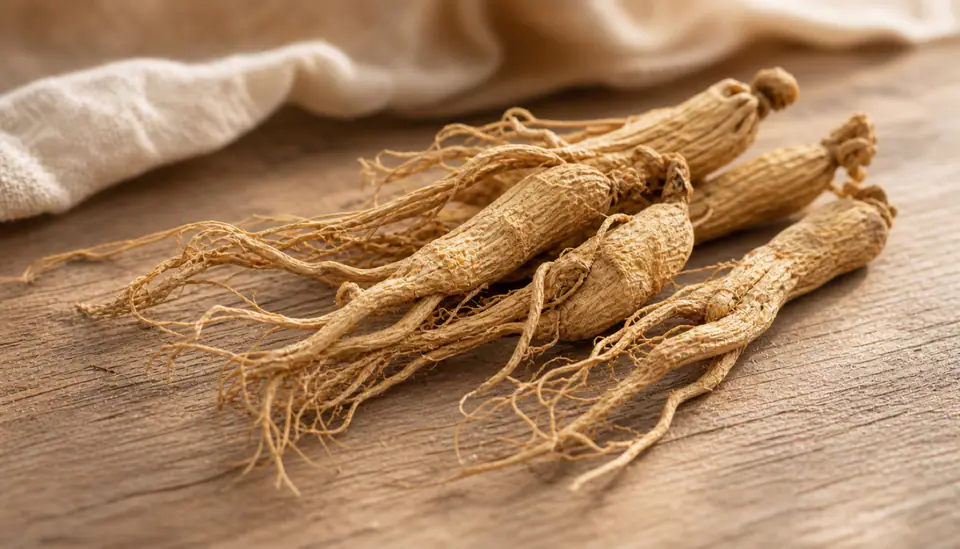
The King of All Herbs, the Foundation of Qi Tonification
The 《Shennong Bencao Jing》 records ginseng (人蔘) as "tonifying the five viscera, stabilizing the mind, settling the soul, brightening the ears, clearing the eyes, and greatly supplementing the original qi with long-term use," placing it in the 'Superior Grade.' This means it stabilizes the internal organs and mind, settles the spirit, improves hearing and vision, and significantly boosts vital energy over time. This classic text has served as the basis for the tradition of calling ginseng the "King of All Herbs" (百草之王). In other words, it was recognized not simply as a precious medicinal ingredient, but as the most fundamental herb for tonifying Qi (vital energy).
However, today ginseng is often narrowly known only as a "restorative tonic to take when physical strength drops." Many people seek out red ginseng, Gongjin-dan, or Gyeongok-go when fatigue accumulates. But ginseng is not a universal tonic that is always safe for everyone. Even the 《Dongui Bogam》 discusses ginseng in the context that "it is beneficial for those with abundant Qi but a deficient body, but it may actually be harmful to those with a constitution of excessive heat or Qi stagnation." Behind the comfort provided by the name 'restorative tonic' lies the hidden necessity of knowing exactly how this herb acts depending on the body's condition.
Therefore, ginseng is a medicinal herb where the dosage, the user, and the method of use are particularly important. At Baekrokdam Korean medicine clinic, when prescribing formulas containing ginseng, we examine the patient's Qi status, the presence of heat, the timing of intake, and the dosage. Rather than taking it unconditionally as a tonic, it is advisable to refer to the criteria provided on this page and receive a customized confirmation through a consultation.
Summary at a Glance
Ginseng is a representative herb for tonifying Qi and is one of the most widely known Korean herbal medicines from classical times to the present. The table below summarizes the identity and core characteristics of ginseng at a glance.
| Category | Content |
|---|---|
| Origin | Hanja Name 人蔘, Scientific Name Panax ginseng The roots of a perennial herb from the Araliaceae family, which has been harvested and cultivated for a long time in the cold regions of East Asia, including the Korean Peninsula, Manchuria, and the Primorsky region, are used medicinally. |
| Properties and Meridian Tropism | The taste is sweet and slightly bitter, and the property is warm. It primarily acts on the Spleen, Lung, and Heart meridians. |
| Representative Aliases | King of All Herbs (Baekchojiwang), Essence of Earth (Tojeong), Divine Herb (Shincho), Earthly Essence (Jijeong), etc. These names derive from the 'Superior Grade' record in the 《Shennong Bencao Jing》 and the description that it "stabilizes the five viscera and settles the mind." |
| Efficacy Recorded in Literature | The 《Shennong Bencao Jing》 records that it "tonifies the five viscera, stabilizes the mind, settles the soul, brightens the ears and eyes, and greatly supplements the original qi with long-term use", it was recognized as a medicinal herb that supports internal organs, stabilizes the spirit, and boosts vital energy over time. |
| Main Ingredients | Ginsenosides are known as the primary active components. |
| Combinations, Contraindications, and Precautions | Due to its nature of tonifying Qi, caution is required for those with strong heat, clear excess patterns (實證), or during the early stages of external contractions such as the common cold. When used concurrently with Western medicine, caution is necessary as potential interactions with warfarin, oral hypoglycemic agents, insulin, and phenelzine are mentioned academically. Use during pregnancy or lactation requires verification. Please inquire during your consultation. |
Is this medicinal herb right for me?
While ginseng is a representative herb for tonifying Qi, it is not a universal tonic that provides the same effect for everyone. Depending on the constitution, symptoms, and concurrently taken medications, it may be appropriate or may instead place a burden on the body. Please check the following three criteria first.
- Generally suitable cases: It may be appropriate for those who generally lack energy, tire easily, or lead a lifestyle that consumes a lot of Qi, such as talking extensively or working while standing for long periods. Additionally, for those who have an appetite but become exhausted quickly after digestion, or those with a constitution that sweats excessively, it may be considered under a Korean medicine doctor's diagnosis.
- Cases requiring caution: You must consult a Korean medicine doctor if you have hypertension, diabetes, thyroid disease, insomnia, anxiety disorders, or are taking anticoagulants (warfarin), oral hypoglycemic agents, insulin, or MAOI-class antidepressants (e.g., phenelzine). Professional consultation is also required if you are pregnant, breastfeeding, or scheduled for surgery.
- Cases to avoid: It is best to avoid ginseng for those with an excess pattern (實證) characterized by high heat, a red face, and frequent constipation; those with acute febrile illnesses such as the common cold; and those intending to take high doses for long periods based on self-diagnosis. In particular, children and adolescents should not take it without a professional evaluation.
Practical Q&A
The Practical Q&A is a collection of questions most frequently asked in the consultation room, which are prone to misunderstanding if dismissed in one or two sentences. The answers below are general information; the decision regarding an individual's use, dosage, and duration must be determined through a consultation with a Korean medicine doctor.
Is ginseng a tonic that can be taken every day?
Just because ginseng is a 'Superior Grade' herb does not mean it is unconditionally good to take every day. The classical statement that 'long-term use supplements the original qi' assumes cases corresponding to a constitution and symptoms of Qi deficiency. Conversely, it can be a burden for those with excessive heat, weak digestive function, or those suffering from acute illnesses like the common cold. Verification is required. Please inquire during your consultation.
Can I take it together with Western medicine?
The Panax ginseng overview published in PubMed mentions that caution is needed when used concurrently with warfarin, oral hypoglycemic agents, insulin, and phenelzine. This is because ginseng may have effects related to blood glucose, blood coagulation, and neurotransmitters. Therefore, if you are currently taking Western medicine, it is safe to consult your attending medical staff before starting ginseng products.
What is the difference between red ginseng and fresh ginseng?
Red ginseng is made by steaming and drying fresh ginseng; it is traditionally distinguished as having a warmer property and an emphasized tonifying power. Fresh ginseng is known to have a relatively cooling energy, making it more suitable for Qi deficiency accompanied by heat. However, the appropriate form varies depending on the constitution and symptoms, so it is advisable to make a choice through a consultation with a Korean medicine doctor.
What happens if I take too much ginseng?
Verification is required. Please inquire during your consultation.
Can I take this while pregnant or breastfeeding?
Verification is required. Please inquire during your consultation.
Is it safe to consume ginseng as ginseng tea or in ginseng dishes?
Verification is required. Please inquire during your consultation.
Relationship with Other Medicinal Herbs (Yakdae/Pairing)
Ginseng's role becomes more distinct when used with other medicinal herbs rather than alone. When ginseng serves as the central axis for supplementing energy within a prescription, other herbs determine where that energy is directed and how it is utilized. In tradition, this combination where two or more herbs help or regulate each other's actions is called "Yakdae (medicinal pair)."
We would like to introduce representative examples from the prescriptions we currently provide where ginseng forms a core combination.
- Ginseng + Ophiopogon japonicus + Schisandra chinensis — Saengmaeksan: A prescription recorded in the "Naeoesangbyeonhwegnon," structured so that ginseng supplements qi (energy), Ophiopogon japonicus supplements body fluids, and Schisandra chinensis converges the energy. It has been traditionally used in states where both qi and body fluids are depleted due to heat or overwork.
- Ginseng + Astragalus membranaceus A representative medicinal pair that strengthens qi supplementation. Astragalus membranaceus boosts the qi of the body surface while ginseng supplements the qi of the internal organs, complementing each other; it is used based on the judgment of a Korean medicine doctor in cases where qi deficiency is evident.
- Ginseng + Coptis chinensis In a structure that supplements energy while clearing heat [often used together with licorice], ginseng supplements qi and Coptis chinensis clears heat. This is a combination traditionally considered for complex conditions where there is stomach heat but a lack of qi.
The effects of ginseng vary greatly depending on the combination. Even with the same ginseng, if used with Ophiopogon japonicus and Schisandra chinensis, it tends toward supplementing body fluids; if used with Astragalus membranaceus, it tends toward boosting the qi of the body surface. Therefore, rather than taking ginseng alone, it is important to consult with a Korean medicine doctor regarding which herbs it is paired with in a prescription that suits your constitution and symptoms.
In what form is it consumed?
The intensity of the effect and the appropriate situation for ginseng vary depending on its form. We will explain the different methods, from light daily use to intensive use according to a Korean medicine doctor's prescription.
- Drinking as tea A form where thinly sliced ginseng is steeped in hot water. It can be used daily when you want to lightly boost your energy, but since the taste is strong and it may increase body heat, it is recommended to check if it suits your constitution.
- Consumption as food A form where ginseng is cooked with honey, jujubes, chicken, etc. It is frequently used in traditional health-boosting or restorative dishes; as it is closer to a food than a medicinal herb, it is used for long-term, light supplementation.
- Consumption as a decoction (boiled herbal tea) A form where several medicinal herbs, including ginseng prescribed at a Korean medicine clinic, are boiled in water and taken at once. This is the traditional method of administration that utilizes the efficacy of ginseng most intensively, and it is combined with other herbs according to symptoms and constitution.
- Self-administration, Not common While ginseng is a representative herb for supplementing energy, it is not a universal tonic that provides the same effect for everyone. Depending on the constitution, symptoms, and other medications taken, it may be appropriate or may instead be a burden; therefore, long-term or high-dose administration without consultation with a Korean medicine doctor is not recommended.
Interactions and Safety During Use
Ginseng is a representative herb for supplementing energy, but because of this, it can produce unexpected effects when combined with other medications or certain physical conditions. Especially for those taking Western medicine or those with chronic diseases, it is important to check specific precautions first rather than assuming it is fine because it is "natural."
- Concurrent use with anticoagulants (such as Warfarin) Academic concerns have been raised that ginseng may affect the action of anticoagulants such as warfarin. If you are undergoing antithrombotic or anticoagulant treatment, it is safe to consult your prescribing physician before starting ginseng products.
- Concurrent use with oral hypoglycemic agents or insulin Since ginseng is known to exhibit effects related to blood glucose control, there is a possibility that blood glucose levels may become excessively low when used with diabetes medication or insulin. If you are being treated for diabetes, please coordinate the dosage and timing of intake with your medical staff.
- Concurrent use with MAO inhibitors (e.g., phenelzine) Potential interactions have been reported when ginseng is used with certain psychiatric medications, particularly MAO inhibitors. If you are receiving a prescription from a psychiatry department, consultation is required before concurrent use.
- General precautions for intake While ginseng is generally well-tolerated, gastric discomfort, insomnia, headache, or blood pressure fluctuations may occur on an empty stomach or in those with sensitive gastrointestinal tracts. When starting for the first time, it is recommended to begin with a small amount during the daytime and stop if any adverse reactions occur.
The above information covers some of the academically confirmed interactions and may vary depending on the medications an individual is taking, their health condition, the type of ginseng (Red Ginseng, White Ginseng, Taegeuk Ginseng, etc.), and the formulation. If you are starting ginseng for the first time or plan to take it with your current medications, please make a decision after consulting with Baekrokdam Korean medicine clinic.
If you experience these symptoms
This section summarizes signals that may appear while taking ginseng. When ginseng does not suit your body or when the burden increases due to excessive or long-term use, the body often sends specific messages. If such signals appear, it is important to notify the prescribing Korean medicine doctor first rather than adjusting the dose yourself or pausing use temporarily. Especially if you are taking Western medications or have cardiovascular, diabetes, or blood pressure-related diseases, it is safe not to overlook even small changes.
- Headache, insomnia, nervousness Due to the energy-boosting properties of ginseng, if taken in a state that does not suit you, it may increase tension instead of clearing the mind. If shallow sleep or a feeling of heart palpitations persists, stop intake and consult a professional.
- Indigestion, abdominal discomfort, diarrhea/constipation For those with sensitive gastrointestinal tracts, ginseng may irritate the stomach, leading to bloating, diarrhea, or constipation. If these symptoms occur especially when taken on an empty stomach, the timing and form of intake must be coordinated.
- Feeling of increased blood pressure, facial flushing, heat sensation While ginseng supplements energy, it can stimulate heat-prone tendencies in some constitutions. If facial flushing, a feeling of rising blood pressure, or palpitations recur, stop intake and seek verification.
- Hypoglycemic reactions (dizziness, sweating, extreme hunger) Since ginseng can affect blood glucose control, hypoglycemic reactions may occur when taken with diabetes medication or insulin. If dizziness, sweating, extreme hunger, or blurred vision occurs, stop intake immediately and visit a medical institution.
- Bleeding tendency (gum bleeding, easy bruising, nosebleeds) When used concurrently with anticoagulants (such as warfarin), ginseng may increase the risk of bleeding. If you bruise more easily than usual or experience bleeding from the gums or nose, notify an emergency medical institution or your attending medical staff immediately.
- Menstrual changes, breast pain In some women, ginseng may cause hormone-related reactions, leading to changes in the menstrual cycle or breast edema and pain. If these persist, stop intake and consult a professional.
If even one adverse reaction appears, please contact the prescribing Korean medicine doctor or the medical staff who prescribed your concurrent medications first, rather than continuing by 'slightly reducing' the ginseng dose. Especially if you are taking anticoagulants, diabetes medication, insulin, or MAO inhibitors (e.g., phenelzine), or if you are pregnant or breastfeeding, consultation with medical staff after stopping intake is necessary even for mild symptoms. If accompanied by severe headache, difficulty breathing, chest pain, decreased consciousness, or persistent bleeding, visit an emergency medical institution (119 or the nearest emergency room).
Differences from other restorative medicines
The difference between various restorative medicines is not simply a matter of "which one is better," but a matter of distinguishing how they act on different constitutions and conditions. Ginseng is a medicinal herb focused on supplementing energy and boosting vitality. Traditionally, restorative medicines such as Gongjindan or Gyeongokgo are also related to energy supplementation, but their compositions and purposes differ.
Gongjindan is known as a prescription used to raise overall energy by complexly blending several precious medicinal herbs. Gyeongokgo places more weight on supplementing blood (Bo-hyeol) and bodily fluids, and can be understood as being tailored for those who are frail, thin, and have a poor complexion. In contrast, ginseng itself is rarely used alone; rather, it serves to strengthen the foundation of energy together with other medicinal herbs within a prescription.
Therefore, when deciding between "taking ginseng or Gongjindan," you should not consider only the name or price, but first determine whether your body is currently deficient in energy (Qi), deficient in blood and fluids, or facing other issues. This distinction is best made through an examination and medical interview by a doctor of Korean medicine. We recommend deciding which restorative herbal medicine is more suitable for you through a professional consultation.
References
- Evidence material related to ginseng 1: PubMed academic paper.
- Evidence material related to ginseng 2: PubMed academic paper.
- Evidence material related to ginseng 3: PubMed academic paper.
- Evidence material related to ginseng 4: GBIF plant classification data.
If you would like to check if this medicinal herb is right for you or which prescription it should be used with, please leave a medical inquiry. For those who find it difficult to visit the clinic, non-face-to-face consultations are available; we will provide guidance after first reviewing your current condition and current medications.

Medical Staff Review
Director Choi Yeon-seung
Chief Director of Baekrokdam Korean Medicine ClinicGinseng Dictionary Entry, reviewed the safety of expressions and the scope of verification before administration.
Review Scope: Clinical Accuracy, Pharmacology, Contraindications, Combinations, QA · Last Reviewed 2026-08-16
- Graduated from Kyung Hee University College of Korean Medicine
- Providing Korean medicine treatment since 2010
- Consultations for Gongjindan, Gyeongokgo, Nokyong (Deer Antler) restorative medicine, and customized restorative herbal medicine