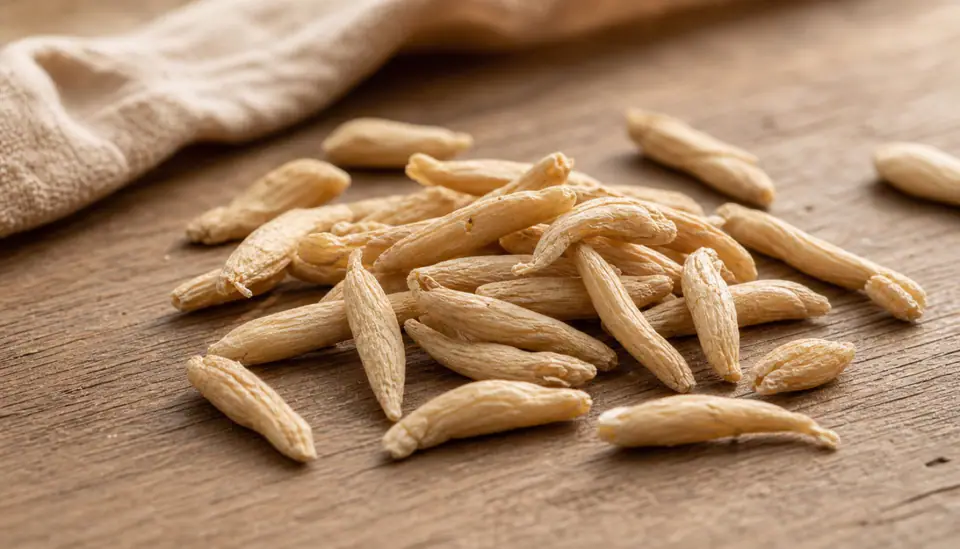
Bulsayak (The Elixir of Immortality), the root that moistens dry mist
According to the Bencao Gangmu, Ophiopogon japonicus (Maekmundong) is known by the alias 'Bulsayak' (The Elixir of Immortality). Rather than being a mystical herb that extends life, this nickname likely stems from its ability to prevent the depletion of 'Yin' and 'Jin-yeok' (body fluids) within the body. The Dongui Bogam describes its properties as 'slightly cold, sweet in taste, and non-toxic,' noting that it is primarily used for 'heat caused by deficiency and exhaustion, and dryness and thirst of the mouth,' and is effective for 'nourishing the heart, clearing the lungs, calming the spirit, and stabilizing the pulse energy.' In other words, this medicinal herb has played a role in managing dryness and heat across three meridians: the lungs, stomach, and heart.
When thinking of Maekmundong, it is easy to have a simplistic image of it as a 'cough medicine' or a 'herb good for the lungs.' However, its actual application in classical texts is more sophisticated. Maekmundong-tang from the Jingui Yaolue consists of Maekmundong, Pinellia, Ginseng, Licorice, Jujube, and polished rice, and is used for 'upward reversal of fire and qi, and discomfort in the throat', symptoms where the throat feels dry and energy feels as if it is refluxing. Here, Maekmundong is not simply a drug to stop coughing, but the central axis of a prescription that restores damaged body fluids and manages the 'fire' of the lungs and stomach simultaneously. What the name 'Bulsayak' refers to is not eternal life, but the persistence with which it protects the body from drying out.
However, this 'moistening power' does not act the same for everyone. Because Maekmundong is slightly cold, sweet, and has adhesive properties, it may be burdensome for those with excessive 'dampness' in the body or sluggish gastrointestinal function. Its efficacy is determined by the criteria of how much to use, what to combine it with, and how long to use it. On this page, we will guide you step-by-step through which prescriptions Maekmundong is used in, what role it plays, and in which cases caution is required.
Summary at a Glance
Maekmundong is not as complex as its name suggests. The core is that it is 'a Yin-nourishing herb that manages both dryness and heat.' The table below summarizes where this herb comes from, its properties, and when it is used.
| Category | Content |
|---|---|
| Origin | Hanja Name 麥門冬, Scientific Name Ophiopogon japonicus (Ophiopogon japonicus) and Liriope platyphylla the root tuber of (Ophiopogon japonicus · Ophiopogon planiscapus) (Liliaceae) |
| Properties and Meridian Tropism | Slightly cold, Sweet, Non-toxic, acts on the Heart, Lung, and Stomach meridians |
| Representative Aliases | Bulsayak, Uyeoryang, Chondong, Hangchondong, Maekdong |
| Efficacy Recorded in Literature | Nourishing Yin and moistening the lungs, benefiting the stomach and generating fluids, clearing the heart and removing irritability |
| Main Ingredients | Saponins such as ruscogenin and ophiopogonin; polysaccharides; flavonoids |
| Combinations, Contraindications, and Precautions | Suitable for cases of Yin deficiency and damage to body fluids in the lungs, stomach, and heart. It must be distinguished based on constitution and symptoms from tonic medicines that nourish Yang or Yin. Caution is required for those with clear Spleen/Stomach deficiency or cold symptoms, or those with frequent diarrhea. Since potential interactions related to the CYP3A4 metabolic enzyme have been reported when used with conventional medicine, please inform us of any medications you are currently taking during your consultation. |
Is this medicinal herb right for me?
While Maekmundong is a herb that manages both dryness and heat, it may be appropriate or require caution depending on your body's condition. Please check the following three criteria first.
- Generally suitable casesSuitable: Those who frequently experience dryness in the throat or mouth, have a dry cough, have difficulty falling asleep at night, or feel chest tightness. It is also traditionally used in common situations where strength and hydration have dropped following a high-fever illness.
- Cases requiring cautionCaution: For those whose stomach is cold and digestion is always slow, or those with frequent diarrhea or loose stools, the slightly cold nature of Maekmundong may aggravate symptoms. Additionally, if you are taking conventional medicine or are pregnant/breastfeeding, you must consult a Korean medicine doctor due to potential interactions with the CYP3A4 metabolic enzyme.
- Cases to avoidUnsuitable: For those whose body is cold and not lacking in body fluids, or those with excessive damp-phlegm resulting in sticky sputum and a feeling of suffocation, Maekmundong may instead leave a feeling of congestion. It is also not suitable for the early stages of a cold caused by wind-cold, characterized by shivering and a cough without sweat.
These criteria are only the first step in distinguishing individual constitutions and symptoms. Prescriptions containing Maekmundong, such as Maekmundong-tang, often use several herbs together; therefore, it is safer to receive a prescription under the diagnosis of a Korean medicine doctor rather than taking it alone.
Practical Q&A
We have collected frequently asked questions about Maekmundong from the clinic. The answers below are for general information and may vary depending on individual constitution or medications being taken. Please ensure you consult a Korean medicine doctor before deciding on a Korean herbal medicine prescription.
Is Maekmundong a cough medicine?
It is used for coughs, but it is not a herb used for 'all coughs.' Maekmundong is traditionally used for dry coughs caused by a deficiency of 'Yin' and 'body fluids' in the lungs, or coughs where sputum is sticky or the throat feels constricted. It may not be suitable for wet coughs in the early stages of a cold or coughs accompanied by chills.
What kind of prescription is Maekmundong-tang?
Maekmundong-tang is a representative prescription with Maekmundong as the chief herb. In the traditions of the Dongui Bogam and Jingui Yaolue, it is known to be used for lung atrophy accompanied by throat discomfort and deficiency heat, as well as dry coughs. Currently, Maekmundong-tang preparations are listed as over-the-counter medicines in the Ministry of Food and Drug Safety's integrated drug information system.
Can I use Maekmundong if I have a weak stomach?
Maekmundong is a herb that also acts on the stomach, but because it is slightly cold and contains mucilaginous components, caution is needed for those with a cold stomach and frequent diarrhea, or those with a weak Spleen/Stomach constitution. In such cases, it is common to use it according to the intended purpose within a prescription combined with herbs like Pinellia, Licorice, and Jujube, rather than taking it alone.
Can I take this along with Western medicine?
It has been academically reported that Ophiopogon japonicus (Maekmundong) may induce the CYP3A4 enzyme. When taken with Western medicines metabolized by this enzyme, such as immunosuppressants, statins, and benzodiazepines, potential interactions should be kept in mind. However, as clinical interaction data is still insufficient, please consult a Korean medicine doctor to decide whether to use these medications concurrently.
Does Ophiopogon japonicus help with diabetes?
Animal studies have reported the potential for blood glucose control and improvement of insulin resistance, but evidence for human application is limited. For those with diabetes, it is advisable to comprehensively consult on Korean herbal medicine prescriptions alongside diet, exercise, and Western medicine management.
Can it be used during pregnancy or breastfeeding?
Safety data regarding the use of Ophiopogon japonicus during pregnancy and lactation has not been sufficiently confirmed in research. During this period, please inform your Korean medicine doctor of your current status and leave the decision on whether to take it and the dosage to professional judgment.
Relationship with Other Medicinal Herbs (Yakdae/Pairing)
Ophiopogon japonicus is rarely used alone. Its utility becomes clear only when paired with other medicinal herbs within a single prescription, a practice traditionally called "Yakdae." Because Ophiopogon japonicus has strong properties for supplementing Yin and generating body fluids (Jin-yeok), it is frequently paired with other herbs to treat dryness and heat in the lungs and stomach. Here are some representative combinations.
-
Ophiopogon japonicus + Pinellia + Ginseng + Licorice + Jujube + Non-glutinous Rice, Maekmundong-tang This is a representative prescription found in the Geumgwe-yoryak and Shanghanlun lineages. Ophiopogon japonicus treats dryness and deficiency heat in the lungs, Pinellia lowers the energy (Qi), and Ginseng, Licorice, Jujube, and Non-glutinous Rice supplement the energy of the stomach and lungs. The Dongui Bogam cites this prescription for application in cases of "Lung-metal receiving evil during the six Wu-year He-xi period." Dongui Bogam, Miscellaneous Diseases Section,
km-dongui-jabyeong-1::sec-002-02 -
Ophiopogon japonicus + Coptis Rhizome, Bogye-bang Throat Sore Prescription This is a prescription where 1 liang of Ophiopogon japonicus and half a liang of Coptis Rhizome are bound with refined honey to make pills. It is a traditional combination used to treat sores caused by heat and dryness in the throat. Bogye-bang,
km-theqi-oldbook-book114::sec-040-05 -
Ophiopogon japonicus + Raw Rehmannia Root, Bencao Gangmu Blood Deficiency Prescription for Men and Women This is a prescription where the juices of Ophiopogon japonicus and Raw Rehmannia Root are collected together, concentrated, and mixed with honey to make a syrup (膏). It has been traditionally used to supplement states where Yin-blood becomes deficient. Bencao Gangmu,
km-theqi-oldbook-book132::sec-027-06 -
Ophiopogon japonicus + Roasted Licorice + Non-glutinous Rice + Jujube + Bamboo Leaf, Bencao Gangmu Exhaustion (Labor Qi) Prescription This is a prescription that adds 2 liang of roasted licorice, half a hap of non-glutinous rice, 2 jujubes, and 15 pieces of bamboo leaf to 1 liang of Ophiopogon japonicus to treat a state where energy feels as if it is breaking due to deficiency and exhaustion. Bencao Gangmu,
km-theqi-oldbook-book132::sec-027-06
A point of caution when combining is that Ophiopogon japonicus has a slightly cold nature and a sticky quality that seems to hold moisture. Therefore, for those with a cold stomach constitution or those with slow digestion due to excessive phlegm-dampness (Dam-seup), it is considered better to use it with warming and drying herbs rather than using it alone or in excess. Please determine the specific combination and dosage after consulting with your attending Korean medicine doctor.
In what form is it consumed?
Traditionally, Ophiopogon japonicus is most commonly consumed as a decoction boiled in water. In modern times, various formulations have been developed for more convenient use, but the foundation still lies in the forms prescribed at a Korean medicine clinic. We have summarized four forms below.
- Tea Forms of boiling and drinking Ophiopogon japonicus alone or with Raw Rehmannia Root and Lycium Bark are common in classical texts. For example, the Bogye-bang contains records of using Ophiopogon japonicus in raw juice form or decocted with other herbs for wasting-thirst (Sogal) or bone-steaming (Gol-jeung). However, 'Maekmundong tea' products generally sold in supermarkets may differ from pharmacological standards and are more appropriate as beverages for symptom relief.
- Food Although Ophiopogon japonicus is an edible medicinal herb, it is not common in Korea to include it in everyday home meals. From the perspective of herbal medicine, it has properties that supplement body fluids (Jin-yeok), so it has been used more frequently for medicinal purposes traditionally.
- Decoction This is the most traditional and common form. Like Maekmundong-tang from the Shanghanlun and Geumgwe-yoryak lineages, Ophiopogon japonicus is decocted in water with Pinellia, Ginseng, Licorice, Jujube, and Non-glutinous Rice. Currently, over-the-counter medicines such as granules and extract granules based on Maekmundong-tang are listed in the Ministry of Food and Drug Safety's integrated drug information system.
- Professional Prescription Ophiopogon japonicus is a medicinal herb frequently used in prescriptions that treat dryness and heat in the lungs, stomach, and heart. Depending on the individual's constitution and symptoms, a Korean medicine doctor adjusts the combination and dosage in various prescriptions beyond Maekmundong-tang. It is safer to receive a prescription through a Korean medicine clinic visit rather than self-administering.
Interactions and Safety During Use
Ophiopogon japonicus is a medicinal herb with strong properties for supplementing Yin and generating body fluids. Thus, it is used to treat 'dryness' and 'heat' within the body, but since it also affects the flow of moisture and heat, caution is required depending on the administration context.
- For those with a weak stomach or poor digestion: Ophiopogon japonicus (Maekmundong) has a slightly cold nature and is viscous, which may be burdensome for individuals with a cold stomach or poor digestion. Those who experience frequent diarrhea or stomach discomfort after eating cold foods should consult a Korean medicine doctor.
- During the early stages of a cold or when heat needs to be released from the body: In the early stages of a cold characterized by shivering, chills, and the need for heat to be released from the body surface, Ophiopogon japonicus, which supplements Yin, may cause heat to remain inside the body and is therefore not appropriate.
- Caution when taking Western medications concurrently: In academic papers, Ophiopogon japonicusthe possibility that it may affect CYP3A4 enzyme activity has been reported. If you are taking Western medications metabolized via CYP3A4, please be sure to inform your Korean medicine doctor before receiving a herbal medicine prescription.
- Pregnancy, Lactation, and Children: Sufficient clinical safety data for these groups has not been confirmed. In such cases, it is safest to decide whether to take the medicine after consulting with a Korean medicine doctor.
Although Ophiopogon japonicus is a natural medicinal herb, the dosage, the patient, and the duration of use are important. Please inform your practitioner during your consultation if you experience any abnormal symptoms during use or if you are currently taking any Western medications.
If you experience these symptoms
If these symptoms appear
Ophiopogon japonicus has a strong property of supplementing Yin and generating body fluids, but this can be burdensome for those with weak stomach and digestive functions. If the following signals appear during use, it may suggest that your body is not adapting to the current prescription. In such cases, do not reduce the dose or stop the treatment on your own; please first notify the attending Korean medicine doctor who can adjust the prescription.
- Abdominal discomfort, slowed digestion, tendency toward diarrhea: The slightly cold nature of Ophiopogon japonicus may act excessively on those who already have weak gastrointestinal function.
- Nausea, vomiting, decreased appetite: These are signals that the movement and digestive function of the stomach may be affected.
- Increased dryness of the mouth or skin, or changes in weight or energy levels: Changes that occur opposite to the expected effect may require a re-evaluation of the prescription direction.
- Suspected allergic reactions such as hives, difficulty breathing, or facial swelling after use: This may be a hypersensitivity reaction to the medicinal herb; stop use immediately and consult a medical professional.
Particular caution regarding gastrointestinal function and electrolyte balance is required when taking Ophiopogon japonicus in high doses or for long periods. As it has been academically reported that Ophiopogon japonicus may affect the CYP3A4 metabolic enzyme, you must inform your Korean medicine doctor and pharmacist if you are concurrently taking Western medications that act through the same enzyme, such as immunosuppressants, statins, or benzodiazepines.
If symptoms are severe or accompanied by difficulty breathing, changes in consciousness, or severe abdominal pain and vomiting, please visit an emergency medical institution (emergency room).
Differences from other restorative medicines
Ophiopogon japonicus falls under the broad category of 'restorative medicine,' but its direction of action differs from Qi-tonifying medicines like Ginseng or Astragalus, which boost energy. It is closer to Yin-tonifying agents such as Gongjindan or Gyeongokgo. However, Ophiopogon japonicus as a single herb must be distinguished from completed Yin-tonifying thick extracts, as they differ in the scope of action and the purpose of the prescription.
Gongjindan or Gyeongokgo combine various Yin- and Blood-tonifying herbs to supplement overall body fluids and blood. Within these prescriptions, Ophiopogon japonicus often serves as a key component to treat dryness and heat in the lungs and stomach and to generate body fluids. Maekmundong-tang, cited in the Dongui Bogam, also uses Ophiopogon japonicus along with Ginseng, Licorice, Pinellia, Jujube, and non-glutinous rice; this structure addresses both the Yin and Qi of the lungs and stomach, rather than using Ophiopogon japonicus alone.
Therefore, whether Ophiopogon japonicus is needed or if a complex Yin-tonifying agent like Gongjindan or Gyeongokgo is more appropriate depends on whether the current state of the body is closer to a deficiency of Qi, a deficiency of Yin, or a deficiency of both. Ophiopogon japonicus tends to be considered first for those with accompanying dryness and heat, specifically those with a dry mouth and throat, chest tightness, and difficulty falling asleep at night. It is advisable to make an accurate determination through examination and consultation with a Korean medicine doctor.
References
- Evidence materials related to Ophiopogon japonicus 1: Crude drug data from the National Institute of Food and Drug Safety Evaluation.
- Supporting evidence for Ophiopogon japonicus 2: Official data from the Ministry of Food and Drug Safety.
- Supporting evidence for Ophiopogon japonicus 3: NCBI original academic data.
- Supporting evidence for Ophiopogon japonicus 4: Korea Institute of Korean Medicine official data.
- Supporting evidence for Ophiopogon japonicus 5: Korea Institute of Korean Medicine official data.
- Supporting evidence for Ophiopogon japonicus 6: Official data from the Ministry of Food and Drug Safety.
- Supporting evidence for Ophiopogon japonicus 7: GBIF plant classification data.
- Supporting evidence for Ophiopogon japonicus 8: Korea Citation Index academic paper.
If you would like to check if this medicinal herb is right for you or which prescription it should be used with, please leave a medical inquiry. For those who find it difficult to visit the clinic, non-face-to-face consultations are available; we will provide guidance after first reviewing your current condition and current medications.

Medical Staff Review
Director Choi Yeon-seung
Chief Director of Baekrokdam Korean Medicine ClinicOphiopogon japonicus Dictionary Entry, reviewed the safety of expressions and the scope of verification before administration.
Review Scope: Clinical Accuracy, Pharmacology, Contraindications, Combinations, QA · Last Reviewed 2026-08-16
- Graduated from Kyung Hee University College of Korean Medicine
- Providing Korean medicine treatment since 2010
- Consultations for Gongjindan, Gyeongokgo, Nokyong (Deer Antler) restorative medicine, and customized restorative herbal medicine