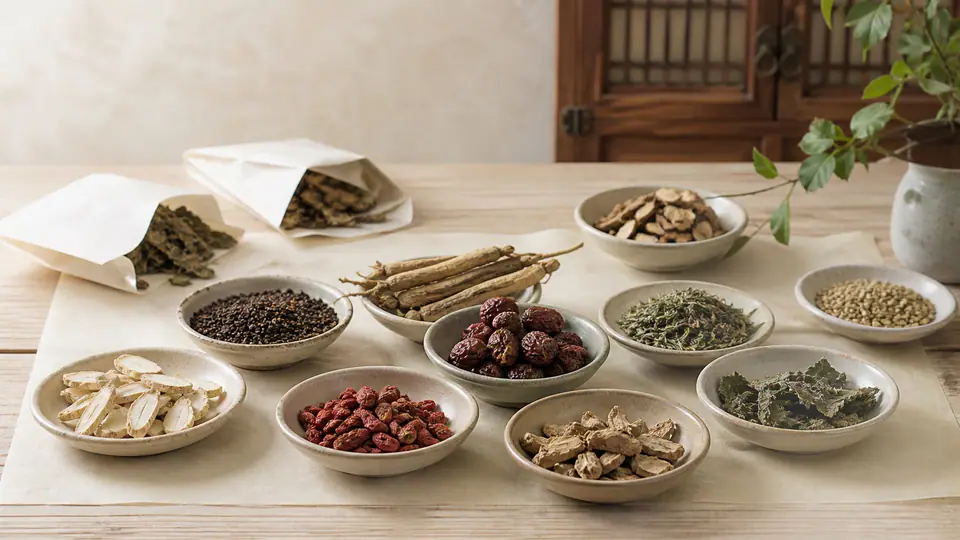
Okbyeong (Jade Screen), the herb that builds the body's wall
The Internal Medicine section of the Dongui Bogam contains a small prescription called 'Okbyeongpung-san (Jade Screen Wind Powder)'. It is a prescription where one root of Baekchul (Atractylodes macrocephala) is combined with Bangpung (Saposhnikovia divaricata) and Hwanggi (Astragalus membranaceus) and decocted in water. The term 'Okbyeong' in the name refers to a screen made of jade. Just as a screen made of precious jade shields and protects a house, this prescription was used to treat the body's surface in people who sweat spontaneously due to a deficiency in the Pyo (exterior). The original text cited in Dansim is as follows: “治表虛自汗 白朮二錢半 防風黃芪各一錢二分 右剉作一貼 水煎服 防風黃芪實表氣 白朮燥內濕 所以有效.” It explains that Bangpung and Hwanggi strengthen the exterior energy, while Baekchul dries the internal dampness, making it effective. Here, Hwanggi serves as one of the main supports of the prescription, taking on the role of building the body's outer wall.
Many people often think of Hwanggi as a 'restorative medicine that boosts immunity.' However, in classical texts, the primary use of Hwanggi is much more specific than the abstract image of a 'restorative that makes one stronger.' It was used to treat states where energy leaks outward, such as when sweat does not dry or when the exterior of the body is weak and cannot withstand the wind. The term 'tonify' (bo-hada) does not simply mean boosting strength. The key to using Hwanggi is first examining where the energy is leaking and in which direction the energy should be gathered.
Therefore, the role of Hwanggi becomes clearer when it is paired with other medicinal herbs rather than taken alone. As it is used with Baekchul and Bangpung in Okbyeongpung-san, Hwanggi is an herb that sets the direction for gathering energy and strengthening the exterior within a prescription. However, this directionality also serves as a precaution. In cases where there is heat on the surface, blocked energy, or specific diseases, Hwanggi may instead push the energy further up and increase discomfort. Thus, when using Hwanggi, 'how much, with whom, and for how long' is important, and that is exactly the criteria covered on this page.
Summary at a Glance
If you would like to quickly understand what kind of herb Hwanggi is, please refer to the table below first. We have summarized everything from its core identity to its uses recorded in traditional literature and precautions at a glance.
| Category | Content |
|---|---|
| Origin | Hanja name 黃芪, Scientific name Astragalus membranaceus. This is a herbal medicine listed in the Korean Pharmacopoeia and the Korean Herbal Pharmacopoeia (Crude Drugs) Standard. It can be verified in the Korea Institute of Oriental Medicine's OASIS and the Ministry of Food and Drug Safety's Herbal Medicine Quality Control Guide. |
| Properties and Meridian Tropism | Verification required. Please inquire during your consultation. |
| Representative Aliases | Verification required. Please inquire during your consultation. |
| Efficacy Recorded in Literature | In Okbyeongpung-san from the Internal Medicine section of the Dongui Bogam, it was used to treat spontaneous sweating due to exterior deficiency, and it is recorded that Hwanggi and Bangpung strengthen the exterior energy. |
| Main Ingredients | Verification required. Please inquire during your consultation. |
| Combinations, Contraindications, and Precautions | When used with restorative medicines for tonifying Yang or Yin, the combination must be adjusted according to the individual's constitution and symptoms. Caution is required for standalone use in states where heat is strongly concentrated or where infectious febrile symptoms are evident. |
Is this medicinal herb right for me?
Hwanggi is an herb that tonifies energy and supports the exterior defense; it has traditionally been used to treat exterior deficiency or chronic Qi deficiency (Gi-heo). However, it is not an herb that fits everyone with the same intensity. Depending on the constitution, symptoms, and other herbs used together, there are appropriate cases and cases to avoid. The criteria below are summarized based on the prescription context and traditional usage found in the Dongui Bogam.
- Generally suitable casesTraditionally considered for those who fatigue easily and lose energy, those who sweat spontaneously in large amounts, and those who recover slowly after a cold. Prescriptions such as Okbyeongpung-san or Bowon-tang from the Dongui Bogam are used in this context.
- Cases requiring cautionHwanggi may instead exacerbate symptoms in cases of high heat, when the body is damp and accompanied by heat during the early stages of a cold, or when there is digestive discomfort and abdominal swelling. Additionally, if you are pregnant or taking Western medication, consultation with a Korean medicine doctor is required before use.
- Cases to avoidThose with febrile diseases, exterior symptoms in the early stages of a cold (shivering and fever), severe damp-heat, or excess patterns (Sil-jeung) such as a hard, swollen abdomen should avoid using Hwanggi. The Dongui Bogam also guides that it is important to distinguish between deficiency patterns (Heo-jeung) and excess patterns when using Hwanggi.
Practical Q&A
We have collected frequently asked questions about Hwanggi from the clinic. The answers below are general guides and may vary depending on individual constitution or medical history; therefore, please ensure you determine the appropriate usage for yourself after consulting with a Korean medicine doctor.
In what cases is Hwanggi most commonly used?
Traditionally, Hwanggi has been used as an herb to tonify Qi and strengthen the exterior. Okbyeongpung-san, listed in the Internal Medicine section of the Dongui Bogam, is a representative prescription for treating spontaneous sweating due to exterior deficiency. It is structured so that Bangpung and Hwanggi reinforce the exterior energy, while Baekchul dries the internal dampness.
Can I drink Hwanggi as a tea every day?
Hwanggi is part of a prescription and is a medicinal herb used according to an individual's constitution and condition. Rather than viewing it as a restorative that is good for anyone to take daily, it is appropriate to decide based on the current state of the body and the combination with other herbs. Specific criteria for long-term use or daily tea consumption require verification. Please inquire during your consultation.
What is the difference between Hwanggi and Ginseng?
Both Hwanggi and Ginseng are known as herbs that tonify Qi, but their directions of action differ. Hwanggi is strong in strengthening the exterior and stopping sweat, while Ginseng tends to be used for tonifying the Qi of the five viscera and treating severe exhaustion. Bowon-tang, listed in the Miscellaneous Diseases section of the Dongui Bogam, is a prescription that uses both Hwanggi and Ginseng together to treat blue diarrhea caused by Man-gyeong-pung (chronic wind).
What should I be careful about when using Astragalus (Hwanggi)?
Astragalus tends to raise energy (Qi) and strengthen the exterior (surface) of the body, so it may not be suitable if there is a strong presence of heat rising or if an exterior pathogen has not yet been resolved. Additionally, if you are pregnant, breastfeeding, or taking Western medications, potential interactions must be considered. Official standards regarding specific contraindications or duration of use need to be verified. Please inquire during your consultation.
Which medicinal herbs pair well with Astragalus?
According to the Dongui Bogam, prescriptions where Astragalus forms a core combination include those with Atractylodes and Saposhnikovia (Okbyeongpung-san), Ginseng and Licorice (Bowon-tang), and Cinnamon twig, White Peony root, and Licorice (Gyeji-hwanggi-tang). As such, Astragalus is often paired with other Qi-tonifying herbs or herbs that manage the exterior. However, the specific combination suited to an individual's condition must be determined by a doctor of Korean medicine.
Does taking Astragalus reduce sweating?
The original text of Okbyeongpung-san states, "Saposhnikovia and Astragalus strengthen the exterior Qi, and Atractylodes dries internal dampness, which is why it is effective." In other words, it is recorded that Saposhnikovia and Astragalus reinforce the exterior energy while Atractylodes dries internal dampness to manage sweating. However, since the causes of sweating vary, it cannot be concluded that Astragalus is always the correct solution. An accurate determination is made through a consultation.
Relationship with Other Medicinal Herbs (Yakdae/Pairing)
Astragalus is not used alone. Its application becomes clearer when paired with other herbs, a concept referred to in tradition as "Yak-dae" (medicinal pairs). In particular, as an energy-tonifying herb, Astragalus has been used alongside Saposhnikovia, Atractylodes, Ginseng, Cinnamon twig, and Licorice to strengthen the exterior (surface) or treat Qi deficiency. Below are representative combinations identified in traditional literature.
- Astragalus + Saposhnikovia + Atractylodes Okbyeongpung-san: A prescription found in the Naegyeong section of the Dongui Bogam, traditionally used for cases where spontaneous sweating occurs due to exterior deficiency. It is structured so that Saposhnikovia and Astragalus protect the exterior energy, while Atractylodes dries internal dampness.
- Astragalus + Ginseng + Licorice Bowon-tang: A prescription found in the Japbyeong-3 section of the Dongui Bogam, a combination where Astragalus and Ginseng tonify energy and roasted licorice harmonizes them.
- Astragalus + Cinnamon twig + White Peony root + Licorice Gyeji-hwanggi-tang: A prescription found in the Japbyeong-2 section of the Dongui Bogam, traditionally used to treat yellow sweat (Hwang-han). The original text records a method of decocting and consuming it by mixing high-quality liquor and water.
- Astragalus + Licorice Hwanggi-yugil-tang: A prescription found in the Japbyeong-2 section of the Dongui Bogam, reported to be a combination of Astragalus and Licorice in a 6:1 ratio.
Direct records regarding combination contraindications were not found in this literature. Since the suitability of prescriptions containing Astragalus varies greatly depending on the individual's constitution, symptoms, and other accompanying herbs, it is safest to determine the specific combination and dosage after consulting with a doctor of Korean medicine.
In what form is it consumed?
Astragalus is most commonly used as a herbal medicine prescribed at a Korean medicine clinic and is relatively less familiar in the form of general food. Below is a summary of how it can be encountered in each form.
- Tea: Drinking Astragalus boiled alone has existed traditionally, but it is not common today. While the taste is mild and may have a slight licorice-like scent, it is far more common to combine it with other herbs to properly utilize the effects of Astragalus.
- Food: Astragalus is sometimes used as a health food in chicken soup (Samgye-tang) or porridge. There is a culture of adding Astragalus to Samgye-tang particularly for those with weak energy or during recovery, but this is strongly dietary supplementation and is distinct from taking it for therapeutic purposes.
- Decoction (Boiling): This is the most traditional and common form, where herbal medicine prescribed at a Korean medicine clinic is decocted in water. Most prescriptions containing Astragalus are taken this way.
- Professional Prescription: Representative prescriptions where Astragalus is a core component include Okbyeongpung-san, Bowon-tang, Gyeji-hwanggi-tang, and Hwanggi-yugil-tang. These prescriptions have been traditionally used in the contexts of exterior deficiency, Qi deficiency, yellow sweat, and Qi deficiency following a cold/fever, respectively.
Interactions and Safety During Use
Astragalus has long been used as a herb to tonify energy and support the exterior defense, but as with all medicinal herbs, caution is required depending on other medications used or the individual's condition. In particular, it is recommended to consult a doctor of Korean medicine before use in the following cases:
- If you are receiving immune-related treatment: Astragalus is frequently mentioned in relation to immune function. If you are taking immunosuppressants or receiving treatment for an autoimmune disease, it is essential to verify whether Astragalus aligns with your treatment direction.
- Taking anticoagulants or antiplatelet agents: If you have a tendency to bleed or are taking related medications, consultation with a specialist is recommended before taking Korean herbal medicine containing Astragalus.
- Before and after surgery: If you have a scheduled surgery or are recovering, it is safe to coordinate the start or discontinuation of restorative herbal medicines, including Astragalus, with your attending medical staff.
- During pregnancy or breastfeeding: There is insufficient official evidence in this section regarding the safety of Astragalus during pregnancy or breastfeeding. In such cases, please decide whether to take it only after consulting with a doctor of Korean medicine.
- Acute fever or early stage of infection: Astragalus, a medicinal herb that tonifies the exterior energy, may inadvertently push the pathogenic factor deeper into the body if used alone or in excess during the early stages when the external pathogen is still present. It may not be suitable for the early stages of a febrile cold or purulent infections, which correspond to so-called "excess patterns (Sil-jeung)."
The appropriate dosage and duration of Huanggi (Astragalus) and its specific interactions with other herbal medicines or Western medications depend on the individual's constitution, medical history, and current medications. The appropriate usage and precautions should be decided after consulting a Korean medicine doctor.
If you experience these symptoms
Astragalus has long been used as a medicinal herb to supplement energy and support the body's exterior defense. However, as with all medicinal herbs, the body may react unexpectedly depending on an individual's condition or other medications taken concurrently. The signals below are known cautionary signs that may appear while taking Astragalus. If these symptoms occur, it is safer to notify your attending doctor of Korean medicine for adjustment rather than reducing the dose or stopping on your own. Please observe more carefully if you are receiving immune-related treatment or taking other medications.
- If the face or body becomes red and you feel a sense of stuffiness: Astragalus is a medicinal herb with a tendency to raise energy; if it does not suit your constitution or is taken in excessive amounts or for a long period, a reaction such as a feeling of rising heat may occur.
- If the head feels heavy or a headache develops: Due to its property of raising energy, individuals who naturally have heat in the upper body or unstable blood pressure may experience related symptoms.
- If digestion slows down or the abdomen feels stuffy or bloated: Energy-tonifying medicinal herbs can place a burden on the gastrointestinal tract, which may lead to a loss of appetite or a feeling of indigestion after intake.
- If sleep becomes shallow or you feel restless: If taken late in the afternoon or if you have a sensitive constitution, the rising energy may make it difficult to fall asleep or cause a feeling of restlessness.
- If symptoms do not subside but rather worsen during the early stages of a cold or a febrile illness: While Astragalus works to strengthen the exterior (Pyo), it may not be appropriate when heat or toxins have already entered the body.
If symptoms are severe or accompanied by difficulty breathing, chest pain, severe headache, or a systemic rash, please visit an emergency medical institution immediately. Please determine the appropriate dose, duration of intake, and compatibility with other medicines only after consulting with a doctor of Korean medicine.
Differences from other restorative medicines
Astragalus falls under the broad category of 'energy-tonifying medicinal herbs,' but there are actually several branches even under the name of restorative medicine. Some supplement overall energy, some focus on specific organs, and others are intended for short-term intensive nourishment. Understanding where Astragalus fits among these will make it clearer when to choose this herb.
Astragalus has traditionally been used to strengthen the exterior (Pyo) and treat energy deficiency (Gi-heo)is a medicinal herb close to this. Looking at prescriptions introduced in the Dongui Bogam, such as Okbyeongpung-san, Bowon-tang, or Gyejihwanggi-tang, Astragalus is used alongside herbs like Saposhnikovia, Atractylodes, Ginseng, Cinnamon twig, and Licorice. It is positioned within a structure that simultaneously cares for the external defense and internal energy. Rather than a simple concept of 'supplementing because of a lack of strength,' it is used more in the direction of when the body's boundaries and internal energy are both deficient as a primary application.
The difference is even more distinct when compared to representative restorative medicines like Gongjin-dan or Gyeongok-go. Gongjin-dan is known for supplementing the original energy of the kidneys, and Gyeongok-go is a prescription focused on nourishing the yin of the lungs and kidneys. In contrast, Astragalus is more suitable for the aspect of Qi, specifically for lifting both the surface energy and the internal Middle Jiao (central digestive area) energy as a medicinal herb. Even under the same name of 'restorative medicine,' Astragalus has a relatively light and ascending property, making it useful for gradually boosting energy over a long period.
Another difference is that Astragalus is often paired with other herbs rather than used alone. While Gongjin-dan or Gyeongok-go are used as pre-completed complex prescriptions, Astragalus more frequently appears as a pillar of a prescriptionthat a Korean medicine doctor combines with Saposhnikovia, Atractylodes, Ginseng, or Cinnamon twig according to the patient's condition. Therefore, it is best to decide whether Astragalus is appropriate or if another restorative medicine is more suitable after evaluating the individual's constitution, current symptoms, and other issues that need to be addressed.
Ultimately, even under the broad umbrella of 'restorative medicine,' Astragalus is a medicinal herb that simultaneously cares for the boundaries and flow of energyand its functions. If you are confused about which restorative medicine you need, the safest approach is to consult a Korean medicine doctor to first check your energy state and the balance between the exterior and interior (pyo-ri).
References
- Astragalus evidence material 1: Supporting data from data.go.kr.
- Astragalus evidence material 2: Korea Institute of Korean Medicine official data.
- Astragalus evidence material 3: Crude drug data from the National Institute of Food and Drug Safety Evaluation.
If you would like to check if this medicinal herb is right for you or which prescription it should be used with, please leave a medical inquiry. For those who find it difficult to visit the clinic, non-face-to-face consultations are available; we will provide guidance after first reviewing your current condition and current medications.

Medical Staff Review
Director Choi Yeon-seung
Chief Director of Baekrokdam Korean Medicine ClinicAstragalus Dictionary Entry, reviewed the safety of expressions and the scope of verification before administration.
Review Scope: Clinical Accuracy, Pharmacology, Contraindications, Combinations, QA · Last Reviewed 2026-08-16
- Graduated from Kyung Hee University College of Korean Medicine
- Providing Korean medicine treatment since 2010
- Consultations for Gongjindan, Gyeongokgo, Nokyong (Deer Antler) restorative medicine, and customized restorative herbal medicine