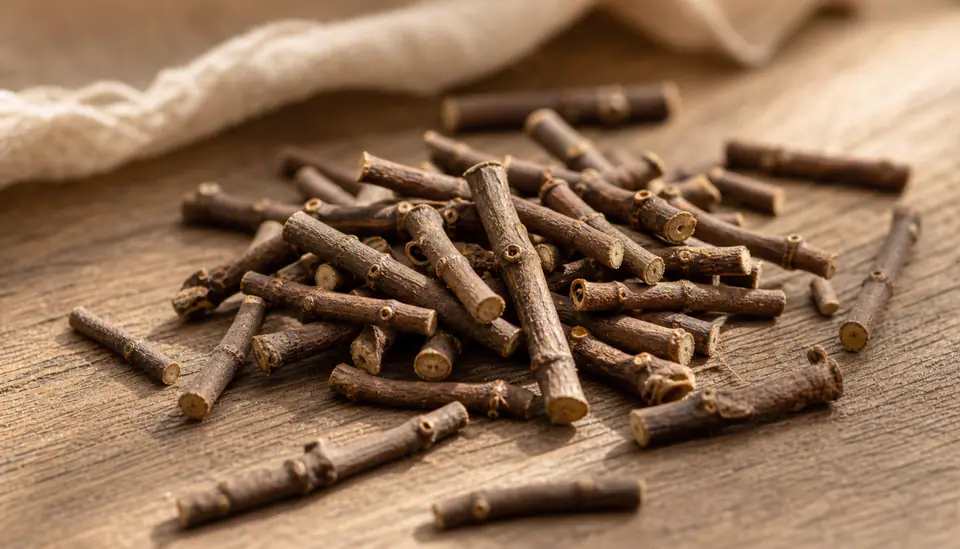
Haegun (解肌): The Key to Unlocking Yeong-wi
The first prescription in the 《Shanghanlun》 is Gyeji-tang (Cinnamon Twig Decoction). It is used when the exterior Qi of the Taiyang meridian is disrupted, specifically for symptoms where the patient sweats spontaneously, yet the fever persists and the body shivers. Because of this prescription, Gyeji (Cinnamon Twig) is often known as a 'synonym for cold medicine,' but the 《Bongyeongpungwon》 identifies the essence of Gyeji more accurately: “麻黃外發而祛寒,遍徹皮毛,故專於發汗。桂枝上行而散表,透達營衛,故能解肌。” While Mahwang (Ephedra) expels cold by inducing sweating, Gyeji ascends to release the exterior (Pyo) and helps the Yeong-gi (nutritive Qi) and Wi-gi (defensive Qi) flow together. 'Haegun', releasing the tension of the muscles, captures the true role of Gyeji.
However, if you remember this medicinal herb only as a 'medicine to induce sweating,' it is easy to miss an unexpected aspect. The 《Bongyeongpungwon》 also states: “世俗以傷寒無汗不得用桂枝者,非也。” It is a misconception that Gyeji should not be used for colds without sweating. Since Gyeji itself has a dispersing nature, being acrid, sweet, and slightly warm (Shin-gam-mi-on), it is included in Mahwang-tang and Gakgeun-tang. However, because Gyeji-tang as a whole is a combination of 'dispersion and convergence,' the prescription itself is simply not suitable for exterior excess patterns (Pyo-sil) without sweating. In other words, the contraindication lies with 'Gyeji-tang,' not 'Gyeji' itself.
As such, Gyeji is not a herb that shines alone, but one that finds its place when paired with other herbs. When paired with Jakyak (Peony), it harmonizes Yeong-wi; with Mahwang, it releases exterior cold; and with Buja (Aconite), it supports Yang-gi. The 《Boje-bang》 and 《Cheongeum-ik-bang》 list dozens of such modification methods. While its uses are broad, this versatility makes it even more important to determine 'for whom, with which prescription, and how much.' Below, we will guide you through the properties, combinations, and precautions of Gyeji step by step.
Summary at a Glance
Gyeji is the core ingredient of Gyeji-tang, the first prescription of the 《Shanghanlun》. Rather than being a simple 'cold medicine,' it plays a role in harmoniously connecting Yeong-gi (nutritive Qi) and Wi-gi (defensive Qi). The table below summarizes its origin, properties, main combinations, and precautions at a glance.
| Category | Content |
|---|---|
| Origin | Hanja Name 桂枝, Scientific Name Cinnamomum cassia (L.) J.Presl. It is a Korean herbal medicine made from the dried young twigs of the cinnamon tree. It is distinguished from Yukgye (Cinnamon Bark), which uses the bark from the same tree. |
| Properties and Meridian Tropism | Acrid, sweet, and slightly warm (Shin-gam-mi-on), non-toxic. According to the 《Bongyeongpungwon》, its primary meridian is the blood level of the Hand Shaoyin Heart Meridian, and it also travels through the Yangwei meridian. |
| Representative Aliases | The sovereign herb (Gun-yak) of Gyeji-tang, the first prescription of the 《Shanghanlun》. It is known as a representative herb for 'Haegun' (releasing muscle tension) and 'Johwa-yeong-wi' (harmonizing Yeong and Wi Qi). |
| Efficacy Recorded in Literature | 《Bongyeongpungwon》: “桂枝上行而散表,透達營衛,故能解肌” It releases the exterior (Pyo) and helps Yeong-wi flow. 《Taepyeong-seong-hye-bang》: Gyeji-tang is used for fever, chills, sweating, nasal congestion, and dry vomiting in Taiyang Wind-strike. |
| Main Ingredients | Volatile components such as cinnamaldehyde are receiving attention, and other components like syringaresinol have been academically reported. |
| Combinations and Contraindications | Representative combinations: Jakyak, Gamcho, Ginger, Jujube (Gyeji-tang); Mahwang (Gyeji-mahwang-gak-ban-tang, etc.); Gakgeun (Gyeji-ga-gakgeun-tang); Buja (Gyeji-ga-buja-tang); Bokryeong, Baekchul (Gyeji-geo-jakyak-ga-bokryeong-baekchul-tang), etc. Precautions: Use Gyeji-tang with caution for those with Yin deficiency and hyperactivity of fire (Eum-heo-hwa-wang), internal heat (Nae-yeol) constitutions, tendency for bleeding due to blood heat, or exterior excess without sweating. Consultation is required when using concurrently with anticoagulants, antiplatelet agents, diabetes medication, or during early pregnancy. |
Is this medicinal herb right for me?
Gyeji is a medicinal herb with acrid, sweet, and slightly warm (Shin-gam-mi-on) properties. In other words, its spicy, sweet, and slightly warm nature helps release the exterior (Pyo) of the body and ensures that Yeong-gi (nutritive Qi) and Wi-gi (defensive Qi) flow smoothly. Because of these properties, it is not a herb that suits everyone equally. The 《Bongyeongpungwon》 notes that Gyeji is a 'Hand Shaoyin blood level medicine' while also traveling through the Yangwei meridian, meaning Gyeji goes beyond simply 'expelling cold' to coordinate the flow of Qi and blood within the body. Below, we will explain cases where Gyeji is relatively suitable, cases requiring caution, and cases where it should be avoided.
-
Generally suitable casesSuitable cases: It has been traditionally used for Taiyang meridian exterior patterns where the patient sweats but the fever does not subside, accompanied by shivering, nasal congestion, or exhaustion. Gyeji-tang from the 《Shanghanlun》 is a representative example. It is also a herb considered in Korean medicine for those with cold hands and feet, poor circulation leading to stiff muscles, or stiffness in the shoulder and neck area. For those with a constitution that is generally cold and slightly lacking in energy, it can be used gradually in combination with other herbs.
-
Cases requiring cautionCases requiring caution: Caution is needed for those with excessive internal heat or those with hypertension, diabetes, or a tendency to bleed. Since Gyeji is acrid, sweet, and slightly warm, it may increase heat in those with internal heat (Nae-yeol). Additionally, as Cinnamomum spp. has been reported to have blood-glucose-lowering effects, there is a theoretical possibility of hypoglycemia when used with anti-diabetic drugs, and a theoretical concern regarding bleeding risk when used with anticoagulants or antiplatelet agents. Consultation with a professional is also necessary during pregnancy or breastfeeding. Since these cases depend on individual medical history and current medications, please be sure to consult a Korean medicine doctor.
-
Cases to avoidCases to avoid: Gyeji-tang as a whole is not appropriate for 'exterior excess without sweating' (Mu-han-pyo-sil), where there is no sweating at all, the body is hot, and the exterior is tightly blocked. This is due to the converging nature of Jakyak (Peony) within Gyeji-tang; Gyeji itself is not absolutely contraindicated. However, for non-sweating symptoms, other prescriptions such as Mahwang-tang or Gakgeun-tang may be more appropriate. Additionally, for those with a Yin deficiency and hyperactivity of fire (Eum-heo-hwa-wang) constitution, meaning those lacking body fluids, experiencing heart palpitations, and night sweats, the slightly warm nature of Gyeji may aggravate symptoms and should be avoided. Caution is also required for those with heat in the blood level, resulting in frequent gum bleeding, nosebleeds, or skin rashes.
Practical Q&A
We have gathered the most frequently asked questions from those searching for Gyeji. The following answers are based on the clinical practice and pharmacognosy records of Baekrokdam Korean medicine clinic. As these may vary depending on individual constitution or medical patterns, it is safest to decide whether to take it after consulting a Korean medicine doctor.
Are Gyeji and Yukgye the same thing?
No. They come from the same cinnamon tree (Cinnamomum cassia) but different parts are used. Gyeji refers to the dried young twigs, while Yukgye refers to the dried thick bark. The 《Bongyeongpungwon》 also explains Gyeji and Mogye (corresponding to Yukgye) separately. Since their properties and usage differ, you should avoid consuming cinnamon used as a spice and Gyeji used as a Korean herbal medicine as if they were the same.
Is Gyeji-tang just a cold medicine?
Gyeji-tang is the first prescription in the Sanghanron (Treatise on Cold Damage). Rather than being a simple cold remedy, it is a prescription used to treat conditions where the exterior energy (pyo-gi) of the Taiyang meridian is disrupted and the harmony between the nutritive energy (yeong-gi) and defensive energy (wi-gi) is lost. The Taepyeong Seonghye-bang records that it is used for situations involving fever, chills, and shivering accompanied by sweating, stating, “For Taiyang wind-strike with fever and aversion to cold, Gyeji-tang is appropriate.” Since the correct prescription varies depending on the form of symptoms and the individual's constitution, it should be used after a process of pattern identification (byeon-jeung) rather than being taken indiscriminately.
Can Gyeji be used even when there is no sweating?
Gyeji itself possesses properties that promote dispersion and release the muscles (hae-geun), so it is often used in other prescriptions such as Mahwang-tang or Galgeun-tang. However, the Bongyeong Pungwon explains that the entire Gyeji-tang formula is inappropriate for conditions with absence of sweating (muhan-jeung) due to the astringent effect of Jakyak. Therefore, the prescription must be determined after comprehensively evaluating whether sweating is present, the state of muscle tension, and other symptoms.
Can I take Korean herbal medicine containing Gyeji while taking Western medication?
Cinnamon-based herbs contain coumarin and other components that can affect blood vessels and blood sugar levels; therefore, particular caution is required if you are taking anticoagulants, antiplatelet agents, or diabetes medications. Individual verification is necessary regarding the difference in component content between Gyeji (twig) and Yukgye (bark), as well as whether there are clinically significant interactions. Please be sure to inform and consult with both your Korean medicine doctor and your primary care physician regarding concurrent use.
Can Gyeji be used during pregnancy?
Since animal study results suggest that cinnamon-based herbs may cause uterine contractions or stimulation, it is generally recommended to avoid excessive intake during early pregnancy. However, this data primarily concerns food-grade cinnamon or Yukgye; for Gyeji used in Korean herbal medicine prescriptions, the judgment varies depending on the timing of intake, dosage, and constitution. If you are pregnant or planning a pregnancy, please consult a Korean medicine doctor first.
What symptoms should prompt me to visit a clinic while taking this?
If you experience abdominal pain, nausea, vomiting, diarrhea, hives, difficulty breathing, gum bleeding, bruising, severe throbbing, or dizziness after taking Gyeji or cinnamon-based herbs, it is advisable to stop intake immediately and visit a Korean medicine clinic or hospital. It is especially safer to respond more promptly if you are taking anticoagulants or diabetes medications.
Relationship with Other Medicinal Herbs (Yakdae/Pairing)
Gyeji is not used alone. Its true value is revealed when paired with other medicinal herbs, which is traditionally called "yak-dae" (medicinal pairs). In the Sanghanron, Gyeji forms a basic framework called Gyeji-tang together with Jakyak, Gamcho, Ginger, and Jujube. By adding or removing ingredients such as Mahwang, Galgeun, Buja, Bokryeong, or Baekchul, it is adapted to various exterior syndromes (pyo-jeung) and states of disharmony between nutritive and defensive energy (yeong-wi-bul-hwa). Here are representative examples of prescriptions where Gyeji forms the core combination among those we provide.
- Gyeji + Jakyak + Gamcho + Ginger + Jujube — Gyeji-tang: The first prescription of the Sanghanron. It is structured so that Gyeji harmonizes the flow of nutritive energy (yeong-gi) and defensive energy (wi-gi), Jakyak stabilizes that flow, and Gamcho, Ginger, and Jujube govern the center; it has been traditionally used for exterior syndromes known as Taiyang wind-strike.
- Gyeji-tang + Galgeun Gyeji-ga-galgeun-tang: A prescription found in the Boje-bang and Cheongeum Ikbang, consisting of Gyeji-tang with the addition of 4 nyang of Galgeun. It has been traditionally used for exterior syndromes accompanied by tension or stiffness in the neck area.
- Gyeji-tang + Buja Gyeji-ga-buja-tang: A prescription found in the Boje-bang, traditionally used in cases where Yang energy (yang-gi) is deficient, leading to excessive sweating and cold hands and feet.
- Gyeji-tang + Hubak + Haeng-in Gyeji-ga-hubak-haeng-in-tang: A prescription found in the Boje-bang, traditionally used in cases accompanied by phlegm in the respiratory tract and a feeling of tightness.
- Gyeji-tang minus Jakyak + Bokryeong + Baekchul Gyeji-geo-jakyak-ga-bokryeong-baekchul-tang: A prescription found in the Cheongeum Ikbang, traditionally used in cases accompanied by fluid stagnation in the body and poor urination.
We also highlight precautions based on the combination. The Bongyeong Pungwon explains that the entire Gyeji-tang formula is inappropriate for "muhan-pyo-sil", a state where the exterior is congested and there is no sweating at all, due to the astringent property of Jakyak. However, this does not mean that the herb "Gyeji" itself is contraindicated. This is because Gyeji is used to aid dispersion in Mahwang-tang and Galgeun-tang. Therefore, when selecting a prescription containing Gyeji, it is important to consider the overall combination and your own syndrome (jeung-hu) together.
In what form is it consumed?
As a Korean herbal medicine ingredient, the most common and standard form of intake for Gyeji is decoction (jeontang, a method of boiling and extracting in water). This is supported by the method of "using X sheng of water to boil and extract X sheng" found in classics such as the Sanghanron and Boje-bang. We summarize this in four forms below.
-
Drinking as tea, Not common Steeping Gyeji alone as a tea is rare in Korean medicine prescription practices; while possible in terms of taste and properties, long-term intake without a specific syndrome (jeung-hu) is not recommended.
-
Adding to food, uncommon While cinnamon (Rougui, bark) is used as a spice, cinnamon twig (Gui Zhi, twig)is a raw material for standardized Korean herbal medicine. Whether it is classified as a food ingredient varies by country and standard, so verification is required.
-
Decoction (boiling), standard In many classical prescriptions, including Gui Zhi Tang from the Shanghan Lun, boiling in water for consumption is the basic method. It is important to boil with appropriate time and heat so that the active ingredients of cinnamon twig are well extracted into the water.
-
Professional prescription, recommended Cinnamon twig is a medicinal herb used according to the pattern identification (Byeon-jeung), such as exterior syndrome (Pyo-jeung) or disharmony between Ying and Wei. Caution is required in specific situations such as pregnancy, bleeding tendencies, liver disease, or diabetes; therefore, it is safer to use it under the prescription and supervision of a Korean medicine doctor rather than self-administering.
Interactions and Safety During Use
As cinnamon twig forms a core combination in representative prescriptions of the Shanghan Lun, its efficacy and precautions are clear. However, some aspects of its interaction with modern Western medicines still require verification, so it is safest to consult a Korean medicine doctor if you are concerned about concurrent use.
Situations requiring caution
- Concurrent use with anticoagulants or antiplatelet agents: When used with drugs such as warfarin or aspirin, a theoretical risk of bleeding may be raised due to the coumarin components and vascular-acting components found in cinnamon species. However, this concern primarily relates to Rougui (bark), and the clinical significance regarding Gui Zhi (twig) requires separate verification.
- Concurrent use with diabetes medication: Since blood glucose-lowering effects have been reported for cinnamon species, there is a theoretical concern regarding the possibility of hypoglycemia when taken with anti-diabetic agents.
- Early pregnancy: Because animal experiment results have shown that cinnamon species may cause uterine contraction or excitation, it is generally advised to avoid excessive intake during early pregnancy. This data primarily concerns food-grade cinnamon (Rougui); for cinnamon twig used in Korean herbal medicine prescriptions, a Korean medicine doctor's judgment is essential.
- During breastfeeding: Verification is required as related clinical data is insufficient.
Precautions for Korean medicine constitution and symptoms
- Eum-heo-hwa-wang (Yin deficiency with hyperactivity of fire): It may be inappropriate for constitutions with a deficiency of Yin and rising heat.
- In cases of severe internal heat: Its pungent, sweet, and slightly warm properties may increase heat.
- Bleeding due to blood heat: Caution is advised in cases where there is a tendency to bleed due to heat in the blood level (Hyeol-bun).
- Excess Exterior without Sweat (Muhanpyosil): According to the Bongyeongpungwon, Guizhi-tang is contraindicated for anhidrosis (lack of sweating) due to the astringent properties of Paeonia. However, since Guizhi itself is used in other formulas such as Mahuang-tang and Gegun-tang, the overall composition of the prescription is important.
Visit a clinic if abnormal symptoms occur
If any of the following symptoms appear while taking a prescription containing Guizhi, it is recommended that you visit a Korean medicine clinic or hospital immediately.
- Abdominal pain, nausea, vomiting, diarrhea
- Hives, skin rash, difficulty breathing
- Bleeding gums, bruising, excessive menstrual bleeding
- Fatigue, jaundice, change in urine color
- Dizziness, cold sweats, urges
- Palpitations, vertigo
Guizhi is not a simple cold remedy, but a medicinal herb that harmonizes the flow of Ying-Qi and Wei-Qi. Therefore, it is crucial which prescription it is used in, the dosage, and the duration of use. In particular, if you are taking Western medicine or are pregnant, breastfeeding, or have a tendency toward bleeding, please consult a Korean medicine doctor before deciding on treatment.
If you experience these symptoms
Guizhi is a herbal medicine used in decoction prescriptions and has different properties than general foods or teas. The following signals are known warning signs that may appear in cases of overdose, long-term use, or when the herb does not match your constitution or condition. If these symptoms occur, do not reduce the dose or stop the medication on your own; it is safer to first notify the Korean medicine doctor who provided the prescription. In severe cases, you must visit an emergency medical institution.
- Digestive Symptoms: Abdominal pain, nausea, vomiting, diarrhea
- Skin and Allergic Reactions: Hives, contact dermatitis, difficulty breathing
- Bleeding tendencyBleeding gums, bruising, excessive menstrual bleeding, particular caution when taking anticoagulants or antiplatelet agents
- Signs of Liver Dysfunction: Fatigue, jaundice, change in urine color, abdominal discomfort
- Hypoglycemia Symptoms: Dizziness, cold sweats, urges, theoretical concern when taken with diabetes medication
- Changes in Heart Rate and Blood Pressure: Palpitations, vertigo
If abnormal symptoms appear or symptoms worsen, please visit a Korean medicine clinic or an emergency medical institution immediately.
Differences from other restorative medicines
Guizhi is a medicinal herb used to 'release the exterior and harmonize the Ying and Wei'. Even among preparations labeled as restorative tonics, prescriptions containing Guizhi and those without it have different applications.
Traditional restorative herbal medicines such as Gongjindan or Gyeongokgo are primarily composed of ingredients like ginseng, Rehmannia glutinosa, Poria cocos, Achyranthes bidentata, and cinnamon bark (Cassia), and are used to supplement energy or replenish essence and blood. Whether cinnamon twig is directly included in these preparations varies by prescription and requires verification. However, cinnamon twig and cinnamon bark are harvested from different parts of the same tree, cinnamon bark refers to the thick bark, while cinnamon twig refers to the young branches. Both possess pungent, sweet, and slightly warm properties, which may be inappropriate for individuals with a 'fire-heat' constitution or those with Yin deficiency and hyperactivity of fire. Therefore, when using restorative herbal medicines in combination or using ingredients with similar properties, caution is necessary to avoid overlapping components that could lead to excessive heat accumulation.
Gyejitang, a representative prescription containing cinnamon twig, is closer to a prescription for treating exterior syndromes and disharmony between Ying and Wei rather than being a 'restorative medicine.' It is used based on a Korean medicine doctor's judgment for early cold symptoms, where exposure to cold wind causes fever, sweating, and chills, or situations where the body's defense mechanisms (Ying and Wei) are mismatched, leading to recurring sweating or chills. In contrast, Gongjindan and Gyeongokgo are closer to supplementing chronic deficiency and insufficiency of Qi and blood.
Ultimately, whether cinnamon twig is similar to a certain restorative medicine or can be used in combination is not determined simply by whether it is labeled as a 'restorative medicine.' One must comprehensively consider the individual's constitution, current symptoms, and the properties of the other ingredients used. For your safety, please consult a Korean medicine doctor before deciding whether to combine or substitute cinnamon twig with other restorative medicines such as Gongjindan or Gyeongokgo.
References
- Evidence materials regarding cinnamon twig 1: PubMed academic paper.
- Evidence materials regarding cinnamon twig 2: PubMed academic paper.
- Evidence materials regarding cinnamon twig 3: PubMed academic paper.
If you would like to check if this medicinal herb is right for you or which prescription it should be used with, please leave a medical inquiry. For those who find it difficult to visit the clinic, non-face-to-face consultations are available; we will provide guidance after first reviewing your current condition and current medications.

Medical Staff Review
Director Choi Yeon-seung
Chief Director of Baekrokdam Korean Medicine ClinicCinnamon Twig Dictionary Entry, reviewed the safety of expressions and the scope of verification before administration.
Review Scope: Clinical Accuracy, Pharmacology, Contraindications, Combinations, QA · Last Reviewed 2026-08-16
- Graduated from Kyung Hee University College of Korean Medicine
- Providing Korean medicine treatment since 2010
- Consultations for Gongjindan, Gyeongokgo, Nokyong (Deer Antler) restorative medicine, and customized restorative herbal medicine