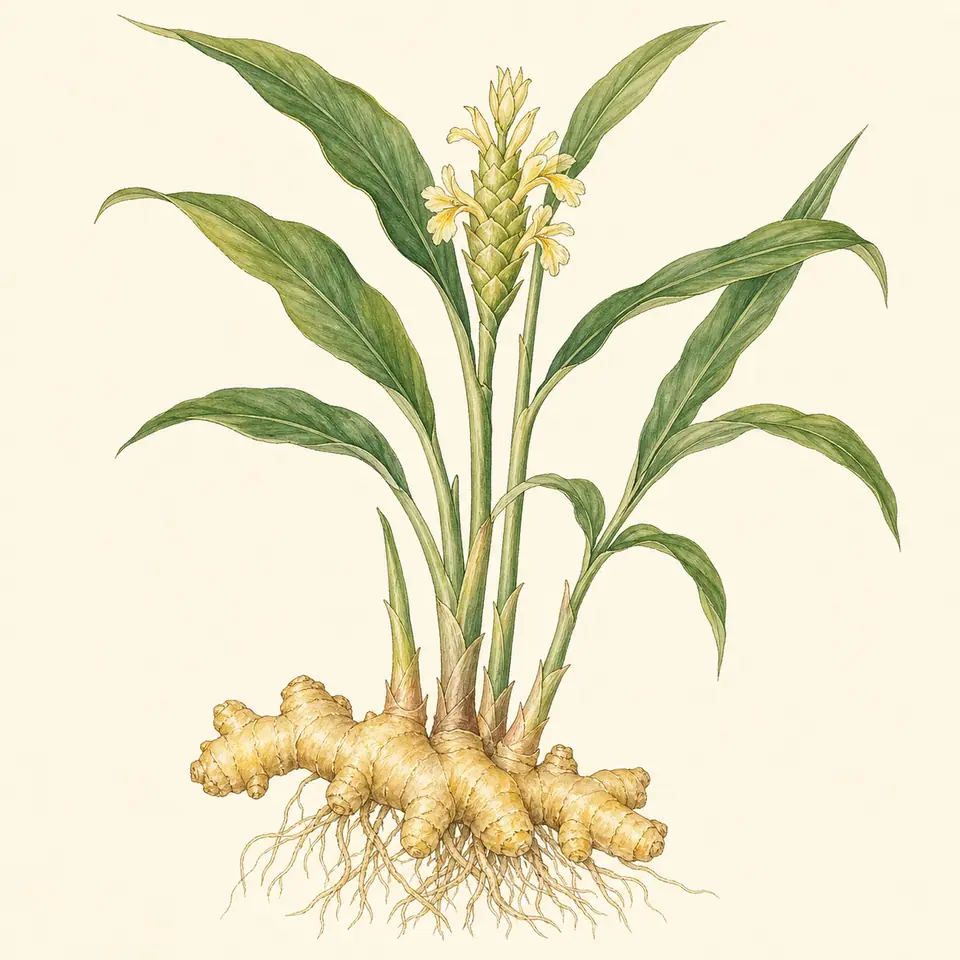
Otang (The Holy Medicine for Vomiting): A sacred medicine that changes a vomiting constitution
The Dongui Bogam states of ginger, “Its nature is slightly warm, its taste is pungent, and it is non-toxic. It enters the five viscera to dissolve phlegm, lower Qi, stop vomiting, and remove wind-cold-dampness.” As such, ginger is not simply an ingredient to soothe the stomach. In Korean medicine, ginger is called ‘Otang’, meaning ‘the holy medicine for those who vomit’, referring to its status as a remedy that can fundamentally shift the constitution of a person prone to frequent nausea.
Many people view ginger merely as a “food ingredient to warm a cold stomach.” However, from a Korean medicine perspective, the core of ginger goes beyond warmth. Ginger disperses wind-cold from the body surface, stops vomiting caused by stomach coldness, and detoxifies various toxins such as Pinellia, Arisaema, and fish or crab toxins. In other words, ginger is a medicinal herb with strong dispersive power that opens up ‘cold energy and blockages’ both inside and outside the body.
Because this dispersive power is so strong, ginger is also a medicinal herb that requires caution. If there is already excessive heat in the body, or in the stage after the initial release of the exterior where sweating is profuse, or after sweating has already occurred during the fever-reducing process, ginger may instead deplete the vital energy (Jeong-gi). The power associated with the high title of ‘Otang’ and the contraindication ‘do not use after releasing the exterior’ actually stem from the same property.
Therefore, it is very important how much ginger is used, for whom, and at what stage. While it is a sacred medicine that can change a vomiting constitution, its dispersive power can make the body more deficient if used incorrectly. On this page, we will guide you through the efficacy and combinations of ginger, as well as the precautions that exist on the opposite side of those benefits.
Summary at a Glance
Ginger occupies a central position in managing vomiting and cold chills, to the extent that it is called ‘Otang’ in Korean medicine. The table below summarizes everything from the basic identity of ginger to precautions at a glance.
| Category | Content |
|---|---|
| Origin | Chinese name: 生薑, Scientific name: Zingiber officinale Roscoe. The rhizome of a perennial herb belonging to the genus Zingiber of the family Zingiberaceae is used medicinally. |
| Properties and Tropism | Nature: Slightly warm; Taste: Pungent. The Dongui Bogam records that “its nature is slightly warm, its taste is pungent, and it is non-toxic.” |
| Representative Alias | Otang (嘔家聖藥), Meaning a sacred medicinal herb that governs a vomiting constitution. |
| Efficacy recorded in literature | Dongui Bogam: Enters the five viscera to dissolve phlegm, lower Qi, stop vomiting, and remove wind-cold-dampness. The OASIS Traditional Medicine Information Portal summarizes its effects as warming the center to stop vomiting, detoxification, releasing the exterior to disperse cold, and transforming phlegm to stop coughing. |
| Main Ingredients | Phenolic compounds such as gingerol and shogaol are known as the primary active ingredients. |
| Combinations and Contraindications | Due to its strong dispersive properties, caution is required after releasing the exterior, for those with a heat-prone constitution, or in states of Yin deficiency with excessive fire. When used with restorative medicines for supplementing Yang or Yin, the constitution and timing must be carefully considered. |
Is this medicinal herb right for me?
Thanks to its warm nature and strong dispersive power, ginger is suitable for those experiencing a combination of cold chills, nausea, and phlegm, but that same power also necessitates caution. Please evaluate your condition based on the following three criteria.
- Generally suitable cases: It is a traditionally considered medicinal herb when nausea and stomach discomfort occur after consuming cold food or exposure to cold wind, when accompanied by cold hands, feet, and a cold feeling in the abdomen, or when there is excessive phlegm and a lingering, sticky cough.
- Cases requiring caution: For those with a constitution that frequently feels internal heat or is prone to anger, those with frequent sweating or bleeding, or those currently taking antipyretics or diaphoretics, the dispersive and warming actions of ginger may be burdensome. Please inform us during your consultation if you are taking any medications or have specific medical conditions.
- Cases to avoid: In Korean medicine, ginger is avoided in cases of wind-heat common cold, characterized by a swollen throat, high fever, and yellow sputum, and in states where there is heat in the lungs and stomach, as it may aggravate symptoms. Additionally, ginger's strong dispersive power is inappropriate after releasing the exterior (after sweating) or in states of excessive perspiration. Pregnant or breastfeeding women, children, and the elderly must consult a professional before use.
Practical Q&A
We have collected frequently asked questions about ginger from the clinic. Since the same medicinal herb can have entirely different meanings depending on the constitution and symptoms, the following answers are provided on the premise that an individual judgment through consultation is necessary.
For which symptoms is ginger the first medicinal herb that comes to mind?
Ginger is first considered when cold chills, nausea, diarrhea, and abdominal pain occur together after eating cold food or being exposed to cold wind. The Dongui Bogam describes that ginger “enters the five viscera to dissolve phlegm, lower Qi, stop vomiting, and remove wind-cold-dampness,” and the medicinal herb encyclopedia of the OASIS Traditional Medicine Information Portal summarizes these as effects such as ‘warming the center to stop vomiting,’ ‘releasing the exterior to disperse cold,’ and ‘transforming phlegm to stop coughing.’ In short, ginger is a medicinal herb traditionally used to warm the stomach, release cold chills from the body surface, and manage phlegm and coughing.
What does the nickname ‘Otang’ mean?
It means ‘the holy medicine for those who vomit.’ This nickname implies that ginger does not simply stop a single episode of nausea, but occupies a central role in managing a constitution or state prone to frequent nausea. However, this status also means that ginger's power is strong. Therefore, while it is appropriate when the cause of symptoms is cold chills or stomach coldness, it may not be suitable for heat-related diseases or Yin-deficient constitutions.
Is it okay to drink ginger tea or ginger juice every day?
Ginger is a medicinal herb with strong warming and dispersive properties. Long-term daily consumption may deplete body fluids, making it potentially unsuitable for those who are thin and have a lot of heat, those who sweat a lot at night, or those with a red tongue and dry mouth. From a Korean medicine perspective, it is better to use it for a duration and dosage that matches your symptoms and constitution, rather than as a daily meal substitute or general health tea. The specific duration and dosage will be determined during your consultation.
Why is ginger used in the early stages of a cold?
Ginger's 'Haepyo-sanhan' (releasing the exterior and dispersing cold) action is used in the early stages of a cold when you feel chilly, have shivering, and experience sneezing or clear nasal discharge. In these cases, ginger works to release the cold energy from the body's surface and is often used together with jujube or cinnamon. Conversely, it is not appropriate for febrile colds characterized by fever, a swollen throat, and yellow phlegm.
Are ginger, garlic, and chili peppers similar medicinal herbs?
While they share commonalities in having a spicy taste and warm properties, their uses in Korean medicine differ. Ginger is central to managing 'Wihan' (stomach cold), nausea, and cold energy on the body's surface. Garlic and chili peppers are more frequently mentioned for other aspects, such as antibacterial/antiparasitic effects or promoting blood circulation. The core of ginger lies in its ability to 'warm the stomach, release exterior cold, and stop vomiting.'
What is the most important precaution when using ginger?
The most important point is the 'contraindication of use after releasing the exterior.' This is the principle that ginger should no longer be used after inducing sweat to release the cold energy from the body's surface. If ginger is continued after sweating has already occurred, excessive dispersion may damage body fluids. Additionally, caution is required when using ginger for those with febrile diseases, a 'Yin deficiency' constitution, a tendency toward bleeding, those taking antipyretics, or those before and after surgery. Please ensure whether your condition falls into these categories through a professional consultation.
Relationship with Other Medicinal Herbs (Yakdae/Pairing)
Ginger's characteristics become more distinct when used with other medicinal herbs rather than alone. In Korean medicine, such pairs are called 'Yakdae' (medicinal pairs). Ginger specifically plays a supporting role for other herbs in warming the stomach, resolving phlegm, and detoxifying. Below are representative examples of core combinations involving ginger.
- Ginger + Banha (Pinellia ternata) In various prescriptions found in the 'Shanghanlun' and 'Jingui Yaolue', ginger is used with Banha to detoxify Banha, warm the stomach, and stop vomiting. While Banha focuses on resolving phlegm and lowering Qi, ginger plays a supporting role in managing the stomach cold and nausea that occur during that process.
- Ginger + Daejo (Jujube) In the 'Shanghanlun', Gyejitang ginger and Daejo frequently appear together. While ginger disperses external cold energy and warms the stomach, Daejo protects Qi and nutrition to regulate the dispersing action so it does not become too strong.
- Ginger + Gyeji (Cinnamon twig) — Gyejitangginger is used to assist the exterior-releasing and sweat-inducing actions of Gyeji, warming the stomach to simultaneously manage nausea and the cold energy caused by external cold winds.
Because ginger has strong dispersing power, caution is needed when using it alone or in strong exterior-releasing prescriptions for those whose internal vital energy is difficult to manage or those with excessive sweating. Depending on which medicinal herbs it is paired with, the same ginger can become a medicine that warmly supplements the stomach or a vanguard that drives out external cold energy.
In what form is it consumed?
Although ginger is a common ingredient on our dining tables, its properties change depending on the part used, the processing method, and the form of administration when used as herbal medicine. Below are the four most common forms.
- Tea/Food This includes ginger tea made by boiling thinly sliced ginger, or adding it to stews, soups, and braised dishes. It is used daily to release cold energy and warm the body, making it the most accessible form.
- Decoction (煎湯, herbal medicine decoction) This is a form where ginger prescribed at a Korean medicine clinic is boiled in water with other medicinal herbs. In classical prescriptions such as the 'Shanghanlun', ginger is mostly used in this decoction form combined with other herbs.
- Professional Prescription Representative prescriptions where ginger forms a core combination include Banha-hubak-tang (Pinellia and Magnolia Bark Decoction) and others. In these cases, ginger is not used alone; a Korean medicine doctor adjusts the dosage and combination to align with the overall direction of the prescription.
- Health Functional Foods/Supplements Ginger extracts, powders, capsules, etc., other than professional Korean medicine prescriptions, are not common within the scope of this section. Since suitability varies greatly depending on an individual's constitution and symptoms, please inquire during your consultation.
Interactions and Safety During Use
Ginger is a medicinal herb with strong warming and dispersing properties. Therefore, while it is effective for warming the stomach and relieving wind-cold, it may conversely increase discomfort by overstimulating energy depending on one's constitution or the state of their symptoms. Below are criteria to check before regularly consuming ginger as a supplement or as part of your diet.
- Those with a heat-prone constitution or internal heat: Ginger has a warm nature. For those whose faces flush easily, who experience dry mouth, frequent constipation, or symptoms accompanied by a feeling of heat, ginger may act to further increase that heat.
- After dispersing the exterior or when already sweating heavily: One of the primary roles of ginger is to induce sweating during the early stages of a wind-cold cold. However, if you continue to consume ginger after you have already sweated sufficiently and your body temperature has risen, the dispersing effect may become excessive and further deplete your energy.
- Cases of sensitive gastric mucosa, such as gastritis or gastric ulcers: Ginger can irritate the stomach. Those who experience frequent stinging sensations in the stomach or frequent acid reflux should be mindful of the form and dosage.
- During pregnancy or breastfeeding: While ginger is a common food ingredient, taking it in herbal medicine dosages or as an extract over a long period can have different effects depending on the individual's condition. Please be sure to consult a professional during this time.
- Bleeding tendency / Before and after surgery: Although ginger has properties that aid blood circulation, some studies suggest it may affect platelet function. Caution is required for those awaiting surgery or those who bleed frequently.
- Those with diabetes, cardiovascular disease, or taking blood thinners: There are experimental studies indicating that ginger may affect blood glucose or blood coagulation. If you are taking Western medications, it is safest to coordinate the timing and dosage with your medical team.
Since ginger is used as both food and medicine, it is easy to assume it is "safe because it is natural." However, the more a medicinal herb has strong warming and dispersing properties, the more important it is how much, when, and in what condition it is used. For the most accurate information regarding your constitution, current medications, or pregnancy/breastfeeding status, please verify through a consultation.
If you experience these symptoms
If you experience these symptoms
Ginger is a medicinal herb with strong warming and dispersing properties. If you experience the following signals while taking it regularly or as part of your diet, it may mean that the potency of the ginger does not match your body's state or is acting excessively. In such cases, rather than reducing the dose or stopping on your own, it is safer to first notify your attending Korean medicine doctor and make a joint decision.
- Dryness in the mouth and throat and increased thirst
- A feeling of heat in the abdomen or a heartburn sensation
- Persistent vomiting or diarrhea, or worsening of these symptoms
- Facial flushing and increased heart rate
- Cough or phlegm becoming stickier and more difficult to expel
If symptoms are severe or accompanied by difficulty breathing, chest pain, or decreased consciousness, please visit an emergency medical institution.
Differences from other restorative medicines
Because ginger is a medicinal herb with strong warming and dispersing properties, its nature differs from restorative herbal medicines (Boyak) intended to tonify and replenish the body. Traditional restorative medicines such as Gongjindan or Gyeongokgo primarily focus on replenishing energy, blood, or essence and treating a deficient constitution from its foundation. In contrast, ginger is closer to relieving states where the body is temporarily blocked or chilled, such as nausea/vomiting caused by cold or wind-cold, phlegm, or the early stages of a cold. In other words, it is not a herb for long-term tonification of a deficient state, but a herb that warms and moves cold or stagnant energy.
Therefore, ginger may be helpful for those who generally have a cold body and a weak stomach, feeling uncomfortable even after eating cold foods. However, if you need to replenish energy over the long term, other restorative medicines like Gongjindan or Gyeongokgo may be more appropriate. Since the right choice requires a comprehensive look at the progression of symptoms, constitution, and current physical state, it is best to decide through a consultation.
References
- Ginger-related evidence 1: Korea Institute of Korean Medicine official data.
- Ginger-related evidence 2: Korea Institute of Korean Medicine official data.
- Supporting evidence for ginger 3: GBIF plant classification data.
- Supporting evidence for ginger 4: Korea Citation Index academic paper.
- Supporting evidence for ginger 5: Korea Citation Index academic paper.
- Supporting evidence for ginger 6: Korea Citation Index academic paper.
- Supporting evidence for ginger 7: PubMed academic paper.
- Supporting evidence for ginger 8: PubMed academic paper.
If you would like to check if this medicinal herb is right for you or which prescription it should be used with, please leave a medical inquiry. For those who find it difficult to visit the clinic, non-face-to-face consultations are available; we will provide guidance after first reviewing your current condition and current medications.

Medical Staff Review
Director Choi Yeon-seung
Chief Director of Baekrokdam Korean Medicine ClinicGinger Dictionary Entry, reviewed the safety of expressions and the scope of verification before administration.
Review Scope: Clinical Accuracy, Pharmacology, Contraindications, Combinations, QA · Last Reviewed 2026-08-16
- Graduated from Kyung Hee University College of Korean Medicine
- Providing Korean medicine treatment since 2010
- Consultations for Gongjindan, Gyeongokgo, Nokyong (Deer Antler) restorative medicine, and customized restorative herbal medicine