Garlic: United by scent, divided by form
Would eating more garlic or taking garlic juice help with blood pressure or cholesterol?
In short, garlic eaten as food and concentrated supplements are different things; the numerical changes shown in research are small and are not evidence to replace medication. The reason this simple question becomes complex is that various forms are mixed under the name 'garlic'.
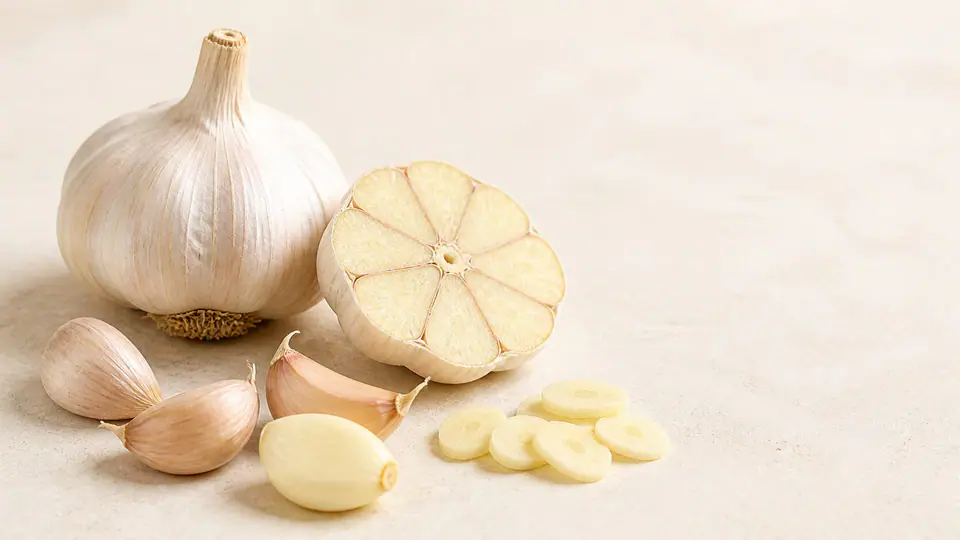
Garlic is a food Allium sativumconsisting of the scaled bulbs of plants in the Allium genus. The NCCIH provides this scientific name and explains that it has been used for food and health purposes for a long time. However, the fact that it has been used for a long time is a different issue from whether the product I am taking now changes a specific numerical value. In particular, raw garlic, cooked food, powder, oil, and aged garlic extract differ in their processing methods and sulfur-containing component compositions, so they are not the same product nor based on the same evidence.
The question starts with garlic, but diverges by form
It is common to hear that one should eat more garlic for blood pressure or cholesterol. However, that statement mixes together a clove of raw garlic, a packet of garlic juice, powder capsules, oil, and aged extracts. While all are called 'garlic', their manufacturing processes and ingredients differ. Therefore, it is difficult to apply the research results of one form directly to another. For example, research on raw garlic as food cannot be interchangeably applied to research on aged extract, powder, or oil supplements. The moment you view them as the same raw material just because they share the same name, expectations and evidence begin to tangle.
Why expectations exist: When small changes sound like significant meaning
The NCCIH explains that garlic supplements may slightly lower total cholesterol and LDL in patients with high cholesterol, and may cause limited, small changes in blood pressure for patients with hypertension. A 2025 meta-analysis of 108 trials involving 7137 people also reported average reductions in several risk indicators, such as total cholesterol, LDL, and blood pressure. However, results varied depending on the formulation, dosage, and subject group.
The important word here is 'average'. An average systolic blood pressure change of approximately 3.71 mmHg and an LDL change of approximately 5.90 mg/dL is not direct evidence that garlic can replace blood pressure medication or statins, or prevent cardiovascular events. The fact that there are many studies does not mean the same effect will necessarily occur in every individual. While small changes can accumulate to hold meaning, viewing them as evidence for medication replacement is a stretch.
Claims about immunity and colds are based on thinner evidence
Besides blood pressure and cholesterol, common claims associated with garlic are immune system strengthening and cold prevention. Human studies supporting these claims are very few and have the limitations of small-scale trials. In other words, expectations are high, but the evidence is still thin. A distinction must be made between garlic having value as a food and its specific effects being proven as an immune supplement.
Food and supplements do not carry the same bleeding precautions
The exposure and bleeding precautions for amounts used in food cannot be viewed at the same level as concentrated supplements. Oral garlic may cause bad breath, body odor, abdominal pain, gas, and nausea, and some people may develop allergies. Concentrated garlic supplements may increase the risk of bleeding, so you must inform your medical team if you are taking anticoagulants or aspirin, or if you have an upcoming surgery. Applying raw garlic directly to the skin can cause severe irritation and chemical burns. There is insufficient safety information regarding supplement dosages that exceed food amounts during pregnancy or breastfeeding.
Therefore, you must first distinguish whether you are viewing garlic as 'just food' or in a 'concentrated form'. This is because safety signals change depending on the form.
Concurrent use and surgery: Three things to check first
When considering garlic supplements, check these three things first: What form it is, whether it is food, juice, powder, oil, or aged extract; whether you intend to replace blood pressure medication, lipid-lowering agents, or diabetes medication; and whether you are taking anticoagulants or aspirin or have an upcoming surgery.
Please also remember not to arbitrarily adjust prescription medications even if blood pressure, lipid, or blood glucose levels change. It is dangerous to reduce or stop medication based solely on the fact that a supplement may influence these numerical values.
Axes of Comparison: What is Being Compared to What
Three axes of comparison are useful when understanding this ingredient: the difference between raw/cooked garlic and aged extracts, powders, or oils; the difference between garlic in food and concentrated supplements; and the difference between changes in blood pressure/lipid levels and the actual treatment of cardiovascular disease. The first is a matter of the product, the second is a matter of exposure amount, and the third is a matter of expectation. Confusing these axes can make it feel as though garlic has become a medicine.
Final Judgment Criteria: Actual Form and Context Over Name
Rather than the food name 'garlic,' we first check the actual formulation and dosage, the specific products used in studies, the magnitude of average numerical changes, bleeding or gastrointestinal reactions, and current medications. So, what should be examined? The form, concomitant medications, scheduled surgeries, gastrointestinal reactions, and the level of expectation. By checking these five factors first, questions about garlic narrow down from a single name to a matter of actual choice.
References
- NCCIH: Garlic usefulness and safety.
- NCCIH: High cholesterol and natural products.
- Garlic and cardiovascular risk factors: updated meta-analysis.
- Garlic and dyslipidemia: GRADE meta-analysis.
This text explains the origin of the raw materials, the scope of research, and precautions before consumption. As this cannot replace individual diagnosis or treatment, please consult a medical professional if you are taking medication or if symptoms persist. If sudden and severe symptoms such as difficulty breathing or decreased consciousness occur after consumption, seek help from 119 or the emergency room.

Medical Staff Review
Director Choi Yeon-seung
Chief Director of Baekrokdam Korean Medicine ClinicGarlic Dictionary Entry, reviewed the safety of expressions and the scope of verification before administration.
Review scope: Ingredient origin, human studies, concomitant medications, safety of intake · Last reviewed 2026-08-17
- Graduated from Kyung Hee University College of Korean Medicine
- Providing Korean medicine treatment since 2010
- Consultations for Gongjindan, Gyeongokgo, Nokyong (Deer Antler) restorative medicine, and customized restorative herbal medicine