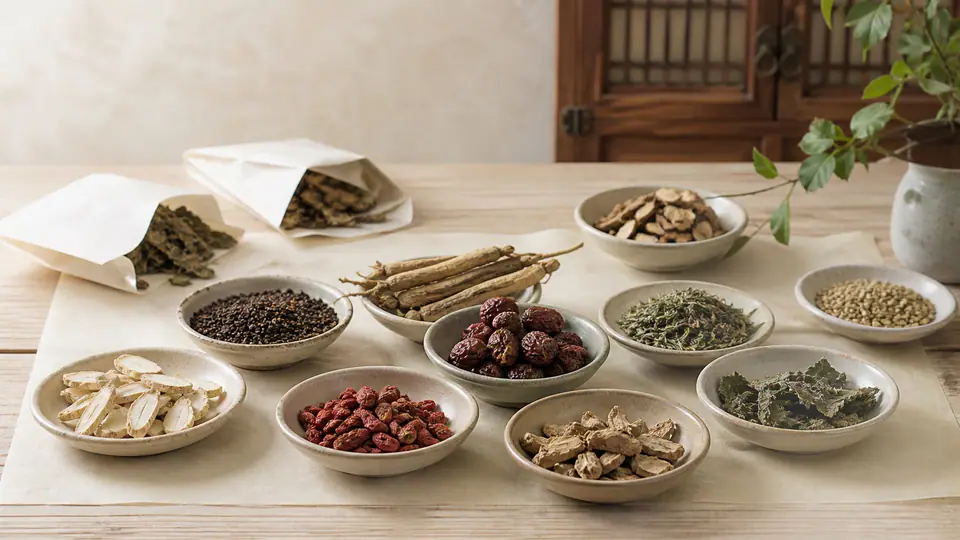
Apricot Kernel (Haeng-in), the Small Fruit of the Lungs
The Dongui Bogam records Apricot Kernel (Haeng-in) as a medicinal herb that enters the lungs to lower the Qi and treat coughing, asthma, and loss of voice. The name 'Haeng' originally refers to the fruit of the apricot tree, and 'In' refers to the seed, specifically the kernel inside the pit. In Korean medicine, 'In' symbolizes the core of the seed, the part where life begins. Therefore, the apricot kernel was regarded not as a simple seed, but as a small fruit that delivers the energy of life to the organ known as the lungs.
It is easy to lightly think of apricot kernels as simply 'seeds that are good for coughs.' However, classical texts record apricot kernels as 'slightly warm, bitter and slightly pungent, with slight toxicity.' In other words, it means that apricot kernels can be both a medicine and a toxin. The Traditional Knowledge Portal of Korea explicitly states, "In the case of children, large doses are prohibited due to concerns about toxicity," showing that this small seed reveals different faces depending on the amount. The idea that 'it is natural, so it is safe' does not apply to apricot kernels.
This caution carries over into clinical practice. Rather than being used alone, apricot kernels are used in combination with other medicinal herbs, as seen in the Jeongpye-tang or Haeng-in-banha-tang of the Dongui Bogam, and frequently as a 'Apricot Kernel-Scutellaria' combination in asthma prescriptions in modern research. Its power is revealed not alone, but within a prescription.
Therefore, apricot kernel is a medicinal herb where the amount, the combination, and the method of use are particularly important. Below, we will guide you through the herbal pharmacological identity of apricot kernels, their combinations in classical prescriptions, and the usage standards to be mindful of in modern times.
Summary at a Glance
Apricot kernel is a Korean herbal medicine classified as having slight toxicity that acts on the lungs and large intestine. The table below summarizes its key characteristics at a glance.
| Category | Content |
|---|---|
| Hanja Name / Scientific Name | Apricot Kernel / Please check the raw material list of the actual prescription for the source plant and used part |
| Origin | Seeds of the apricot tree or wild apricot tree (mountain apricot), which are deciduous trees belonging to the Rosaceae family. When the summer fruit matures, the pulp and shell are removed, and only the seeds are taken and sun-dried. |
| Properties and Meridian Tropism | Slightly warm, bitter and slightly pungent, slight toxicity. Acts on the large intestine and lungs. |
| Representative Aliases | Apricot kernel (Haeng-hak-in), Wild apricot (San-haeng) |
| Efficacy Recorded in Literature | Used in the Dongui Bogam and other texts for asthma, cough, and loss of voice caused by lung Qi deficiency or rebellious Qi (upward flow). |
| Main Ingredients | Possibility of containing Amygdalin (cyanogenic glycoside). In modern combination drugs such as Yonggak-san, there are cases where 0.83mg (24.9mg as Amygdalin) is used per dose. |
| Combinations, Contraindications, and Precautions | Frequently combined with Ephedra, Cinnamon twig, Licorice, Pinellia, Mulberry bark, and Schisandra in prescriptions related to the lungs and coughs. Use with caution in cases of loose stools or diarrhea; large doses are prohibited for children due to toxicity concerns. Combination with restorative medicines for Yang or Yin requires verification. |
Is this medicinal herb right for me?
Apricot kernel is a Korean herbal medicine classified as having slight toxicity that acts on the lungs and large intestine. Therefore, unlike the general image of being 'used for coughs,' it is important who it is used for, how much, and in what form. Please review the following three criteria first.
- Generally suitable cases: This is when a Korean medicine doctor confirms a state where lung Qi is surging upward or accompanied by coughing and shortness of breath, and includes it in the prescription. Apricot kernels primarily appear in this context in the Dongui Bogam.
- Cases requiring caution: Caution is required for children, the elderly, and those with watery stools or a tendency toward diarrhea. The Traditional Knowledge Portal of Korea guides that "it should be used with caution for loose stools or diarrhea, and especially for children, large doses are prohibited due to toxicity concerns."
- Cases to avoid: This applies to cases of attempting long-term or high-dose self-administration of apricot kernel tea or powder found on the internet, or arbitrary use during pregnancy or breastfeeding. Apricot kernel is classified as a medicinal herb with slight toxicity, and even in modern pharmaceuticals, only a refined small amount at the level of 0.83mg per dose is used. Self-administration is not recommended.
Practical Q&A
While apricot kernels have a strong image of being 'used for coughs,' there are many questions regarding actual administration methods and precautions since they are classified as having slight toxicity. We have gathered answers based on verified evidence among the questions frequently asked in clinical settings. Since suitability varies depending on an individual's constitution and symptoms, please understand the following answers as reference points for consultation.
Can I boil apricot kernels as tea at home?
We have not found official evidence for taking apricot kernels alone in tea form. Classical texts such as the Dongui Bogam record apricot kernels in prescriptions where they are decocted (boiled) together with other medicinal herbs, and apricot kernels are classified as a medicinal herb with slight toxicity. Therefore, it is safer to use them under the prescription of a Korean medicine doctor rather than arbitrarily boiling them as tea at home. Please inquire during your consultation.
How much apricot kernel should I take per day?
The exact daily dosage varies depending on your constitution, symptoms, and the composition of the prescription. Referring to examples of modern pharmaceuticals, Yonggak-san contains 0.83mg of Apricot Kernel (Haeng-in) per 0.3g dose, and Wanhabi-X Granules contain 0.83g of Apricot Kernel (24.9mg as amygdalin) per 3.0g dose. However, these are simply the amounts used in combination products and are not the recommended dosages for Apricot Kernel alone. Please consult the Korean medicine doctor who provided your prescription for specific dosage information.
Can I give this to children?
Extra caution is needed for children. The Korean Traditional Knowledge Portal states that "children are prohibited from taking large amounts due to the risk of poisoning." Haengin is classified as having low toxicity, and the risk of poisoning in children may differ from that in adults depending on their weight and developmental stage. If you are considering a prescription containing haengin for your child, please consult a Korean medicine doctor and make a decision after that.
What are the representative prescriptions that use apricot kernel?
The Dongui Bogam records several prescriptions where apricot kernel is a key ingredient. Haeng-in-ban-ha-tang has been traditionally used for shortness of breath and coughing caused by a deficiency of lung qi; Jeong-pye-tang for coughing and sang-gi (upward surge of qi); and Haeng-in-jeon for when the voice is lost due to coughing. Additionally, an analysis of herbal combinations in asthma treatment prescriptions showed that the 'apricot kernel-scutellaria' combination was used most frequently. The specific choice of prescription varies depending on the individual's symptoms and constitution.
Can I take it if I have diarrhea?
Caution is required in cases of daebyeon-dangseol, which refers to watery diarrhea. The Traditional Knowledge Portal of Korea also lists this as a contraindication. Since apricot kernel is a medicinal herb that also acts on the large intestine, those with a tendency toward diarrhea or weak digestive function must consult a Korean medicine doctor before taking it.
Can I take apricot kernel for a long period of time?
Apricot kernel is classified as having slight toxicity, and large doses are explicitly contraindicated for children. This research has not secured official or academic evidence regarding the safety of long-term use. Therefore, please decide whether to take it long-term under the judgment of a Korean medicine doctor, and it is recommended to visit a hospital immediately if any abnormal symptoms appear during use.
Relationship with Other Medicinal Herbs (Yakdae/Pairing)
Apricot kernel is not used alone. Within a prescription, it pairs with other medicinal herbs to perform its role, and these pairs are traditionally called "yak-dae (medicinal pairs)." Apricot kernel works to lower lung qi and resolve phlegm, and other herbs complement or regulate this flow so that the entire prescription converges in one direction. Therefore, when looking at a prescription containing apricot kernel, the key is 'what it is used with.'
We introduce representative examples where apricot kernel forms a key combination, as identified in classical prescriptions and modern academic research.
- Apricot kernel + Mulberry bark (Sangbaekpi) + Pinellia (Banha) + Platycodon (Gilgyeong), etc. — Haeng-in-ban-ha-tang: A prescription found in the Miscellaneous Diseases section of the Dongui Bogam. It consists of 4g each of apricot kernel, pinellia, platycodon, citrus peel, red porphyridium, aristolochia, mulberry bark, and alum, and has been traditionally used for cases of "shortness of breath and coughing due to lung qi deficiency." The structure is such that apricot kernel lowers lung qi, while pinellia and platycodon resolve phlegm.
- Apricot kernel + Aster (Jawan) + Schisandra (Omija) + Tangerine peel (Gyulpi) + Licorice (Gamcho), etc. — Jeong-pye-tang: A prescription recorded in the Miscellaneous Diseases section of the Dongui Bogam. It was used for sang-gi-cheon-su (shortness of breath and coughing due to qi surging upward), where apricot kernel plays the role of lowering lung qi, and schisandra and licorice are combined to manage the cough and tension in the lungs.
- Apricot kernel + Ephedra (Mahwang) + Cinnamon twig (Gyeji) + Gypsum (Seokgo) + Licorice (Gamcho) — Dae-cheong-ryong-tang: A prescription found in the Miscellaneous Diseases section of the Dongui Bogam. It is used for wind-cold patterns, with a structure where ephedra releases the exterior and apricot kernel lowers lung qi to address both coughing and shortness of breath.
- Apricot kernel + Honey (Bongmil) + Mulberry bark (Sangbaekpi) + Fritillaria (Paemo) + Schisandra (Omija), etc. — Haeng-in-jeon: A prescription recorded in the Internal Medicine section of the Dongui Bogam. It was used for sil-eum (loss of voice) due to coughing, and is prepared by pounding apricot kernel and decocting it with honey and ginger juice. Apricot kernel works to moisten the lungs and soothe the cough.
- Apricot kernel + Scutellaria (Hwanggeum) This is the most frequently appearing herbal combination in asthma treatment prescriptions, as confirmed by modern network analysis research. It is analyzed as a combination where apricot kernel lowers lung qi and scutellaria clears heat, complementing each other.
Since apricot kernel is a medicinal herb classified as having slight toxicity, all the above are traditional prescriptions used under the diagnosis of a Korean medicine doctor. In particular, large doses are contraindicated for children due to toxicity concerns, and caution is required for those with daebyeon-dangseol (watery stools mixed with diarrhea). Because the combination of apricot kernel is designed to maximize efficacy while controlling toxicity, taking it alone or mixing it arbitrarily is not recommended.
In what form is it consumed?
Haeng-in (Apricot Kernel) is a medicinal herb that acts on the lungs and large intestine and is classified as having slight toxicity (so-dok). Therefore, rather than consuming it as a tea or adding it to food, it is generally taken in a form prescribed by a Korean medicine doctor. The different methods of consumption are explained below.
- When consumed as a tea This is not common. There is no confirmed official basis for taking Haeng-in alone in tea form. As it is a herb classified as having slight toxicity, it is safer to use it within the context of a prescription rather than simply boiling and drinking it.
- When added to food This is not common. Haeng-in is classified as a Korean herbal medicine ingredient and is distinct from almonds used for food. It is not an ingredient to be used freely like everyday cooking or snacks.
- When decocted (boiled as a herbal tonic) This is the most common method. In classical prescriptions such as the Dongui Bogam, the standard usage is recorded as Jeon-bok, which is decocting Haeng-in together with other medicinal herbs. Representative prescriptions include Jeongpye-tang, Jaso-banha-tang, Haeng-in-banha-tang, Haeng-in-jeon, and Dae-cheongryong-tang.
- When taken as a professional prescription (prescribed by a Korean medicine doctor) It is recommended. Hang‑in (Peach kernel) is classified as low toxicity (小毒), and especially in children there is a risk of poisoning, so taking it in large amounts is contraindicated. In modern herbal medicines such as Yonggaksan, cases have been observed where a single dose of 0.3 g contains 0.83 mg of hang‑in and 24.9 mg of amygdalin, a very small amount. Therefore, because hang‑in must be handled with caution even in refined small amounts, it should be used under the diagnosis and prescription of a Korean medicine doctor.
Interactions and Safety During Use
While Haeng-in is familiar as a herb used for coughs and shortness of breath, it is classified as having slight toxicity (so-dok) in pharmacognosy. The combination with other herbs, the target patient, and the dosage must be determined in a prescription. The following sections explain medications to take concurrently and situations requiring caution before use.
- Frequent diarrheal stools (Daebyeon-dangseol): According to the Traditional Knowledge Portal, it should be used with caution in this case. Because Haeng-in also acts on the large intestine, it may further irritate symptoms if the large intestine function is already weak.
- Large doses for children: The same source specifies that "large doses are prohibited for children due to toxicity concerns." When used for children, it must be prepared in an appropriate amount under a Korean medicine doctor's prescription.
- Long-term or high-dose use based on slight toxicity (so-dok) classification: Since Haeng-in is classified as having slight toxicity, it is not recommended to take it alone for a long period just because it seems effective.
- Dosage in modern pharmaceuticals: In the case of Komedi Wanhabi-X Granules (Mazinha-hwan), 0.83mg of Apricot Kernel and 24.9mg as Amygdalin are contained per 3.0g dose. This is an example of a modern combination drug where Apricot Kernel is used only in refined small amounts.
- Official safety guidelines and cases from the Ministry of Food and Drug Safety: No separate official guidelines have been confirmed at this time.
- Concurrent use with Western medicine, and interactions regarding pregnancy or breastfeeding: There is no confirmed academic evidence.
Since Haeng-in is a medicinal herb with slight toxicity that acts on the lungs and large intestine, it is safer to consult a Korean medicine doctor for a prescription rather than deciding to take it alone, even when experiencing a cough or shortness of breath. In particular, children, the elderly, those with chronic diseases, or those taking other medications must consult a professional before use.
If you experience these symptoms
If you experience these symptoms
Haeng-in is a medicinal herb classified as having slight toxicity (so-dok). In appropriate amounts, it helps lower lung qi and resolve phlegm, but there are toxicity concerns related to cyanogenic glycoside components if taken in excessive amounts or inappropriate forms. If any of the following signs appear, do not attempt to adjust the dose yourself; immediately notify the prescribing Korean medicine doctor or a nearby medical institution.
- Nausea, vomiting, abdominal discomfort These are the gastrointestinal symptoms that may appear first in the event of an overdose of apricot kernel (Haeng-in).
- Headache, dizziness, general lethargy These are signals that the central nervous system may be affected.
- Difficulty breathing, feeling short of breath or breathless This is a warning that the lungs and respiratory muscles may be affected.
- Cyanosis (bluish discoloration of the lips, hands, or feet) This is a serious signal that there may be a problem with oxygen supply to the tissues.
- Cases where a child shows adverse reactions after taking a preparation containing apricot kernel (Haeng-in) Children must be responded to with particular urgency as their exposure relative to body weight is higher and their metabolic capacity differs from that of adults.
If your symptoms worsen rapidly or if you notice any changes in breathing or consciousness, visiting an emergency medical institution (emergency room) is the safest step. The herb is a medicinal material that is meaningful only when used in an appropriate amount under the prescription of a Korean medicine doctor. If you experience any discomfort while taking it, stop taking it and be sure to consult a professional.
Differences from other restorative medicines
Apricot kernel (Haeng-in) is a medicinal herb used to treat coughing and shortness of breath, and is classified as having slight toxicity (sodok) acting on the lungs and large intestine. Therefore, its nature differs from the category of 'restorative medicines' (boyak) that supplement the body's overall energy or essence and blood, such as Gongjindan or Gyeongokgo. Gongjindan is known to be primarily used to stabilize the mind and body and supplement vital energy, while Gyeongokgo is used to moisturize the blood and treat facial aging and dryness. While these may be taken short-term or long-term to supplement a weak constitution even in the absence of symptoms, apricot kernel (Haeng-in) is closer to a 'symptom-treating herb' included in prescriptions when specific pulmonary symptoms such as cough, phlegm, or shortness of breath are present.
Additionally, apricot kernel (Haeng-in) must be distinguished from foods such as almonds or apricot seeds. Unlike food-grade seeds with similar names or appearances, apricot kernel (Haeng-in) is intended for small-dose, short-term use as a Korean herbal medicine, and its safety varies depending on the dosage and processing method (poje). Rather than deciding on your own that 'I should take apricot kernel because I have a cough,' it is advisable to consult a doctor of Korean medicine to see if your current symptoms are suitable for a prescription containing apricot kernel (Haeng-in).
References
- Supporting data for apricot kernel 1: Official data from the Ministry of Food and Drug Safety.
- Supporting data for apricot kernel 2: Korea Citation Index academic paper.
- Supporting data for apricot kernel 3: Korea Citation Index academic paper.
- Supporting data for apricot kernel 4: Korea Citation Index academic paper.
- Supporting data for apricot kernel 5: kmcric.com supporting data.
- Supporting data for apricot kernel 6: koreantk.com evidence materials.
- Supporting data for apricot kernel 7: herba.kr evidence.
- Supporting data for apricot kernel 8: comedi.kr supporting data.
If you would like to check if this medicinal herb is right for you or which prescription it should be used with, please leave a medical inquiry. For those who find it difficult to visit the clinic, non-face-to-face consultations are available; we will provide guidance after first reviewing your current condition and current medications.

Medical Staff Review
Director Choi Yeon-seung
Chief Director of Baekrokdam Korean Medicine ClinicApricot kernel dictionary entry, reviewed the safety of expressions and the scope of verification before administration.
Review Scope: Clinical Accuracy, Pharmacology, Contraindications, Combinations, QA · Last Reviewed 2026-08-16
- Graduated from Kyung Hee University College of Korean Medicine
- Providing Korean medicine treatment since 2010
- Consultations for Gongjindan, Gyeongokgo, Nokyong (Deer Antler) restorative medicine, and customized restorative herbal medicine