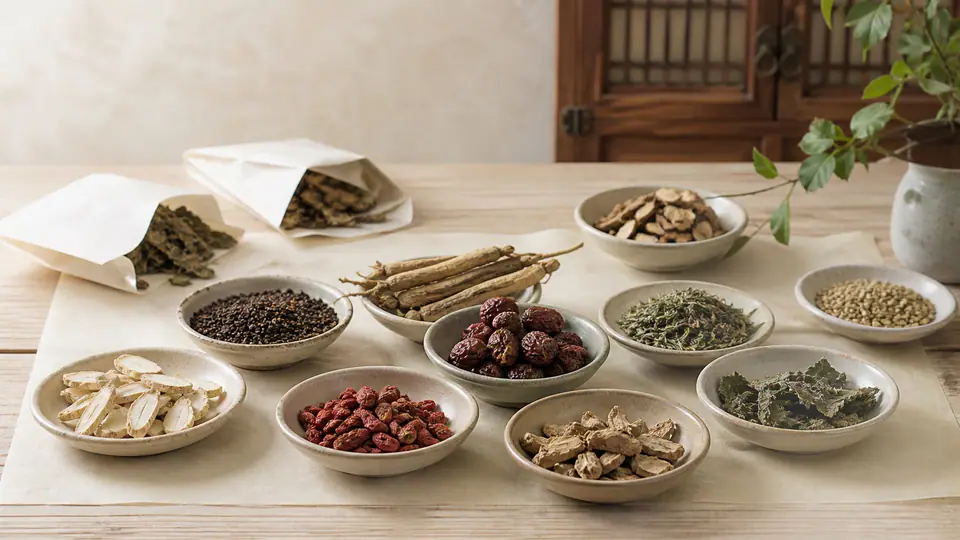
Gyesim, heat stripped from the heart of the tree
The Dongui Bogam records Gyesim as having a "greatly hot nature, sweet and pungent taste, and slight toxicity." It further notes that it "warms the center, opens the blood vessels, and benefits the Qi of the liver and lungs," while adding a warning that it "can cause abortion." The essence of this medicinal herb is contained within these short sentences. Gyesim is produced by stripping the outer bark and part of the inner bark from the stem bark of Cinnamomum cassia, leaving only the area inside the stone cell layer. In other words, it is a medicinal herb obtained by removing the exterior of the tree and taking only the part closest to the heart. This is likely why the character for 'heart' (心) is in its name. This inner bark, rich in essential oils, possesses a strong warming property that is referred to as 'great heat' (大熱) in Korean medicine.
People often easily think of cinnamon-type ingredients as simply 'spices that warm the body.' However, Gyesim is not the cinnamon found in a kitchen. The Korean Pharmacopoeia (Herbal Medicine/Crude Drug) Standards defines it as a registered pharmaceutical and treats it as a strict medicinal herb, specifying standards for heavy metals and foreign substances. From the Boje-bang and Taepyeong Seonghye-bang to the Boncho Ganyo-bang, classical texts record Gyesim as a pillar of prescriptions administered for symptoms such as postpartum heart pain, wind-evil entering the heart, and stagnant blood that does not disperse. It is not a 'warm fragrance,' but a prescription-grade medicinal herb that opens blood vessels, supplements Yang energy, and acts on the pericardium.
However, this strong warming effect is a double-edged sword. The Dongui Bogam already recorded that it "can cause abortion" and noted that it "has slight toxicity." For those with a Yin-deficient (陰虛) constitution, a fire-type (火體) constitution, or heat symptoms, it may instead add more fire. Additionally, while the possibility of interaction with anticoagulants, anti-diabetic drugs, or Western medicines that affect liver metabolism is generally discussed, clinical research specifically focused on Gyesim currently requires further verification. Therefore, we do not use this herb in isolation, but within the context of a prescription, carefully considering the dosage, the patient, and the duration of use. We will guide you through those criteria step by step below.
Summary at a Glance
The core of Gyesim is that it is a 'greatly hot medicinal herb obtained by stripping the outer bark and taking only the inner deep layer.' The following table summarizes its identity, properties, and precautions concisely.
| Category | Content |
|---|---|
| Origin | Hanja Name 桂心, Scientific Name Cinnamomum cassia J.Presl. A medicinal herb produced by removing the periderm, outer bark layer, and part of the inner bark layer from the stem bark of Cinnamomum cassia, leaving only the inside of the stone cell layer. |
| Properties and Meridian Tropism | Nature is greatly hot, taste is sweet and pungent, and has slight toxicity. Acts on the Heart Meridian and Pericardium Meridian. |
| Representative Aliases | Gyesim (桂心), Cassiae Cortex Interior. |
| Efficacy Recorded in Literature | Dongui Bogam: Warms the center (溫中), opens blood vessels (通血脈), benefits liver and lung Qi (利肝肺氣). Boncho Ganyo-bang: Supplements Yang (補陽), invigorates blood (活血), benefits essence (益精), opens the nine orifices (通九竅), resolves blood stasis (消瘀血), connects tendons and bones (續筋骨), and eliminates three types of parasites (殺三蟲). |
| Main Ingredients | Rich in essential oils. Terpenoids, phenylpropanoids, etc., have been reported. |
| Combinations, Contraindications, and Precautions | Contraindicated for pregnant women or consultation with a doctor/Korean medicine doctor is mandatory (Dongui Bogam records "can cause abortion"). Caution for those with Yin-deficient (陰虛), fire-type (火體), or heat-symptom (熱證) constitutions. Interaction with anticoagulants, anti-diabetic drugs, and Western medicines affecting liver metabolism requires verification. |
Is this medicinal herb right for me?
As its name suggests, Gyesim is a greatly hot medicinal herb that acts on the 'heart' (心). Therefore, while it is strong in warming the center of the body and opening blood vessels, it can be burdensome for those with excessive internal heat or those who are pregnant. You can first assess your suitability based on the following three criteria.
-
Generally suitable cases: May be considered under the prescription of a Korean medicine doctor for those with a constitution where the hands and feet are cold and the center of the body is chilled, those who feel cold in the abdomen after meals, or cases where blockage of blood and Qi (血氣) is accompanied by oppression or pain. This is the context in which the Dongui Bogam records 'warming the center and opening blood vessels' as primary effects.
-
Cases requiring caution: Those who naturally have a lot of heat or a constitution prone to anger, those whose faces redden easily and whose mouths are dry, and those with a tendency to bleed or who are taking anticoagulants or anti-diabetic drugs must consult a Korean medicine doctor. Since interaction research specific to Gyesim requires further verification, the decision to use it concurrently with other medications must be made on an individual basis.
-
Cases to avoid: Those who are pregnant or may be pregnant should avoid this. The Dongui Bogam explicitly warns that Gyesim "can cause abortion", meaning it can affect the fetus. Additionally, it is not suitable for those with distinct heat symptoms (熱證) or those diagnosed with a Yin-deficient fire-type (陰虛火體) constitution.
Practical Q&A
We have gathered a few frequently asked questions about Gyesim from the clinic. Focusing on the areas of most concern regarding the efficacy and safety of the herb, we provide both confirmed facts and points that require consultation.
Can it be used during pregnancy?
As a rule, it is not used during pregnancy. The Dongui Bogam leaves a record that Gyesim "can cause abortion", meaning it can affect the fetus. This serves as the basis for handling Gyesim with caution for pregnant women in traditional medicine; currently, if you are pregnant or there is a possibility of pregnancy, you must decide after consulting a Korean medicine doctor.
I usually have a lot of heat in my body; will it be okay?
For those who have a lot of heat by constitution, those who easily get angry (fire), or those with distinct heat-related symptoms, Gyesim can be burdensome. Since the property and taste of Gyesim are recorded as 'Great Heat' (大熱), it may actually aggravate symptoms if heat is already present in the body. In such cases, it is common to consider other herbs with weaker warming properties or a different prescription direction.
Is this the same as cinnamon tea?
No. Gyesim is a medicinal herb produced by removing the outer bark layer and part of the inner bark layer from the stem bark of Cinnamomum cassia (Cinnamomum cassia) and leaving only the inside of the stone cell layer. In contrast, cinnamon tea or cinnamon powder consumed in daily life often includes the outer bark, and the amount and purpose of consumption as food are different. Gyesim is traditionally used in the form of a decoction boiled in water or alcohol for prescriptions and must be distinguished from simple teas or seasonings.
Can I take this along with Western medicine?
The possibility that cinnamon-type medicinal herbs interact with anticoagulants, anti-diabetic drugs, and medications affecting liver metabolism is generally discussed. However, clinical research specific to Gyesim is an area that requires verification. If you are currently taking Western medicine, please provide a list of your medications when visiting the Korean medicine clinic and consult regarding concurrent use.
How much can I take per day, and for how long?
Specific dosages and durations of intake vary depending on the individual's constitution, symptoms, and the composition of the prescription. While there are records of using 5.625 g of cinnamon heart (Gyesim) in Gamisogeonjung-tang from the Dongui Bogam and 3 nyang (approx. 112.5 g) of cinnamon heart decocted in alcohol for Gyesim-ju from the Boje-bang, these are based on specific prescriptions and contexts. They cannot be applied as general daily dosages, and self-administration is not recommended.
In which prescriptions is it most commonly used?
Cinnamon heart is a highly warming medicinal herb used to warm the center of the body and clear the blood vessels. It is traditionally utilized in prescriptions related to blood circulation or pain accompanied by cold symptoms (Han-jeung) and postpartum care. Representative examples include Daeam-mil-tang from the Boje-bang, Gyesim-san from the Taepyeong Seonghye-bang, and Gamisogeonjung-tang from the Dongui Bogam. As such, the role of cinnamon heart becomes clearer when it is combined with other medicinal herbs rather than used alone.
Relationship with Other Medicinal Herbs (Yakdae/Pairing)
Gyesim is not used alone. Its properties become more distinct the moment it is paired with other medicinal herbs, a concept referred to in tradition as "Yak-dae" (medicinal pairs). Specifically, its role becomes clear when used with other herbs to warm the center of the body and clear the blood vessels. Below, we introduce a few classical combination prescriptions identified.
- Daeam-mil-tang A prescription found in the Boje-bang, combined with raw Rehmannia (or processed Rehmannia), Angelica gigas, Aralia cordata, Evodia rutaecarpa, Peony, dried ginger, and licorice GyesimIt was traditionally used in situations where cold energy and blood energy clash after childbirth, causing deep internal pain.
- Gyesim-ju A simple form of prescription recorded in the Boje-bang. 3 nyang of cinnamon heartThis method involves decocting the herb in 3 seung of alcohol to produce 2 seung, which is then consumed warm in three divided doses. There are records of its use for postpartum pain or sudden chest pain.
- Gyesim-san A prescription appearing in the Taepyeong Seonghye-bang, 1 nyang of cinnamon heartcombined with red peony root, Saposhnikovia divaricata, Asarum, ginseng, and Schizonepeta. It was traditionally used when wind-pathogens (Pung-sa) enter the heart area, causing chest pain that extends to the back.
- Gamisogeonjung-tang A prescription found in the Dongui Bogam. It consists of 3.75 g of licorice (honey-roasted), 5.625 g of cinnamon heart, 11.25 g of white peony root (steamed), and 3.75 g of Polygala (steamed with ginger juice), decocted with 5 slices of ginger and 2 jujubes. It was traditionally used for abdominal pain below the heart.
As shown, cinnamon heart is almost always used in combination with other medicinal herbs and in the form of a decoction. Daily intake in the form of tea or simple food should be distinguished from cinnamon heart used as a medicinal herb. Pregnant women or those with excessive internal heat must be particularly cautious with these combinations.
In what form is it consumed?
Cinnamon heart is a medicinal herb that uses the inner bark, which is rich in essential oils. Therefore, rather than simply steeping it in hot water, the decoction method, which sufficiently extracts the components, is the standard in traditional prescriptions. Below is a guide distinguishing between daily forms and professional prescriptions.
- Tea Not common. The essential oil components of cinnamon heart are difficult to dissolve sufficiently by simply steeping in hot water for a short time; this is closer to enjoying the aroma than expecting medicinal effects. This must be distinguished from cinnamon heart used as a medicinal herb.
- Food (Seasoning) Not common. While cinnamon (Yukgye) or cassia (Gyepi) are used as spices, cinnamon heart is a medicinal grade where the outer bark is removed to take only the inner core. It is difficult to view it as identical to cinnamon used for cooking.
- Decoction (Herbal Tea) This is the most common form in traditional prescriptions. In texts such as Dongui Bogam's Gami-sogeonjung-tang, Boje-bang's Daeam-mil-tang and Gyesim-ju, Taepyeong-seonghye-bang's Gyesim-san, and Boncho-ganyo-bang's Gyesim-hwan, it is prepared as a decoction using water or alcohol.
- Professional Prescription (Prescribed by a Korean Medicine Doctor) Recommended. Gyesim (Cinnamon Bark) is a highly heating medicinal herb, requiring contraindication during pregnancy and caution based on constitution and symptoms. It is safe to use in the form of decoctions or Korean herbal medicine preparations prescribed by a Korean medicine doctor. Self-administration is not recommended.
Interactions and Safety During Use
Since Gyesim is a potent medicinal herb, it is important to know when to use it and when to avoid it. Below is a summary of confirmed interactions and safety standards.
- Pregnancy Dongui Bogam records that it "can cause abortion." As a rule, pregnant women should not take it, and consultation with a Korean medicine doctor is mandatory.
- Constitution and Symptoms Its nature is Great Heat (very hot). It may be burdensome for those with excessive internal heat, Yin deficiency (a state of lacking body fluids and essence), a heat-prone constitution, or heat symptoms.
- Concurrent Use with Western Medicine Potential interactions between cinnamon-based substances and anticoagulants (e.g., warfarin), anti-diabetic drugs, or medications that affect liver metabolism have generally been discussed. However, clinical research specifically focused on Gyesim requires further verification.
- Toxicity and Overdose Dongui Bogam records that it "has slight toxicity." Overdose may cause concerns such as gastrointestinal irritation, sweating, and increased heart rate.
Gyesim used in prescriptions must be distinguished from daily consumption in the form of simple teas or food. For your safety, the decision on whether to take it, the dosage, and the duration must be made after consulting a Korean medicine doctor.
If you experience these symptoms
Gyesim is a potent medicinal herb rich in essential oils. Therefore, it is important to adhere to the proper dosage and duration of use. Certain signals from your body should be taken as warnings of overdose or inappropriate use. If the following signals appear, do not adjust the dose yourself and must inform your attending Korean medicine doctor.
- Abdominal discomfort or heartburn The Great Heat nature and essential oil components of Gyesim can irritate the gastrointestinal tract. This may appear more frequently in those taking it on an empty stomach or those with a weak stomach.
- Facial flushing, sweating, or increased heart rate Using a highly heating herb when the body already has excessive heat can aggravate heat symptoms.
- Oral mucosal irritation, lip swelling, or rash These are reactions that may occur in individuals with a personal sensitivity to cinnamon-based substances.
- Menstrual irregularities or sensation of uterine contraction As Dongui Bogam records that it "can cause abortion," particular caution is needed for those who may be pregnant or are currently menstruating.
- Increased Tendency for Bleeding Since cinnamon-based substances can affect blood flow, consultation is necessary if you experience new or worsening skin bruising or gum bleeding.
Even if these symptoms are mild, if they persist for several days, or if they are accompanied by difficulty breathing, severe dizziness, decreased consciousness, or chest pain, please use emergency medical services immediately. Since the core of Korean herbal medicine is adjusting treatment based on the cause of symptoms, it is safer to consult your attending Korean medicine doctor than to stop or reduce the dose on your own.
Differences from other restorative medicines
Gyesim (Cinnamon Heart) is a medicinal herb that simultaneously possesses two directions: 'Boyang' (tonifying yang) and 'Hwalhyeol' (invigorating blood). Therefore, it can be seen as positioned between restorative tonics that simply supplement energy and blood-invigorating medicines that clear the blood. Traditionally, it has been used to warm the center of the body and open the blood vessels, which distinguishes its use from representative yang-tonifying restoratives such as Gongjindan or Gyeongokgo.
Gongjindan primarily focuses on supplementing the original qi of the kidneys and enriching the essence (Jeong). In contrast, Gyesim has a structure where 'Boyang' and 'Hwalhyeol' act together, with a stronger emphasis on releasing cold energy within the body and aiding blood flow. Gyeongokgo is a prescription that emphasizes nourishing the blood (Yanghyeol) and calming the spirit (Jingyeong), which differs in nature from the warming and circulating properties of Gyesim. Rather than gradually changing the constitution over a long period like those restorative tonics, Gyesim is closer to a medicinal herb focused on resolving coldness and stagnation within a specific prescription.
However, these differences vary depending on the overall composition of the prescription and the individual's constitution and symptoms. It is recommended to consult with a doctor of Korean medicine to determine whether Gyesim is more appropriate for you compared to Gongjindan or Gyeongokgo.
References
- Evidence material 1 regarding Gyesim: Crude drug data from the National Institute of Food and Drug Safety Evaluation.
- Evidence material 2 regarding Gyesim: Supporting data from data.go.kr.
- Evidence material 3 regarding Gyesim: nikom.or.kr evidence materials.
- Evidence material 4 regarding Gyesim: GBIF plant classification data.
- Evidence material 5 regarding Gyesim: GBIF plant classification data.
- Evidence material 6 regarding Gyesim: PubMed academic paper.
- Evidence material 7 regarding Gyesim: PubMed academic paper.
- Evidence material 8 regarding Gyesim: PubMed academic paper.
If you would like to check if this medicinal herb is right for you or which prescription it should be used with, please leave a medical inquiry. For those who find it difficult to visit the clinic, non-face-to-face consultations are available; we will provide guidance after first reviewing your current condition and current medications.

Medical Staff Review
Director Choi Yeon-seung
Chief Director of Baekrokdam Korean Medicine ClinicGyesim Dictionary Entry, reviewed the safety of expressions and the scope of verification before administration.
Review Scope: Clinical Accuracy, Pharmacology, Contraindications, Combinations, QA · Last Reviewed 2026-08-16
- Graduated from Kyung Hee University College of Korean Medicine
- Providing Korean medicine treatment since 2010
- Consultations for Gongjindan, Gyeongokgo, Nokyong (Deer Antler) restorative medicine, and customized restorative herbal medicine