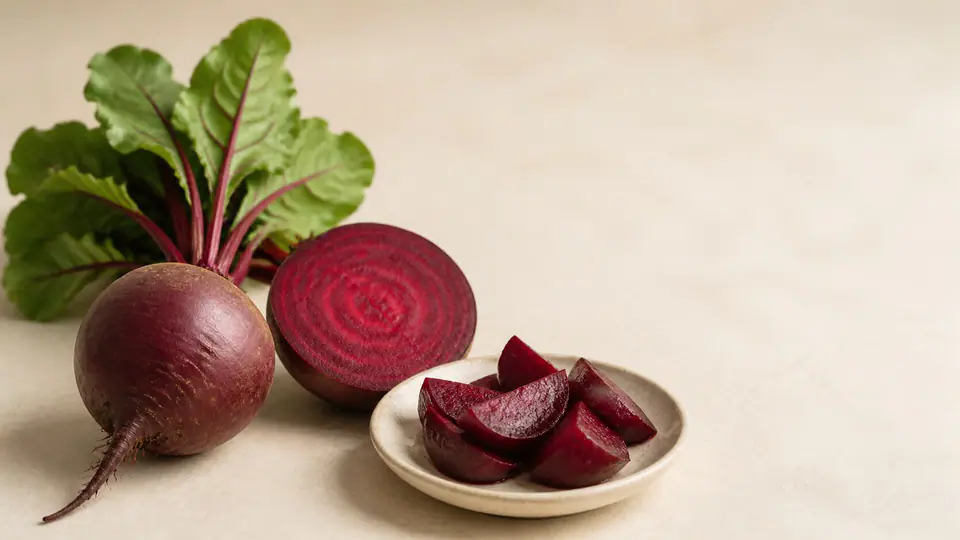
The process of red root vegetables becoming blood pressure drinks
Will drinking beet juice help lower blood pressure? In short, while some studies showed a slight decrease in clinic systolic blood pressure, it is difficult to be that definitive. This is because one plate of beets and one bottle of beet juice, clinic blood pressure and 24-hour blood pressure, and pink urine and actual hematuria are different stories.
Beets are plants of the Amaranthaceae family Beta vulgarisand are crops where the root is consumed. Kew classifies this plant as a recognized species of Amaranthaceae and a crop used as food. Boiled beets, salads, juices, concentrated shots, powders, and products with standardized nitrates all originate from beets, but the intake amount and nitrate exposure are not the same. The fact that various forms coexist under the same name increases misunderstandings.
Why beets attracted attention regarding blood pressure
The reason for focusing on beets lies in the connection between nitrates and nitric oxide. Since the process of nitrates converting to nitric oxide in the body is related to vascular function, beets began to be linked to exercise and blood pressure. As the image of red root vegetables met with the image of vascular health, beets moved from the dining table to functional drinks.
However, image and evidence are different matters. While it is true that beets have been eaten as food for a long time, tests on blood pressure primarily used beet juice with a set nitrate content. These results cannot be applied directly to general beet side dishes, non-standardized powders, or all juice products.
What did the research show?
In a 2024 meta-analysis of 11 trials involving 349 adults with hypertension, beet juice was found to lower clinic systolic blood pressure by an average of 5.31 mmHg. However, there were no significant changes in diastolic blood pressure or 24-hour blood pressure. The studies that showed an effect used beet juice data providing 200 to 800 mg of nitrates per day.
What is important here is that the certainty of the evidence is low, and the heterogeneity between studies is moderate to high. Therefore, the results should be interpreted cautiously. Furthermore, an average change in blood pressure figures does not prove the discontinuation of hypertension medication or the prevention of cardiovascular disease. A decrease in figures does not automatically translate to a reduction in disease risk.
A plate of beets is different from a bottle of juice
There are several ways to consume beets. Boiled beets, salads, juices, concentrated shots, powders, and standardized nitrate products all come from beets, but nitrate exposure varies by product. Because the research used beet juice with a fixed amount of nitrates, it cannot be concluded that other forms of beet products produce the same effect.
Concentrated beet juice or powders may have certain components more concentrated than general foods. The NIH ODS states that no clear safety issues were identified in studies using moderate amounts of beet juice for several weeks, but data on long-term use of concentrated products are limited. It is important not to extend the safety of general foods directly to high-concentration extracts, powders, or nitrate-standardized products.
What about taking it with hypertension medication?
The combined use of beet juice and hypertension medication has not been sufficiently reviewed through large-scale, long-term trials. If you are taking hypertension medication, or if you have naturally low blood pressure and experience dizziness, you should monitor blood pressure changes after starting concentrated beet juice and must not reduce your medication arbitrarily.
Then, what should you look for? First, check whether it is boiled beets, or juice, concentrated shots, or powder, and whether there is a nitrate label. Next, observe if there is hypotension or dizziness while taking hypertension medication. Caution is required when these two factors overlap.
Why red urine should not be dismissed as just being caused by food
Urine may turn pink or red after eating beets. This may be due to beet pigments. However, if red urine persists after stopping beet consumption, or is accompanied by pain, blood clots, or urinary symptoms, you should not assume it is just due to food and should seek a medical evaluation.
It is important to distinguish between urine color changes caused by beet pigments and actual hematuria (blood in the urine). It is risky to be complacent based solely on the color, or conversely, to assume it is always a disease. A rational approach is to check whether the timing aligns with beet consumption and whether there are other accompanying signals.
The Gap Between Expectation and Evidence
While there was a study showing that beet juice lowered systolic blood pressure measured in a clinic setting, the evidence is limited. The scale was not large, involving 11 studies and 349 participants, and there were significant differences between studies. Since there was no change in 24-hour blood pressure, a single value measured in a clinic must be interpreted separately from blood pressure over a full day.
It is also clear that the average change in blood pressure figures does not provide a basis for reducing or stopping hypertension medication. Beet juice remains in the realm of food or functional beverages and is not a means of replacing medication.
Similar Names, Different Characteristics
Whole beet foods and nitrate-standardized beet juices originate from the same raw material but are different interventions. Similarly, clinic systolic blood pressure and diastolic or 24-hour blood pressure carry different meanings under the same name of 'blood pressure.' The same applies to urine changes caused by beet pigments versus actual hematuria.
When names are the same, it is easy to assume they are the same thing. However, that specific gap must be distinguished. This distinction should be made first when choosing beets.
Realistic criteria to check today
First, when selecting beets, do not mistake the red color or images of nitric oxide for a blood pressure treatment. Instead, check the product form, the amount of nitrate, the measurement method, and the progression of dizziness or red urine alongside any medications currently being taken.
Specifically, check whether they are boiled beets, juice, concentrated shots, or powder, and if there is a nitrate label. If you are taking hypertension medication or experience hypotension or dizziness, monitor your blood pressure response. Check if red urine coincides with beet consumption and if there are other signals such as pain or blood clots. Together, these criteria provide a safe and realistic way to use beets.
References
- Kew Plants of the World Online: Beta vulgaris.
- Beetroot juice and blood pressure in hypertension: systematic review.
- NIH ODS exercise and athletic performance fact sheet.
- NHS: blood in urine.
This text explains the origin of the raw materials, the scope of research, and precautions before consumption. As this cannot replace individual diagnosis or treatment, please consult a medical professional if you are taking medication or if symptoms persist. If sudden and severe symptoms such as difficulty breathing or decreased consciousness occur after consumption, seek help from 119 or the emergency room.

Medical Staff Review
Director Choi Yeon-seung
Chief Director of Baekrokdam Korean Medicine ClinicBeet Dictionary Entry, reviewed the safety of expressions and the scope of verification before administration.
Review scope: Ingredient origin, human studies, concomitant medications, safety of intake · Last reviewed 2026-08-17
- Graduated from Kyung Hee University College of Korean Medicine
- Providing Korean medicine treatment since 2010
- Consultations for Gongjindan, Gyeongokgo, Nokyong (Deer Antler) restorative medicine, and customized restorative herbal medicine