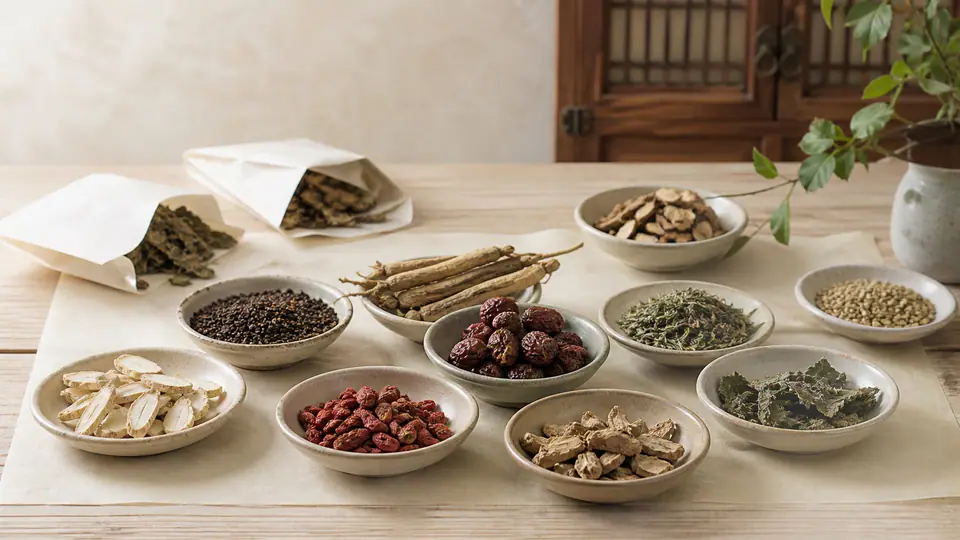
Hwasu Eunhwa, the small stove inside the body: Yukgye (Cinnamon Bark)
In Korean medicine classics, including the Sanghanron and Geumgwe Yoryak, Yukgye (Cinnamon Bark) frequently appears as a 'medicinal herb that ignites the fire within the body.' While its appearance, dried bark stripped from a tree, is simple, its fragrance is strong and warm. Traditionally, Yukgye has been used to support the Yang energy of the kidneys and expel cold energy from deep within the body. The name comes from 'Yuk' (meaning thick, fleshy bark) and 'Gye' (referring to the fragrant cinnamon tree).
It is easy to view Yukgye simply as a 'warming spice.' However, in Korean medicine, Yukgye is not merely a food that provides a sensation of heat. Its warmth does not stop at heating the surface but acts to activate functions deep within the body. Therefore, its application differs from other herbs that provide a similar 'warmth.'
Due to its potent warming properties, Yukgye is always discussed in terms of 'how much, for whom, and how it is used.' Depending on one's constitution or symptoms, it may be unnecessary, and its effects can vary significantly depending on the combination with other medicinal herbs. This page will guide you through the classical meaning of Yukgye and the criteria for using its power safely.
Summary at a Glance
We have summarized the key information about Yukgye at a glance. The table below will help you understand the origin of this herb, its properties, and the precautions to keep in mind.
| Category | Content |
|---|---|
| Origin | Hanja name Yukgye (肉桂), Scientific name Cinnamomum cassia A Korean herbal medicine made by stripping and drying the bark of the Cinnamomum cassia tree from the Lauraceae family. |
| Properties and Tropism | Properties: Greatly warm (Daewon), Taste: Acrid and sweet (Sin-gam), Acts on the Kidney, Spleen, and Pericardium meridians. |
| Representative Alias | It has been referred to as Yukgyesu (肉桂樹), Gyesu (桂樹), Daegye (大桂), and Gwongye (官桂). |
| Efficacy recorded in literature | In Korean medicine classics such as the Sanghanron and Geumgwe Yoryak, it is recorded as a means to supplement Kidney Yang, expel cold energy from deep within the body, and help the smooth flow of Qi and Blood. |
| Main Ingredients | Representative components include volatile oils, such as cinnamaldehyde. |
| Combinations and Contraindications | It may be incompatible with restorative medicines focused on supplementing Yang or Yin, so caution is required when used together. Additionally, those with excessive body heat, a tendency toward bleeding, or pregnant women require consultation with a specialist. |
The first things to check in this table are the Hanja name Yukgye (肉桂) and the scientific name in the origin row Cinnamomum cassiaThese two notations serve as the criteria for confirming the identity of the herb discussed in this entry; please be careful not to confuse it with other herbs with similar names.
Is this medicinal herb right for me?
Yukgye is a warm-natured herb used to resolve cold energy deep within the body and support Yang energy. However, because of this warming characteristic, it may cause discomfort depending on your constitution or symptoms. You can first gauge this based on the following three criteria.
- Generally suitable cases: Traditionally considered for those who have cold hands and feet, frequently feel cold in the abdomen or lower back, or those who experience slow digestion or easily become chilled after eating cold foods.
- Cases requiring caution: Caution is required for those whose faces redden easily, those with dry mouth and frequent constipation, or those experiencing sensations of heat or burning, as the warming properties of Yukgye may exacerbate these symptoms.
- Cases to avoid: It is generally avoided during pregnancy, for those with a tendency toward bleeding, or in states of strong accumulated internal heat (e.g., high fever, severe inflammatory response). Please consult a Korean medicine doctor for a specific determination.
Practical Q&A
We have collected frequently asked questions about Yukgye from the clinic. We will explain in which situations this herb is considered and what should be examined in advance. All answers are provided on the premise that they accompany a professional consultation.
For what kind of body conditions is Yukgye mainly used?
Yukgye has been traditionally used to resolve cold energy deep within the body and support the Yang energy of the kidneys. It is often considered for those with cold hands and feet, a cold sensation in the lower back or knees, or slow digestive function. However, since this must be determined by looking at the overall symptom pattern and constitution, the decision to take it is not made based on a single symptom alone.
Can I use this if I naturally have a body constitution that feels hot?
Yukgye (Cinnamon bark) is a medicinal herb with strong warming properties. It may not be suitable for individuals who easily flush in the face, experience dry mouth, suffer from frequent constipation, or often feel a sensation of heat. In such cases, herbs or prescriptions with different properties may be more appropriate, so please first verify your constitution and symptoms through a consultation.
Yukgye is also consumed as a food; is there a difference when it is used as a medicinal herb?
While the cinnamon used in cooking and the Korean herbal medicine Yukgye originate from the same Cinnamomum genus, their components and uses can differ depending on the part of the plant used, the harvest time, and the processing method. As a food, it is used in small, dispersed amounts, but in Korean herbal medicine prescriptions, the dosage and combination are adjusted according to the patient's symptoms and constitution. Therefore, it is difficult to determine the appropriateness of using it as a medicine based solely on experience with food consumption.
Can I take this together with other medications or health functional supplements?
When receiving a prescription containing Yukgye, it is important to inform us of any Western medications or health functional supplements you are currently taking. In particular, please be sure to mention during your consultation if you are taking medications related to blood circulation, glucose metabolism, or blood pressure, or if you have a scheduled surgery. Whether specific interactions occur depends on the individual's medication status, so verification is necessary.
Can it be taken during pregnancy or breastfeeding?
This is a medicinal herb that requires special caution during pregnancy and breastfeeding. Because Yukgye has strong warming properties and acts to move the energy within the body, it is generally handled with caution during this period. Please be sure to inform us of any pregnancy or breastfeeding status at the start of your consultation.
How long is a prescription containing Yukgye typically taken?
The duration and dosage vary depending on the progress of symptoms, constitution, and the combination with other herbs. It may be used short-term to relieve cold energy, or included long-term to manage a constitution with weak Yang energy. The exact duration will be guided according to the prescription after your consultation.
Relationship with Other Medicinal Herbs (Yakdae/Pairing)
Yukgye is rarely used alone. Its warming effect becomes more distinct when paired with other herbs, which is traditionally called "Yakdae" (medicinal pairs). This is similar to how a person's talent finds its true place when paired with someone with a different role rather than being alone. The same applies to Yukgye. Its power to relieve cold energy deep within the body works more stably when combined with herbs that nourish the blood or herbs that lift the energy.
However, because its warming properties are so strong, there are also pairs that do not harmonize. Since Yukgye is hot in nature and has a strong aroma, it is often difficult to use in cases where there is already excessive internal heat or active bleeding. Specific combinations vary by prescription, so this is decided based on your constitution and symptoms during the consultation.
- Yukgye + Astragalus Root As recorded in the Yeonggarok Bojungikgi-tangis used in a structure where Astragalus lifts the energy of the middle burner (Jungcho), and Yukgye warmly embraces that energy. This is a prescription traditionally utilized for those who are frail and losing energy.
- Yukgye + Angelica Gigas Root From the Shanghanlun's Dangguigeongang-tangis combined such that Angelica nourishes the blood and Yukgye relieves internal cold energy, aiming to treat cold symptoms accompanied by blood deficiency.
- Yukgye + Poria Cocos + Atractylodes Macrocephala Root, etc. In the 'Shanghanlun', Jingye-tangis a prescription where Yukgye supports the Kidney Yang (Sinyang), while Poria and Atractylodes work together to dry dampness. This is traditionally considered when water-dampness is intertwined with cold energy, such as in poor urination or lower body edema.
In what form is it consumed?
The use of Yukgye varies depending on the method used to preserve its warming properties and aroma. Generally, the most common form is decoction (boiling and extracting), which is used at Korean medicine clinics according to the prescription. In daily life, it is sometimes added in small amounts to teas or food as a spice, but it is best to distinguish this from its use as a medicinal herb.
- Tea Yukgye tea, made by boiling a small amount of Yukgye, is sometimes consumed daily. However, this differs from medicinal administration, so professional consultation is required for the dosage and duration appropriate for your symptoms.
- Food It is used as a spice in steaming, braising, or desserts. This should be thought of as supporting the warming nature of the food rather than taking it for medicinal effects.
- Decoction (煎湯, herbal medicine decoction) This is the most common form of prescription in a Korean medicine clinic. It is boiled in water with other medicinal herbs and consumed, utilizing the warm properties of Cinnamomum cassia to align with the overall direction of the prescription.
- Professional Prescription Representative traditional prescriptions containing Cinnamomum cassia include 桂枝 (Gui Zhi) series prescriptionsand Sasintang (Four Spirit Decoction) and others. The specific choice of prescription varies depending on your constitution and symptoms, so it is determined through a consultation.
Interactions and Safety During Use
Since Cinnamomum cassia is a medicinal herb with distinct warm properties, caution is required during intake depending on your constitution, symptoms, and other medications being used. In particular, those with a heat-prone constitution or specific medical conditions are not recommended to take it long-term without a prior consultation.
- During pregnancy or breastfeeding: Due to concerns regarding the uterine contraction effects of Cinnamomum cassia, those who are pregnant or breastfeeding must consult a Korean medicine doctor before use.
- Bleeding Tendency · Concurrent use of Anticoagulants: Because Cinnamomum cassia helps blood circulation and may potentially increase the risk of bleeding, caution is required for those taking anticoagulants or antiplatelet agents, or those with bleeding disorders.
- Decreased Liver or Kidney Function: As it contains components that may place a burden on liver or kidney metabolism, those with related diseases or those taking corresponding medications require a professional consultation.
- Thyroid Disease: There are reports that the active ingredients of Cinnamomum cassia may affect thyroid function; therefore, those with thyroid disease or those taking related medications should exercise caution.
- Diabetes: As there is a possibility it may affect blood glucose control, it is recommended that those taking diabetes medication or those requiring blood glucose management use it after a consultation.
- Hypertension: There are reports that Cinnamomum cassia may affect blood pressure, so caution is required for those taking hypertension medication or those requiring blood pressure management.
- Hypersensitivity reactions: Those with allergies to cinnamon or similar plants should avoid use.
While Cinnamomum cassia is a common ingredient in food, the dosage and long-term use as a medicinal herb require professional judgment. If any of the above items apply to you, or if you are currently taking Western medicine, please be sure to inform your doctor during your medical evaluation.
If you experience these symptoms
If the following signs appear while taking a prescription containing Cinnamomum cassia, they can be seen as known warning signs that the body is reacting excessively to the warm properties. In such cases, it is important to notify your attending Korean medicine doctor and receive guidance rather than adjusting the dosage or prescription composition yourself.
- Dryness of the mouth and tongue or severe thirst
- A feeling of flushing or redness in the face
- Abdominal tightness or diarrhea
- Heart palpitations or chest tightness
- Headache or dizziness
If symptoms are mild, please stop taking the medication for now and inquire during clinic hours. However, if severe systemic reactions occur, such as chest pain, severe throbbing, difficulty breathing, or decreased consciousness, please visit an emergency medical institution (119 or the nearest emergency room).
Differences from other restorative medicines
Yukgye (Cinnamon Bark) is a medicinal herb with warm and fragrant properties, but these characteristics alone do not place it in the same category as all restorative herbal medicines. In traditional medicine, prescriptions labeled as 'Bo (補)' (tonifying/restorative) have different directions of supplementation, and Yukgye is a medicinal herb that acts along a specific pathway among them.
Traditional restorative medicines such as Gongjindan or Gyeongokgo are established as prescriptions that supplement energy (Qi) and essence (Jeong) in a broad sense. These often aim for long-term nourishment and recovery through a complex blend of various medicinal herbs. On the other hand, while Yukgye can serve as one pillar of such complex restorative medicines, it is also used alone or in short-term prescriptions to help the body's Yang energy (Yang-gi) using its warmth and fragrance. Simply put, if Gongjindan or Gyeongokgo is a 'big picture for balanced overall supplementation,' Yukgye is closer to a 'specific tool for warming and resolving particular coldness (Han-gi) or Yang energy deficiency.'
Additionally, Yukgye differs in nature from Qi-tonifying medicines such as Hwanggi (Astragalus) or Insam (Ginseng). While Hwanggi and Insam are primarily used to supplement and lift Qi, Yukgye places more emphasis on warming the Yang and aiding the flow of blood. Therefore, for those who are easily fatigued and quiet due to Qi deficiency, the Insam family may be considered first; for those with cold hands and feet, a cold abdomen, and a feeling of sluggish blood circulation, a prescription containing Yukgye may be more appropriate.
Whether a specific restorative medicine or Yukgye itself is more appropriate depends on your constitution, current symptoms, and other medicinal herbs used in combination. It is safe to determine the specific choice through a medical consultation.
References
- Evidence material 1 regarding Yukgye: Supporting data from data.go.kr.
- Evidence material 2 regarding Yukgye: Korea Institute of Korean Medicine official data.
- Evidence material 3 regarding Yukgye: Crude drug data from the National Institute of Food and Drug Safety Evaluation.
If you would like to check if this medicinal herb is right for you or which prescription it should be used with, please leave a medical inquiry. For those who find it difficult to visit the clinic, non-face-to-face consultations are available; we will provide guidance after first reviewing your current condition and current medications.

Medical Staff Review
Director Choi Yeon-seung
Chief Director of Baekrokdam Korean Medicine ClinicYukgye Dictionary Entry, reviewed the safety of expressions and the scope of verification before administration.
Review Scope: Clinical Accuracy, Pharmacology, Contraindications, Combinations, QA · Last Reviewed 2026-08-16
- Graduated from Kyung Hee University College of Korean Medicine
- Providing Korean medicine treatment since 2010
- Consultations for Gongjindan, Gyeongokgo, Nokyong (Deer Antler) restorative medicine, and customized restorative herbal medicine