The Misconception That Bitter Roots Become Hormones
Will taking Tongkat Ali improve testosterone or sexual function? In short, it is difficult to conclude so based on the evidence reviewed thus far. While some studies have shown signals of increasing total testosterone levels, this does not necessarily translate to improvements in libido, erection, muscle mass, or fertility. On the contrary, the European Food Safety Authority (EFSA) raised concerns about the potential for DNA damage in the stomach and duodenum with certain Tongkat Ali extracts, concluding that safety has not been established under any conditions of use. This is an ingredient where small signals of efficacy must be viewed alongside separate safety concerns.
The reason this ingredient may seem familiar is likely due to advertising phrases such as 'male vitality' or 'testosterone booster.' However, the impression given by the name and the actual evidence move at different speeds. As the bitter root of Southeast Asia transforms into a modern supplement, traditional use, standardized ingredients, small clinical trials, and genotoxicity evaluations become mixed within a single product.
The Identity Hidden Behind the Name
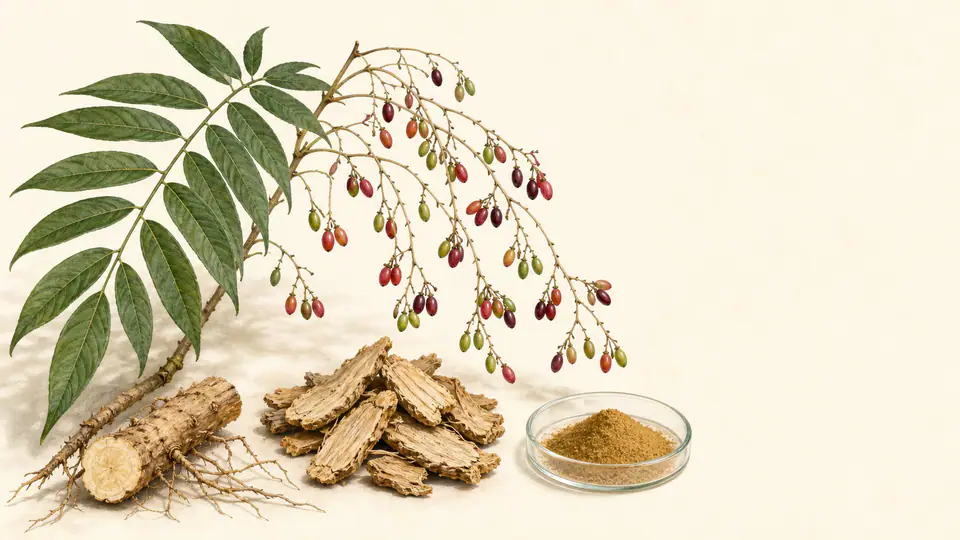
Tongkat Ali is a root ingredient from Eurycoma longifolia, a tree of the Simaroubaceae family found in the tropical regions of Southeast Asia. It also has nicknames such as Malaysian Ginseng and Longjack. The Royal Botanic Gardens, Kew, classifies this tree as a recognized species growing from Indochina to western Malaysia. Importantly, Tongkat Ali is not male hormone itself. Commercial products vary widely, ranging from traditional root decoctions, dried root powder, and water extracts to branded ingredients standardized for eurymanon or glycosaponins. Concentration and safety data differ by form. Since one name covers several different substances, the first thing to check when choosing a product is this identity.
Reasons for the Expectations
There is a reason why Tongkat Ali is associated with an image of male vitality. A 2022 meta-analysis of five randomized trials reported signals of increased total testosterone in some men. However, the authors of the analysis stated that additional research is needed for clinical use due to high study heterogeneity and a small number of trials. Another 2015 meta-analysis on erectile function included only two trials with 139 participants, and the overall change in IIEF-5 was not significant; signals were only present in some subgroups with low baseline scores. In other words, saying that numbers increase is not the same as saying that actual life problems are resolved.
Differences Between Root, Powder, and Water Extracts
Although all Tongkat Ali products use the same name, their contents differ. Raw E. longifolia root, dried powder, and concentrated water extracts have different concentrations and component profiles. Certain branded ingredients are water extracts standardized to 0.8–1.5% eurycomanone. This was the specific ingredient proposed at 200 mg/day that EFSA evaluated. However, EFSA clearly stated that they reviewed the safety of this ingredient, not its efficacy. It must be remembered that efficacy and safety are different evaluations.
EFSA's Concerns Regarding DNA Damage
The EFSA's decision marks a critical turning point in the story of Tongkat Ali. Chromosomal abnormalities were observed in in vitro tests, and DNA damage to the stomach and duodenum was observed in high-dose oral animal tests. Based on this, the EFSA concluded that the safety of this specific raw material has not been established under any conditions of use. This means more than simply 'be cautious'; it means there is currently insufficient evidence to state that it is safe. So, what should you look for? You should start by checking the type of extract listed on the product label, the eurycomanone content, the daily intake amount, and the branded raw material name.
Between Test Numbers and Actual Symptoms
An increase in total testosterone levels is just one test result. Libido, erection, sperm quality/quantity, muscle mass, fatigue, and fertility are each different issues. Before choosing Tongkat Ali, you must first distinguish which of these six you are trying to address. If you suspect new sexual dysfunction or low testosterone, it is a priority to evaluate causes such as lack of sleep, obesity, medications currently being taken, or pituitary/testicular diseases. Prescribed hormones or erectile dysfunction medications should not be arbitrarily replaced with this ingredient.
Combined Intake and Individual Circumstances
Extra caution is needed when using Tongkat Ali with other supplements or medications. If insomnia, nervousness, throbbing, headache, or gastrointestinal discomfort occurs, use should be discontinued. At this time, check if other stimulant ingredients or sexual function complex ingredients are included. Use should be avoided, and the medical team should be consulted, for those who are pregnant, breastfeeding, children, or those with hormone-sensitive diseases (such as prostate or breast cancer) or liver/kidney disease. Since a safe self-administration dose cannot be provided, long-term or high-concentration use should not be taken lightly.
Similar names, different ingredients
There are four common comparisons that get mixed up when understanding Tongkat Ali. First, E. longifolia root and concentrated water extract come from the same plant but are different products. Second, Tongkat Ali and prescribed testosterone differ in their mechanism of action. Third, total testosterone levels are not on the same line as libido, erection, and fertility. Fourth, small short-term efficacy trials and EFSA's genotoxicity safety evaluations are answers to different questions. Distinguishing these four is the way to escape the confusion of the name.
Criteria to Check Today
If you are considering Tongkat Ali, first check what kind of extract the product is, the eurycomanone content, the daily dose, and the branded ingredient. Next, distinguish whether you expect a test value or an actual symptom among libido, erection, sperm, fatigue, or muscle. It is also necessary to first receive a proper evaluation, such as a morning testosterone re-test. Finally, make a judgment without long-term self-administration of ingredients where the DNA damage concerns raised by EFSA have not been resolved. The exact extract, target symptom, and context of safety evaluation come before advertising phrases like male vitality.
References
- Kew Plants of the World Online: Eurycoma longifolia.
- EFSA: Safety of Eurycoma longifolia root extract as a novel food.
- Tongkat Ali and erectile function: systematic review and meta-analysis.
- E. longifolia and total testosterone: systematic review and meta-analysis.
- E. longifolia water extract in men: randomized trial.
This text explains the origin of the raw materials, the scope of research, and precautions before consumption. As this cannot replace individual diagnosis or treatment, please consult a medical professional if you are taking medication or if symptoms persist. If sudden and severe symptoms such as difficulty breathing or decreased consciousness occur after consumption, seek help from 119 or the emergency room.

Medical Staff Review
Director Choi Yeon-seung
Chief Director of Baekrokdam Korean Medicine ClinicTongkat Ali Dictionary Entry, reviewed the safety of expressions and the scope of verification before administration.
Review scope: Ingredient origin, human studies, concomitant medications, safety of intake · Last reviewed 2026-08-17
- Graduated from Kyung Hee University College of Korean Medicine
- Providing Korean medicine treatment since 2010
- Consultations for Gongjindan, Gyeongokgo, Nokyong (Deer Antler) restorative medicine, and customized restorative herbal medicine