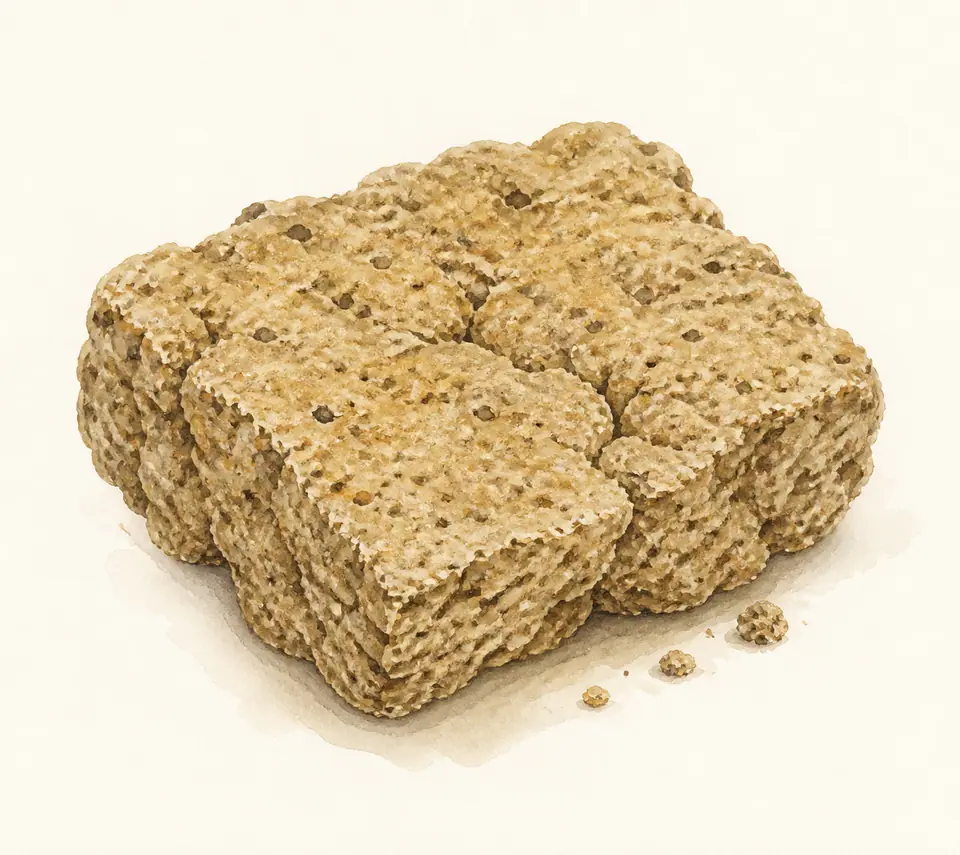
Yuksingok (Six-Spirit Starter), Medicine Made from Fermented Starter
According to the 《Bencao Gangmu》, Shinguk (神麴) is a medicinal fermentation starter made by mixing 100 geun of wheat flour with red bean powder, apricot seed juice, Qinghao (靑蒿), Cang'er (蒼耳), and Hongliao (紅蓼) juice, and then fermenting it with koji mold. Because of these 6 ingredients, or in comparison to the 6 deities (Six Spirits), the Azure Dragon, White Tiger, Vermilion Bird, Black Tortoise, Tengshe, and Gouchen, it came to be called 'Yuksinguk (六神麴)'. While the name may sound like a mystical herb, it is actually a fermented food similar to the koji we are familiar with. In Korean medicine, this fermentation starter is a representative 'digestive medicine' (Soshik-yak), a medicinal ingredient traditionally used when food is not digested and causes indigestion.
Unlike the ordinary image of 'fermented starter,' Singok is not a simple digestive supplement. The Compendium of Materia Medica records that it 'digests food, lowers qi, and removes phlegm-reversal, cholera, diarrhea, and abdominal bloating,' and the Theory of Medicinal Properties explains that it 'transforms accumulated food and masses, and strengthens the spleen and warms the stomach.' In other words, it is used to resolve accumulation caused by leftover food and support the function of the spleen and stomach; however, it may actually be burdensome for those who have a naturally weak stomach. The idea that 'anyone can take it because it helps digestion' does not apply to this medicinal ingredient.
Therefore, the dosage, the patient, and the method of use for Singok are particularly important. It is not suitable for those with excessive heat in the spleen and stomach, those with high stomach acid, or those with spleen yin deficiency. Traditional records also advise caution during pregnancy. In prescriptions, it is often paired with other digestive or spleen-stomach medicines; there is no official evidence supporting its use as a standalone tea. At Baekrokdam Korean medicine clinic, prescriptions containing Singok are determined only after evaluating the patient's digestive state and constitution, the moment a piece of starter becomes medicine, precise knowledge of its application is required.
Summary at a Glance
While Singok may sound like a special herb based on its name, it is actually a fermented medicinal starter. Here is a summary of its identity and core characteristics.
| Category | Content |
|---|---|
| Origin | Hanja name: 神麴, Scientific name Triticum aestivum L., A medicinal starter made by kneading wheat flour (or wheat bran) with red bean powder, crushed apricot seeds, sweet wormwood juice, xanthium juice, and smartweed juice, then fermenting it with starter mold |
| Properties and Tropism | Properties: Warm, Sweet, Acrid; Target Organs: Spleen, Stomach |
| Representative Alias | Yuksingok, Yukgok, Singok, Geongok, Hwangsingok |
| Efficacy recorded in literature | 《本草綱目》: “消食下氣,除痰逆、霍亂、泄痢、脹滿諸氣。” 《藥性論》: “化水穀宿食、癥結積滯,健脾暖胃。” |
| Main Ingredients | Wheat-based fermented product; red bean powder, apricot seeds, sweet wormwood, xanthium, and smartweed participate in the fermentation process |
| Combination, Contraindications, and Precautions | Combined with other digestive or stomach-strengthening medicines to resolve spleen-stomach indigestion and food accumulation; use with caution in constitutions with spleen yin deficiency, excessive stomach heat, or hyperacidity; caution is required during pregnancy as modern official evidence regarding safety has not been confirmed |
Is this medicinal herb right for me?
Singok is a medicinal ingredient often considered when digestion is poor or when food feels stuck. However, it does not provide the same effect for everyone and may actually increase discomfort depending on the constitution or symptoms. Based on verified data and organized standards, we will first categorize its use simply.
-
Generally suitable casesSuitable cases: Traditionally considered when digestion feels slow after overeating or consuming greasy foods, or when the abdomen feels tight or as if food is stuck. The Compendium of Materia Medica records its ability to 'digest food and lower qi,' and the Theory of Medicinal Properties notes it 'transforms accumulated food and strengthens the spleen and warms the stomach,' showing it has been used to resolve states where food remains undigested.
-
Cases requiring cautionCases requiring caution: Those with high stomach acid, frequent heartburn, or those who are pregnant should be cautious. KingNet (National Network Medicine) advises 'caution for pregnant women.' Additionally, it may not be suitable for those classified as having spleen yin deficiency or excessive stomach heat, so it is best to decide after consulting a Korean medicine doctor.
-
Cases to avoidCases to avoid: Long-term use without specific food accumulation is not advisable. The Benjing Fengyuan records that 'long-term use without accumulation consumes the body's original qi,' providing a traditional warning that using it for a long time when no undigested food remains may deplete vital energy. Furthermore, as the raw material is wheat-based, those with wheat allergies or gluten-related disorders must check before use.
Practical Q&A
I have gathered a few frequently asked questions about Singok from the clinic. I will answer keeping in mind that when choosing a medicinal ingredient, 'who, how much, and how' must always be considered together.
Can I take Singok alone when I have indigestion?
Rather than taking it alone, it is common to use it in combination with other ingredients within a prescription. Gami-pyeongwi-san, found in the Miscellaneous Diseases section of the Dongui Bogam, is a prescription that adds Shinguk and malt to the original Pyeongwi-san for food stagnation, and Sosik-cheongul-tang includes Pinellia, citrus peel, Poria cocos, Shinguk, and hawthorn fruit to treat food stagnation-accumulation disorder (jojap syndrome). Since indigestion can arise from various patterns such as stomach heat, spleen deficiency, phlegm-dampness, or fire constraint, it is safe to receive a diagnosis and prescription from a Korean medicine doctor.
Can I brew Singok as a tea?
No traditional or official evidence supports taking it as a standalone tea. Singok is generally used in decoctions (boiled medicine) or processed into pills or powders. The health.kr Oriental Materia Medica information records using 9–15g in a decoction bag. Lightly brewing it like tea may not be appropriate in terms of efficacy and safety, so it is not recommended.
I often have heartburn or high stomach acid; can I use Singok?
Singok is a digestive medicine with warm, sweet, and acrid properties, recorded as helping to keep the spleen and stomach healthy. However, it may not be suitable for those with excessive stomach heat, hyperacidity, or spleen yin deficiency. A digestive aid is not always the answer just because there are symptoms; in cases of heartburn or bloating, it may actually worsen the symptoms, so a consultation is necessary.
Can Singok be used during pregnancy or breastfeeding?
Specific and official Korean clinical trial or epidemiological evidence regarding pregnancy and breastfeeding has not been identified. Some traditional records state, "Use with caution during pregnancy." Please consult a Korean medicine doctor to determine whether to use this during pregnancy or breastfeeding.
Can I take it for a long period of time?
There are classical records suggesting that long-term use in the absence of food stagnation may deplete vital energy. Singuk is a medicinal ingredient used to temporarily relieve situations where food is stuck and not digested; it is not a restorative tonic to be taken habitually every day. If abdominal bloating persists, or if you experience stomach pain, heartburn, diarrhea, nausea, vomiting, or allergic reactions, a visit to a hospital is recommended.
Are there any precautions when using this with Western medicine or other restorative tonics?
Systematic literature supporting specific interactions between Singuk (Massa Medicata Fermentata) and Western medicine was not directly obtained through searches. However, since the raw material is wheat-based, those with wheat allergies or gluten-related issues should consider the characteristics of the ingredient. As there are also no confirmed official documents on specific combination principles with other restorative tonics such as Gongjindan, Gyeongokgo, or Bojungikgi-tang, please inform your doctor of any medications or tonics you are currently taking before prescription.
Relationship with Other Medicinal Herbs (Yakdae/Pairing)
Singuk is rarely used alone. In Korean medicine, rather than simply chasing the symptoms of food stagnation, digestive medicines are often paired with other ingredients depending on whether the cause is weak spleen and stomach energy, the presence of dampness-phlegm, or whether it is accompanied by heat or cold. These pairs are traditionally called 'Yakdae'. The use of Singuk becomes clearer especially when combined with other ingredients that support the digestive function of the spleen and stomach.
- Singuk + Maega (Malt) Guknyeol-jijul-hwan from the "Uihak Jeongjeon". A prescription composed of Baekchul, Jishil, Singuk, and Maega, traditionally used for overeating, indigestion, or diarrhea.
- Singuk + Banhaguk Iguk-won from the "Dansim". A prescription using equal parts of Singuk and Banhaguk, traditionally used for cases where the spleen is weak and there is excessive phlegm, making it difficult to eat food.
- Singuk + Baekchul + Jinpi + Banha Anjung-jogi-hwan from the Miscellaneous Diseases section of the "Dongui Bogam". It is passed down as a prescription that uses roasted Singuk combined with various spleen and stomach medicines to treat stomach reflux and phlegm-qi.
- Singuk + Sansa + Hyangbuja + Cheongung Pyeonggan-sunggi-bojung-hwan from the Miscellaneous Diseases section of the "Dongui Bogam". Traditionally used for cases where fire-stagnation accumulates in the spleen and stomach, causing phlegm, vomiting, and symptoms of acidity or irritability.
There are few clearly recorded items regarding combination contraindications. However, since Singuk itself has a warm nature and aids digestion, it should be considered more carefully along with other accompanying ingredients for those with a constitution of severe spleen yin deficiency, severe stomach fire, or high stomach acid. As official literature on specific combination contraindications or interactions has not been confirmed, it is necessary to examine symptoms and constitution during consultation.
In what form is it consumed?
As Singuk is a fermented medicinal starter, it is not an ingredient to be lightly used as a general food or steeped alone like a tea. Traditionally, it is often decocted (boiled) with other ingredients within a Korean herbal medicine prescription or processed into pills or powder. Each form is explained below.
- Tea: Not common. No traditional or official standards have been confirmed for steeping Singuk alone as a tea.
- Food: Not common. There is no evidence that it is recognized as a food ingredient other than for medicinal use as a fermented medicinal starter.
- Decoction (boiling in water): The most common traditional form. It is boiled and consumed with other Korean herbal medicines, typically packaged in 9–15g for decoction, or processed into pills or powder.
- Professional Prescription: The most appropriate form. Although Singuk is classified as a digestive medicine, there are contraindications depending on constitution or symptoms, so use under the prescription of a Korean medicine doctor is recommended.
Interactions and Safety During Use
As Singuk is a fermented medicinal starter, it is not an ingredient to be lightly used as a general food or steeped alone like a tea. Traditionally, it is often decocted (boiled) with other ingredients within a Korean herbal medicine prescription or processed into pills or powder. Each form is explained below.
- Tea: Generally, no traditional or official evidence has been confirmed for steeping Singuk alone as a tea.
- Food: There is no official evidence of recognition as a food ingredient other than for medicinal use as a fermented medicinal starter.
- Decoction (boiling in water): The most common form. According to the Korean herbal medicine information on health.kr, it is used by decocting 9–15g or used in the form of pills or powder.
- pills and powders: In cases such as Anjung-jogi-hwan in the "Dongui Bogam", there are examples of processing Singuk into a paste pill (humar) by dissolving it in bamboo juice or ginger juice.
Overall, Singuk is ③ a medicinal herb that requires decoction (boiling) and ④ for which self-administration is not recommended. Because there are clear contraindications depending on one's constitution and symptoms, it is safe to use it only under the prescription of a Korean medicine doctor.
While Singuk is commonly used for indigestion, it is not unconditionally safe for everyone. We have summarized the verified criteria below; please be sure to consult a Korean medicine doctor based on your individual condition.
- Traditional Contraindicated Constitutions and Symptoms: Caution is required in cases of Spleen Yin Deficiency (Bi-eum-heo), excessive Stomach Fire (Wi-hwa-chi-seong), or hyperacidity (excessive stomach acid).
- Pregnancy and Breastfeeding: KingNet (National Network Medicine) records it as "use with caution during pregnancy." However, since Korean clinical trials or epidemiological studies supporting safety during pregnancy and lactation have not been confirmed, please be sure to consult a doctor if you are pregnant or breastfeeding.
- Interactions with Western medicine: Systematic literature regarding specific Western medicine interactions for Massa Medicata Fermentata has not been confirmed at this time. If you are taking Western medications, it is advisable to inform your doctor during prescription.
- Ingredient Allergies: Singuk is made by kneading and fermenting flour (or wheat bran) with red bean powder, apricot seeds, sweet wormwood, Xanthium strumarium, and smartweed. Caution is required for those with wheat allergies or gluten intolerance.
- Long-term Use and Overdose: The Benjing Fengyuan records that "long-term administration in the absence of food stagnation consumes the body's original qi." It is not advisable to use it excessively for a long period simply because of poor digestion.
If you experience reactions such as hyperacidity, increased stomach pain or heartburn, persistent abdominal bloating, diarrhea or constipation, nausea, vomiting, hives, or difficulty breathing during administration, stop taking the medicine and visit a hospital. Since Singuk is a medicinal herb that becomes more effective when paired with other herbs within a prescription, we recommend receiving a customized prescription through a medical evaluation rather than judging on your own.
If you experience these symptoms
If these symptoms appear
Singuk is a medicinal herb used when food is stuck or digestion is slow, but if the dosage is incorrect or it does not suit your constitution, it may instead place a burden on the gastrointestinal tract. The following are known warning signs to watch for during or after administration. Even for mild discomfort, it is safer to notify the prescribing Korean medicine doctor first rather than adjusting it yourself.
- When stomach acid increases or the feeling of heartburn and burning worsens
- When abdominal bloating and a feeling of tight tension persist
- When diarrhea or constipation recurs, or when accompanied by nausea and vomiting
- When allergic reactions such as hives, difficulty breathing, or throat swelling appear
- When appetite decreases further and a feeling of exhaustion continues
In particular, if difficulty breathing, throat swelling, or severe abdominal pain and vomiting occur, please visit an emergency medical institution and inform the medical staff that you are taking Korean herbal medicine.
Differences from other restorative medicines
Just because Singuk is categorized as a restorative medicine does not mean it functions like all restorative medicines. While restorative medicines such as Gongjindan or Gyeongokgo focus on supplementing the constitution and recovering energy, Singuk is a digestive agent (Soshik-hwa-je) used when food is stuck and digestion is slow. In other words, its purpose is different from restorative medicines that fill the body.
However, since it is difficult to properly absorb the effects of other restorative medicines when digestive function is sluggish, it is sometimes included as a supplement in some restorative prescriptions. Nevertheless, specific formulas or academic literature supporting the principles of how Singuk is combined with Gongjindan, Gyeongokgo, or Bojungikgi-tang have not been confirmed. Therefore, it is safe to consult a Korean medicine doctor after evaluating your symptoms and constitution to determine if Singuk is necessary or if it can be used with other restorative medicines.
References
- Supporting data for Singuk 1: Crude drug data from the National Institute of Food and Drug Safety Evaluation.
- Supporting data for Singuk 2: GBIF plant classification data.
- Supporting evidence for Shinguk 3: GBIF plant classification data.
- Supporting evidence for Shinguk 4: GBIF plant classification data.
- Supporting evidence for Shinguk 5: PubMed academic paper.
- Supporting evidence for Shinguk 6: PubMed academic paper.
- Supporting evidence for Shinguk 7: PubMed academic paper.
- Supporting evidence for Shinguk 8: NCBI original academic data.
If you would like to check if this medicinal herb is right for you or which prescription it should be used with, please leave a medical inquiry. For those who find it difficult to visit the clinic, non-face-to-face consultations are available; we will provide guidance after first reviewing your current condition and current medications.

Medical Staff Review
Director Choi Yeon-seung
Chief Director of Baekrokdam Korean Medicine ClinicShinguk Dictionary Entry, reviewed the safety of expressions and the scope of verification before administration.
Review Scope: Clinical Accuracy, Pharmacology, Contraindications, Combinations, QA · Last Reviewed 2026-08-16
- Graduated from Kyung Hee University College of Korean Medicine
- Providing Korean medicine treatment since 2010
- Consultations for Gongjindan, Gyeongokgo, Nokyong (Deer Antler) restorative medicine, and customized restorative herbal medicine