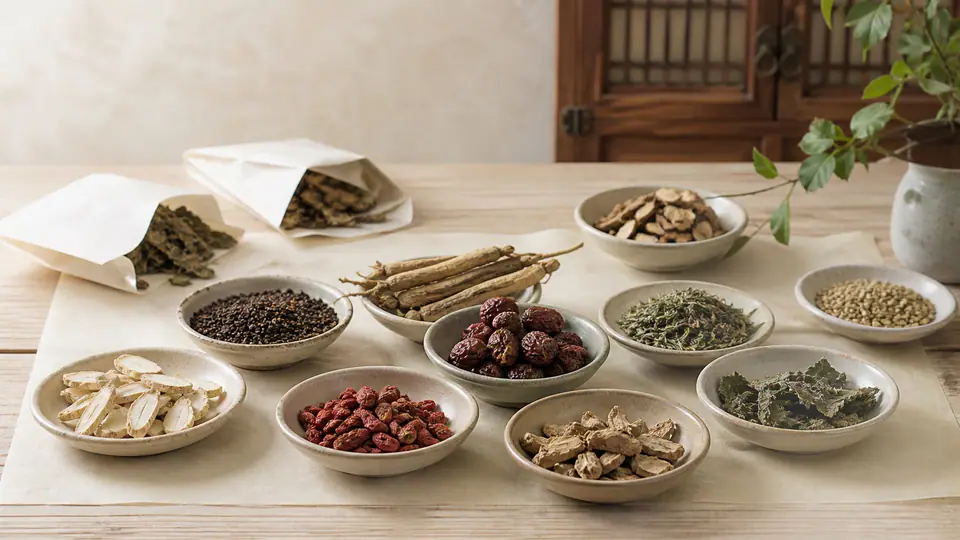
The Small Fruit of Pagi (Breaking Qi), Young Trifoliate Orange Fruit, Jishil
The Hyangyak Jipseongbang (Compendium of Native Korean Medicine) states that trifoliate orange fruits are harvested, split, and dried, then the insides are scraped out and the fruit is lightly roasted until it becomes fragrant before use. Because these small, young fruits resemble tangerines, they were called 'Ji,' and the name 'Shil' was added to indicate that they are unripe fruits. Young fruits are classified as Jishil, while slightly more mature ones are called Jigak; both come from the trifoliate orange tree Poncirus trifoliatabut they are harvested at different times. Aliases such as Dongjeong, Jeomja, Chwigyul, and Yadeungja show that these small fruits have been used as medicine in a wild, potent state with a strong scent, remaining largely untouched by human cultivation.
Many people view it simply as a 'citrus-based medicinal herb used for indigestion,' but the nature of Jishil is far stronger. In traditional medicine, Jishil is recorded as having the effects of draining phlegm and eliminating accumulations (sadamsojeok) and breaking Qi to dissipate fullness (pagisanbi). In other words, it is used to resolve blockages caused by the clumping of phlegm and food, and to open 'blocked states' such as a feeling of fullness in the chest and flanks, oppression below the sternum, and constipation. The term 'Pagi' (Breaking Qi) itself does not mean gently managing the flow of Qi, but rather strongly breaking through clumped energy. Therefore, Jishil is closer to a 'purgative agent' (gongje) than a simple digestive aid.
Due to this strong nature, Jishil is often used within a prescription alongside other herbs rather than alone. The Dongui Bogam records that Gwaru-jishil-tang is used for 'dammi-simgyu' (phlegm obstructing the mind), where phlegm clumps make it difficult to expectorate, the chest hurts, and speech is impaired; Hubak-jishil-tang is used for bowel obstruction and chest oppression; and Chija-daehwang-tang is used for alcoholic jaundice. Additionally, Jishil-sobi-hwan, combined with Coptis, Magnolia bark, Pinellia, Atractylodes, and Ginseng, is used for 'simha-bi' (fullness below the heart), oppression in the epigastric region, and loss of appetite. Depending on which prescription it is included in, the direction of Jishil's action changes.
However, this strength is a double-edged sword. Jishil is appropriate only for cases of 'gichwi-sasil,' where energy is clumped and pathogenic factors are excessive. Caution is required for those with a weak spleen and stomach or for pregnant women; if used when Qi is deficient, it may instead damage the healthy Qi (jeonggi). Long-term or excessive intake may cause digestive disorders or weakness of energy. Therefore, 'how much, for whom, and how' Jishil is used is particularly important. It is not a light tea, but a medicinal raw material used in the form of decoctions or preparations under the prescription and pattern identification of a Korean medicine doctor.
Summary at a Glance
Jishil is the young fruit of the trifoliate orange tree, with its name varying by harvest time. The table below provides a summary of the plant origin, properties, and uses of this medicinal herb in traditional medicine.
| Category | Content |
|---|---|
| Hanja Name / Scientific Name | 枳實, Poncirus trifoliata Rafinesque |
| Plant Origin and Part | Immature fruit of the trifoliate orange tree (Rutaceae) |
| Harvest Period | Solar calendar May to June, loose drying or low-temperature drying |
| Properties, Toxicity, and Nature | Bitter, Sour, Acrid; Non-toxic; Slightly Cold |
| Meridian Tropism | Large Intestine, Spleen, Stomach |
| Representative Aliases | Dongjeong, Jeomja, Chwigyul, Yadeungja |
| Efficacy Recorded in Literature | Draining phlegm and eliminating accumulations, breaking Qi to dissipate fullness |
| Main Indications | Clumping of phlegm and fluid in the chest and flanks, fullness below the heart (simha-bi), indigestion, constipation, etc. |
| Main Components and Quality Standards | Flavonoids (hesperidin, naringin, poncirin, etc.); The 11th edition of the Korean Pharmacopoeia specifies poncirin 2.0% or more and naringin 0.7% or more |
| Combination and Co-administration Precautions | Use with caution in cases where Qi is deficient, in non-excess patterns, for those with a weak spleen and stomach, or for pregnant women |
| Relationship with Tonic Medicines | As it is a purgative agent with strong Qi-breaking and accumulation-eliminating effects, there is a theoretical consideration that it may offset the tonifying effects when used simultaneously with tonic medicines intended to supplement Qi or Blood |
The first thing that will likely catch your eye in this table is 'Pagisanbi (破氣散痞)' in the efficacy column. This means 'breaking the Qi and dispersing accumulated masses.' This indicates that Jishil (Fructus Aurantii) is not a medicinal herb used to supplement the body's overall energy, but rather to resolve stagnant, blocked Qi and phlegm-food accumulation (痰飮食積). Therefore, for this herb, its efficacy also serves as a cautionary note.
Is this medicinal herb right for me?
Jishil is a medicinal herb with strong powers to break Qi (破氣) and resolve accumulation (消積). In other words, it is highly effective at releasing clumped Qi and moving accumulated food or phlegm downward. Therefore, rather than focusing on which constitution or symptom it is used for, you must first consider which conditions it should NOT be used forand then determine its application. The criteria are summarized below.
-
Generally suitable cases: It has been traditionally used in cases where the chest, solar plexus, or flanks feel tight and congested as if something is stuck, when digestion is poor, or when there is a feeling of interrupted or blocked bowel movements. The primary context for its use is chest fullness and tightness belonging to the 'excess pattern' (實證) caused by accumulated phlegm and food.
-
Cases requiring caution: Caution is required for those with a weak spleen and stomach (脾胃), those whose congestion is not caused by Qi deficiency, and pregnant women. Because Jishil has a strong power to release Qi, it may damage the 'vital energy' (正氣), and since it may affect the uterus during pregnancy, it is only considered under the diagnosis and prescription of a Korean medicine doctor.
-
Cases to avoid: Avoid use for abdominal tightness or chronic indigestion caused by Qi deficiency (氣虛), during pregnancy, or for long-term/excessive consumption. In particular, assuming it is 'safe because it is a natural herb' and consuming it for a long time, even in tea form, may risk damaging the vital energy. Therefore, as a rule, Jishil should be used in medicinal forms such as decoctions (煎湯) according to a Korean medicine doctor's prescription.
Practical Q&A
In practice, many people ask about the role Jishil plays within a prescription and which other herbs it is paired with, rather than taking it alone. Below is a summary of frequently asked questions from consultations. Since answers may vary depending on the individual's condition, please consult a Korean medicine doctor regarding whether you should take it.
What is the difference between Jishil and Jigak?
Both use the fruit of the trifoliate orange tree Poncirus trifoliatabut the harvest timing differs. If the young fruit is used, it is called Jishil (枳實); if the more mature fruit is used, it is called Jigak (枳殼). Traditionally, they have been distinguished by the fact that Jishil has a stronger power to break Qi, while Jigak has a more pronounced tendency to move Qi downward.
Is trifoliate orange tea the same as the herbal medicine Jishil?
While the trifoliate orange used as a food ingredient and the Jishil listed in the pharmacopeia often come from the same plant, their purposes and quality standards differ. The 11th revision of the Korean Pharmacopoeia specifies the flavonoid content of Jishil as 2.0% or more for poncirin and 0.7% or more for naringin; as a rule, it should be used appropriately according to a prescription as a medicine. Since trifoliate orange tea is more of a light beverage, continuous or symptomatic use should be done under the prescription of a Korean medicine doctor.
Does Jishil help with constipation?
Due to its action in resolving accumulation (消積), meaning it moves accumulated food or phlegm downward, Jishil has been traditionally used for constipation and indigestion. However, since Jishil is a 'purging agent' (攻劑) with a strong Qi-breaking (破氣) action, it is only suitable when the cause of constipation is clumped Qi or food accumulation (食積). Caution is necessary for those with a weak spleen and stomach (脾胃) or for pregnant women.
Can I take Jishil for a long period?
Jishil is a medicinal herb with strong Qi-breaking (破氣) efficacy. Because long-term or excessive consumption may damage the vital energy (正氣), it is recommended to use it within the prescription and duration specified by a Korean medicine doctor. If severe abdominal pain, diarrhea, vomiting, dizziness, or general weakness occurs during use, stop taking it and visit a clinic.
Can I take it with restorative herbal medicine (Boyak)?
There is a general principle that taking Jishil simultaneously with restorative medicines (Boyak) that have Qi-supplementing (補氣) or blood-supplementing (補血) effects may offset the restorative (補) effects of those medicines. However, there are 'combined supplementing and purging' (補瀉兼用) prescriptions, such as Samchulgeonbitang (蔘朮健脾湯) from the Dongui Bogam, which use Jishil together with restorative herbs like Ginseng and Baekchul. Since this is a prescription based on a Korean medicine doctor's diagnosis, you must consult a professional if you intend to take restorative medicine and Jishil together.
Can it be used during pregnancy?
Pregnant women must be cautious when using Jishil. Traditional medical records state that pregnant women should use it with caution (愼用). Due to the nature of the herb's strong Qi-breaking (破氣) action, use during pregnancy must be decided by a Korean medicine doctor. If you experience uterine contractions or bleeding after taking it during pregnancy, please seek prompt medical evaluation immediately.
Relationship with Other Medicinal Herbs (Yakdae/Pairing)
Jishil is rarely used alone. Because its power to release Qi and move phlegm and food residue downward is so strong, it finds its proper place only when used with other herbs. In traditional medicine, such pairs are called 'Yakdae' (藥對), a relationship where herbs of different properties meet to create balance within a single prescription. Because Jishil has a strong releasing role, it is often paired with herbs that supplement (補) or herbs that clear phlegm.
Here is a representative example of a prescription we guide in our clinic where Jishil forms a core combination.
- Jishil + Gwaruin (瓜蔞仁) + Gilgyeong (桔梗) + Gamcho (甘草), etc., Gwarojishiltang (瓜蔞枳實湯): This is a prescription recorded in the Naegyeong section of the Dongui Bogam and in the Hoechun. It has been traditionally used to treat conditions where phlegm is clumped and difficult to expectorate, the chest feels tight, and phlegm clouds the mind, making it difficult to speak.
- Aurantii Fructus Immaturus + Ginseng + Atractylodes Rhizoma Alba + Zingiberis Rhizoma + Glycyrrhizae Radix, etc., Jisil-Ijung-Hwan: This is a prescription from the Ijung-tang family found in the Outer Form section of the Dongui Bogam and the Gangmok. It is used for fullness (pi) caused by cold, a state where the body is cold, there is no thirst, and the pulse is slow.
- Aurantii Fructus Immaturus + Magnoliae Cortex, Hubak-Jisil-Tang: A prescription recorded in the Outer Form section of the Dongui Bogam and the Dongwon; it has been traditionally used for 'excess fullness' (sil-pi) characterized by bowel obstruction and chest tightness.
- Aurantii Fructus Immaturus + Ginseng + Atractylodes Rhizoma Alba + Poria + Magnoliae Cortex, etc., Jisil-Sobi-Hwan: A prescription passed down through the Dongui Bogam lineage, used for 'epigastric fullness' (simha-pi) characterized by tightness in the solar plexus and loss of appetite.
We will also highlight precautions regarding combinations. Aurantii Fructus Immaturus (Jisil) is a strong attacking agent (gong-je) with powerful effects in dispersing stagnant Qi (pa-gi) and eliminating accumulations (so-jeok). Therefore, when used with Qi-tonifying or blood-tonifying herbs such as Ginseng, Astragalus, or Angelica Gigas, it is important to balance tonification (bo) and sedation (sa) according to the patient's pattern identification. Theoretically, it may offset the effects of tonifying medicines, but in actual clinical practice, it is used in prescriptions that combine both tonification and sedation, such as Samchul-Geonbi-Tang. A Korean medicine doctor must determine the appropriate combination after evaluating the individual's condition.
In what form is it consumed?
Since Jisil is a Korean herbal medicine made from the dried immature fruit of the trifoliate orange tree, it differs in nature from lightly enjoying it as a general food or tea. We provide an honest summary of its actual forms of use below.
-
Drinking as tea, Not common While folk teas using trifoliate orange fruit (trifoliate orange tea) exist, the Jisil defined in the pharmacopoeia is a raw pharmaceutical ingredient to be used appropriately via prescription. Long-term consumption as a tea for symptomatic purposes is not recommended.
-
Consumption as food, Not common There is no confirmed evidence that Jisil has been officially approved as a food ingredient. While trifoliate orange fruit itself may be used in folk recipes for jams or preserves, this must be distinguished from medicinal Jisil.
-
Consumption as a decoction (boiled tea), Core form of administration Boiling in water is the basic method in classics such as the Dongui Bogam, and it is still prepared as a decoction today according to a Korean medicine doctor's prescription. The effects of Jisil in dispersing stagnant Qi and eliminating accumulations are properly manifested when it harmonizes with other herbs within a prescription through decoction.
-
Professional prescription (Korean medicine doctor's prescription), Recommended Jisil should be used with caution in individuals with weak spleen and stomach functions and in pregnant women; for those with deficient Qi, it may instead damage the vital energy (jeong-gi). Therefore, continuous or symptomatic use must be conducted under the pattern identification and prescription of a Korean medicine doctor.
Interactions and Safety During Use
Jisil is a potent herb for releasing Qi and descending phlegm and food accumulation. Because its effects are so distinct, who uses it and in what condition is critical. Below are the precautions confirmed by traditional medicine and modern standards.
- Cases where Qi is not stagnant but is instead deficientshould be approached with caution. Because Jisil has a strong Qi-dispersing effect, it may further deplete energy in situations where the vital energy (jeong-gi) needs to be managed.
- Individuals with weak spleen and stomach functionsrequire caution. Excessive use in constitutions with weak digestive functions may lead to damage of the vital energy.
- Pregnant women should use with cautionTraditional medical records explicitly state that pregnant women should use this herb with caution.
- Long-term or excessive intake is not recommended. The principle for herbs with strong Qi-dispersing and accumulation-eliminating effects is to use them for a short period when necessary.
- Relationship with tonifying medicinesThere are general precautions to consider. Since Jishil (immature bitter orange) has strong purging properties (Gong-je), there is a theoretical consideration that using it simultaneously with restorative medicines (Bo-yak) that supplement Qi (Bo-gi) or blood (Bo-hyeol) may offset the restorative effects. However, in actual clinical practice, there are prescriptions that combine both supplementation and purging (Bo-sa-gyeom-yong), so this is determined by the Korean medicine doctor based on pattern identification.
From a modern pharmacological perspective, Jishil is the immature fruit of a citrus plant and contains flavonoids. While there is general knowledge that citrus flavonoids may affect some drug metabolism enzymes, official clinical evidence regarding specific interactions between Jishil and Western medicines has not been secured. If you are taking anticoagulants, antihypertensives, antidiabetic drugs, or drugs that are CYP3A4 substrates, please be sure to consult a Korean medicine doctor before using Jishil.
Jishil is fundamentally used as part of a prescription through decoction (boiling in water), and self-administration is not recommended. Since the decision to use it, as well as the dosage and duration, varies depending on an individual's constitution, symptoms, and current medications, it is safest to decide through a consultation.
If you experience these symptoms
If these symptoms appear
Jishil is a medicinal herb with a strong ability to release Qi and eliminate phlegm and food stagnation. Therefore, if the following signs appear during administration, it is important to notify the prescribing Korean medicine doctor first rather than reducing the dose or stopping the medication on your own. This is especially true for those who are pregnant or have a weak digestive system (spleen and stomach).
- Severe abdominal pain, diarrhea, or vomiting
- Dizziness or general lethargy
- Feelings of uterine contraction or bleeding after administration during pregnancy
- Allergic reactions such as rash or difficulty breathing
If these symptoms appear severely or progress rapidly, it is safe to visit an emergency medical institution.
Differences from other restorative medicines
Jishil is a medicinal herb with a strong purging role. Its direction is different from restorative medicines like Gongjindan or Gyeongokgo, which fill what is lacking. In Korean medicine theory, Jishil is close to a purging agent (Gong-je) that breaks Qi and eliminates stagnation (Pa-gi-so-jeok), meaning it clears blocked energy and pushes down accumulated phlegm and food residue. Therefore, there is a general precaution that taking it simultaneously with restorative medicines that help supplement Qi (Bo-gi) or blood (Bo-hyeol) may offset the filling effect of the restorative medicine. However, in actual prescriptions, there are cases of combined supplementation and purging (Bo-sa-gyeom-yong), such as Samchulgeonbitang, which uses Ginseng, Atractylodes macrocephala, and Jishil together; this must be decided according to the Korean medicine doctor's pattern identification.
Whether Jishil is necessary or whether restorative medicines like Gongjindan or Gyeongokgo are more appropriate is a matter of judgment based on an individual's condition. It is better to confirm this through a consultation rather than deciding on your own.
References
- Evidence material related to Jishil 1: Crude drug data from the National Institute of Food and Drug Safety Evaluation.
- Evidence material related to Jishil 2: Korea Citation Index academic paper.
- Evidence material related to Jishil 3: Korea Citation Index academic paper.
- Evidence material related to Jishil 4: Korea Citation Index academic paper.
- Evidence material related to Jishil 5: koreantk.com evidence materials.
- Evidence material related to Jishil 6: herba.kr evidence.
- Evidence material related to Jishil 7: koreantk.com evidence materials.
- Evidence material related to Jishil 8: koreantk.com evidence materials.
If you would like to check if this medicinal herb is right for you or which prescription it should be used with, please leave a medical inquiry. For those who find it difficult to visit the clinic, non-face-to-face consultations are available; we will provide guidance after first reviewing your current condition and current medications.

Medical Staff Review
Director Choi Yeon-seung
Chief Director of Baekrokdam Korean Medicine ClinicJishil Dictionary Entry, reviewed the safety of expressions and the scope of verification before administration.
Review Scope: Clinical Accuracy, Pharmacology, Contraindications, Combinations, QA · Last Reviewed 2026-08-16
- Graduated from Kyung Hee University College of Korean Medicine
- Providing Korean medicine treatment since 2010
- Consultations for Gongjindan, Gyeongokgo, Nokyong (Deer Antler) restorative medicine, and customized restorative herbal medicine