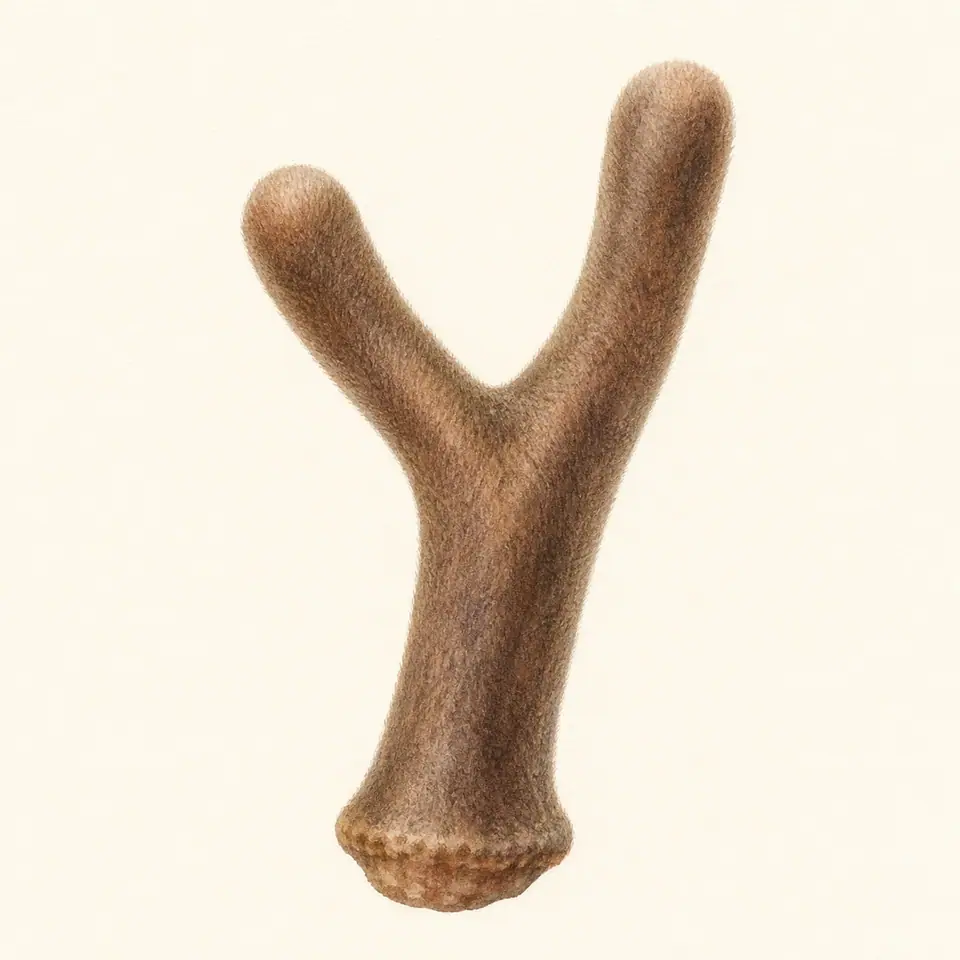
The Horn of Banryong, a Restorative Medicine Containing Yang Energy
First recorded in the middle grade of the Shen Nong Ben Cao Jing, deer antler velvet embodies vitality in its very name. It is said to be named after the 'image of plants growing vigorously,' reflecting the growth energy inherent in the young, non-ossified antlers of a deer. The Ben Cao Gang Mu refers to deer antler velvet as 'Banryong' and records that its 'properties are sweet and warm, and it is non-toxic.' The Dongui Bogam explains more specifically that it 'treats emaciation from deficiency, aching and pain in the limbs, waist, and spine; treats kidney deficiency-cold and weakness in the legs and knees in men; and manages uterine bleeding, leucorrhea, and stabilizes the fetus in women.' As such, deer antler velvet has long been established as a representative Yang-tonifying medicine that replenishes the 'deficient lower part', the kidneys, essence, blood, bones, and muscles.
However, the label 'restorative medicine' can actually be risky. Many believe that 'because it is a natural restorative, it is harmless,' but deer antler velvet is traditionally recorded as contraindicated for Yin deficiency with Yang hyperactivity and Yin deficiency with blazing fire. In other words, if deer antler velvet is added to a state where heat is already rising in the body or Yang energy is excessive, it may result in fueling the 'fire' rather than replenishing Yang. Records stating that high doses may cause epistaxis (nosebleeds) or head heaviness follow the same context. It is a medicinal ingredient where the comfort provided by the name 'restorative' coexists with the sharpness of its actual medicinal properties.
That is why, when prescribing deer antler (nokyong), we first verify the patient's constitution and the direction of their symptoms. It is priority to distinguish whether there is a tendency toward deficiency of yang energy and coldness, or if there are already signs of heat or yang hyperactivity. For suitable individuals, it is traditionally used to treat cold pain in the lower back and legs caused by kidney deficiency and coldness, as well as weakness in the muscles and bones; however, for unsuitable individuals, it may actually worsen the symptoms.
Ultimately, deer antler is a medicinal herb where 'who' uses it, 'how much' is used, and 'in what form' it is used makes all the difference. It is not a simple health food, but a Korean herbal medicine ingredient that must be prescribed and prepared under the diagnosis of a doctor of Korean medicine. Below, we will provide a step-by-step guide on the primary combinations, contraindications, and standards for the safe use of deer antler.
Summary at a Glance
The very name of deer antler implies a medicinal herb containing growth energy. In the table below, you can see at a glance where this herb comes from, its properties, and when caution is required.
| Category | Content |
|---|---|
| Origin | Hanja Name 鹿茸, Scientific Name Cervus elaphus Dried young antlers of a male deer (Cervidae) that are densely covered in hair and are either not yet ossified or only slightly ossified |
| Properties and Meridian Tropism | Warm (溫), Sweet (甘) or Sweet-Salty (甘鹹), Non-toxic (無毒); Liver Meridian (肝經), Kidney Meridian (腎經) |
| Representative Aliases | Banryong (斑龍) |
| Efficacy Recorded in Literature | Strengthens muscles and bones (强筋骨), supplements kidney yang (補腎陽), increases essence and blood (益精血), regulates Chong and Ren meridians (調衝任), and expels toxins from sores (托瘡毒) |
| Main Ingredients | Unossified or cartilaginous young antler tissue; traditionally used to supplement essence, blood (精血), and yang energy (陽氣) |
| Combinations and Contraindications | As a tonic herb that supports yang energy, caution is advised for those with constitutions characterized by yin deficiency with blazing fire (陰虛火熾) or internal heat (內熱), and for patients with hypertension; general guidelines suggest avoiding use for pregnant women, breastfeeding women, and infants/toddlers |
The parts that will first catch your eye in this table are likely 'Warm (溫)' and 'Kidney Meridian (腎經)'. Deer antler is used to warmly supplement cold and exhausted states, which is why it must be prescribed even more carefully according to the individual's constitution and symptoms.
Is this medicinal herb right for me?
While deer antler is widely known as a tonic for yang energy, it is a medicinal herb whose suitability varies greatly depending on the constitution and symptoms. You can first gauge this based on the following three criteria.
- Generally suitable cases: It has been traditionally used for those who have become emaciated due to deficiency-fatigue, experience aching in the limbs, waist, and spine, or lack strength in the legs and knees due to kidney deficiency. Additionally, it may be considered under the prescription of a doctor of Korean medicine if the body is cold due to a lack of yang energy, or if supplementation of reproductive function or essence and blood (精血) is deemed necessary.
- Cases requiring caution: Caution is required for those with hypertension or those with a heat-type or Mok-eum constitution. Large doses may lead to nasal bleeding, a feeling of heaviness in the head, or increased blood pressure. If you are taking Western medication, professional consultation is necessary as the possibility of interaction with antihypertensive drugs cannot be ruled out. Furthermore, it is general practice for pregnant women, breastfeeding women, and infants/toddlers to avoid intake based on functional ingredient standards.
- Cases to avoid: It is contraindicated or prohibited for those with hematemesis (vomiting blood) or hematochezia (bloody stools) caused by yin deficiency with yang hyperactivity (陰虛陽亢) or yin deficiency with blazing fire (陰虛火熾), those with kidney deficiency with fire (腎虛有火), internal heat (內熱), phlegm-heat in the upper burner (上焦), or stomach fire (胃火). Additionally, consuming raw deer antler as it is must be absolutely avoided due to food hygiene risks.
Practical Q&A
Deer antler is a medicinal herb that generates as much curiosity as its reputation as a yang tonic. However, because its suitability varies greatly by constitution and symptoms, it is important to determine if it matches your condition rather than starting it vaguely as a 'good medicine.' We have summarized the most important points for those considering deer antler, based on frequently asked questions in clinical practice.
Who is deer antler suitable for?
Deer antler is traditionally used to supplement kidney yang (腎陽), increase essence and blood (精血), and strengthen muscles and bones (筋骨). The Dongui Bogam records its use for 'emaciation due to deficiency-fatigue, aching in the limbs, waist, and spine, kidney deficiency and coldness in men with weakness in the legs and knees, and uterine bleeding or abnormal vaginal discharge in women.' In other words, it is a suitable herb for those in a weak state where the body is cold and energy is depleted, especially when accompanied by weakness in the waist and knees or cold symptoms. Conversely, it may be unsuitable for those with excessive internal heat or high blood pressure, so it is advisable to use it only after consultation and prescription by a doctor of Korean medicine.
Can I take deer antler if I have hypertension?
If you have hypertension, deer antler should be considered with caution. Sources such as the Traditional Knowledge Portal of Korea indicate that large doses may cause nasal bleeding or a feeling of heaviness in the head in hypertensive patients, and the possibility of blood pressure elevation has been raised for those with heat-type or Mok-eum constitutions. Furthermore, since the possibility of interaction with antihypertensive drugs cannot be completely ruled out, you must inform your medical staff and consult them if you are currently taking Western medication.
Can I take deer antler during pregnancy or breastfeeding?
It is safer for pregnant women, breastfeeding women, and infants/toddlers to avoid deer antler. This recommendation exists even for deer antler enzyme-hydrolyzed extracts as functional ingredients; being a yang tonic does not mean it is unconditionally good for everyone. In particular, extra caution is needed during pregnancy regarding fetal stability, so please do not self-administer deer antler preparations during pregnancy or breastfeeding and seek a professional judgment through consultation.
Can I eat raw deer antler as it is?
Consuming raw deer antler in its natural state is not recommended. The Ministry of Food and Drug Safety advises against eating raw deer antler, deer blood, or deer meat, and manages deer antler so that it is used only in the form of extracted processed foods after hygienic treatment. In traditional Korean herbal medicine, deer antler undergoes processing (poje) such as hair removal, vinegar soaking, or roasting before being used in decoctions, pills, or powders. Therefore, rather than boiling raw deer antler at home, it is correct to use appropriately processed products under the prescription of a doctor of Korean medicine.
What symptoms should prompt a visit to the hospital after taking it?
Since deer antler is a medicinal herb that supplements yang energy, taking excessive amounts or using it if it is unsuitable for your constitution may cause an excessive increase in body heat. If symptoms such as nasal bleeding, a feeling of heaviness in the head, heat sensations/fever, headache, heart palpitations, indigestion, skin rash, or increased blood pressure occur, you should stop taking it immediately and visit a Korean medicine doctor or an internal medicine clinic. In particular, those with hypertension should monitor changes in blood pressure more carefully.
Can I take this along with Gongjindan or other restorative herbal medicines?
Whether you can combine this with other restorative medicines, such as Gongjindan or Gyeongokgo, depends on your individual constitution and the purpose of administration. Deer antler itself is a medicinal herb with a distinct effect of supplementing yang energy; taking it in combination with other restorative medicines may instead cause excessive heat or place a burden on digestion. Rather than attempting to take several restorative medicines simultaneously, it is safer to consult a Korean medicine doctor to determine the most suitable option for your current condition and use it step-by-step.
Relationship with Other Medicinal Herbs (Yakdae/Pairing)
Deer antler is not used alone. True to its reputation as a nourishing medicine, its true value is revealed when it is paired with other medicinal herbs within a prescription rather than being taken in isolation. In traditional medicine, such pairs are called 'Yakdae' (medicinal pairs). Deer antler is frequently paired with other warming and blood-tonifying herbs to supplement kidney deficiency (Shin-heo) and enrich essence and blood (Jeong-hyeol). The combinations listed below are actual examples of deer antler used in classical prescriptions or official pharmaceutical products.
- Yanggi-seok-hwan A prescription recorded in Volume 29, Kidney Section of the Boje-bang. Along with Yanggi-seok, Gija, Yukjongyong, Agarwood, Cornus officinalis, and Viper fangs, deer antler (steamed after soaking in alcohol)is included, and it has been traditionally used to treat kidney deficiency and depletion of yang energy.
- Ikji-hwan Also a prescription listed in Volume 29 of the Boje-bang, deer antler (roasted with butter to remove hair)is combined with herbs such as Paguk, Rehmannia glutinosa, Goji berry, Yukjongyong, Aconite, Cinnamon bark, and Licorice to treat kidney deficiency and coldness, frequent urination, lower back and hip pain, tinnitus, and dizziness.
- Banryong-hwan A prescription recorded in the Deer section of the Bencao Gangmu (Boncho Gangmok). deer antler (roasted with butter or alcohol)is combined with deer antler glue, deer horn, Yanggi-seok, Yukjongyong, Ziziphus jujuba, Platycladus orientalis, Astragalus, Angelica gigas, Black aconite, Rehmannia glutinosa, and Cinnabar, and has been traditionally used for physical weakness and dizziness with darkening of vision.
- Iksu-gongjindan An over-the-counter medicine registered in the Ministry of Food and Drug Safety's Integrated Pharmaceutical Information System. One dose (3 pills, 11.250g) contains 1333mg of deer antler, 1333mg of Angelica gigas, 1333mg of Cornus officinalis, and 222mg of musk; it is a product approved in 2004.
As shown, deer antler almost always appears alongside other warming, blood-tonifying, or kidney-tonifying herbs. Conversely, for those with constitutions characterized by yin deficiency with yang hyperactivity, yin deficiency with blazing fire, kidney deficiency with fire, phlegm-heat in the upper burner, or stomach fire, the entire yang-tonifying combination including deer antler may be unsuitable, so caution is required.
In what form is it consumed?
While deer antler is known as an ingredient for nourishing foods, as a medicinal herb, it is generally prepared in traditional formulations rather than simply being brewed as a tea or added to food. We have summarized this based on the following four forms:
- Drinking as a tea: This is uncommon. Rather than simply steeping deer antler in hot water to drink, it is traditional to prepare it as a decoction (Tang-je) through boiling, or to process it into pills or powder.
- As food/food products: Possible on a limited basis. It is only permitted in the form of food products that have been hygienically extracted and processed according to Ministry of Food and Drug Safety (MFDS) standards; it is safer not to consume raw deer antler.
- Decoction: Applicable. The traditional method of use is to decoct it as a liquid herbal medicine or prepare it by soaking it in alcohol or su (butter/fat). The Traditional Knowledge Portal of Korea records various processing methods, such as removing the hair (geomo), powdering (bun), and slicing (pyeon).
- Professional Prescription: Strongly applicable. Since deer antler is a medicinal herb with clear contraindications, such as Yin deficiency with blazing fire (eumheohwahchi), hypertension, and pregnancy, it should, in principle, be used under the prescription of a Korean medicine doctor. Self-administration is not recommended.
Interactions and Safety During Use
While deer antler is known as a tonic for nourishing the body, its suitability varies greatly depending on an individual's constitution and symptoms. While it is helpful for those it suits, it requires caution as it may worsen symptoms if taken by someone with an incompatible constitution or condition.
Contraindications by Constitution and Symptom
It is recommended to avoid using deer antler in the following cases:
- Yin Deficiency and Yang Hyperactivity (Eumheoyanghang): A state where the Yin energy in the body is deficient and the Yang energy rises excessively.
- Hematemesis or hematochezia due to Yin Deficiency with Blazing Fire (Eumheohwahchi): Use is prohibited in cases where fire caused by Yin deficiency becomes severe, leading to vomiting blood or bleeding.
- Kidney Deficiency with Fire (Sinheoyuhwa), Internal Heat (Naeyeol): It is also unsuitable for those who have kidney deficiency but possess internal heat.
- Upper Jiao (Sangcho) Phlegm-Heat, Stomach Fire (Wihwa): Caution is required if phlegm and heat are concentrated in the upper chest or if there is fire in the stomach.
- Hypertension: It must be used with caution as high doses may cause epistaxis (nosebleeds) or a feeling of heaviness in the head.
Pregnancy, Lactation, and Infants/Toddlers
Pregnant women, breastfeeding women, and infants/toddlers should avoid consuming deer antler. If you have a specific medical condition or are taking other medications, please be sure to consult a professional.
Precautions When Using with Western Medicine
If you are taking medication for hypertension, the possibility of interaction with deer antler cannot be ruled out. As systematic clinical trials on interactions between deer antler and Western medicines have not been confirmed to date, please inform your medical staff if you are taking any other Western medicines and use it only after consultation.
Consumption in Food Form
The Ministry of Food and Drug Safety (MFDS) recommends against consuming raw deer antler, deer blood, or deer meat. Deer antler is managed to be used only in the form of hygienically processed extracted food products.
Signs That May Appear During Excessive or Long-term Use
If the following symptoms appear after taking deer antler, stop use immediately and seek medical evaluation from a Korean medicine doctor or an internal medicine physician.
- Epistaxis (nosebleed)
- Heaviness in the head
- Feeling of heat · Fever
- Headache
- Heart palpitations
- Indigestion
- Skin rash · Allergic reaction
- Increased blood pressure
Deer antler velvet is a restorative medicine, but not all restorative medicines are suitable for everyone. It is important to use it after comprehensively considering your constitution, current symptoms, and any medications you are taking. If you feel any discomfort before starting or while taking deer antler velvet, please consult Baekrokdam Korean medicine clinic.
If you experience these symptoms
If these symptoms appear
Deer antler velvet is a warming and reinforcing medicine that supplements kidney yang (Shin-yang) and replenishes essence and blood (Jeong-hyeol). Because its properties are warm and have a strong upward tendency, if it does not match your constitution or condition, it may instead cause excessive heat accumulation or abnormal signals regarding blood pressure and bleeding. The symptoms below are known warning signs that may appear while taking deer antler velvet. Even for mild discomfort, it is important that you do not reduce the dose yourself or continue taking it; instead, please notify the prescribing Korean medicine doctor first.
- Nosebleed (Epistaxis): This is known as one of the most representative reactions when taking large amounts of deer antler velvet.
- Heavy or stuffy feeling in the head (Du-jung): This is a signal that may appear when taking large amounts.
- Feeling of heat · Fever: This may occur when the supplementation of yang energy acts excessively.
- Headache: This may occur when the dose is excessive or does not match your constitution.
- Heart palpitations: This is a case where the cardiovascular system may be stimulated.
- Indigestion: Symptoms may worsen for those with stomach fire (Wi-hwa).
- Skin rash · Allergic reaction: Allergic reactions may occur depending on the individual.
- Increased Blood Pressure: Particular caution is needed for those who have hypertension or are taking hypertension medication.
If symptoms are severe, or in cases of difficulty breathing, decreased consciousness, severe headache, or a very fast or irregular pulse, stop taking the medicine immediately and visit an emergency medical institution.
Differences from other restorative medicines
Deer antler velvet falls under the broad category of restorative medicine, but its nature differs from widely known tonics such as Gongjindan or Gyeongokgo. Even under the name of 'tonic,' the appropriate user varies depending on 'what is being supplemented'; deer antler velvet is a medicinal ingredient with strengths specifically in supplementing kidney yang (Shin-yang) and essence and blood (Jeong-hyeol). Therefore, it is often considered when overall energy is low, the lower back and knees feel cold, or when deficiency symptoms in stamina and reproductive function are prominent.
Gongjindan is a complex prescription including deer antler, and it tends to address a broader range of deficiency patterns. For example, Iksu-Gongjindan, registered in the Ministry of Food and Drug Safety's Integrated Pharmaceutical Information System, consists of 1,333mg of deer antler, 1,333mg of Angelica gigas, 1,333mg of Cornus officinalis, and 222mg of musk per 11.25g dose; it is approved as an over-the-counter drug primarily for treating exhaustion-related eczema and decreased vitality. In this way, deer antler often serves as a key component for supplementing kidney yang and essence/blood in Gongjindan-based prescriptions.
Its properties differ in focus from Gyeongokgo. Gyeongokgo is a representative restorative herbal medicine focused on supplementing blood (Bo-hyeol) and calming yang (Jin-yang). While it partially overlaps with the warming and ascending nature of deer antler velvet in supplementing kidney yang, the symptom groups it is applied to are different. If deer antler velvet is closer to treating coldness, lack of energy, and kidney deficiency (Shin-heo), Gyeongokgo is closer to those who need more blood supplementation (Hyeol-heo) and sedation.
Ultimately, whether deer antler velvet is appropriate, or if Gongjindan, Gyeongokgo, or another restorative herbal medicine is more suitable, depends on a comprehensive evaluation of your constitution, primary symptoms, and current medications. Restorative medicine should not be a 'good medicine' but the 'right medicine' for you; therefore, please decide on the selection of restorative medicines, including those containing deer antler velvet, only after consulting with a doctor of Korean medicine.
References
- Evidence material 1 regarding deer antler velvet: Korea Institute of Korean Medicine official data.
- Evidence material 2 regarding deer antler velvet: Korea Institute of Korean Medicine official data.
- Evidence material 3 regarding deer antler velvet: Korea Institute of Korean Medicine official data.
- Evidence material 4 regarding deer antler velvet: Crude drug data from the National Institute of Food and Drug Safety Evaluation.
- Evidence material 5 regarding deer antler velvet: Official data from the Ministry of Food and Drug Safety.
- Evidence material 6 regarding deer antler velvet: GBIF plant classification data.
- Evidence material 7 regarding deer antler velvet: GBIF plant classification data.
- Evidence material 8 regarding deer antler velvet: GBIF plant classification data.
If you would like to check if this medicinal herb is right for you or which prescription it should be used with, please leave a medical inquiry. For those who find it difficult to visit the clinic, non-face-to-face consultations are available; we will provide guidance after first reviewing your current condition and current medications.

Medical Staff Review
Director Choi Yeon-seung
Chief Director of Baekrokdam Korean Medicine ClinicDeer Antler Velvet Dictionary Entry, reviewed the safety of expressions and the scope of verification before administration.
Review Scope: Clinical Accuracy, Pharmacology, Contraindications, Combinations, QA · Last Reviewed 2026-08-16
- Graduated from Kyung Hee University College of Korean Medicine
- Providing Korean medicine treatment since 2010
- Consultations for Gongjindan, Gyeongokgo, Nokyong (Deer Antler) restorative medicine, and customized restorative herbal medicine