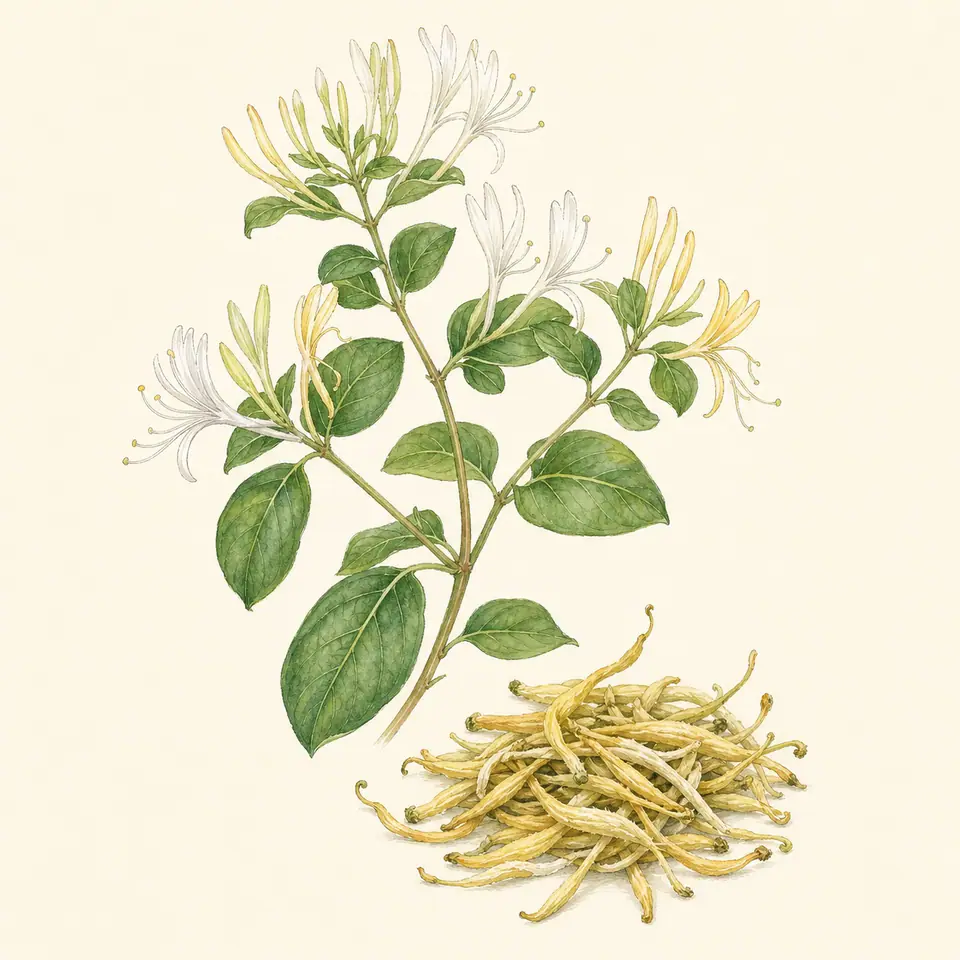
Lonicera (Indong), Flower Buds That Endured the Winter
The "Boncho Sinpyeon" refers to Geumeunhwa as a "divine herb that saves living people" and records that it "enters every meridian." In particular, it is described as eliminating toxins in the kidneys and stomach. Herbs with such wide-ranging effects are rare, which is why it earned the name "divine herb" in classical texts.
While Geumeunhwa literally means "gold and silver flowers," it is more widely called Indong in Korean medicine. Indong means "the vine that endures winter," a name derived from the way its leaves withstand the cold without falling until late autumn. As the name suggests, Geumeunhwa has a cold nature and has been traditionally used for clearing heat and detoxifying, cooling the blood to stop dysentery, and cooling and dispersing wind-heat. According to data from the Traditional Knowledge Portal and the Korea Institute of Oriental Medicine, the medicinal parts are the flower buds or newly blooming flowers, harvested and dried before they fully bloom in summer.
However, contrary to the impression given by the word "detoxification," Geumeunhwa is not a panacea that simply removes all heat and toxins from the body. Rather, because it has a distinct cold nature and a clear direction of relieving wind-heat, it may not be appropriate for individuals with a cold constitution or symptoms. While the "Boncho Gangmok" records its properties as "sweet, warm, and non-toxic," later and modern Korean medicine materials generally define it as having a cold nature; therefore, one should keep in mind that there are chronological differences in the records of its properties.
Therefore, when using Geumeunhwa, the "how much, who, and how" are important. Selecting high-quality buds that are yellowish-white, plump, and not yet bloomed; the difference in usage depending on whether it is used raw (saeng-yong) or charred (cho-tan); and how it is combined with other herbs within a prescription, all these criteria determine the safe use of this medicinal herb. The specific criteria are provided below.
Summary at a Glance
This table alone will help you grasp the core of what Geumeunhwa is, what it is used for, and what precautions to take.
| Category | Content |
|---|---|
| Origin | Caprifoliaceae, Lonicera Lonicera japonica Flower buds or newly blooming flowers of Lonicera japonica Thunb. Chinese name: Geumeunhwa. Harvested and dried before summer blooming. |
| Properties and Meridian Tropism | Sweet, Cold, Non-toxic. Acts on the Heart, Stomach, and Lungs. |
| Representative Aliases | Indong, Ssanghwa, Eunhwa, Geumeunhwa. |
| Efficacy Recorded in Literature | Clearing heat and detoxifying, cooling the blood to stop dysentery, cooling and dispersing wind-heat. The "Boncho Sinpyeon" refers to it as a "divine herb that saves living people" and records that it "enters every meridian." |
| Main Ingredients | Flavonoids and phenolic acids, such as chlorogenic acid and luteolosides, have been reported as the primary active ingredients. |
| Combination & Precautions | As it is a heat-clearing and detoxifying medicine with a distinct cold nature, caution is required for those with a cold constitution, a weak stomach, or frequent diarrhea. It may not be compatible with restorative medicines (boyak) intended to supplement yang or yin, so consultation is recommended when using them together. |
Is this medicinal herb right for me?
Geumeunhwa is a cold-natured medicinal herb whose primary actions are clearing heat and detoxifying, and cooling the blood to stop dysentery. While it can be helpful depending on the constitution and symptoms, it may be burdensome for those with a cold body. It is advisable to check the criteria below before taking it.
- Generally suitable cases: It has been traditionally considered for cases of high heat accompanied by swelling or pain in the throat, early-stage cold symptoms with a feeling of heat and sore throat, thirst and headache caused by summer heat, and cases where blood is mixed in the stool or diarrhea shows a heat-related tendency.
- Cases requiring caution: Those who typically have cold hands and feet, weak digestion, severe menstrual pain, low menstrual flow, or discomfort when eating cold foods due to a weak stomach should use it after consulting a Korean medicine doctor. Because Geumeunhwa is cold in nature, it may aggravate symptoms in these constitutions.
- Cases to avoid: Those with a cold abdomen and consistently loose stools, or those with a clear state of deficiency-cold in the spleen and stomach from a Korean medicine perspective, should avoid taking it alone or for long periods. Additionally, if you are pregnant, breastfeeding, or taking other medications, you must decide whether to use it after a consultation.
Practical Q&A
The most common questions from those encountering Geumeunhwa for the first time are "Is it right for my symptoms?" and "How do I use it?" Below, we have summarized questions frequently asked during consultations regarding the characteristics of Geumeunhwa. The answers provide general information and may vary depending on individual constitution and condition; therefore, please decide on intake or prescriptions only after consulting a Korean medicine doctor.
Does Geumeunhwa help with colds?
Geumeunhwa has been traditionally used for cooling and dispersing wind-heat, meaning relieving a state where wind and heat have accumulated. When early cold symptoms such as a swollen throat or fever show a heat-related tendency, a prescription containing Geumeunhwa may be considered. However, since colds are divided into various types in Korean medicine, such as wind-cold, wind-heat, and damp-heat, it may not be suitable for colds centered on cold energy (han-gi) where the body is cold and there is no sweating.
Are Indong tea and Geumeunhwa the same thing?
Yes, they often refer to the same plant. Geumeunhwa is the name used when the flower buds are used medicinally, and Indong is the name of the plant itself. However, it is necessary to verify whether "Indong tea" sold on the market necessarily meets the Korean medicine standards for Geumeunhwa. The scientific name Lonicera japonica Lonicera japonica Thunb. is the authentic Geumeunhwa referred to in Korean medicine and is distinguished from similar species.
Can it be used for people with a cold constitution?
Geumeunhwa (Honeysuckle flower) is classified as a cold-natured medicinal herb. For those with a cold body constitution, frequent diarrhea, or a weak stomach, it may exacerbate indigestion or abdominal coldness; therefore, caution is advised when using it alone or for long periods. When necessary, it may be prescribed in combination with warming herbs to mitigate its cold properties.
Is it safe during pregnancy or breastfeeding?
Clear safety data regarding the use of Geumeunhwa during pregnancy and lactation has not been confirmed. While it is traditionally used for clearing heat and detoxifying, those who are pregnant or breastfeeding must consult a doctor of Korean medicine before deciding whether to use it.
Can I take this along with Western medicine?
Theoretical possibilities of interactions with anticoagulants, immunosuppressants, or diabetes medications have been raised, but specific clinical interaction studies on Geumeunhwa have not been confirmed. If you are currently taking Western medicine, it is safest to inform your Korean medicine doctor in advance to confirm whether concurrent use is appropriate.
How much and for how long should I take it per day?
The appropriate daily dose and duration of Geumeunhwa use vary depending on an individual's constitution, symptoms, and the form of prescription (single herb, decoction, pill, etc.). Since there is no single standard dosage applicable to everyone, please determine the specific dose and duration through a consultation with a doctor of Korean medicine.
Relationship with Other Medicinal Herbs (Yakdae/Pairing)
Geumeunhwa is a medicinal herb that exhibits more distinct characteristics when paired with other herbs rather than used alone. In Korean medicine, such pairs are called "Yakdae." In the case of Geumeunhwa, there are many combinations that connect different meridians and action points while maintaining the directions of clearing heat and detoxifying (Cheongyeol-haedok) and cooling the blood to stop dysentery (Yanghyeol-jiri). Below are representative combinations found in classical and modern Korean medicine.
-
Geumeunhwa + Yeongyo (Forsythia fruit) Eungyo-san: A representative prescription found in the "Onbyeong-jobyeon." Geumeunhwa and Yeongyo work together to disperse wind-heat and detoxify heat-toxins, and it has been traditionally used for heat sensations or congestion in the throat and in the early stages of a febrile cold. This combination is one of the best examples of Geumeunhwa's action in cooling and dispersing wind-heat.
-
Geumeunhwa + Hwangryeon (Coptis rhizome) Geumeunhwa is sometimes added to the Hwangryeon-haedok-tang family of prescriptions. While Hwangryeon focuses on directly extinguishing excess fire in the heart, stomach, and liver, Geumeunhwa plays a supporting role in detoxifying that heat and scattering the spreading heat. However, as this combination increases the cold nature, caution is required for those with a weak stomach or a cold body.
-
Geumeunhwa + Dang-gwi (Angelica gigas), Gamcho (Licorice), etc. In prescriptions such as Sinmi-tang, Geumeunhwa is used to release heat-toxins while Dang-gwi helps in cooling the blood. In such combinations, Geumeunhwa's action of cooling the blood and stopping dysentery is linked to the treatment of diarrhea and bloody dysentery.
There are points to note regarding combination contraindications. Since Geumeunhwa itself is a cold-natured herb, excessive overlap with other cold-natured or heat-lowering herbs such as Hwangryeon, Hwangbaek, or Daehwang may place a burden on the gastrointestinal tract. Additionally, while the "Bencao Gangmu" recorded the properties of Geumeunhwa as "sweet, warm, and non-toxic," later and modern records generally define it as cold-natured; thus, it is common to utilize it in prescriptions while keeping these historical differences in property records in mind. Since specific prescriptions and dosages vary by constitution and condition, it is advisable to decide them with a doctor of Korean medicine during a consultation.
In what form is it consumed?
Geumeunhwa is a medicinal herb used in the form of dried flower buds. While it is a form that is relatively easy to encounter at home, it must be considered differently based on purpose and constitution from a Korean medicine perspective. The general forms of intake are summarized below.
- Tea Steeping dried Geumeunhwa in hot water to drink as a tea. This is a method frequently used at home when the throat is swollen or when thirst is severe due to heat. However, since Geumeunhwa is a cold-natured herb, those with a cold body or a weak stomach should try it in small amounts for a short period rather than in large quantities for a long time.
- Food (Dietary Therapy) Some people add Geumeunhwa to dough-flake soup or other broth dishes expecting a heat-clearing effect. However, this is closer to a regional or folk habit and is not a form routinely recommended by Baekrokdam Korean medicine clinic.
- Decoction (Herbal medicine boiled as a tonic) The most common professional form is when it is included in a prescription at a Korean medicine clinic and boiled for consumption. Geumeunhwa is often used in combination with other heat-clearing and detoxifying herbs such as Yeongyo, Hwangryeon, and Hwanggeum rather than alone.
- Professional Prescriptions Representative prescriptions containing Geumeunhwa include Indong-tang from the "Sanghanron" and Eungyo-san from the "Onbyeong-jobyeon." These prescriptions have been traditionally used for the early stages of febrile diseases, throat swelling, and rashes; it is best to confirm specific applications through a medical consultation.
Interactions and Safety During Use
Geumeunhwa is a cold-natured herb whose primary actions are clearing heat and detoxifying, and cooling the blood to stop dysentery. It may be suitable for those with high body heat accompanied by inflammation or infectious symptoms, but it may be burdensome depending on the constitution or condition. It is recommended to check the following before intake.
- Constitutional Contraindications It is safer for individuals with a cold body constitution, those with a weak stomach or frequent diarrhea, and those who are pregnant to use this after consulting a specialist.
- Dosage and Duration The appropriate dosage and long-term intake standards for Geumeunhwa (Honeysuckle) vary depending on an individual's constitution and symptoms. Please inquire during your consultation regarding specific dosages or the duration of intake.
- Interaction Interactions with current Western medications or other Korean herbal medicines need to be verified. Please be sure to consult a Korean medicine doctor when considering concurrent use.
While Geumeunhwa is a medicinal herb that is relatively easy to access at home, being 'natural' does not mean it is harmless to everyone. In particular, due to the nature of cold-property herbs, it may affect digestive function or overall energy if it does not match your constitution. Therefore, it is best to rely on a specialist's judgment to determine if it is appropriate for your symptoms.
If you experience these symptoms
If you experience these symptoms
Since Geumeunhwa is a cold-property herb whose primary actions are clearing heat and detoxifying, as well as promoting blood circulation and removing stasis, you should be aware that the following signals may indicate your body is reacting to the cold nature of the herbal medicine. In such cases, do not reduce the dose yourself or continue taking it; instead, it is best to first notify the attending Korean medicine doctor who provided the prescription.
- If abdominal coldness worsens or diarrhea becomes more frequent As Geumeunhwa is a cold-property herb, it may place a burden on the gastrointestinal function of those with a weak stomach or a constitutionally cold body.
- If hands and feet become cold or general fatigue increases This is a signal that the heat-clearing action may be excessive and could damage the vital energy (Jeong-gi).
- If irregular menstruation or menstrual pain worsens In women, cold-property herbs may affect the flow of blood and energy (Hyeol-gi) in the lower burner (Hacho).
- If symptoms worsen or new pain, rashes, etc., appear It is necessary to distinguish between an individual reaction to the herb and the progression of other medical conditions.
If symptoms are mild, you may stop intake and consult your attending Korean medicine doctor; however, if accompanied by severe diarrhea, abdominal pain, difficulty breathing, systemic rash, or decreased consciousness, it is safer to visit an emergency medical institution.
Differences from other restorative medicines
Geumeunhwa is not a 'tonifying' herb, but rather one centered on 'detoxification' and 'clearing heat.' Therefore, its nature differs from traditional restorative medicines such as Gongjindan or Gyeongokgo. While Gongjindan and Gyeongokgo are strong tonics taken long-term to supplement energy, blood, or yin, Geumeunhwa is a herb used to manage states where heat or toxins have temporarily increased in the body. It may be suitable for cases with severe heat accompanied by inflammatory or infectious symptoms, but it may be burdensome for those who are usually cold or have a weak stomach.
Furthermore, Geumeunhwa is often prescribed in combination with other herbs rather than taken alone. Since it serves to balance the actions of other herbs while maintaining heat-clearing and detoxification, it is more important to consider "whether heat and toxins are excessively accumulated in my current body state" than whether it is a "tonifying medicine or not." Whether Geumeunhwa is necessary or if restorative medicines like Gongjindan or Gyeongokgo are more appropriate depends on your constitution and current condition, so consultation before intake is recommended.
References
- Evidence material related to Geumeunhwa 1: koreantk.com evidence materials.
- Evidence material related to Geumeunhwa 2: Korea Citation Index academic paper.
- Evidence material related to Geumeunhwa 3: Korea Citation Index academic paper.
- Evidence material related to Geumeunhwa 4: PubMed academic paper.
- Evidence material related to Geumeunhwa 5: PubMed academic paper.
- Evidence material related to Geumeunhwa 6: PubMed academic paper.
- Evidence material related to Geumeunhwa 7: PubMed academic paper.
- Evidence materials related to Lonicera japonica (Geumeunhwa) 8: PubMed academic paper.
If you would like to check if this medicinal herb is right for you or which prescription it should be used with, please leave a medical inquiry. For those who find it difficult to visit the clinic, non-face-to-face consultations are available; we will provide guidance after first reviewing your current condition and current medications.

Medical Staff Review
Director Choi Yeon-seung
Chief Director of Baekrokdam Korean Medicine ClinicLonicera japonica Dictionary Entry, reviewed the safety of expressions and the scope of verification before administration.
Review Scope: Clinical Accuracy, Pharmacology, Contraindications, Combinations, QA · Last Reviewed 2026-08-16
- Graduated from Kyung Hee University College of Korean Medicine
- Providing Korean medicine treatment since 2010
- Consultations for Gongjindan, Gyeongokgo, Nokyong (Deer Antler) restorative medicine, and customized restorative herbal medicine