Red berries floating on water: To what extent can they prevent infection?
I frequently get cystitis; will drinking cranberry juice or taking capsules daily prevent or treat it? In short, there is evidence for a preventive effect in women or children with recurrent urinary tract infections (UTIs) and in vulnerable groups after certain procedures, but it is not a treatment for current infections. Furthermore, the same effect is unlikely for pregnant women, elderly individuals in long-term care facilities, or adults with bladder emptying disorders.
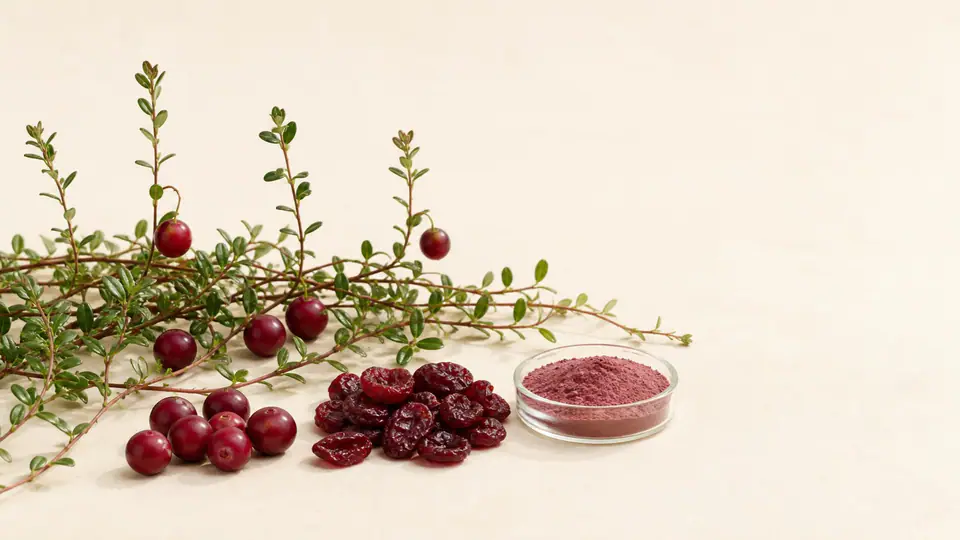
Cranberries are evergreen shrubs that grow in North American wetlands Vaccinium macrocarpon and produce red berries. They come in various forms, including fresh fruit, dried fruit, sweetened juice drinks, unsweetened juice, powder, and proanthocyanidin (PAC) standardized capsules; these vary in sugar content, concentration, and exposure to active ingredients. Even if they share the same name, the exposure to the body from a glass of sweet drink versus a standardized capsule is quite different.
The question begins with whether it is for prevention or treatment
Questions about cranberries often start with "Will it cure me?", but this mixes two different situations. One is prevention to stop recurrence when there are no symptoms, and the other is the treatment of a current infection characterized by stinging during urination or frequent urination. A 2023 Cochrane review synthesizing 50 studies and 8,857 participants concluded that cranberry products can reduce the risk of symptomatic, culture-confirmed UTIs in women and children with recurrent UTIs and in some vulnerable groups after procedures. However, the same review noted that current evidence does not support use for elderly individuals in long-term care facilities, pregnant women, or adults with bladder emptying disorders.
The NCCIH also explains that while it may help prevent recurrent UTIs in some women, it is not recommended as a treatment for existing UTIs. In other words, the relative risk reduction seen in prevention studies cannot be translated into the speed of recovery from a current infection or as an alternative to antibiotics. Why, then, did cranberries become a target for prevention?
Reason for expectation: Hypothesis that it prevents bacteria from adhering
The mechanism that Type-A proanthocyanidins in cranberries may affect bacterial adhesion is the core of the prevention hypothesis. This is not an antibiotic effect that eliminates an existing infection. Rather, it means making it difficult for bacteria to adhere to the bladder epithelium before an infection occurs. Therefore, the logic that "people who experience frequent recurrences may have fewer subsequent infections if they consume it consistently" is possible.
However, this mechanism is only meaningful when research results, product form, and consistency of intake all align. Results from one product cannot be applied directly to another.
Juice, Dried Fruit, Capsules: Same name, different impact on the body
Cranberry products are divided into fresh fruit, dried fruit, sweetened juice drinks, unsweetened juice, powder, and PAC standardized capsules. The concentration of proanthocyanidins and the consistency of intake vary during the processing stage. Because the amount of PAC, processing method, and consistency of intake differ by product, it is difficult to apply the effects and appropriate dosage of a specific juice or capsule to all products.
It is easy to think that any form will be similar just by hearing the name "cranberry," but for juice drinks, one must check added sugars and calories, and dried fruit also comes with sugar and calories. Large amounts can cause stomach discomfort or diarrhea. Unsweetened juice or PAC standardized capsules provide active ingredients through different routes, but even then, the standardized amount varies by product.
| Category | Points to Check |
|---|---|
| Juice drink | Added sugar, calories, actual cranberry content |
| Unsweetened juice | Reduced sugar, but PAC concentration and consistency of intake |
| Dried fruit | Sugar and calories, daily intake amount |
| PAC standardized capsules | Indicated PAC amount, consistency of intake |
First, you must identify who the evidence applies to
The average effect from the 2023 Cochrane review was observed in women with recurrent urinary tract infections. This cannot be applied directly to pregnant women, elderly individuals in care facilities, or people who cannot empty their bladder properly. Even with the same ingredients, the expected results vary depending on the target group.
What should you look for then? First, whether you are in a situation treating an active infection with dysuria (painful urination) or frequency, or in a situation preventing recurrence when there are no symptoms. Second, what formulation is being used. Third, factors such as pregnancy, fever, flank pain, symptoms in men or children, kidney disease, bladder emptying disorders, or whether you are taking warfarin.
Consultation is required when taking with other medications
Evidence regarding interactions with warfarin is conflicting. If you are taking warfarin, it is safer to consult the medical staff managing your INR rather than starting or increasing the dose of concentrated products on your own. Since cranberry is not a medication to treat an active infection, you must not arbitrarily reduce or stop your existing prescriptions.
What signals indicate that a medical evaluation should come first?
If a urinary tract infection is suspected, it is important not to delay diagnosis and treatment by trying cranberries first. Prompt medical evaluation is necessary if there is fever, chills, flank pain, vomiting, hematuria (blood in urine), if symptoms appear during pregnancy, or if symptoms occur in men or children. Recurrent infections may be caused by other underlying issues such as stones, urinary disorders, or postmenopausal changes, so preventive foods cannot replace a professional diagnosis of the cause.
Final Decision Criteria
Rather than the image of a red berry that is good for the bladder, first distinguish between treatment and prevention. Check the cause of recurrence and the target group, the sugar content and PAC standardization of the actual formulation, signs of ascending infection such as fever or flank pain, and current medications. While cranberry is an ingredient with evidence for preventing recurrence in some people, it does not work the same for everyone and in every situation.
References
- NCCIH: Cranberry usefulness and safety.
- Cranberries for preventing urinary tract infections: Cochrane review.
- Cochrane cranberry review update: 50 trials and 8,857 participants.
This text explains the origin of the raw materials, the scope of research, and precautions before consumption. As this cannot replace individual diagnosis or treatment, please consult a medical professional if you are taking medication or if symptoms persist. If sudden and severe symptoms such as difficulty breathing or decreased consciousness occur after consumption, seek help from 119 or the emergency room.

Medical Staff Review
Director Choi Yeon-seung
Chief Director of Baekrokdam Korean Medicine ClinicCranberry Dictionary Entry, reviewed the safety of expressions and the scope of verification before administration.
Review scope: Ingredient origin, human studies, concomitant medications, safety of intake · Last reviewed 2026-08-17
- Graduated from Kyung Hee University College of Korean Medicine
- Providing Korean medicine treatment since 2010
- Consultations for Gongjindan, Gyeongokgo, Nokyong (Deer Antler) restorative medicine, and customized restorative herbal medicine