Black masses from the cold forest: the journey to being called the anti-cancer mushroom
Is it okay to consume Chaga mushroom tea or powder for a long time for immunity or cancer? To answer in one sentence: based on current evidence, long-term consumption with such expectations is not recommended. In particular, if you consume several grams of powder or concentrated products daily, you must first consider the burden of oxalic acid that can accumulate in the kidneys.
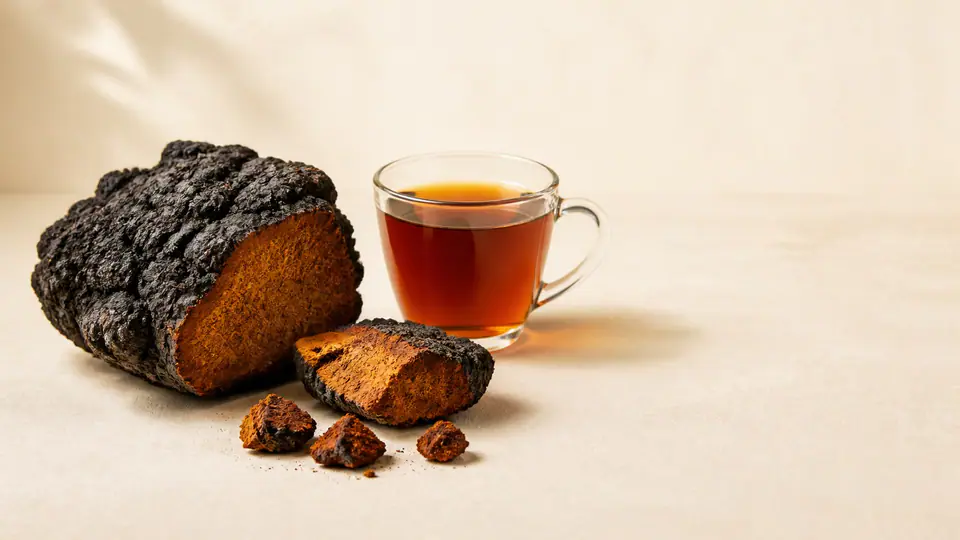
The name Chaga mushroom itself is prone to misunderstanding. When people hear 'mushroom,' they easily imagine a fruiting body with a cap and stem, but what we use for tea, powder, and extracts are black, irregular sclerotial masses that form on tree trunks. These are fungi that parasitize birch trees and other species. Inonotus obliquusThese masses are ingredients with different forms and component exposure compared to typical capped mushroom fruiting bodies.
Where did these masses come from?
The NCBI classifies Chaga as a basidiomycete Inonotus obliquusThe black mass we see is a sclerotium created by the fungus within the tree tissue. Starting as a mark similar to a tree wound and growing over a long period in cold forests, these masses likely became used as medicinal mushrooms in folk medicine due to their appearance and growth environment. However, an impressive appearance does not automatically provide clinical evidence for treating specific diseases.
How did it get the nickname 'anti-cancer mushroom'?
There are many studies on the anti-cancer and immune effects of Chaga. There is a body of in vitro antioxidant and cytotoxic research focusing on polyphenols and polysaccharides, and a 2023 comprehensive review discussed the possibility of clinical application. However, the basis of that review was primarily preclinical research. Effective doses and results for humans could not be determined, and clinical evidence for treating cancer or immune diseases in humans has not been established.
In other words, indicators seen in cell cultures or animal experiments are not yet enough to be directly linked to tumor response or survival in the human body. The nickname 'anti-cancer mushroom' is a name based on expectation, not a confirmed therapeutic concept.
A cup of tea and powder consumed whole are different
Even with the same raw material, the amount of exposure differs between tea steeped in water, powder where the fungal mass is consumed whole, and concentrated extracts obtained through hot water or alcohol. Tea contains only the components that dissolve in water, while powder involves ingesting the Chaga mass itself. Concentrated extracts have different concentrations because specific components are intentionally gathered. In particular, the actual amount of oxalic acid entering the body can vary significantly depending on the formulation.
Although all are called 'Chaga mushroom,' tea, powder, and extracts are different intake routes, and their safety should not be viewed as the same.
| Category | Characteristics | Consideration of exposure to oxalic acid, etc. |
|---|---|---|
| Tea | Steeped in water; components are limited to what dissolves in water | Relatively low |
| Powder | Ingesting the entire fungal mass | May be high |
| Hot water or alcohol extracts | Concentrating specific components | Different concentrations and components |
Why should you be concerned about oxalic acid?
Chaga contains oxalic acid. A Korean case of end-stage renal failure accompanied by oxalic acid crystals was reported after long-term intake of powder, and the oxalic acid content of the remaining product was very high. In another case, acute oxalic nephropathy appeared after taking 10–15 g of chaga powder and 500 mg of vitamin C daily for 3 months.
A few case reports do not indicate the risk frequency for the entire using population. However, they are signals that contradict the assumption that long-term intake of high-dose powder is safe. In particular, the oxalic acid burden may increase when taken with vitamin C. It is not just the chaga powder that is an issue, but the total exposure to oxalic acid that must be considered.
Who should be more cautious?
If you have chronic kidney disease, kidney stones, or issues with oxalic acid metabolism or intestinal absorption, it is advisable not to use chaga powder or concentrated products arbitrarily. Do not view tea and powder as the same amount; you must check the long-term intake of powder in grams and the oxalic acid burden, including vitamin C.
If you experience decreased urine output, edema, flank pain, hematuria, severe nausea, or fatigue, stop use and have your kidney function evaluated. This is a safety signal that anyone taking chaga should remember.
Extra caution is required when using with other medications or supplements
You should not replace cancer treatments, immunosuppressants, or diabetes medications with chaga, nor take it without the knowledge of your treatment team. Even when used as a supplement, inform your medical staff and disclose which product is being used, the daily amount and duration, and whether you intend to use it as a substitute for treatment.
Then, what should you look for? If the fungal species, origin, heavy metals, mixed ingredients, and actual extraction ratio of a product are unclear, it is reasonable not to assume it is the same as the product used in preclinical studies. Laboratory chaga and commercial chaga may share the same name only.
The Gap Between Human Evidence and Expectations
Most cancer and immunity research related to chaga is at the level of component analysis, cells, or animals. There is no clinical data to suggest that this has led to disease treatment results in humans. Even a comprehensive review in 2023 stated that while the possibility of clinical application remains open, the effective dose and results could not be determined.
This does not mean "it is ineffective," but rather "it is not yet known." While expectations are high, there is a clear gap in human-based evidence to support those expectations. More clinical research is needed to fill this gap, and until then, caution is necessary.
Differences between similar names and different raw materials
The sclerotium mass of chaga is different from the general fruiting body of a mushroom. It is a sclerotium grown inside a tree, not a fruiting body with a cap and stem. Furthermore, tea, powder, hot water extracts, and alcohol extracts have different component concentrations and oxalic acid exposures, even if made from the same raw material. There is also a large gap between antioxidant/anticancer indicators in test tubes and tumor response/survival in humans.
These three comparisons are criteria to keep in mind whenever choosing chaga. Having the same name does not mean the safety and efficacy are the same.
Realistic criteria to check today
When choosing chaga mushrooms, look at the exact fungal species, the part used, the formulation, and the dosage first, rather than the nickname "anticancer mushroom." Also check the gap in human clinical evidence, kidney function and total oxalic acid exposure, and whether it is replacing a treatment.
If you are currently taking chaga, first check whether it is tea, powder, or an extract; how long you have taken it daily; whether you have kidney or oxalic acid-related diseases; and whether you are using it with other supplements or medications. That verification is the starting point for turning vague expectations into concrete judgment.
References
- NCBI Taxonomy: Inonotus obliquus.
- Chaga biology, chemistry and evidence review.
- End-stage renal disease after long-term Chaga ingestion.
- Chaga oxalate nephropathy with nephrotic syndrome.
This text explains the origin of the raw materials, the scope of research, and precautions before consumption. As this cannot replace individual diagnosis or treatment, please consult a medical professional if you are taking medication or if symptoms persist. If sudden and severe symptoms such as difficulty breathing or decreased consciousness occur after consumption, seek help from 119 or the emergency room.

Medical Staff Review
Director Choi Yeon-seung
Chief Director of Baekrokdam Korean Medicine ClinicChaga Mushroom Dictionary Entry, reviewed the safety of expressions and the scope of verification before administration.
Review scope: Ingredient origin, human studies, concomitant medications, safety of intake · Last reviewed 2026-08-17
- Graduated from Kyung Hee University College of Korean Medicine
- Providing Korean medicine treatment since 2010
- Consultations for Gongjindan, Gyeongokgo, Nokyong (Deer Antler) restorative medicine, and customized restorative herbal medicine