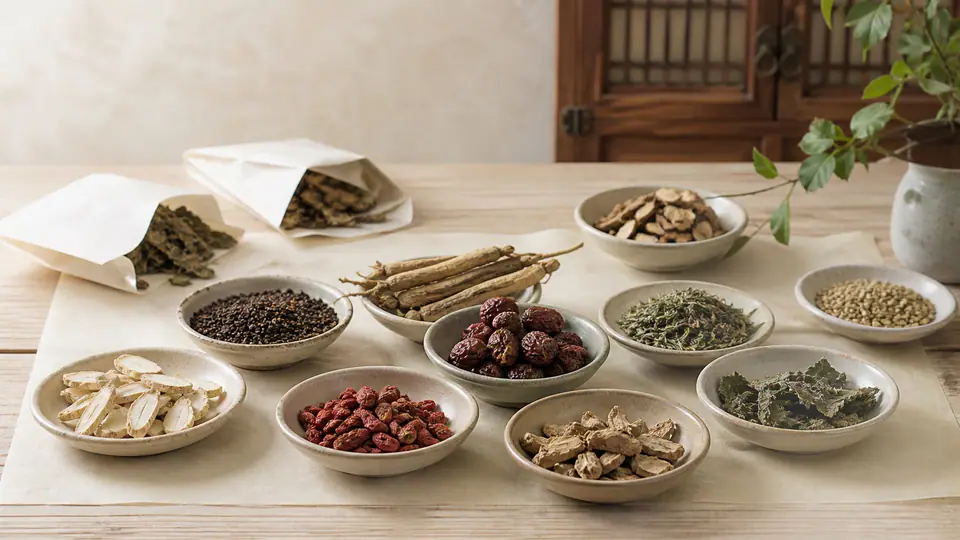
A Diuretic for Brightening the Eyes, Alisma orientale in the Bencao Gangmu
According to the Shennong Bencao Jing and Benjing Shuzheng, Alisma orientale is recorded as “久服耳目聰明”, meaning that long-term use clears the ears and eyes. Later, Li Shizhen's Bencao Gangmu from the Ming Dynasty interpreted the name as “removing and draining the water of the marshes.” The Tangye section of the Dongui Bogam categorized this medicinal herb as a water-draining agent that “expels stagnant water from the bladder, treats the five types of lin syndrome, clears heat from the bladder, and opens the water passages.” Interestingly, the same classics also note that “扁鵲云, 多服病人眼”, Bian Que stated that “excessive consumption harms the eyes.” This dual message, that it can benefit the eyes but harm them if overused, defines the identity of Alisma orientale.
The idea that a medicine promoting urination can serve as a treatment principle for the eyes may feel unfamiliar at first. While modern people are accustomed to warnings about 'burden on the kidneys,' traditional medicine reads this in reverse. The logic is that by draining accumulated fluids from the body downward, the eyes above become clear. The effects listed in the Benjing Shuzheng, such as "eliminating water, nourishing the five viscera, increasing strength, promoting robustness and supplementing deficiency from the five overexertions, removing fullness in the five viscera, raising yin energy, stopping essence leakage, treating thirst, lin syndrome, and expelling stagnant water from the bladder and Sanjiao," all stem from a single mechanism of 'opening the water pathways.' Therefore, Alisma orientale is not a simple diuretic, but a representative 'draining' (瀉) herb that resolves states where water-dampness and heat are entangled.
However, the power to open these water pathways does not act in the same direction for everyone. According to the Traditional Knowledge Portal, its use is contraindicated for those with kidney deficiency and essence leakage (腎虛精滑者), lin syndrome (淋病), and edema caused by kidney deficiency (腎虛). In other words, while Alisma orientale acts as a passage for those with 'accumulated water,' it may simply empty the lower body for those 'lacking the vital energy to manage water.' This is why Bian Que's warning that “excessive consumption harms the eyes” remains relevant today.
Therefore, the key to using Alisma orientale is 'how much, for whom, and how.' It is a medicinal herb that a Korean medicine doctor cannot prescribe carelessly without distinguishing the patient's constitution and symptoms; self-administration is not recommended other than through proper decoction. Below, we provide guidance on the primary combinations of Alisma orientale, modern approved preparations, and signals to watch for during administration.
Summary at a Glance
As its name suggests, Alisma orientale is a medicinal herb that means 'letting the water of the marshes flow.' The table below summarizes the origin, properties, core effects from the classics, and precautions at a glance.
| Category | Content |
|---|---|
| Origin | Hanja name: 澤瀉, Scientific name Alisma orientale Alisma orientale. It is the rhizome of the Alismataceae family, with the fine roots and outer skin removed. |
| Properties and Meridian Tropism | The properties are recorded as sweet, bland, and cold, and it targets the bladder and kidneys. |
| Representative Aliases | It is also known as Susa, Taekji, Geupsa, Cheondok, Mul-taeksa, Soedaenamul, Mang-yu, and Goksya. |
| Efficacy Recorded in Literature | The Shennong Bencao Jing and Benjing Shuzheng record that it treats wind-cold-dampness obstruction, eliminates water, nourishes the five viscera, increases energy, manages obesity and deficiency, and treats diuresis and lin syndrome. It also states that “long-term use clears the ears and eyes,” while simultaneously warning that “excessive use harms the eyes.” The Tangye section of the Dongui Bogam records that it expels stagnant water from the bladder, treats the five types of lin syndrome, clears heat from the bladder, opens the water passages, and clears the small intestine. |
| Main Components and Pharmacology | Repeated oral toxicity studies on Alisma orientale extract have been reported by the National Institute of Food and Drug Safety Evaluation, and it is known as a medicinal herb with diuretic effects. |
| Combinations and Contraindications | Traditionally, it is recorded as contraindicated for those with kidney deficiency and essence leakage, lin syndrome, and edema due to kidney deficiency. Since it may be theoretically incompatible when used with restorative tonics for yin or yang, the judgment of a Korean medicine doctor is required. |
Is this medicinal herb right for me?
Alisma orientale is a powerful water-draining herb. Therefore, while it helps those with accumulated fluids in the body, it can be a burden for those with fluid deficiency, a cold lower abdomen, or weak kidney function. Please evaluate yourself based on the following three criteria.
- Generally suitable casesSuitable: Those whose legs or face swell easily, or who feel that urination is difficult or interrupted. It is used short-term under a Korean medicine doctor's prescription when one is sensitive to heat or feels the body is heavy and sticky.
- Cases requiring cautionCaution: Those who frequently urinate, tend to dry out easily, suffer from frequent dizziness or fatigue, or are taking diuretic medication. Since Alisma orientale also has diuretic effects, it may affect electrolyte balance; consultation with a Korean medicine doctor is necessary for concurrent use.
- Cases to avoidContraindicated: Those with essence leakage due to kidney deficiency (腎虛), coldness and weakness in the waist and knees, a yin-dampness constitution, or edema caused by kidney weakness. These are representative cases where administration is forbidden in traditional texts such as the Dongui Bogam.
An accurate determination must be made after examining the pulse and symptoms. The above criteria are for your own reference; for safety, any prescription including Alisma orientale must be decided after consulting a Korean medicine doctor.
Practical Q&A
As Alisma orientale is a 'water-draining herb,' there are questions that must be checked before administration. Among the questions frequently asked in clinical practice, we have selected core content that considers both classical and modern information. However, since suitability varies depending on individual symptoms and constitution, please use the answers below as reference for your consultation and decide on the prescription only after consulting a Korean medicine doctor.
What does it mean that it is "good for the eyes"?
The Shennong Bencao Jing and Benjing Shuzheng record that long-term use of Alisma orientale “clears the ears and eyes.” This is understood as a record of the process where accumulated dampness in the body is sent downward, thereby relieving the heaviness that had gathered in the head or facial area. However, the same classics state that “Bian Que said excessive consumption harms the eyes.” In other words, while it can lead to clarity of the eyes in the correct dosage and constitution, overusing it or using it when it does not fit one's constitution can instead place a burden on the eyes.
I heard it is a water-draining medicine; does it help with weight loss?
The edema and water-swelling (水腫) traditionally treated by Alisma orientale can be a cause of weight gain, but Alisma orientale itself is not a fat-burning herb. Prescriptions such as Taeksasan or Saryeong-opitang in the Miscellaneous Diseases section of the Dongui Bogam are designed to drain accumulated fluids; for those whose bodies are swollen and heavy due to fluid, weight change may accompany symptom relief. However, if weight gain is caused by factors other than fluid, it is unlikely to be effective, and long-term self-administration is not recommended due to risks such as electrolyte imbalance.
I am taking Western diuretic medication; can I use this together?
Alisma orientale (Taeksa) is traditionally recorded as having the action of “逐膀胱停水”, promoting the excretion of water stagnant in the bladder, which is related to diuretic effects. Therefore, when used in combination with Western diuretics such as loop diuretics or thiazides, there is a theoretical concern regarding the risk of hypokalemia, hyponatremia, or dehydration. However, official data from direct clinical interaction trials between Alisma orientale and specific Western diuretics has not been confirmed. If you are taking Western diuretics, please be sure to inform your Korean medicine doctor during your consultation, and it is safest to leave the decision on combined use to a professional's judgment.
Can it be used during pregnancy or breastfeeding?
Clear contraindication statements for pregnancy or lactation have not been identified in official Korean medicine or pharmaceutical literature regarding Alisma orientale. However, Alisma orientale is traditionally noted as requiring “caution regarding Yin-dampness (陰濕)” and is a medicinal herb with strong diuretic properties. Since fluid balance and kidney burden can be sensitive during pregnancy and lactation, please decide whether to use it only after consulting with a Korean medicine doctor.
Which constitutions or symptoms require caution?
According to the Traditional Knowledge Portal, the intake of Alisma orientale is avoided (contraindicated) in the following cases:
- Those with kidney deficiency and seminal leakage (腎虛精滑者): individuals with weak kidney function leading to the leakage of semen
- Urinary tract infections/Strangury (淋病)
- Cases where edema (水腫) is caused by kidney deficiency (腎虛)
In other words, Alisma orientale is not necessarily appropriate just because there is fluid accumulation. It may instead place a burden on those who have a deficiency of fluids, a cold lower abdomen, frequent urination, or concerns regarding kidney function.
What signs should I look for to visit a hospital in case of overdose or long-term use?
Since Alisma orientale is a medicinal herb with strong diuretic effects, if the following signs appear during overdose or long-term use, a visit to a hospital or Korean medicine clinic is necessary:
- Dehydration, dizziness, or fatigue caused by excessive urination
- Signs of electrolyte imbalance: muscle cramps, severe lethargy, or irregular heartbeat
- Gastrointestinal symptoms such as abdominal pain, diarrhea, or nausea
- Skin reactions such as rashes or redness
Classical texts also warned that “多服病人眼”, excessive use can harm the eyes. If these signs appear, stop intake immediately and seek a professional evaluation.
Relationship with Other Medicinal Herbs (Yakdae/Pairing)
Alisma orientale's use becomes clearer when it is prescribed in combination with other medicinal herbs rather than used alone. In tradition, such pairs are called “Yak-dae (藥對)”; in the case of Alisma orientale, it is often paired with herbs that supplement its water-excreting power or guide its direction. Below are representative examples of combinations found in classical texts and modern authorized preparations.
- Taeksasan (Alisma Powder) A prescription found in the Miscellaneous Diseases section of the Dongui Bogam. Alisma orientale is powdered together with Poria cocos, Aurantii Fructus Immaturus, Polyporus, Akebia quinata, Areca catechu, and Phytolacca decandra, then taken mixed in a decoction of ginger and scallion root (Chongbaek). It has been traditionally used when bowel movements and urination are difficult due to edema.
- Saryeong-opitan (Four Poria Five Peel Decoction) An edema prescription recorded in the Miscellaneous Diseases section of the Dongui Bogam. It is used to open the pathways of water by combining Atractylodes lancea, Atractylodes macrocephala, Alisma orientale, and Polyporus with Mulberry bark, Citrus peel, Lycium bark, Poria peel, Ginger peel, Sterculia peel, Green citrus peel, and Plantago seed.
- Taeksatang (Alisma Decoction) A prescription where Akebia quinata, Areca catechu, Polyporus, Poria cocos, Aurantii Fructus Immaturus, Alisma orientale, and Black Atractylodes are powdered and taken; it has been traditionally used to treat edema of the limbs and general edema.
- Ikgi-bosin-hwan (Yukmi-jihwang-hwan) This is a modern Korean herbal medicine preparation approved as an over-the-counter (OTC) drug by the Ministry of Food and Drug Safety. It is composed of Rehmanniae Radix Preparata, Corni Fructus, Dioscoreae Rhizoma, Alismatis Rhizoma, Poria Cocos, and Moutan Cortex; among these, Alismatis Rhizoma (Taeksa) is responsible for promoting urination and clearing heat.
As such, Alismatis Rhizoma is generally used with herbs that remove dampness, such as Poria Cocos, Polyporus, Atractylodes Rhizoma, or Atractylodes Macrocephala, or with tonic herbs such as Rehmanniae Radix, Corni Fructus, and Dioscoreae Rhizoma. However, since Alismatis Rhizoma itself is a draining herb, it may be burdensome if used excessively with tonic-centered prescriptions or for those with Kidney Deficiency (Shin-heo) or Yin-Dampness (In-seup) constitutions. Therefore, it is important that it be formulated based on the judgment of a Korean medicine doctor.
In what form is it consumed?
Alismatis Rhizoma is a medicinal herb used through the Korean medicine decoction process rather than as a common tea or general food. Because its power to promote urination is strong, the form of administration is categorized accordingly. Each form is explained below.
-
Drinking as tea, Not common There are no confirmed official standards or recommended grounds for steeping Alismatis Rhizoma as a daily tea.
-
Consumption as food, Not common It is managed as a crude drug according to the Korean Pharmacopoeia (KP) standards, and there is no evidence of it being registered as a general food ingredient.
-
Decoction (boiling in water), Primary form In classical prescriptions such as the Dongui Bogam, Alismatis Rhizoma is recorded as being administered in a decocted form. Even now, it is primarily prescribed as a decoction at Korean medicine clinics.
-
Professional prescriptions/Approved preparations, Used when necessary A representative modern approved preparation containing Alismatis Rhizoma is Ikgi Bosin Hwan (Yukmi Jihwang Hwan). This is an over-the-counter drug composed of Rehmanniae Radix Preparata, Corni Fructus, Dioscoreae Rhizoma, Alismatis Rhizoma, Poria Cocos, and Moutan Cortex, approved by the Ministry of Food and Drug Safety in 2005.
Since Alismatis Rhizoma has a distinct diuretic effect and is contraindicated for Kidney Deficiency (Shin-heo) and Yin-Dampness (In-seup), it is advisable to use it under the prescription and differential diagnosis of a Korean medicine doctor rather than self-administering.
Interactions and Safety During Use
As Alismatis Rhizoma is a potent herb for promoting urination, one must consider not only what it is combined with but also who should avoid it. Below are the interactions and safety standards identified in classical texts and modern pharmaceutical information.
- Those with Kidney Deficiency and Essence Leakage (Shin-heo-jeong-hwal-ja): Individuals whose kidney function is weak, leading to the leakage of seminal fluid
- Lin disease (urinary dysfunction)
- Edema caused by Kidney Deficiency
In these cases, the use of Alismatis Rhizoma is contraindicated. (Traditional Knowledge Portal)
-
Yin-Dampness (In-seup) constitution: According to the precautions for Alismatis Rhizoma extract powder, particular caution is required for those with a damp constitution. (comedi.kr pharmaceutical information)
-
Lactose intolerance: Some preparations, such as Alismatis Rhizoma extract powder, contain lactose; therefore, it is contraindicated for patients with galactose intolerance, Lapp lactase deficiency, or glucose-galactose malabsorption.
-
Concurrent use with conventional diuretic drugs: Since Alismatis Rhizoma itself has diuretic effects, there is a theoretical concern regarding the risk of electrolyte imbalance (hypokalemia, hyponatremia) or dehydration when used with loop diuretics or thiazides. However, official data from direct clinical interaction trials between Alismatis Rhizoma and these conventional diuretics have not been confirmed at this time.
-
Pregnancy and Breastfeeding: While no clear contraindication phrases have been confirmed in official Korean medicine or pharmaceutical literature, caution is traditionally advised regarding yin-dampness (in-seup), and consultation with a healthcare provider is essential during pregnancy and lactation.
-
Concurrent use with restorative herbal medicine (Boyak): When using Alismatis Rhizoma together with restorative herbal medicines that supplement energy (Qi) or blood, such as Gongjindan or Gyeongokgo, it is theoretically possible that the draining properties of Alismatis Rhizoma (draining fire and water) may conflict with the supplementing action of the restorative medicine. As direct official studies on concurrent use have not been confirmed, the decision must be made based on the Korean medicine doctor's evaluation of symptoms and constitution.
Concern regarding eye conditions with overuse: In the "Shennong Ben Cao Jing" and "Ben Jing Shu Zheng," there is a record stating, "Bian Que said, taking too much harms the patient's eyes", meaning that excessive intake of Alismatis Rhizoma can be harmful to the eyes. This is a warning opposite to the records in "Bencao Gangmu" regarding its ability to brighten the eyes, which can be understood as an indication that dosage and duration of intake are important.
If you experience a cold lower abdomen, excessive increase in urine volume, dizziness, fatigue, muscle spasms, or an irregular heartbeat during intake, please stop taking the medicine and visit a hospital or Korean medicine clinic. Since Alismatis Rhizoma is a medicinal herb used through decoction under the prescription of a Korean medicine doctor, it is safer to confirm the appropriate dose and combination for you through consultation rather than self-administering.
If you experience these symptoms
As Alismatis Rhizoma is a medicinal herb with a strong power to eliminate water, if the following signals appear during intake, do not simply assume that "the medicine is working," but please inform your attending Korean medicine doctor. These are signals of the body's balance that may appear during overdose or long-term use; it is safer to receive a professional judgment rather than reducing the dose or stopping on your own.
- Cases where urine volume increases excessively, or dehydration is suspected as a result Dizziness, fatigue, and dry mouth may accompany this.
- Symptoms suggesting electrolyte imbalance When muscle spasms, severe lethargy, or irregular heartbeat occur.
- Digestive Symptoms When abdominal pain, diarrhea, or nausea persist.
- Skin Reactions When rashes or redness appear.
- Eye-related discomfort Classical texts record that "overuse harms the eyes," so particular caution is required if there are abnormalities in the eyes or changes in existing eye diseases.
If these symptoms appear severely, or if there are sudden changes such as difficulty breathing, decreased consciousness, or severe heartbeat abnormalities, it is appropriate to visit an emergency medical institution.
Differences from other restorative medicines
Alismatis Rhizoma is a medicinal herb used to promote urination and remove dampness (seup). Therefore, its nature differs from restorative herbal medicines like Gongjindan or Gyeongokgo, which supplement energy (Qi) or blood. While restorative medicines work toward filling what is deficient, Alismatis Rhizoma is closer to the "draining (sa)" category, which organizes the remaining water and heat in the body. Since their roles are opposite even within the same prescription, they must be combined after accurately assessing symptoms and constitution.
In classical texts, Alismatis Rhizoma is recorded for its power to "promote urination and drain dampness" and "drain fire." In the "Dongui Bogam" (Chapter on Decoctions), it is written as "expelling water stagnant in the bladder, treating the five types of lin syndrome, clearing bladder heat, and opening the water passages," showing that its core function is to open the water pathways. In contrast, Gongjindan is a prescription where various restorative herbs harmonize to support overall Qi and blood, and Gyeongokgo is a preparation focused on supplementing blood and calming the mind. Even Yukmi Jihwang-hwan (Ikgi Bosin-hwan), a modern approved preparation containing Alismatis Rhizoma, is structured with both supplementation and fire-draining properties; it is not a pure restorative medicine.
Therefore, there is no simple answer to questions such as "I need restorative medicine, but is it okay if Alismatis Rhizoma is included?" or "Can I take Gongjindan or Gyeongokgo while using Alismatis Rhizoma?" Depending on the constitution and current symptoms, Alismatis Rhizoma may be appropriate or should be avoided, even for the same restorative medicine. In particular, those with edema due to kidney deficiency (sin-heo), symptoms of seminal leakage, or those classified as having a yin-dampness (in-seup) constitution should be more cautious in using Alismatis Rhizoma.
Whether Alismatis Rhizoma is right for you and how it should be combined with restorative medicine requires the examination and judgment of a Korean medicine doctor. If you are taking any restorative herbal medicines or health functional foods, please be sure to mention them before the prescription and review them during your consultation for safety.
References
- Evidence materials related to Alismatis Rhizoma 1: Official data from the Ministry of Food and Drug Safety.
- Supporting evidence for Alisma orientale 2: Korea Citation Index academic paper.
- Supporting evidence for Alisma orientale 3: Korea Citation Index academic paper.
- Supporting evidence for Alisma orientale 4: Korea Citation Index academic paper.
If you would like to check if this medicinal herb is right for you or which prescription it should be used with, please leave a medical inquiry. For those who find it difficult to visit the clinic, non-face-to-face consultations are available; we will provide guidance after first reviewing your current condition and current medications.

Medical Staff Review
Director Choi Yeon-seung
Chief Director of Baekrokdam Korean Medicine ClinicAlisma orientale Dictionary Entry, reviewed the safety of expressions and the scope of verification before administration.
Review Scope: Clinical Accuracy, Pharmacology, Contraindications, Combinations, QA · Last Reviewed 2026-08-16
- Graduated from Kyung Hee University College of Korean Medicine
- Providing Korean medicine treatment since 2010
- Consultations for Gongjindan, Gyeongokgo, Nokyong (Deer Antler) restorative medicine, and customized restorative herbal medicine