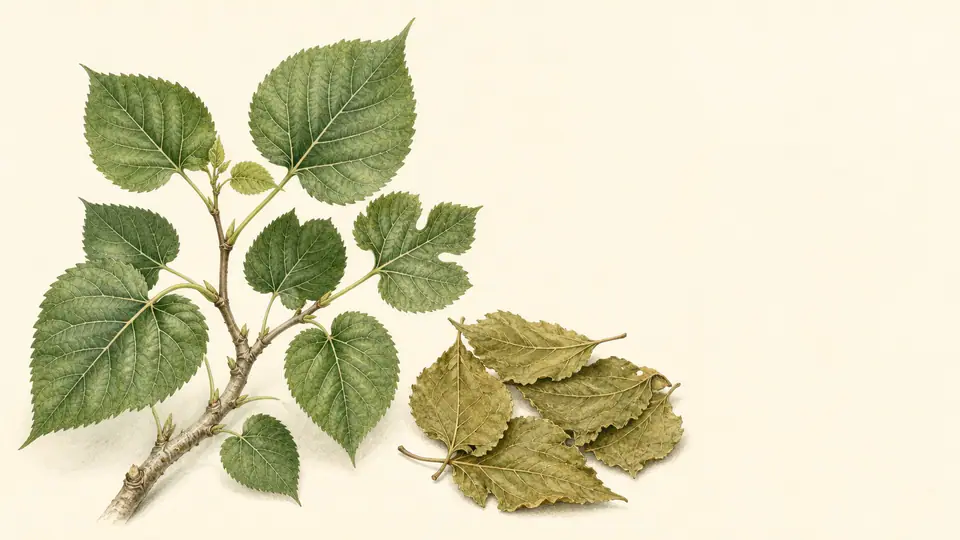
Between a cup of mulberry leaf tea and diabetes medication: The story of Sangyeop
Can I drink mulberry leaf tea, which is said to be good for blood sugar, along with diabetes medication? In short, using them together arbitrarily is not recommended. While mulberry leaves have long been used as tea, medicinal herbs, and raw materials for blood sugar products, a cup of tea is not the same exposure as a standardized extract, and research on postprandial blood glucose changes cannot be expanded as evidence for long-term diabetes management.
This raw material is not simple. Even if they come from the same mulberry tree, the leaves, fruit, root bark, and twigs are classified as different medicinal herbs; likewise, leaf tea/powder, DNJ standardized extracts, and blood sugar products should not be viewed as the same. Therefore, it is necessary to examine the part of the Sangyeop used, the formulation, and the actual research conditions separately.
What kind of leaf is Sangyeop?
The Ministry of Food and Drug Safety's crude drug standards define Sangyeop as the leaf of the mulberry tree Morus alba or the mountain mulberry tree Morus bombycisA single name can blur the facts. Sangyeop, Sangsimja, Sangbaekpi, and Sangji all come from the mulberry tree but are different parts. Research on leaves should not be combined with research on fruit or root bark, M. alba and the data M. bombycis cannot be applied directly to products.
Why DNJ has gained attention
1-deoxynojirimycin (DNJ) in mulberry leaves has become the center of discussion regarding carbohydrate absorption. There were expectations that it could mitigate postprandial blood glucose spikes by slowing down carbohydrate breakdown in the intestines, leading to the use of concentrated or standardized extracts of this component in various products. However, the presence of a single component does not mean that a cup of leaf tea or long-term intake will yield the same results.
Leaf tea and standardized extracts are different
General mulberry leaf tea, powder, and DNJ standardized extracts are not the same exposure. Human trials have primarily been short-term evaluations of leaf extracts with adjusted DNJ content taken with carbohydrate-rich meals. For example, a trial on DNJ-enriched leaf extract was a crossover study involving a single dose with white rice for 12 people with fasting blood glucose between 100 and 140 mg/dL. This differs from general tea or long-term diabetes treatment conditions.
Research on rice coated with standardized extracts or proprietary extracts is specific to the product and dosage. Those results cannot be converted into the effect of a single cup of dried leaf tea. In other words, there is no evidence to conclude that the DNJ content and absorption pattern of a cup of tea are the same as the extracts used in research.
The Extent of Evidence in Human Subjects
A 2022 systematic review Morus alba reported the possibility that products could lower postprandial blood glucose and insulin, but stated that the evidence is insufficient to conclude them as blood glucose-lowering interventions. A meta-analysis of 13 randomized trials observed changes in blood glucose at 30, 60, and 90 minutes post-meal, but there were no significant differences in fasting blood glucose, HbA1c, or lipid markers.
Observing a decrease in blood glucose at certain points after a meal is different from proving an effect on glycated hemoglobin or the prevention of complications. So, what should we look at? We must consider the number of studies, consistency, and the absence of long-term indicators. For now, it is appropriate to understand it only as a possibility for a one-time change after a meal.
When used with diabetes medication
It is important not to arbitrarily combine concentrated mulberry leaf products with medications that can cause hypoglycemia, such as insulin or sulfonylureas. If you are taking such medications, it is necessary to show your blood glucose records and the product's content to your medical provider or pharmacist. If you experience symptoms of hypoglycemia, such as cold sweats, tremors, palpitations, or confusion, check your blood glucose immediately and follow the established hypoglycemia response protocol; if these recur, you must seek medical evaluation.
It is also a clear boundary that prescribed diabetes medication should not be replaced with mulberry leaf tea. Sangyeop products are not a basis for reducing or discontinuing blood glucose medication.
Individual circumstances and safety signals
You must discontinue use if you have a mulberry allergy or experience hives, swelling of the lips or throat, or difficulty breathing. Severe reactions require evaluation by 119. There is insufficient safety data regarding long-term concentrated intake for pregnant or breastfeeding women, children, and those with liver or kidney disease. This does not prohibit use in these specific groups, but acknowledges a lack of reviewed safety evidence.
Similar names, different ingredients
Four distinctions are necessary when understanding mulberry leaf (Sangyeop). First, the difference between the leaves and the berries, root bark, or twigs. Second, the difference between general leaf tea and DNJ standardized extracts. Third, the difference between post-meal blood glucose changes and HbA1c or complication prevention. Fourth, M. alba the difference between M. bombycis research data and actual products. These distinctions are often blurred under the single name 'mulberry leaf'.
Criteria to Check Today
Rather than simply stating that mulberry leaves are good for blood glucose, a more accurate starting point is to verify the species, part used, formulation, and DNJ content, and to check whether blood glucose medication is being taken. A realistic approach to this ingredient is to avoid extrapolating short-term post-meal studies as evidence for discontinuing medication or preventing long-term complications. The safest way to explore the use of mulberry leaf is to review the product label with a healthcare provider or pharmacist and decide on its use after sharing your blood glucose records.
References
- Ministry of Food and Drug Safety Crude Drug Standard: Mulberry Leaf.
- Morus alba for blood sugar management: systematic review.
- Morus alba glucose and lipid outcomes: meta-analysis.
- DNJ-enriched mulberry leaf extract and postprandial glycemia.
- Standardized Morus alba leaf extract randomized trial.
This text explains the origin of the raw materials, the scope of research, and precautions before consumption. As this cannot replace individual diagnosis or treatment, please consult a medical professional if you are taking medication or if symptoms persist. If sudden and severe symptoms such as difficulty breathing or decreased consciousness occur after consumption, seek help from 119 or the emergency room.

Medical Staff Review
Director Choi Yeon-seung
Chief Director of Baekrokdam Korean Medicine ClinicMulberry Leaf Dictionary Entry, reviewed the safety of expressions and the scope of verification before administration.
Review scope: Ingredient origin, human studies, concomitant medications, safety of intake · Last reviewed 2026-08-17
- Graduated from Kyung Hee University College of Korean Medicine
- Providing Korean medicine treatment since 2010
- Consultations for Gongjindan, Gyeongokgo, Nokyong (Deer Antler) restorative medicine, and customized restorative herbal medicine