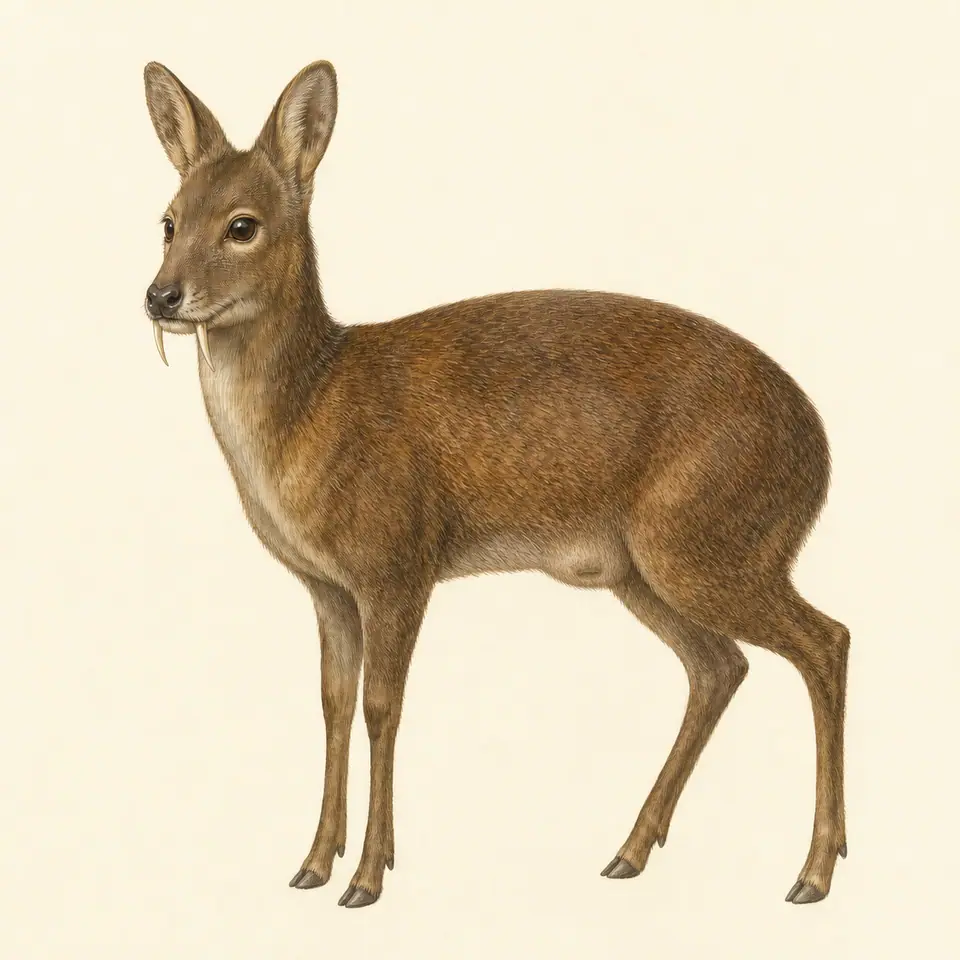
Tong-gyu (Opening the Orifices): A single drop that opens closed doors
The Divine Farmer's Materia Medica classifies musk as a 'Superior Grade' medicine, stating that it "repels evil qi, eliminates ghostly essences, and removes the three worms and toxic poisons." Later, the Records of Famous Physicians provided more specific details, noting that it "treats ominous evils and ghostly qi, and manages sudden pain in the heart and abdomen as well as wind toxins." Among these, a line from the Treatise on the Properties of Drugs clearly reveals the essence of musk: "When powdered and administered in single pills with warm water, it treats pediatric convulsions and sudden fright, stabilizes the mind and spirit, and stops urinary cessation." Opening closed orifices, activating stalled functions, and awakening the spirit, this has been the core role of musk in classical texts.
However, the common image of musk is often limited to being a 'precious fragrance' or a 'medicine with a strong smell.' While it is easy to remember only its strong scent, the position of musk in traditional herbal medicine is not simply that of a 'good-smelling herb.' The explanation by Li Shizhen in the Compendium of Materia Medica is clear: "It clears the various orifices, opens the meridians, and penetrates the muscles and bones." Musk does not overwhelm a person with its scent, but is a 'Tong-gyu' (orifice-opening) medicine that pierces through blockages and moves stagnant qi. This power is exerted when consciousness is clouded or meridians are blocked.
Due to these characteristics, musk is used in very small amounts in prescriptions, making it crucial who it is used for and how. In the 'Clarification' section of the Compendium of Materia Medica, a debate continues among Li Gao, Zhu Zhenheng, Yan Yonghe, and Li Shizhen, and their core point remains consistent: "Musk penetrates and disperses to clear obstructions in the orifices and open blockages in the meridians; it is not that it cannot be used, but rather that it must not be overused." Its strong potency translates directly into precautions. It is contraindicated for pregnant women and should be used with caution for those with Yang-excess/Yin-deficiency or those experiencing alternating chills and fever and night sweats due to deficiency of the Sea of Blood. Therefore, musk is a medicinal herb where the safety standard is defined by how much is used, for whom, and under what conditions.
Summary at a Glance
In herbal medicine studies, musk is recorded as a precious animal-based medicinal herb with the characteristic of 'opening closed orifices and clearing blocked meridians.' The table below summarizes the identity and key characteristics of this herb at a glance.
| Category | Content |
|---|---|
| Origin | Chinese Name: 麝香 / Scientific Name Moschus moschiferus Dried secretion from the musk gland of a male musk deer |
| Properties and Meridian Tropism | 辛, 溫; 心經·脾經 |
| Representative Aliases | Sajehyang, Jehyang, Hyangjeja, Sabu |
| Efficacy Recorded in Literature | Opening orifices and awakening the mind (clearing consciousness and brightening the spirit), promoting blood circulation and clearing meridians/reducing swelling and relieving pain (resolving blood stasis, clearing meridians, and calming swelling and pain), promoting labor and descending the fetus |
| Main Ingredients | Muscone (C₁₆H₃₀O), 2.0% or more on a dry matter basis |
| Combinations, Contraindications, and Precautions | Due to its strong blood-circulating and meridian-clearing effects, both oral and external use are contraindicated for pregnant women; caution is required for those with Yang-excess/Yin-deficiency, alternating chills and fever/night sweats due to deficiency of the Sea of Blood, or a tendency toward bleeding; it is difficult to use in combination with restorative medicines intended for tonifying Yang or Yin as their directions of action differ |
Is this medicinal herb right for me?
Musk is a medicinal herb with a strong power to clear blockages and open what is closed. Accordingly, the criteria for the people and situations in which it is used are very clear. Please check the following three criteria first.
-
Generally suitable casesIndications: Cases where a professional Korean medicine doctor determines that a prescription containing musk is necessary for symptoms such as clouded consciousness, a feeling of blocked orifices, pain or numbness as if meridians are twisted, or wounds and swelling caused by accumulated blood stasis. This corresponds to the description in the Compendium of Materia Medica regarding 'clearing uncontrollable meridian blockages and eliminating alcohol toxicity and food stagnation from fruit.'
-
Cases requiring cautionPrecautions: Individuals with a Yang-excess/Yin-deficiency constitution who fatigue easily and have excessive sweat or heat, those with alternating heat and cold due to deficiency of the Sea of Blood, and those with a tendency to bleed or who are taking anticoagulants or antiplatelet agents. Because musk has a property of 'racing through the crisis,' it may further scatter the Qi of those with deficient original Qi. Additionally, while the risk of bleeding may theoretically increase when used with Western medicines, direct clinical evidence of interaction has not been confirmed.
-
Cases to avoid: Pregnant women must avoid both oral and external use. In traditional herbal medicine, musk has a strong effect of stimulating the uterus to the extent that it is used to 'treat difficult labor and abortion.' The Korea Institute of Oriental Medicine and the Traditional Knowledge Portal consistently record it as contraindicated for pregnant women. Breastfeeding women and children should also not use it without consulting a professional Korean medicine doctor.
Practical Q&A
We have gathered the most frequently asked questions from clinical practice. Since musk is a potent herb with many legal and medical regulations, it is safer to first ask "In what situations should I NOT use this?" rather than "Can I use this in this situation?" The following answers are provided based on that premise.
What should I do if I am pregnant or planning a pregnancy?
As a rule, pregnant women should avoid both oral and external use. Musk is recorded in traditional herbal medicine as a potent herb that excites the uterus to the extent of treating difficult labor and abortion, and the Compendium of Materia Medica specifically notes its use for "difficult labor and abortion." The Korea Institute of Oriental Medicine and the Traditional Knowledge Portal also consistently advise that "since it causes uterine excitation, pregnant women should abstain from taking it." You must consult a Korean medicine doctor before making a decision even during periods when pregnancy is possible.
I am taking Western medicine; can I use it concurrently?
Verification is required. Since musk has a "blood-circulating and meridian-clearing" effect, the risk of bleeding may theoretically increase if used with anticoagulants or antiplatelet agents. However, clinical studies addressing direct interactions between musk and anticoagulants have not yet been confirmed in databases such as PubMed or NCBI. Furthermore, as muscone is a component that can affect the central nervous system and cardiovascular system, if you are taking related Western medicines, please inform and consult both your Korean medicine doctor and your primary care physician.
Is external application to the skin also dangerous?
External use is also contraindicated for pregnant women. Classical texts such as Boje-bang record the external use of musk combined with borneol, frankincense, and myrrh for treating toxic carbuncles or lower-body ulcerations, but these were cases judged by experts within the clinical context of that time. Currently, we do not recommend that individuals apply musk externally on their own; the prescription and dosage must be determined through consultation with a Korean medicine doctor.
Can it be used for children?
The Theory of Medicinal Properties records that "mixing it into a powder with cooked rice water and administering one pill treats pediatric convulsions and vomiting." However, this is merely a classical record; it is not appropriate to use musk alone or routinely for children today. Since the constitution and symptoms of children differ from those of adults, even for prescriptions containing musk, you must consult a Korean medicine doctor with experience in pediatric care before use.
Can I take restorative medicine containing musk (such as Gongjin-dan)?
Gongjin-dan is a prescription listed in the Dongui Bogam, consisting of deer antler, angelica root, cornus fruit, and musk. Restorative medicines containing musk, such as this, can only be used after an accurate assessment of the individual's constitution and symptoms. In particular, because prescriptions containing musk have a strong property of "opening closed orifices and clearing blocked meridians," they may not be suitable for those with excessive internal heat, a Yin-deficient constitution, or a tendency to bleed. It is necessary to verify if it is appropriate for you through a medical evaluation by a Korean medicine doctor.
Can I obtain and use musk on my own?
Musk is listed in CITES Appendix II, meaning its international trade is regulated, and it is designated as a Class I Endangered Wild Species in Korea. It is also categorized as Critically Endangered (CR) on the Korean Red List. Due to this legal status, individual purchase, possession, and use may be legally restricted. Even for medical purposes, it must be used through lawful channels via professional institutions and Korean medicine doctors. At Baekrokdam, we only decide whether to include it in a prescription after verifying these points.
Relationship with Other Medicinal Herbs (Yakdae/Pairing)
Musk is not used alone. It exerts its power within a prescription by pairing with other medicinal herbs, a concept referred to in tradition as "Yak-dae (medicinal pairs)." In particular, musk has a strong property of 'opening closed orifices and clearing blocked meridians,' so it is often placed in a supportive yet decisive role to support restorative medicines or to open up acute symptoms. Below are representative classical prescriptions where musk forms a core combination.
- Gongjindan This is a prescription listed under the 'Xu Lao' (Deficiency-Fatigue) section of Volume 4, Miscellaneous Diseases, in the 《Dongui Bogam》. By adding musk to deer antler, angelica root, and cornus officinalis, this prescription strengthens the vital energy (won-gi) and harmonizes the five viscera, and has been traditionally used based on the principle of “Suseung-hwagang” (descending of fire and ascending of water). The preparation method involves grinding the ingredients into a powder, mixing them with a paste made of flour and alcohol, and shaping them into pills the size of a paulownia seed.
- Sahyanggyeongbun-san (Musk and Calomel Powder) An external prescription recorded in the "Chi-po-bang." It was traditionally used for bullae and malignant ulcers by combining alum, frankincense, calomel, and musk.
- Cheongeum-san (Thousand Gold Powder) A prescription found in the "Ui-gam," used for malignant ulcers by combining frankincense, myrrh, blood dragon, realgar, and musk.
- Ogeum-san (Black Gold Powder) A prescription recorded in the "Taiping Sheng Hui Fang." It was traditionally used for postpartum blood stasis and qi stagnation by adding musk to red scales, orchid hair, and processed ingredients.
- Sahyang-san (Musk Powder) A prescription found in the "Taiping Sheng Hui Fang," used for postpartum blood stasis by combining musk, cinnabar, five-flavored berry, and fragrant ink.
Because musk has a strong power of 'circulation (Tong),' its strength is moderated when used with restorative medicines in combinations, and it acts quickly and powerfully when used with other orifice-opening or blood-activating herbs in prescriptions for acute symptoms. It is contraindicated for pregnant women for both internal and external use, and those with a tendency to bleed or a constitution of Yang-excess and Yin-deficiency should avoid prescriptions containing musk.
In what form is it consumed?
Due to its potency, musk is a medicinal herb where the form of use itself reveals the intent of the prescription, rather than being used regardless of form. It is rarely consumed daily in the form of tea or food like general restorative medicines; most often, it is used in small amounts for short periods within professional prescriptions.
- Tea: Not common. While musk does not volatilize easily even at high temperatures, its fragrance is strong and its action is sharp, so it is not consumed in the form of an everyday tea.
- Food: Not common. In traditional pharmacognosy, it is classified as a medicinal herb rather than a food. In particular, because there is a high risk if consumed by pregnant women, its use in food form is not recorded.
- Decoction: Not common. Musk is a medicinal herb where fragrance and dispersing components are more central than water-soluble components; boiling it with other herbs may cause it to volatilize or deviate from the prescription's intent. In classical texts, it is often finely powdered and combined with other herbs or used externally.
- Professional Prescription: The most common form. Like Gongjin-dan in the Dongui Bogam, it is powdered with deer antler, angelica root, and cornus fruit to be taken as pills, or combined with other herbs for external or internal use as seen in Sahyanggyeongbun-san, Cheongeum-san, Ogeum-san, and Sahyang-san. The dosage and duration must be prescribed by a professional Korean medicine doctor, and use is contraindicated for pregnant women or those with a tendency to bleed.
Interactions and Safety During Use
Just as musk has the property of 'opening the closed and clearing the blocked,' it is a medicinal herb with clear situations where it must not be used. In particular, regarding pregnancy, it has been consistently cautioned against from classical texts to modern pharmacognosy data. Below are the confirmed safety standards.
- Pregnancy and Breastfeeding: Musk is traditionally recorded as having an effect that stimulates the uterus, and it appears in the context of treating difficult labor or abortion in the "Bencao Gangmu." Therefore, pregnant women must avoid both internal and external use. As a rule, it should also not be used during breastfeeding.
- Bleeding tendency / Concurrent use of anticoagulants or antiplatelet agents: Since musk has the property of "activating blood and clearing meridians," there is a theoretical possibility that the risk of bleeding may increase. However, clinical studies dealing with direct interactions between musk and specific Western medicines such as warfarin, aspirin, or clopidogrel have not been confirmed. Those undergoing anticoagulant or antiplatelet therapy, or those with hemorrhagic diseases, must consult a professional.
- Central Nervous System and Cardiovascular Medications: Muscone, a primary component, is known to act on the central nervous system and the cardiovascular system. While there is a theoretical possibility of interaction when used concurrently with sedatives or cardiac stimulants, clinical evidence is insufficient.
- Contraindications based on Constitution and Symptoms: It is not suitable for individuals with excessive Yang energy and Yin deficiency, or those with weak blood essence who experience alternating chills and fever and night sweats. Additionally, some point out that in cases of wind-syndrome (風證) of the five viscera, musk may scatter the defensive Qi (衛氣).
- Daily Consumption and Tonic Forms: Musk is not a medicinal herb to be taken daily by adding it to tea or food like general health tonics. It is mostly used in small amounts for short periods within professional prescriptions, and self-administration is not recommended.
As the effects of musk are potent, the decision to use it must be made following an examination and prescription by a Korean medicine doctor. Please inform your doctor during the consultation if you are currently taking Western medications or if you suspect pregnancy, breastfeeding, or bleeding disorders.
If you experience these symptoms
Since musk has a strong property of 'unblocking what is blocked and opening what is closed,' it is important to notify your attending Korean medicine doctor first if specific signals appear during intake, rather than attempting to adjust it yourself. The following signals are situations that are cautioned against in traditional pharmacognosy regarding the strong 'opening' action of musk, or require modern caution.
- Bleeding tendency: Nosebleeds, bleeding gums, easy bruising under the skin, or a sudden increase in menstrual flow, Musk has a 'blood-activating and meridian-opening (活血通經)' effect, which may theoretically increase the risk of bleeding.
- Uterine Abnormalities: Lower abdominal pain, changes in menstrual cycle, abnormal bleeding, Musk is traditionally recorded as having an effect that stimulates the uterus, so particular caution is needed if there is a possibility of pregnancy or existing menstrual disorders.
- Consciousness and Nervous System Abnormalities: Dizziness, anxiety, severe headache, convulsions, Muscone, the main component of musk, can affect the central nervous system; if adverse reactions occur, stop intake immediately and consult your doctor.
- Cardiovascular Symptoms: Heart palpitations, irregular heartbeat, dizziness, There are theoretical concerns that muscone may also affect the cardiovascular system.
- Allergic reactions: Occurrence of hives, difficulty breathing, or facial swelling after intake, As it is an animal-derived medicinal herb, caution regarding allergic reactions is also necessary.
If symptoms are severe or progress rapidly, please visit an emergency medical institution and provide information on all medications and prescriptions you are taking. Since musk is a medicinal herb that is used safely only within the balance of an entire prescription, please do not adjust the dosage or duration of intake on your own.
Differences from other restorative medicines
The core property of musk is its 'power to open.' Therefore, even when placed within the broad category of health tonics, its direction of use is clearly different from other tonics. While tonics often evoke an image of adding energy and filling what is deficient, musk is closer to the role of unblocking obstructions in places where that supplementation cannot reach.
A representative example is Gongjindan. This prescription, found in the Dongui Bogam, is a tonic made by adding musk to deer antler, angelica root, and cornus fruit, and is said to support the innate original Qi by helping the descent of fire and ascent of water (水升火降). Here, musk does not simply support the power of deer antler or angelica root that fills the energy, but rather opens the blocked paths so that the supplementation can circulate properly. Just as it is useless to supply water if a large river is blocked somewhere, musk plays the role of clearing that blockage to open the waterway.
It also differs in nature from typical Qi and blood supplementing tonics such as Gyeongokgo or Bokryeong-tang. While those are mainly used to slowly nourish a deficient constitution over a long period, musk is often used short-term to open urgent symptoms caused by blocked circulation during such nourishment processes, or in severe cases where consciousness is clouded and orifices seem blocked. In other words, musk is closer to a 'tonic for circulation' than a 'tonic for filling.'
Therefore, whether musk is necessary or whether nourishing herbs like deer antler, ginseng, or angelica root are more appropriate must be determined by observing the individual's constitution and the flow of current symptoms. Rather than deciding on your own, please consult your attending Korean medicine doctor to confirm the right direction for you.
References
- Evidence materials related to musk 1: Crude drug data from the National Institute of Food and Drug Safety Evaluation.
- Evidence materials related to musk 2: GBIF plant classification data.
- Evidence materials related to musk 3: GBIF plant classification data.
- Supporting data for musk 4: Korea Citation Index academic paper.
- Supporting data for musk 5: PubMed academic paper.
- Supporting data for musk 6: PubMed academic paper.
- Supporting data for musk 7: NCBI original academic data.
- Supporting data for musk 8: NCBI original academic data.
If you would like to check if this medicinal herb is right for you or which prescription it should be used with, please leave a medical inquiry. For those who find it difficult to visit the clinic, non-face-to-face consultations are available; we will provide guidance after first reviewing your current condition and current medications.

Medical Staff Review
Director Choi Yeon-seung
Chief Director of Baekrokdam Korean Medicine ClinicMusk Dictionary Entry, reviewed the safety of expressions and the scope of verification before administration.
Review Scope: Clinical Accuracy, Pharmacology, Contraindications, Combinations, QA · Last Reviewed 2026-08-16
- Graduated from Kyung Hee University College of Korean Medicine
- Providing Korean medicine treatment since 2010
- Consultations for Gongjindan, Gyeongokgo, Nokyong (Deer Antler) restorative medicine, and customized restorative herbal medicine