What Role Does Lysine Play in Cold Sores?
If cold sores occur frequently, can taking lysine or avoiding foods high in arginine prevent recurrence? In short, clinical evidence is not yet consistent enough to conclude that this is the case. While lysine is an essential amino acid the body needs, this does not mean that a person who consumes sufficient protein can prevent or treat cold sores by taking an additional single supplement.
Starting as a building block for protein synthesis, this ingredient became known as a cold sore capsule after the arginine competition hypothesis observed in cell cultures. Since then, the paths have diverged between correcting nutritional deficiencies, supplementing a sufficient diet, cell culture versus human recurrence, and prevention versus the treatment of existing lesions.
What is Lysine: An Essential Piece of Protein
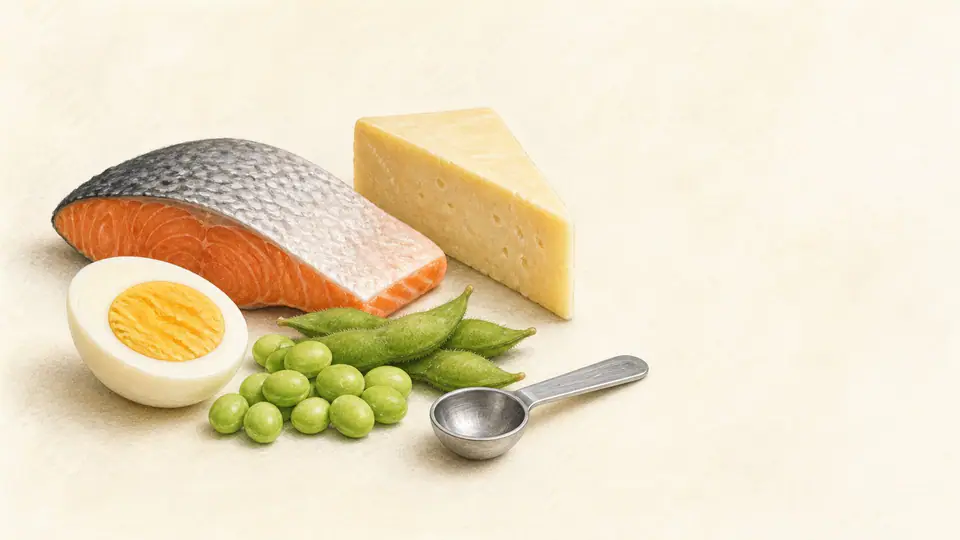
Lysine is an essential amino acid required for protein synthesis. Because the body cannot produce it on its own, it must be obtained from food; it is found in protein-rich foods such as meat, fish, dairy, eggs, and legumes. It is also referred to as lysine or L-lysine.
Lysine in food proteins, single L-lysine or hydrochloride powder, and mixtures of various essential amino acids differ in absorption rates and accompanying nutrients. Even with the same name, if the form is different, the context in which the body accepts it also changes. Therefore, a problem arises where the single name 'lysine' makes several different situations appear as one.
Grain-based Diets and Limiting Amino Acids
In some grain proteins, lysine can be the limiting amino acid. This is where the image of lysine as an essential amino acid that is easily lacking in grain-based diets comes from. However, the nutritional status of a person who eats a variety of proteins sufficiently is separate from the need for a single supplement.
There is a gap between the fact that lysine is an essential nutrient and the claim that one should take additional single amino acids. Correcting a deficiency and expecting a preventive or therapeutic effect are different questions, even for the same ingredient.
Why Expectations Were Placed on Cold Sores
There is a mechanism observed in cell cultures regarding the relationship between the herpes virus and arginine. This mechanism is not the same as evidence that avoiding chocolate and nuts and eating more lysine prevents recurrence in humans. Phenomena occurring in cell cultures and human recurrence rates are on different dimensions.
Nevertheless, the idea that the lysine-to-arginine ratio helps prevent cold sores has spread widely. While the name comes from a scientific mechanism, the clinical evidence in humans is not as robust.
What Does the Evidence in Humans Show?
In a double-blind crossover trial of 65 people in 1980, 1 g of lysine hydrochloride per day did not improve the overall recurrence rate, lesion healing speed, or severity. There were only signals of no recurrence in some participants.
A 2017 evidence review concluded that less than 1 g of lysine per day was not effective for the prevention or treatment of cold sores without a low-arginine diet. It noted that subjective signals at higher doses require long-term controlled trials. There is no consistent randomized trial evidence that lysine heals existing cold sores faster, nor does it replace prescription or general antiviral treatments.
The fact that lysine is an essential amino acid and the claim that it is effective for cold sores may seem similar, but the latter has not yet been proven.
Differences in Product Forms: Food, Single Amino Acids, and Hydrochloride
Food proteins and single L-lysine or lysine hydrochloride are different even if they are the same raw material. Lysine in food is contained with other amino acids and nutrients, whereas single products contain it in high concentrations in a specific form. Mixtures of various essential amino acids are yet another form.
What was primarily used in studies was lysine hydrochloride powder, and those results cannot be generalized to food proteins or complex amino acid products. When choosing a product, you should first check what form it is and whether it is the same form used in the studies.
Combined Intake and Individual Circumstances
High doses of lysine hydrochloride may cause nausea, abdominal pain, or diarrhea. Long-term excess of a single amino acid may potentially alter the balance and metabolism of other amino acids. If you have kidney, liver, cardiovascular, or gallbladder disease, do not use high doses arbitrarily and consult your medical provider regarding your prescription medications and dietary status.
Data on high-dose use during pregnancy and breastfeeding is insufficient, and LactMed states there is no information on high-dose use for the purpose of treating herpes during breastfeeding. For lesions around the eyes, severe pain, widely spreading blisters, immunocompromised states, or frequent recurrences, do not rely solely on lysine; instead, consult a professional regarding diagnosis and the timing of antiviral treatment. If symptoms such as difficulty breathing, facial swelling, severe dehydration, or decreased urine output occur, stop use immediately and seek medical evaluation.
Differences from similar raw materials
Lysine and arginine are often discussed as a pair. However, the competitive relationship observed in cell cultures does not directly translate to human food choices. A distinction must also be made between the prevention of cold sores and the treatment of active lesions. Evidence for prevention is lacking, and the evidence for attempting to treat existing lesions with lysine is even weaker.
Cell culture mechanisms, subjective experiences, and recurrence rates in randomized trials hold different levels of persuasiveness, even when dealing with the same lysine. The existence of a mechanism does not mean the same effect will manifest in humans.
Criteria to Check Today
Before considering essential amino acids or the ratio of lysine to arginine, first verify the accurate diagnosis of the lesion, the purpose of prevention or treatment, dietary protein intake, and the form of the product. After considering the gap between outdated, conflicting clinical evidence and antiviral treatment, the correct sequence is to discuss whether to take the supplement with a healthcare provider, especially in cases of personal illness, pregnancy, or breastfeeding.
What then should be considered? First, whether a healthcare provider has confirmed the cold sore and ensured it is not another lesion such as aphthous stomatitis, contact dermatitis, or herpes zoster. Second, whether the goal is prevention or treatment of an existing lesion, and whether it is being used to delay or replace prescribed antiviral medication. Third, whether dietary protein is sufficient, whether there are kidney, liver, cardiovascular, or gallbladder diseases, or if the person is pregnant or breastfeeding, as well as the total daily dose and duration of use.
Lysine is sufficiently important as a building block of protein. However, that importance does not equate to the therapeutic efficacy of cold sore capsules.
References
- NCBI MeSH: Lysine as an essential amino acid.
- USDA evidence scan: High amino acid intake and acute adverse effects.
- LactMed: Lysine during breastfeeding.
- Lysine for herpes simplex prophylaxis: review of the evidence.
- Lysine prophylaxis in recurrent herpes labialis: double-blind crossover trial.
This text explains the origin of the raw materials, the scope of research, and precautions before consumption. As this cannot replace individual diagnosis or treatment, please consult a medical professional if you are taking medication or if symptoms persist. If sudden and severe symptoms such as difficulty breathing or decreased consciousness occur after consumption, seek help from 119 or the emergency room.

Medical Staff Review
Director Choi Yeon-seung
Chief Director of Baekrokdam Korean Medicine ClinicLysine Dictionary Entry, reviewed the safety of expressions and the scope of verification before administration.
Review scope: Ingredient origin, human studies, concomitant medications, safety of intake · Last reviewed 2026-08-17
- Graduated from Kyung Hee University College of Korean Medicine
- Providing Korean medicine treatment since 2010
- Consultations for Gongjindan, Gyeongokgo, Nokyong (Deer Antler) restorative medicine, and customized restorative herbal medicine