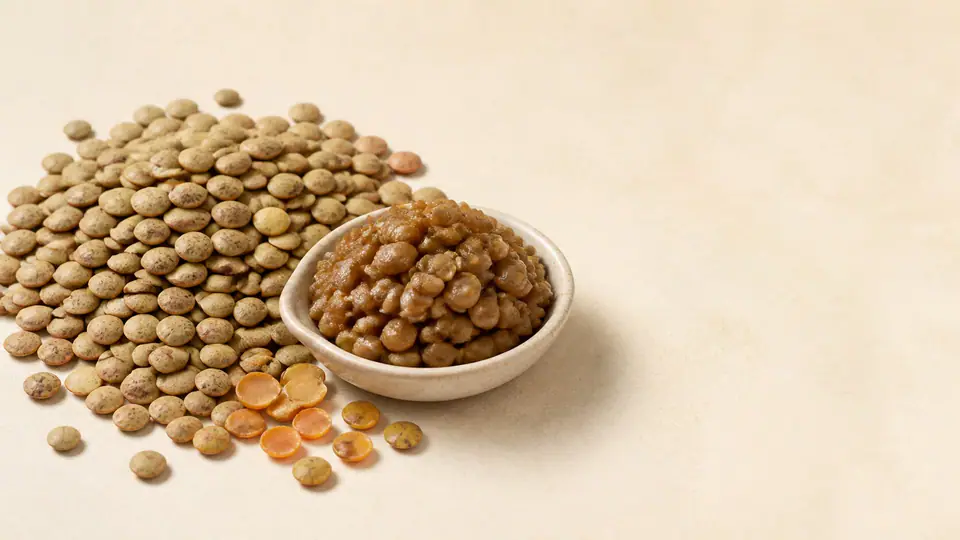
Lentils: Small signals from a single-meal replacement
Can I eat lentils every day instead of rice or meat due to blood sugar or cholesterol? Rather than simply switching every day, the priority is what you are replacing and in what quantity.
Lentils are legumes containing protein and fiber, but they are not foods that treat diabetes or cardiovascular disease in themselves. This is because lowering postprandial blood glucose for a single meal is different from improving long-term complications.
What are lentils?
Lentils are the lens-shaped seeds of a Vicia lenslegume plant. Lens culinarisThey are legumes widely known by the scientific name. Kew currently classifies lentils Vicia lensas, Lens culinarisare treated as synonyms. Brown, green, and red lentils, as well as whole, split, powdered, and canned forms, differ in cooking time, texture, and the amount consumed per serving, so they cannot be considered the same dietary exposure.
Why it became a symbol of plant-based protein and low-glycemic foods
Lentils are legumes that provide protein and fiber. The nutritional value of a food is not the same claim as its therapeutic effect on diabetes or cardiovascular disease. Nevertheless, lentils became a symbol of plant-based protein and low-glycemic foods because small signals of improvement in certain indicators were seen when they replaced refined grains or meat in a meal. However, it cannot be concluded that these signals lead directly to disease prevention.
What does the research show?
A 2024 meta-analysis of 24 randomized trials on legumes reported small average improvements in total cholesterol, LDL cholesterol, and fasting blood glucose. However, the types and forms varied, and not all indicators improved. A 2023 review of healthy adults evaluated that while there were small signals in risk indicators, evidence for the actual occurrence of cardiovascular disease or diabetes was limited, making it impossible to draw a conclusion.
In a 12-week trial of 38 people in 2024, lunches containing cooked lentils daily improved some indicators compared to a meat-based control diet. However, this is a small replacement-diet study. The scope of evidence differs between a meta-analysis grouping all legumes and a small trial on lentils alone. If 'legumes' and 'lentils' are placed on the same level, the scale of research and the scope of application change.
Dietary exposure varies by form
Even for the same type of lentil, whole, split, powdered, and canned forms are not the same dietary exposure because their cooking times, textures, and amounts per serving differ. Since water-soluble GOS in canned lentils can leak into the liquid, those requiring a low-FODMAP diet may consider discarding the liquid and rinsing them.
| Form | Points to Consider |
|---|---|
| Whole | Cooking time and amount per serving |
| Split | Cooking time and texture |
| Powder | Amount per serving and accompanying foods |
| Canned | GOS in the broth and whether it was rinsed |
What is being replaced is part of the result
Trials on increasing lentil intake often replace meat or other carbohydrate foods. Therefore, what was removed is part of the result. If you eat lentils daily instead of rice or meat, you must observe how the reduced amount of carbohydrates and proteins, as well as the total food intake, changes. A diet that adds lentils and a diet that replaces meat or refined grains are different designs.
When taking diabetes medication
Since lentils also contain carbohydrates, you must calculate the amount per serving and the grains or sauces eaten with them while managing diabetes. Do not change your medication arbitrarily. It is dangerous to exclude the carbohydrates in lentils from your calculations or attempt to reduce your medication while taking diabetes medication.
Gas, bloating, and allergies
Fiber and fermentable carbohydrates may cause gas and abdominal bloating. Gradually increase the amount of cooked lentils and monitor your individual tolerance. Lentils can rarely cause IgE-mediated allergies and anaphylaxis. Sensitization to other legumes does not automatically mean that lentils are safe or dangerous. If hives, swelling of the lips and throat, wheezing, or dizziness occur after consumption, stop intake; for severe reactions, seek emergency help immediately.
Differences from similar raw materials
Studies on lentils alone differ from studies that group various legumes together. Differences in form, whole, split, powdered, or canned, must also be considered. A diet that adds lentils and a diet that replaces meat or refined grains are different comparison targets. In other words, there is a gap in evidence between the statement 'legumes are good' and 'lentils prevent disease.'
Criteria to Check Today
Rather than the label of a 'superfood,' first check the serving size per meal, the food being replaced, the overall carbohydrate and protein composition, the difference between legume research and evidence for lentils alone, and your experience with gas adaptation and allergies. What should you look for? First, check how much of the rice, meat, or other beans are being replaced, how you calculate carbohydrates while taking diabetes medication, and whether you have had allergies to soybeans, peas, chickpeas, peanuts, or experienced hives or respiratory symptoms after consuming lentils.
References
- Kew Plants of the World Online: Vicia lens.
- Legume intake and cardiometabolic outcomes: RCT meta-analysis.
- Legumes, cardiovascular disease and diabetes: systematic review.
- Daily lentil consumption: randomized clinical trial.
- IgE-mediated legume allergy: pediatric review.
- Monash FODMAP FAQ: canned legumes.
This text explains the origin of the raw materials, the scope of research, and precautions before consumption. As this cannot replace individual diagnosis or treatment, please consult a medical professional if you are taking medication or if symptoms persist. If sudden and severe symptoms such as difficulty breathing or decreased consciousness occur after consumption, seek help from 119 or the emergency room.

Medical Staff Review
Director Choi Yeon-seung
Chief Director of Baekrokdam Korean Medicine ClinicLentil Dictionary Entry, reviewed the safety of expressions and the scope of verification before administration.
Review scope: Ingredient origin, human studies, concomitant medications, safety of intake · Last reviewed 2026-08-17
- Graduated from Kyung Hee University College of Korean Medicine
- Providing Korean medicine treatment since 2010
- Consultations for Gongjindan, Gyeongokgo, Nokyong (Deer Antler) restorative medicine, and customized restorative herbal medicine