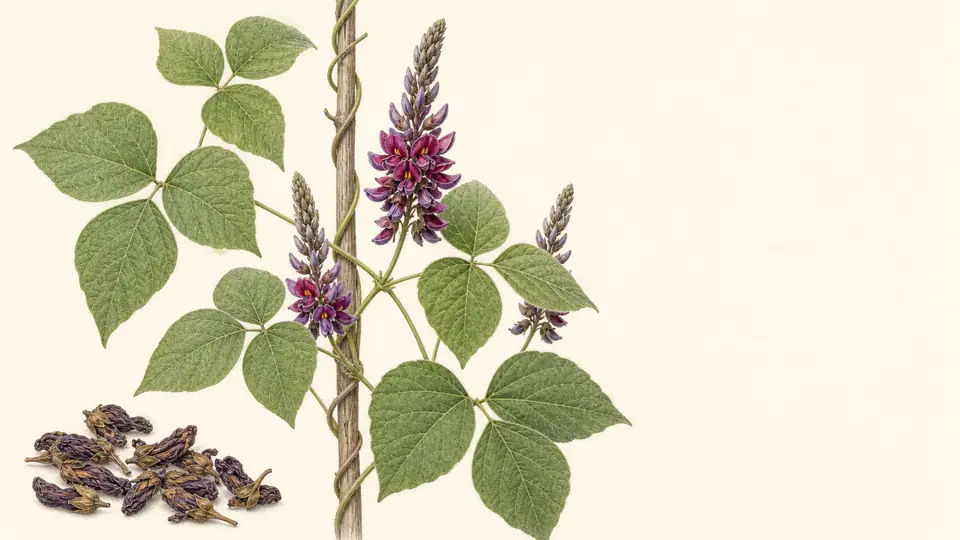
The story that purple flower buds, which bloom briefly in summer, can relieve alcohol toxicity
Can taking Galhwa before or after drinking alcohol prevent hangovers or liver damage?
It is difficult to conclude that so far. When seeing hangover drinks containing Galhwa, one might believe it simply 'because it is kudzu,' but this refers to the briefly blooming flower buds, not the entire kudzu vine. Even for those flowers, there is a lack of definitive clinical evidence in humans. Let's examine the differences in the plant part, species, and formulation hidden behind the name.
Galhwa refers to the flower buds of the kudzu plant
The Ministry of Food and Drug Safety's crude drug standards define Galhwa as Pueraria lobatathe flower buds or flowers that have just begun to bloom. The standards for heavy metals, residual pesticides, and sulfur dioxide are also based on this specific part. The kudzu root, known as Galgeun, which we commonly consume, comes from the same vine but is a different part. Galhwa refers specifically to the flower buds.
In the market, the term 'kudzu' is often used interchangeably
In hangover drinks, kudzu root (Galgeun), Pueraria lobataGalhwa, Pueraria thomsonii flower extracts, isolated isoflavones, and various plant extracts are often mixed together. These do not share the same evidence regarding the plant part, species, or formulation. The name Galhwa alone cannot guarantee the effects of kudzu root or flower extracts from other species. So, what should we look for? First, it begins with confirming whether the ingredient in the product is P. lobatathe flower of the specific plant, or a different part or species.
Why are there expectations for its effectiveness against hangovers?
Expectations for Galhwa began with small-scale human trials and animal or cell studies. However, in 2002, P. thomsonii a human trial using flower extract showed no effect on blood ethanol and acetaldehyde concentrations, reporting only a slight change in the acetaldehyde removal rate. The P. thomsoniiused in this study is a different species from the domestic P. lobata Galhwa.
A 2023 randomized trial of 80 people evaluated a mixture of Galhwa and two other plant extracts. Therefore, the individual effect and dosage of Galhwa cannot be isolated. A systematic review of Galhwa from the same year broadly summarized its components and preclinical potential, but concluded that more research is needed to transition from experimental to clinical application.
The quality of evidence for overall hangover intervention research is very low
A systematic review of 21 hangover intervention trials involving 386 people found only one study per intervention, and the quality of evidence for all efficacy outcomes was rated as very low. This reflects the current standing of not only Galhwa (Kudzu flower) but all hangover-related ingredients. It is still highly limited to generalize based on a single study claiming that a specific ingredient reduced certain symptoms.
Product forms must also be distinguished
When looking at Galhwa, you must first check whether it is the raw flower bud, an extract, a concentrate, or a complex product. P. lobata Given the lack of human evidence for Galhwa single extracts, it is impossible to know which component contributed how much in complex products mixed with other plants such as Hovenia dulcis, Acer glossyrhachis, or mugwort. Relieving hangover symptoms, reducing blood alcohol levels, and preventing liver damage are different goals. Separate evidence is required to claim that one product achieves all three simultaneously.
| Category | What is the difference? |
|---|---|
| Galhwa flower vs. Galgeun root | Both are from the Kudzu plant, but the parts used are different |
| P. lobata vs P. thomsonii Flower | The species are different |
| Single flower extract vs. complex product | The independent effect of Galhwa cannot be isolated |
| Relieving hangover symptoms vs. blood alcohol/liver damage prevention | The goals and evidence are different |
Exercise more caution when taking with other medications or health conditions
If you are undergoing treatment for liver disease or alcohol use disorder, or taking various medications such as diabetes or hormone-related drugs, it is advisable not to arbitrarily combine them with complex hangover products. There is also a lack of human safety data regarding long-term concentrated intake for pregnant women, breastfeeding women, and children. Results from animal liver protection studies should not be used as evidence for preventing damage caused by binge drinking. Because of the familiar name 'Kudzu,' it is easy to assume the safety is at the same level as general food, but Galhwa is a part subject to crude drug standards, and complex products may involve multiple interacting components.
Emergency signals are determined by behavior, not by the ingredients
You must not assume that taking Galhwa or hangover drinks allows for a certain driving time or reduces blood alcohol levels. Drunk driving and additional drinking must be avoided. If a person is difficult to wake, has slow or irregular breathing, or exhibits repeated vomiting, convulsions, or blue lips, lay them on their side to protect the airway and contact 119 immediately. In other words, no matter how much expectation is placed on flower buds, nothing is as certain as protecting the consciousness and breathing of an intoxicated person.
Realistic criteria to check today
When choosing a Galhwa product, ask these three things first: P. lobataWhether it is a flower, arrowroot, another species, or a complex product. Whether it is a supplement to reduce alcohol consumption, or if there is already severe vomiting or decreased consciousness, and what the amount and frequency of alcohol consumption per occasion is. Whether there are liver diseases, diabetes, hormone-sensitive diseases, treatment for alcohol use disorder, current medications, or other hangover products.
The most certain prevention is to reduce alcohol intake and protect the consciousness and breathing of an intoxicated person. Rather than using flower buds and hangover imagery as a 'license to drink,' a realistic approach to this ingredient is to distinguish between species, plant parts, complex components, and trial results.
References
- Ministry of Food and Drug Safety Crude Drug Standards: Galhwa.
- Pueraria thomsonii flower extract and alcohol metabolism in humans.
- Puerariae Flos systematic review.
- Plant extract mixture containing Pueraria lobata flower: randomized trial.
- Hangover interventions: systematic review of randomized trials.
This text explains the origin of the raw materials, the scope of research, and precautions before consumption. As this cannot replace individual diagnosis or treatment, please consult a medical professional if you are taking medication or if symptoms persist. If sudden and severe symptoms such as difficulty breathing or decreased consciousness occur after consumption, seek help from 119 or the emergency room.

Medical Staff Review
Director Choi Yeon-seung
Chief Director of Baekrokdam Korean Medicine ClinicGalhwa Dictionary Entry, reviewed the safety of expressions and the scope of verification before administration.
Review scope: Ingredient origin, human studies, concomitant medications, safety of intake · Last reviewed 2026-08-17
- Graduated from Kyung Hee University College of Korean Medicine
- Providing Korean medicine treatment since 2010
- Consultations for Gongjindan, Gyeongokgo, Nokyong (Deer Antler) restorative medicine, and customized restorative herbal medicine