A Sulfur-Containing Molecule Named After Ergot Fungus, Under the Nickname 'Longevity Vitamin'
Can taking ergothioneine from mushrooms as a supplement slow down brain aging or dementia? Based on human studies to date, it is difficult to conclude that it does. While ergothioneine is an interesting molecule, obtaining it from food versus taking high-purity capsules, and the causal effect of supplements versus the health of people with high blood levels, are different issues.
This ingredient takes its name from ergot fungus, and humans primarily consume it through mushrooms. Recently, as expectations for antioxidant effects and aging delay have grown, high-purity L-ergothioneine products have increased. However, as expectations rise, it is necessary to distinguish exactly what has been verified and what remains unclear.
Context of the Inquiry: Why Ergothioneine?
Ergothioneine is a sulfur-containing histidine derivative synthesized by bacteria and fungi. PubChem describes it as such and notes that it is found in various foods, including mushrooms. Since humans cannot produce it themselves, they obtain it from foods such as mushrooms, certain legumes, grains, and organ meats.
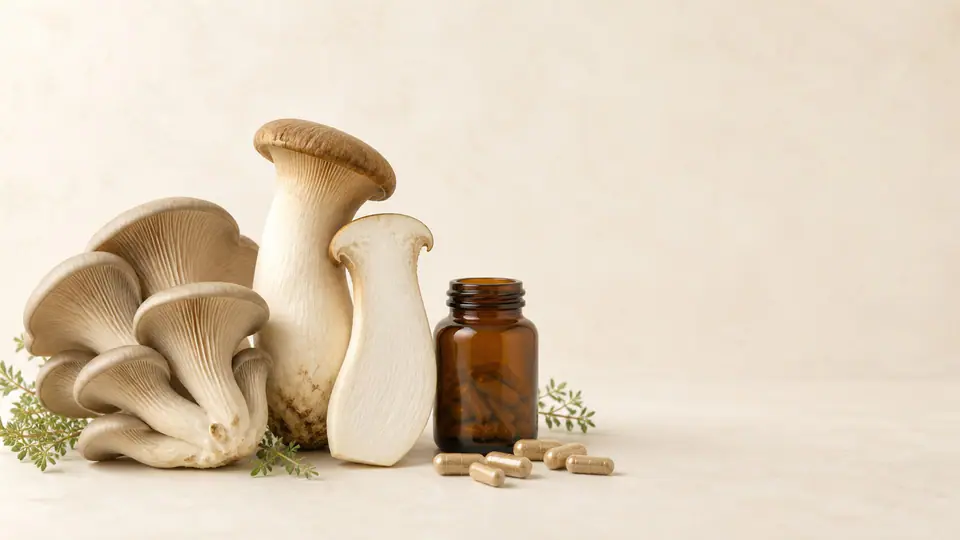
A plate of edible mushrooms, mushroom extracts, and high-purity L-ergothioneine capsules made through fermentation or synthesis all share the name 'ergothioneine,' but the actual amount of ergothioneine and the other components they contain differ. The fact that they are called by the same name is precisely what makes the choice difficult.
Identity of the Ingredient: What Having a Transporter Means
The human body has an OCTN1 transporter that absorbs and reabsorbs ergothioneine. The existence of a dedicated transporter suggests the possibility that this molecule may play an important physiological role. However, the presence of a transporter does not mean that ergothioneine deficiency causes disease or that it holds the status of an essential vitamin.
This is the first point of tension in the ergothioneine story. Being biologically interesting is a different dimension from having proven health functions.
Reasons for High Expectations: Antioxidants and the Nickname 'Longevity Vitamin'
Ergothioneine is regarded as an antioxidant, and there is a hypothesis that it may play a role in reducing cellular damage. These hypotheses combined to create the nickname 'longevity vitamin.' However, a nickname only reflects marketing or expectations; it is not a clinical result.
In short-term administration studies on healthy adults, it was confirmed that ergothioneine is absorbed and maintained in the blood, but changes in oxidative damage or inflammatory markers were mostly not statistically significant. There is a gap between the fact that it enters the blood and the fact that it creates distinct physiological changes.
Food vs. Capsules: What and How Much to Consume
Edible mushrooms are a natural pathway for consuming ergothioneine. However, the content varies depending on the type of mushroom, the part used, and the cooking method, and it is consumed along with other nutrients. Mushroom extracts or powders are concentrated forms, but the extraction method and the content of other components vary by product.
High-purity L-ergothioneine capsules are forms containing ingredients made through fermentation or synthesis at a high purity. The important point here is that just because three products share the name 'ergothioneine,' it does not mean they produce the same effect. Food must be considered in the context of food, extracts in the context of extracts, and high-purity capsules in the context of their corresponding safety and research.
Blood Levels and Supplementation Effects: Observation vs. Causality
In an observational study of 3,236 individuals without cardiovascular disease, high levels of ergothioneine were associated with healthy dietary patterns and a lower risk of cardiovascular and overall mortality. However, this was not a study testing the effects of supplementation.
The reason people with high ergothioneine levels may be healthier might not be due to this molecule alone. Those who consume many mushrooms and plant-based foods are likely to have an overall higher quality of diet. In other words, ergothioneine may be a marker of a healthy dietary pattern. This is why we cannot conclude that achieving the same blood levels through capsules will yield the same health outcomes.
Pilot Studies on Memory and Dementia: Hope and Limitations
In a one-year pilot study of 19 individuals with mild cognitive impairment, it was reported that administering 25 mg three times a week showed some results in learning tests and neurofilament light chain signals. While one year is not a short period, only 14 of the 19 enrolled participants completed the study.
This study is not of a scale that can confirm the effects of dementia prevention or memory improvement in the general population. However, it may provide clues for designing future large-scale trials. In other words, there is currently insufficient evidence to choose a product based on the claim that it slows brain aging.
Safety and Concurrent Use: What Has Been Verified
The European Food Safety Authority (EFSA) has evaluated certain synthetic L-ergothioneine as safe under proposed conditions of use. However, this is only a conclusion regarding the safety of the raw material; it is not an approval of its efficacy for cognitive function or anti-aging, nor does it guarantee the quality of all products.
The EFSA adult supplementation condition of a maximum of 30 mg per day and food additive scenarios are evaluations for specific high-purity synthetic materials. These should not be applied directly to other mushroom extracts or complex formulations. Even if a safety margin for exposure during pregnancy and lactation was recognized in a 2017 additional evaluation, this is not a basis for self-administering high doses during pregnancy or lactation for disease prevention.
Long-term, large-scale safety data and drug interaction data in humans are limited. If you have liver or kidney disease or are taking multiple medications, it is necessary to inform your medical provider or pharmacist about the product. If new memory loss, difficulty finding your way, or changes in daily functioning occur, do not simply monitor the situation with supplements; you must receive a cause evaluation and standard care.
Questions to Consider Before Choosing
What then should you look for? First, verify whether the product is mushroom food, mushroom powder, a complex extract, or high-purity L-ergothioneine, and check the actual content and manufacturing method. Second, distinguish whether the expectation is for prevention in a healthy person, or for a diagnosed mild cognitive impairment or ongoing memory loss. In the latter case, it is more important whether you are receiving validated evaluation and treatment.
Third, check for pregnancy, lactation, pediatric status, presence of liver or kidney disease, and whether you are taking multiple antioxidants or mushroom products concurrently. Even for raw materials with the same name, appropriateness varies depending on the product form and individual circumstances.
Differences from Similar Ingredients: Comparing Context, Not Names
When evaluating ergothioneine, first distinguish between edible mushrooms and high-purity L-ergothioneine. Next, look at the gap between the antioxidant/transporter mechanism and actual clinical results for memory and dementia. Additionally, observational studies of blood levels must be distinguished from randomized controlled trials of supplements. Finally, remember that safety tolerance conditions and disease prevention efficacy are different evaluations.
Because these four axes of comparison are all hidden under one name, consumers easily make decisions based solely on the word 'ergothioneine'.
Final Decision Criteria: mg and Study Scale Over Nicknames
Rather than the nickname 'longevity vitamin', decisions should be based on the actual mg of the food, extract, or high-purity material and the scale of the research. If there are changes in memory, it is more important to receive evaluation and validated prevention or treatment first rather than delaying with capsules.
Ergothioneine is an interesting molecule, and more research may emerge in the future. However, the wisest way to approach this ingredient is to clearly separate what has been verified from what is expected.
References
- PubChem: Ergothioneine.
- EFSA: Safety of synthetic L-ergothioneine as a novel food.
- Pure ergothioneine in healthy adults: uptake and biomarker study.
- Ergothioneine, cardiovascular disease and mortality: cohort study.
- Ergothioneine for mild cognitive impairment: randomized pilot study.
This text explains the origin of the raw materials, the scope of research, and precautions before consumption. As this cannot replace individual diagnosis or treatment, please consult a medical professional if you are taking medication or if symptoms persist. If sudden and severe symptoms such as difficulty breathing or decreased consciousness occur after consumption, seek help from 119 or the emergency room.

Medical Staff Review
Director Choi Yeon-seung
Chief Director of Baekrokdam Korean Medicine ClinicErgothioneine Dictionary Entry, reviewed the safety of expressions and the scope of verification before administration.
Review scope: Ingredient origin, human studies, concomitant medications, safety of intake · Last reviewed 2026-08-17
- Graduated from Kyung Hee University College of Korean Medicine
- Providing Korean medicine treatment since 2010
- Consultations for Gongjindan, Gyeongokgo, Nokyong (Deer Antler) restorative medicine, and customized restorative herbal medicine