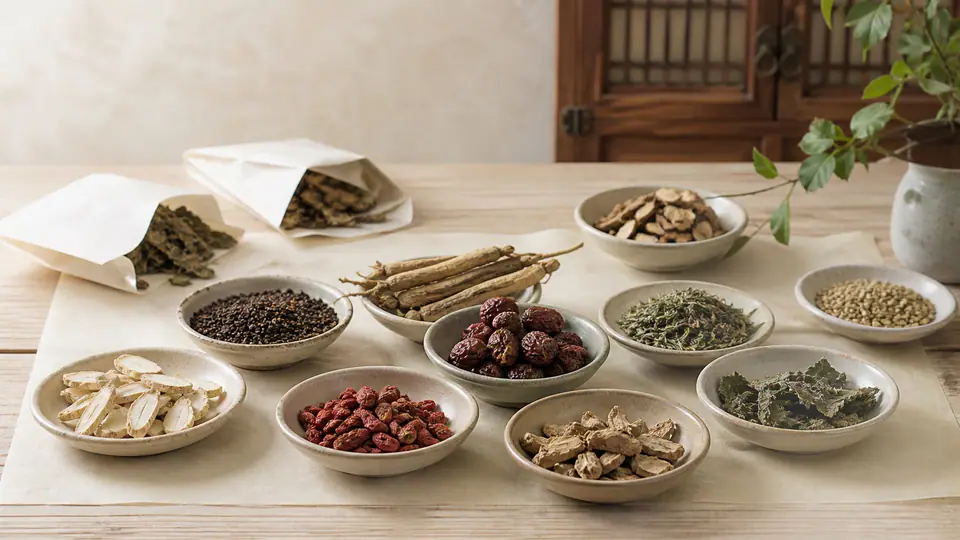
Dangdo: The Herb that Stays by the Roadside to Open the Eyes and Waterways
The Shennong Ben Cao Jing, in its first record of Plantago seed (Cheojeonja), left a nickname: 'Dangdo', meaning it grows green even in the middle of village roads. The same book describes it as 'growing in flat marshes,' and the Mingyi Bielu adds that it 'grows among the hills and roads of Zhending.' In other words, Plantago seed was not a rare plant from deep mountains, but a common weed found along paths and hillside fields where people pass. Yet, this handful of roadside grass is recorded in herbal medicine for its effects in 'treating urinary retention, relieving pain, promoting urination, and removing damp-bi,' and it is even mentioned that 'long-term use lightens the body and resists aging.' A plant once dismissed as insignificant, as its name suggests, was actually a medicinal ingredient used to clear blockages in the eyes and the urinary tract.
It is easy to remember Plantago seed simply as a diuretic. However, looking at classical prescriptions, this ingredient did more than just remove water. Jugyeong-hwan from the Taiping Huimin Heji Jufang uses Plantago seed alongside Rehmannia glutinosa (Sukjihwang) and Cuscuta seed (Tosaja) to treat 'deficiency of both liver and kidney, constant dimness of vision, seeing black spots, or the development of cataracts and blurred vision.' Here, among ingredients that nourish the blood and essence, Plantago seed plays the role of 'Bo-jung-yu-sa', nourishing while simultaneously flowing what is blocked. It acts not as a roadside weed, but as a guide pointing to the water veins within the soil of an old path.
However, this power to promote flow cannot be used freely by everyone. The Ben Cao Xin Bian states, 'Pregnant women should avoid it,' and the herbal information from the Korea Pharmaceutical Information Center notes that 'pregnant women should use it with caution.' For those with internal exhaustion from overwork, kidney deficiency with seminal leakage, or those lacking damp-heat in the body, it may instead damage the vital essence (Jeong-gi). Therefore, Plantago seed is an ingredient where 'how much, with whom, and how it is used' is particularly important. We will examine those criteria step by step below.
Summary at a Glance
Plantago seed may seem ordinary, as its name suggests, but in herbal medicine, it is widely used for diuresis, clearing damp-heat, and supporting the treatment of eye diseases. The table below summarizes its core identity and precautions.
| Category | Content |
|---|---|
| Origin | Hanja Name 車前子, Scientific Name Plantago asiatica L., Ripe seeds of Plantago asiatica, a perennial herb of the Plantaginaceae family |
| Properties and Meridian Tropism | Sweet, Cold, Bland; recorded for the Kidney, Liver, Lung, Small Intestine, and Bladder |
| Representative Aliases | Dangdo, Buyik, Hamaui, Uyu, Charyunchyo |
| Efficacy Recorded in Literature | Shennong Ben Cao Jing: 'Mainly treats urinary retention, stops pain, promotes urination, and removes damp-bi. Long-term use lightens the body and resists aging.' Ben Cao Xin Bian: 'Specializes in promoting urination, most effective in clearing the urinary tract, stops dribbling and diarrhea, closes the essence orifice, expels wind-heat, effectively clears red eyes, and is effective in inducing labor.' |
| Main Ingredients | Plantago-mucilage, iridoid glycosides such as aucubin, and dietary fiber components |
| Combinations and Contraindications | Combined for those with a damp-heat constitution or for gonorrhea and urinary tract disorders; Deficiency patterns, internal exhaustion from overwork, sinking of Yang energy, kidney deficiency with seminal leakage, and pregnancyare cautious or contraindicated. Depending on the symptoms, the combined use with tonic medicines for nourishing Yang or Yin may vary, so consultation with a Korean medicine doctor is required. |
Is this medicinal herb right for me?
Plantago seed is an ingredient with strengths in clearing damp-heat and opening waterways. Therefore, rather than taking it simply because 'vision is dim' or 'there is a problem with urination,' it is important to first verify if it matches your constitution and condition. We have summarized this based on the following three criteria.
-
Generally suitable cases: Used under the prescription of a Korean medicine doctor when there is frequent interruption of urination, a painful urge to urinate, cloudy or itchy eyes, or diarrhea caused by damp-heat. This is the context described as 'promoting urination and removing damp-bi' in the Shennong Ben Cao Jing and 'most effective in clearing the urinary tract' in the Ben Cao Xin Bian.
-
Cases requiring caution: Those who are pregnant, have weak kidney function, or are taking Western diuretics, antihypertensives, diabetes medications, or lithium. Plantago seed has a diuretic effect, and the Ben Cao Xin Bian warns that 'pregnant women should avoid it'; hypersensitivity cases have also been reported in modern times. In these situations, a decision must be made after consulting with a Korean medicine doctor.
-
Cases to avoid: Those who are deficient and lacking energy without damp-heat, or those whose vital essence is too weak to control semen or urine. The Korea Pharmaceutical Information Center and the Traditional Knowledge Portal of Korea specify 'internal exhaustion from overwork, sinking of Yang energy, kidney deficiency with seminal leakage, and those without internal damp-heat' as contraindications. Using a diuretic for a deficiency pattern rather than damp-heat may further damage the vital essence.
Practical Q&A
Because Plantago seed is known only as an 'herb good for the eyes' or 'herb good for urination,' it is easy to be confused about what to be careful of when receiving a prescription. We have summarized the questions frequently asked in the clinic.
Can I boil Plantago seed as a tea?
In Korean herbal medicine, we use the ripe seedsIt is used as an herbal medicine ingredient. Because the seed is light and small, if decocted as is, it tends to float or spread in boiling water; traditionally Po-jeon (decocting the medicinal herbs inside a gauze pouch) is used. It is used in this manner. Therefore, rather than drinking it conveniently as a general tea or tea bag, the principle is to decoct it according to a Korean medicine doctor's prescription. You should also distinguish that Plantago seed husk (Psyllium husk) is used as a swelling dietary fiber raw material, but Plantago seeds have a different purpose.
Can it be taken during pregnancy?
In principle, during pregnancy, it must be used with cautionThe 'Boncho Sinpyeon' records that 'pregnant women should avoid it' and warns that it may 'cause miscarriage due to excessive slipperiness.' While prescriptions for febrile gonorrhea during pregnancy appear in the 'Boncho Gangmok,' these were prescribed by Korean medicine doctors for specific situations with clear damp-heat symptoms and are not generally recommended during pregnancy. Please be sure to consult with a Korean medicine doctor before making a decision during pregnancy.
Can I take it if my vision is blurred?
It is true that Plantago seeds are used for eye diseases. In the 'Taepyeong Hyemin Hwaje Gukbang,' Jugyeong-hwan contains Plantago seeds along with Rehmannia glutinosa and Cuscuta chinensis, and is used for blurred vision, eyelid twitching, tearing, and loss of luster in the eyes caused by Liver and Kidney deficiency. However, rather than taking it based solely on the symptom of blurred vision, a Korean medicine doctor must determine if the cause corresponds to a combined state of Liver and Kidney deficiency and damp-heat. This is a medicinal herb that is not suitable for self-administration based only on symptoms.
When is it used for urinary problems?
Plantago seeds have traditionally been used for Gi-ryong (difficulty urinating),·pain relief,·promoting urination (facilitating the flow of urine),·and removing damp-bi (dampness-related obstruction). In the 'Jeungchi Junsung,' Chajeon-san combines Plantago seeds with Phyllostachys, Albi Cortex, Euryale seed, and Schizonepeta to treat various types of strangury. However, not all urinary problems are suitable for Plantago seeds. It is appropriate for cases with damp-heat, but may not be suitable for urinary abnormalities caused by Qi deficiency or Kidney deficiency.
What should I be careful about when taking it with other medications?
Since Plantago seeds have a diuretic effect, caution is needed regarding electrolyte balance or the possibility of dehydration when used in combination with Western diuretics, antihypertensives, diabetes medications, or lithium preparations. However, officially confirmed evidence regarding the interaction between Plantago seeds and specific Western medicines is a matter that currently requires further verification. If you are taking Western medication, please be sure to inform your Korean medicine doctor and consult them regarding concurrent use.
Can I take it for a long period?
The 'Shennong Bencao Jing' records that 'long-term use makes the body light and resistant to aging,' but this refers to cases that match the specific constitution and condition. In Korean medicine, Naesang-nogwon (internal damage from exhaustion), Yanggi-haham (sinking of Yang Qi), Sinheo-hwajeong (Kidney deficiency with leakage of essence), and Naemu-seupyeol (absence of internal damp-heat) are considered contraindications. This means that long-term or sole use in deficiency syndromes without damp-heat may instead damage the vital essence (Jeong-gi). For your safety, please discuss the duration of use with the Korean medicine doctor who provided the prescription.
Relationship with Other Medicinal Herbs (Yakdae/Pairing)
Plantain seed (Chajeonja) becomes more distinct in its characteristics when used with other medicinal herbs rather than alone. Because it has a strong ability to clear damp-heat and open the waterways, combining it with tonic herbs creates a form of 'draining within tonifying,' while combining it with diuretic or urinary-tract-clearing herbs focuses their combined effects. In traditional medicine, this pairing is called 'Yakdae.' Here are representative examples of core combinations involving plantain seed.
- Plantain seed + Rehmannia glutinosa (Sukjihwang) + Cuscuta seed (Tosaja) — Jugyeong-hwan(《Taiping Huimin Heji Ju Fang》 Volume 7): Rehmannia glutinosa and Cuscuta chinensis nourish the liver and kidneys, while Plantago asiatica clears heat and dampness from within and brightens the eyes. It has been traditionally used for cases of “deficiency of both liver and kidney, constant dimness of vision, frequent appearance of black spots, or development of cataracts/films”; when used with tonic medicines as such, it must be limited to cases where deficiency symptoms and damp-heat coexist.
- Plantain seed + Bamboo leaf (Damjukyeop) + Poria cocos (Jeokbongryeong) + Rush pith (Deungsim) + Schizonepeta spike (Gyeonggyesu) — 車前散(From Zhengzhi Zhuncheng): This is a representative diuretic and urinary-tract-clearing combination used for various types of urinary syndrome (Lin-syndrome) and difficulty urinating. Plantain seed plays the primary role in opening the waterways, while bamboo leaf and rush pith assist by cooling the heat.
- Plantain seed + Talcum (Hwalseok), etc. From Puji Fang 熱淋·小便不利 Related prescriptions: These show a structure where plantain seed and talcum are used together to clear urinary pathways blocked by damp-heat.
Combination contraindications must also be kept in mind. Since plantain seed is a herb that expels damp-heat with sweet, cold, and bland properties, it may be inappropriate, regardless of how good the other combined herbs are, if the patient has deficient energy and declined yang energy due to internal damage, leakage of essence due to kidney deficiency, or an absence of damp-heat in the body. In particular, caution is required during pregnancy, as the Boncho Sinpyeon warns that it may "be too slippery and cause miscarriage." Therefore, it must be used only under the prescription of a Korean medicine doctor.
In what form is it consumed?
Plantain seed refers to using the ripe seeds of the plantain plant as a herbal medicine; it differs in nature from the materials commonly encountered in the public as tea or tea bags. Because the seeds are light and small, they float or are difficult to filter if boiled as they are. In Korean herbal medicine, these are processed using a method called Pojeon (wrapped decoction) where they are wrapped before boiling. I will explain based on the following four forms.
- Simple consumption as tea/tea bags Not common. Plantain seeds must be processed as a herbal medicine via wrapped decoction, and there is no confirmed official basis for tea or tea bag forms. Plantain husk (the shell) is used as a bulk-forming laxative ingredient, but this must be distinguished from the seed itself.
- Food/Health Functional Food Plantain seed is classified as a herbal medicine according to the Korean Pharmacopoeia standards. While plantain husk is used as a raw material for dietary fiber and constipation medication, taking the seed as an everyday food is not recommended.
- Decoction (Wrapped decoction) Applicable. Based on the Drug Information Center, 3–9g is processed via wrapped decoction for consumption; it can also be used in the form of pills or powders if necessary.
- Self-administration Not recommended. As a diuretic and damp-heat clearing herb, there are contraindications such as pregnancy and deficiency symptoms, and there are concerns regarding concurrent use with Western medicines. It is advisable to use it under the prescription of a Korean medicine doctor.
Interactions and Safety During Use
Plantain seed is a herb with a clear direction toward clearing damp-heat and opening the waterways. Because its effect is strong, one must first consider who should use it, in what condition, and with which other herbs. Below are the confirmed precautions and safety signals.
-
Special caution for deficiency symptoms (Heojeung) and pregnancy If there is no damp-heat in the body, or if energy is deficient and kidney function is weak, using plantain seed alone or long-term may further damage the vital essence (Jeong-gi). Regarding pregnancy, the Boncho Sinpyeon warns that it "may be too slippery and cause miscarriage," and the Drug Information Center also advises that "pregnant women should use it with caution." During pregnancy, it must be used only under the prescription of a Korean medicine doctor.
-
Possibility of Hypersensitivity If you are hypersensitive to plantain seeds or plantain herbs, skin rash, itching, or fever may occur after administration. Please let us know before use if you have had a reaction to plantain seeds or the plant itself in the past.
-
Concurrent use with Western medicine requires verification Since Plantago seed is a medicinal herb with diuretic properties, the possibility of electrolyte imbalance or dehydration must be considered when used concurrently with diuretics, antihypertensives, diabetes medications, lithium, etc. However, specific evidence regarding interactions currently requires verification. If you are taking Western medicine, please be sure to mention it during your consultation.
-
Warning signs requiring a hospital visit Immediately stop intake and seek medical evaluation if you experience systemic rash, severe itching, abdominal pain, diarrhea accompanied by dizziness, dry mouth, decreased urination, a significant drop in urine volume, severe kidney edema, extreme fatigue, or if you experience lower abdominal pain or bleeding during pregnancy.
Plantago seed is not a medicinal herb chosen based on symptoms alone. It is safe to prescribe only after a comprehensive evaluation of your constitution, pathology, and other medications being used. The specific decision on whether to take it and the dosage will be determined through a consultation.
If you experience these symptoms
If these signs appear
Plantago seed is a medicinal herb with a strong direction toward clearing damp-heat and opening the urinary pathway. Therefore, if the following signs appear during intake, the effect may be excessive or it may not suit your constitution or condition. It is important to notify your attending Korean medicine doctor first rather than adjusting the dose yourself.
-
Skin rash, pruritus, urticaria Hypersensitivity reactions to Plantago seed or Plantago herb have been reported. If systemic itching or red spots appear after intake, stop immediately and contact us.
-
Severe abdominal pain, diarrhea, dehydration symptoms If there is a possibility of dehydration, such as dizziness, dry mouth, or decreased urination, the diuretic effect may have been excessive. Stop intake, drink plenty of water, and seek medical evaluation.
-
Significant decrease in urine volume, kidney edema, severe fatigue For those with weak kidney function or the elderly, the diuretic effect may cause a burden. If these signs appear, a kidney function evaluation may be necessary, so a hospital visit is recommended.
-
Lower abdominal pain or bleeding during pregnancy Plantago seed is a medicinal herb that must be used cautiously during pregnancy, as excessive action may affect the fetus. If any abnormalities occur during intake while pregnant, go to an obstetrics and gynecology clinic or an emergency medical institution immediately.
-
Lethargy or decreased libido after long-term intake Long-term solo intake in deficiency patterns (虛證) without damp-heat may risk damaging the vital essence (精氣). Regular re-evaluation is necessary as the duration of intake increases.
If symptoms are severe or if your systemic condition deteriorates rapidly, such as difficulty breathing, decreased consciousness, or persistent vomiting and diarrhea, please visit an emergency medical institution (119 or the nearest emergency room).
Differences from other restorative medicines
Due to its image of being good for the eyes and urination, Plantago seed is often misunderstood as being similar to restorative medicines like Gongjindan or Gyeongokgo. However, it is a medicinal herb with a different nature and direction of action. Plantago seed is a diuretic and urinary-tract medicine focused on clearing damp-heat and opening the urinary pathway; it is not a restorative medicine that supplements energy, essence, or blood. In fact, for those with a deficient-cold constitution without damp-heat or those with weak vital essence, solo or long-term use is classified as a contraindication in Korean medicine as it may damage the essence.
A representative case where Plantago seed meets restorative medicine in classical texts is Jugyeong-hwan from the 'Taepyeong Huimin Huajiguo Fang'. By being used with essence- and blood-supplementing herbs such as Rehmannia glutinosa and Cuscuta seed, it is utilized for eye diseases in a structure where 'draining (瀉) exists within supplementing (補)'. It is more accurate to view this as a supporting role that helps the restorative effect work properly by removing heat and dampness within a restorative prescription, rather than Plantago seed itself being a restorative medicine.
Direct classical evidence for concurrent use with specific restorative medicines such as Gongjindan or Gyeongokgo has not been confirmed. Therefore, the question of 'what would happen if I take Plantago seed with Gongjindan or Gyeongokgo' can only be answered after a comprehensive review of your constitution, current symptoms, and current prescriptions. If you are considering both restorative medicine and Plantago seed, it is safe to consult your attending Korean medicine doctor to verify if this herb can serve as an appropriate supporting role for your current state.
References
- Evidence materials related to Plantago seed 1: Supporting data from data.go.kr.
- Evidence materials related to Plantago seed 2: Korea Institute of Korean Medicine official data.
- Supporting evidence for Plantain Seed 3: Crude drug data from the National Institute of Food and Drug Safety Evaluation.
- Supporting evidence for Plantain Seed 4: Korea Institute of Korean Medicine official data.
- Supporting evidence for Plantain Seed 5: GBIF plant classification data.
- Supporting evidence for Plantain Seed 6: Korea Citation Index academic paper.
- Supporting evidence for Plantain Seed 7: PubMed academic paper.
- Supporting evidence for Plantain Seed 8: PubMed academic paper.
If you would like to check if this medicinal herb is right for you or which prescription it should be used with, please leave a medical inquiry. For those who find it difficult to visit the clinic, non-face-to-face consultations are available; we will provide guidance after first reviewing your current condition and current medications.

Medical Staff Review
Director Choi Yeon-seung
Chief Director of Baekrokdam Korean Medicine ClinicPlantain Seed Dictionary Entry, reviewed the safety of expressions and the scope of verification before administration.
Review Scope: Clinical Accuracy, Pharmacology, Contraindications, Combinations, QA · Last Reviewed 2026-08-16
- Graduated from Kyung Hee University College of Korean Medicine
- Providing Korean medicine treatment since 2010
- Consultations for Gongjindan, Gyeongokgo, Nokyong (Deer Antler) restorative medicine, and customized restorative herbal medicine