Until it becomes the mortar of the skin barrier
My skin is dry and I have atopy; is it better to apply ceramide topically or take it orally?
In short, while both fall under the category of the skin barrier, their delivery paths and supporting evidence differ, so one cannot replace the other or be called unconditionally better.
Is applying moisturizer to atopic skin thanks to ceramide?
The American Academy of Dermatology recommends consistently applying fragrance-free moisturizers immediately after bathing for atopic dermatitis. This recommendation does not refer to the efficacy of ceramide as a single ingredient. This is because the moisturizer as a whole creates a thin film on the skin and prevents moisture evaporation. In a meta-analysis of five studies on ceramide moisturizers, ceramide products showed slightly better atopy severity scores than other moisturizers, but transepidermal water loss did not differ significantly, and there was high study heterogeneity. In a randomized trial for pediatric atopy, both ceramide-based and paraffin-based moisturizers showed improvement, and no differences were found in severity, quality of life, transepidermal water loss, or steroid usage. In other words, this does not mean ceramide is bad, but rather that its superiority within the broader category of moisturizing is not yet clear.
Ceramide is not a single ingredient
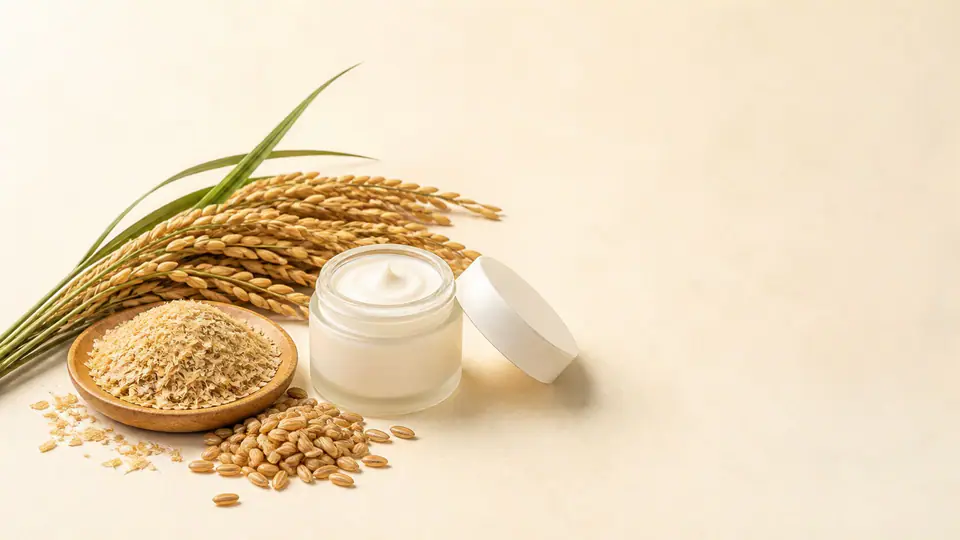
Ceramide is not the name of a single ingredient, but a family of lipids formed by the combination of sphingoid bases and fatty acids. In the skin's stratum corneum, it forms a barrier along with cholesterol and free fatty acids. When describing the stratum corneum, corneocytes are often compared to bricks, and ceramides, cholesterol, and fatty acids to the lipid mortar between them, but the actual barrier is created by various ceramide species and proteins together. Natural, synthetic, and pseudo-ceramides in cosmetics, as well as glucosylceramides derived from rice, konjac, wheat, or microorganisms taken orally, differ in structure, dosage, and delivery path. Even if they are all labeled as 'ceramide,' lipids within the skin, cosmetic ingredients, and supplement raw materials differ in identity and how they reach the body.
What kind of ceramide goes into cream jars?
Ingredients such as ceramide NP, AP, and EOP in cosmetics, synthetic pseudo-ceramides, and oral plant-based glucosylceramides have different names and metabolic pathways. Topical products act on the skin surface and the stratum corneum. Oral products undergo digestion, absorption, and metabolism. Therefore, evidence from one cannot be applied to the other. While there is an image that ceramide in creams directly replenishes the skin barrier, cosmetic ingredients may be designed to be identical or similar to the skin's own ceramides, or they may be pseudo-structures. This difference is often not visible on the full ingredients list.
How far do oral skin moisturizing capsules reach?
A meta-analysis of randomized trials on oral skin moisturizing supplements reported signals of increased skin hydration and decreased transepidermal water loss for ceramides. However, these were mostly short-term, product-specific studies using surrogate markers. Therefore, these results cannot be expanded to the treatment of atopy or wrinkle improvement. Because raw materials (such as konjac, rice, and microorganisms) and types (such as glucosylceramide and dihydroceramide) vary, it is difficult to convert the mg of one product directly to another. Even if the number of capsules is the same, if the ceramide family inside differs, the comparison itself is invalid.
Topical and oral options: the premises for comparison are different
Skin-native ceramides vs. cosmetic ceramides; natural ceramides, synthetic pseudo-ceramides, and glucosylceramides; topical moisturizers vs. oral supplements; skin hydration and transepidermal water loss vs. itching, recurrence, and disease treatment. These four pairs are easily mixed up, but their units of comparison are different. Topical moisturizers are closer to immediate skin surface protection and stratum corneum hydration. Oral supplements showed changes in the measured value of skin hydration, but this has not been linked to itching, recurrence frequency, or disease treatment. In other words, an increase in the hydration measurement does not necessarily mean atopy has improved.
Sensitive skin requires looking at the entire formulation
For topical products, not just the ceramide itself, but the entire formulation, including fragrances, preservatives, and plant extracts, can cause stinging, redness, or contact dermatitis. For sensitive skin, it is necessary to test on a small area first. If you experience oozing, yellow crusts, a feeling of heat, rapidly spreading rashes, or swelling around the eyes, do not simply apply more moisturizer; seek medical evaluation for possible infection or allergy. For oral products, check the raw materials (such as rice, wheat, konjac, corn, or microorganisms) and allergy labels, and consider that long-term safety data for pregnancy, lactation, and children are limited. Do not arbitrarily stop using prescription atopy ointments or replace them with oral ceramides; if the condition worsens after using a new product, stop use and show the full ingredients list to your healthcare provider.
When using with prescription ointments or other moisturizers
When using ceramide products with prescription atopy ointments or layering them with other moisturizers, the most important premise is that they are 'added or combined,' not a 'replacement.' If you arbitrarily stop using a prescription atopy ointment and replace it with ceramide, symptoms may worsen. If the skin becomes more irritated or red after starting a new product, it is safer to stop use and show the full ingredients list to your healthcare provider. For oral products, rather than interactions with prescription drugs, you should first consider that long-term safety data for pregnancy, lactation, and children are limited. The bigger issue is not the act of using them together, but what you are attempting to replace.
Three things to check before making a choice
You must determine whether it is simple dryness or atopic dermatitis, contact dermatitis, or an infection, and assess the severity of itching, oozing, and cracking. You should check whether it is a cream or lotion, or an oral glucosylceramide derived from rice, konjac, wheat, or microorganisms, and identify the fragrances, preservatives, and complex ingredients within. You must also consider whether you have grain allergies, are pregnant or breastfeeding, intend to pause the use of prescribed ointments, or plan to use the same product on both your face and body. These three questions address individual circumstances that cannot be covered by the name 'ceramide' alone.
Final Decision Criteria
Rather than focusing on the term 'skin barrier ingredient,' you should first verify whether it is applied topically or taken orally, the exact type of ceramide, and the overall formulation, and then examine the gap between moisture measurement values and actual symptoms or atopic dermatitis treatment. Ceramide can be a lipid present in the skin, an ingredient in a cream, or glucosylceramide in a capsule. So, what should you look for? Start by distinguishing which type of ceramide the product uses, the route by which it reaches the skin, and whether the evidence for its efficacy is based on moisture levels or symptom improvement.
References
- American Academy of Dermatology: Atopic dermatitis treatment and moisturizers.
- Ceramide moisturizers for atopic dermatitis: systematic review and meta-analysis.
- Ceramide versus paraffin moisturizer in children with atopic dermatitis: randomized trial.
- Oral dietary supplements for skin moisturizing: systematic review and meta-analysis.
- Oral bacterial dihydroceramide and skin hydration: randomized trial.
This text explains the origin of the raw materials, the scope of research, and precautions before consumption. As this cannot replace individual diagnosis or treatment, please consult a medical professional if you are taking medication or if symptoms persist. If sudden and severe symptoms such as difficulty breathing or decreased consciousness occur after consumption, seek help from 119 or the emergency room.

Medical Staff Review
Director Choi Yeon-seung
Chief Director of Baekrokdam Korean Medicine ClinicCeramide Glossary, reviewed the safety of expressions and the scope of verification before administration.
Review scope: Ingredient origin, human studies, concomitant medications, safety of intake · Last reviewed 2026-08-17
- Graduated from Kyung Hee University College of Korean Medicine
- Providing Korean medicine treatment since 2010
- Consultations for Gongjindan, Gyeongokgo, Nokyong (Deer Antler) restorative medicine, and customized restorative herbal medicine