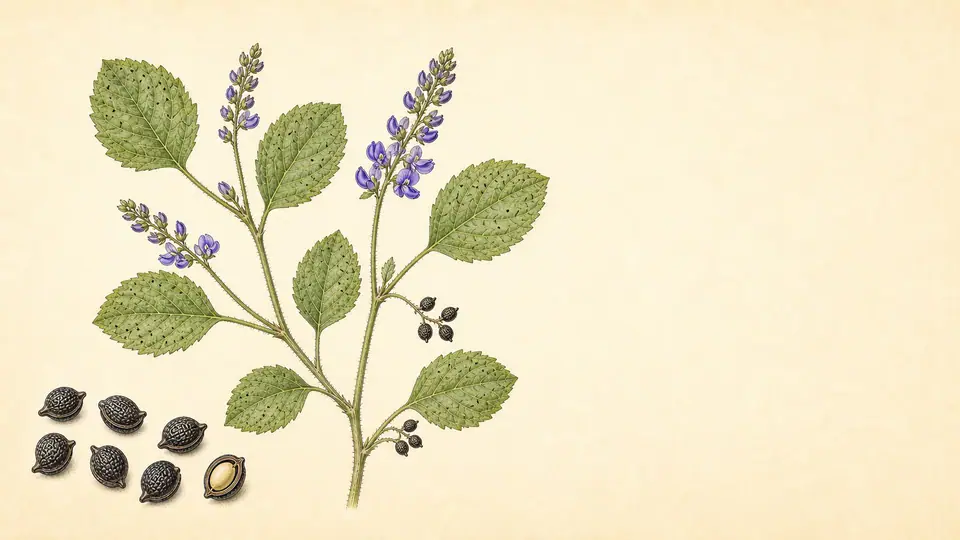
Black seeds gain two expectations
Is it okay to take Bogolji for a long time because it is said to be good for bones or skin? In short, there is currently insufficient evidence to lightly begin long-term administration. In particular, liver health must be checked first, and it is necessary to consider whether it is the raw seed or a concentrated extract, as well as what the expected outcome is.
Bogolji, also called Pagoji, is Psoralea corylifolia the seed of Linné. The Ministry of Food and Drug Safety (MFDS) standards also define this seed as the raw material and have established psoralen identification tests and standards for heavy metals and residual pesticides. However, under the same name, raw seeds, processed products, seed essential oils, concentrated extracts, isolated psoralen/isopsoralen, and bakuchiol used in cosmetics all have different exposure levels and different supporting evidence. This distinction is the core of the Bogolji discussion.
What does Bogolji mean?
Bogolji is a type of seed. The MFDS standards P. corylifoliadefine Bogolji as the seed of the plant, and quality standards are based on this seed. However, in the market, raw seeds, powders, pills, concentrated extracts, and even the bakuchiol ingredient applied to the skin are easily called 'Bogolji'. Having the same name does not mean they are the same raw material. Raw seeds, processed products, seed essential oils, concentrated extracts, isolated psoralen/isopsoralen, and bakuchiol for cosmetics each have different exposure levels and different evidence.
Where did the expectations for bone and skin come from?
The expectations for bone health and skin pigmentation associated with Bogolji stem from its components. Psoralen and bakuchiol are representative examples. However, just because these components are present in the seed, it cannot be concluded that they will increase bone density or change skin condition in humans as they are. This is because the research subjects and product forms differ.
Regarding osteoporosis, a 2026 meta-analysis examined 23 efficacy studies and 7 toxicity studies, all of which were animal-based. It stated that even the converted doses are exploratory values not verified in humans. In other words, while bone metabolism signals seen in animals are interesting, they cannot be confirmed as effects for preventing fractures or treating bone density in humans.
Seeds, extracts, and bakuchiol are different stories
Bogolji seeds and bakuchiol cosmetics, raw seeds/processed products and concentrated extracts, and Bogolji and isolated psoralen PUVA (photochemical therapy) are different products even if they belong to the same family. Bakuchiol is used in cosmetics, and isolated psoralen is used in medical photochemical therapy. These should not be understood as interchangeable with the oral intake of raw Bogolji seeds. Especially considering the photoreaction of the psoralen family, it is necessary to inform your medical staff about oral intake of raw seeds, topical bakuchiol, or medical photochemical therapy regarding skin reactions and sunlight exposure.
Then, what should be looked at? First, distinguish what the product form is and what the evidence is that corresponds to that specific form.
Liver damage is more evident in human data
Liver damage related to Bogolji is not a simple theoretical warning. Among 547 people in a DILI (drug-induced liver injury) cohort at one hospital, 40 were classified as having Bogolji-related liver injury, with a median latency period of 45 days, and most were hepatocellular injuries. Another group of 12 severe cases all began with jaundice, and there were cases of death or chronicity. This is why fatigue, loss of appetite, dark urine, and jaundice during long-term use cannot be taken lightly.
Who should be more cautious?
People with liver disease, a history of drug-induced liver injury, frequent alcohol consumption, or those taking various Korean herbal medicines, supplements, or medications that may burden the liver should avoid adding Bogolji arbitrarily. Avoid long-term concentrated administration, and even if it is prescribed, if fatigue, loss of appetite, nausea, dark urine, jaundice of the eyes or skin, or pain in the upper right abdomen occurs, stop immediately and receive a liver function evaluation.
Long-term safety in pregnancy, lactation, and children has not been sufficiently established, and Bogolji should not be used to replace osteoporosis medication or treatment for skin diseases.
When using with other medications or supplements
While the components of Bogolji and CYP3A4 inhibition have been studied in vitro, the strength and clinical significance of all drug interactions in actual humans have not been established. Nevertheless, greater caution is required when using it with other medications, Korean herbal medicine, or health functional foods that may place a burden on the liver. The possibility of concomitant use with acetaminophen is also a consideration. Before taking it, you must inform your medical provider whether the product is raw seeds, processed products, pills (hwan), concentrated extracts, isolated psoralen, or bakuchiol products; whether you have liver disease, drink alcohol, or have a history of drug-induced liver injury; whether you are taking acetaminophen, Korean herbal medicine, or health functional foods; whether you are receiving bone density tests and standard treatment for osteoporosis; and whether you are combining it with light exposure or skin medications for dermatological purposes.
The Gap Between Expectation and Evidence
In other words, while expectations for Bogolji have branched into two directions, human-based evidence has not yet caught up. Animal bone density signals and human fracture prevention are on different levels. Topical ingredients for skin purposes and oral raw seeds are also on different levels. Interpreting non-clinical bone metabolism results as benefits for long-term self-administration exceeds the boundaries of the evidence.
Criteria to Check Today
If considering Bogolji, first verify three things. First, whether it is raw seeds, processed products, pills (hwan), concentrated extracts, isolated psoralen, or bakuchiol. Second, the presence of liver disease, history of drug-induced liver injury, alcohol consumption, or concomitant medications. Third, whether you are receiving standard treatment appropriate for bone or skin purposes. The realistic standard for evaluating this ingredient is to verify the seeds, formulation, concentration, liver disease, and accompanying products before expectations for bone and skin, and to avoid interpreting non-clinical bone metabolism results as benefits for long-term self-administration.
References
- Ministry of Food and Drug Safety Herbal Medicine Standards: Bogolji.
- Bu Gu Zhi-induced liver injury long-term cohort.
- Fructus Psoraleae severe liver injury case series.
- Psoralea corylifolia osteoporosis efficacy and hepatotoxicity meta-analysis.
- Psoralea corylifolia CYP3A4 inhibition study.
This text explains the origin of the raw materials, the scope of research, and precautions before consumption. As this cannot replace individual diagnosis or treatment, please consult a medical professional if you are taking medication or if symptoms persist. If sudden and severe symptoms such as difficulty breathing or decreased consciousness occur after consumption, seek help from 119 or the emergency room.

Medical Staff Review
Director Choi Yeon-seung
Chief Director of Baekrokdam Korean Medicine ClinicBogolji Dictionary Entry, reviewed the safety of expressions and the scope of verification before administration.
Review scope: Ingredient origin, human studies, concomitant medications, safety of intake · Last reviewed 2026-08-17
- Graduated from Kyung Hee University College of Korean Medicine
- Providing Korean medicine treatment since 2010
- Consultations for Gongjindan, Gyeongokgo, Nokyong (Deer Antler) restorative medicine, and customized restorative herbal medicine