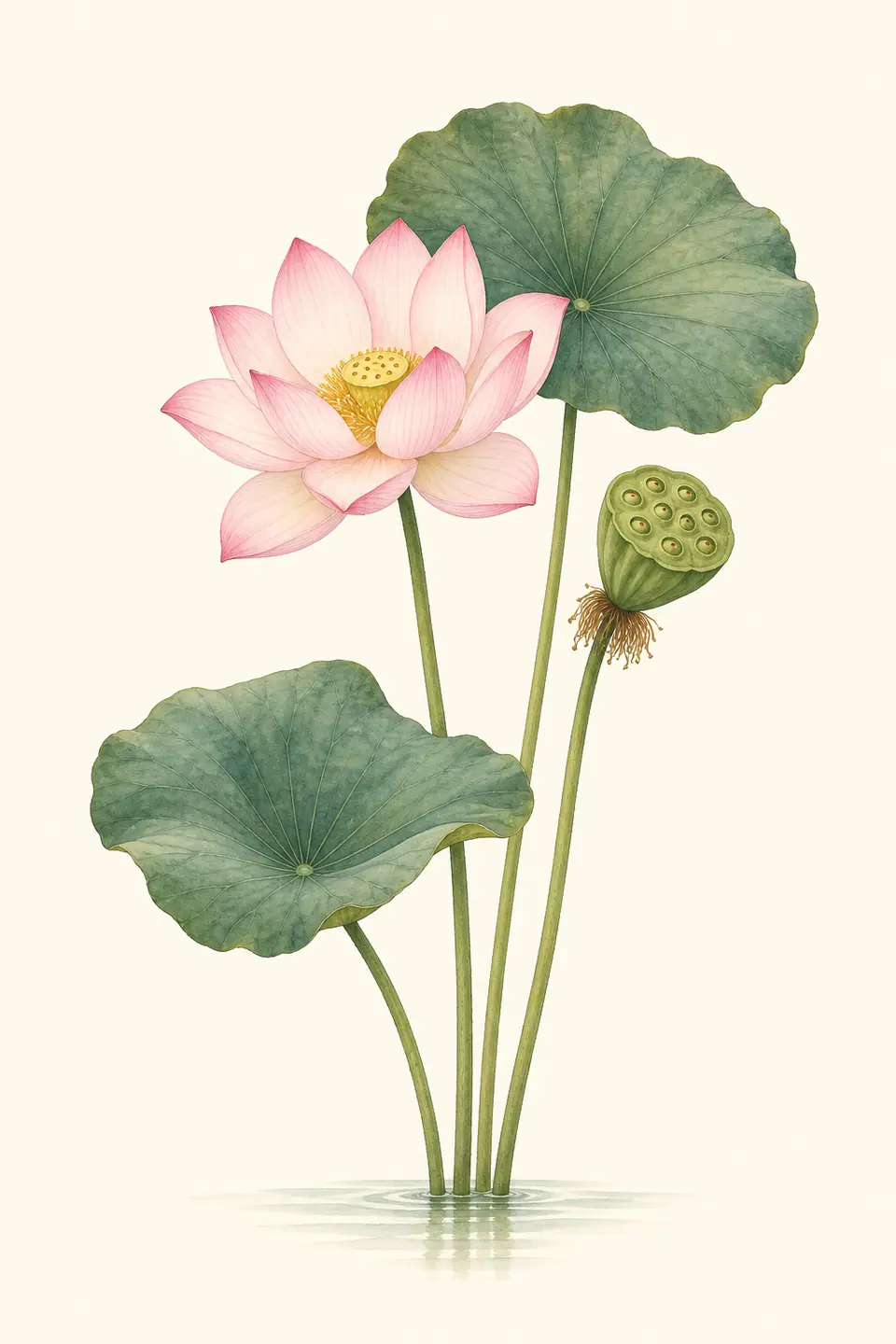
Seeds of the King of Narcissus: The Double-Edged Fruit Known as a Health Tonic
The Bencao Gangmu describes lotus seeds (Yeonjayuk) as something that "tonifies the five viscera, benefits the mind, and, when taken over a long period, makes the body feel light and extends lifespan." The lotus is a plant that blooms above the water and bears fruit beneath it. While its seeds, lotus seeds, may appear to be ordinary health food ingredients, they have held a place as restorative medicine in classical texts.
However, the common perception of this medicinal herb is that "since it is a natural health tonic, anyone can eat it." Because people are familiar with it in the form of lotus seed rice, lotus seed tea, or ointments, side effects or contraindications are often overlooked. The Dongui Bogam clearly warns against this: "Those with heart-heat (Sim-yeol) and phlegm-fire (Dam-hwa) must not consume it." This means that although it appears to be a gentle food ingredient, depending on one's constitution and symptoms, it may actually cause unnecessary heat to linger in the body.
Therefore, lotus seeds are not merely a health food, but a medicinal herb where the amount, the user, and the method of use are critical. Below, we will examine the primary benefits of lotus seeds, cases where those benefits become contraindications, and how they are combined with other medicinal herbs.
Summary at a Glance
If you would like to quickly understand what kind of medicinal herb lotus seeds are, please refer to the table below first. We have summarized its core identity, properties, and tendencies that require caution at a glance.
| Category | Content |
|---|---|
| Origin | Hanja name: 蓮子肉, Scientific name: Nelumbo nucifera, A medicinal herb made from the dried seeds of the lotus flower. |
| Properties and Tropism | The properties are neutral (平), the taste is sweet (甘), and it is reported to have almost no toxicity. It primarily acts on the Spleen meridian, Heart meridian, and Kidney meridian. |
| Representative Alias | It has been called Yeonja, Yeonsil, Sureung, Hangeo, and other names. |
| Efficacy recorded in literature | The Bencao Gabyo states that it "tonifies the spleen and stomach, stabilizes the heart and mind, and strengthens the essence (Jeong-gi)," and the Bencao Gangmu records that it "tonifies the five viscera, benefits the mind, and, when taken over a long period, makes the body feel light and extends lifespan." |
| Main Ingredients | It contains starch, protein, fat, B-complex vitamins, calcium, phosphorus, and iron. Research has reported antioxidant activity and effects in inhibiting oxidative DNA damage in lotus seed extracts. |
| Combinations and Contraindications | As a restorative medicine for tonifying Yang and Yin, caution is required for constitutions or pathological states with heart-heat (Sim-yeol) and phlegm-fire (Dam-hwa). Specific dosages or long-term use require verification. Please inquire during your consultation. |
Is this medicinal herb right for me?
While lotus seeds are frequently used as a health tonic, classical texts present clear indications and contraindications. The Dongui Bogam warns, "Those with heart-heat (Sim-yeol) and phlegm-fire (Dam-hwa) must not consume it," which suggests that in modern terms, it may be inappropriate for those with a heat-type constitution, inflammatory states, or excessive phlegm. Please refer to the criteria below to determine if lotus seeds are suitable for you.
- Generally suitable casesSuitable for: Those whose mind and body tire easily and who need a health tonic due to weak digestive function; those who tend to have diarrhea or loose stools and need intestinal stability; those who experience mild anxiety or poor sleep quality.
- Cases requiring cautionCaution for: Those who frequently feel bloated or have gas in the abdomen; those prone to constipation; those who need to manage diabetes or blood sugar levels, lotus seeds are also a food high in starch.
- Cases to avoidAvoid if: Those with signs of heart-heat or phlegm-fire, such as severe heat sensations, burning, dry mouth, red eyes, or yellow phlegm; those with an acute cold or febrile illness; those who experience worsening indigestion or abdominal bloating after consumption. For those who are pregnant, breastfeeding, children, seniors, or those with existing medical conditions, it is safest to decide after consulting with a Korean medicine doctor.
Practical Q&A
Lotus seeds are an ingredient that sits on the boundary between food and medicine. Naturally, questions arise such as "Can I eat this every day?", "Who is it good to eat this with?", and "In what conditions should I avoid it?" Based on the most frequent inquiries in the clinic, we have summarized the verified facts and points to consider during consultation.
How much lotus seed is appropriate to eat per day?
There are no officially established regulations regarding the daily intake of lotus seed embryo (yeonjayuk) from the Ministry of Food and Drug Safety or the Korean Pharmacopoeia. When prescribed at a Korean medicine clinic, the dosage varies depending on the patient's constitution, symptoms, and the combination with other medicinal herbs. If consuming it as a health-boosting food, please follow the daily intake indicated on the product label. For long-term use or during pregnancy and breastfeeding, it is safest to decide after consulting with a Korean medicine doctor.
Does lotus seed help when the stomach is not in good condition?
Lotus seeds have traditionally been used to tonify the spleen and stomach and to stop diarrhea. The Bencao Gangmu records that "taking it over a long period makes the body feel light and extends lifespan," and the Dongui Bogam states that it "tonifies the stomach, stabilizes the mind, stimulates appetite, and stops diarrhea." However, if the gastrointestinal condition presents as heat-type, meaning it is accompanied by heartburn or a heat sensation, it may actually aggravate the symptoms, so a constitutional check is necessary.
Which medicinal herbs pair well with lotus seeds?
Because lotus seeds have a strong restorative nature, they are often paired with other restorative herbs or herbs that manage the spleen and stomach. Representative examples include jujube (Daechu), Atractylodes macrocephala (Baekchul), Poria cocos (Bokryeong), and Dioscorea opposita (Sanyak). These combinations are utilized in prescriptions for tonifying Qi, tonifying blood, or strengthening the spleen, and the specific combination varies according to symptoms and constitution.
Should I avoid lotus seeds if I have a constitution with a lot of heat?
The Dongui Bogam states, "Those with heart-heat (Sim-yeol) and phlegm-fire (Dam-hwa) should not consume it." Heart-heat refers to sensations of heat in the chest, anxiety, and insomnia, while phlegm-fire refers to a state of having excessive phlegm, dry mouth, and a quick temper. In such states, lotus seeds, which have strong tonic and warming properties, may further increase heat. Therefore, it is advisable to consult regarding consumption after these symptoms have subsided.
Are lotus seeds (Yeonjayuk) and lotus plumule (Yeonjasim) the same thing?
They come from the same lotus seed, but the part and properties are different. Lotus seeds (Yeonjayuk) refer to the round fleshy part of the seed, which has strong properties for nourishing the body, strengthening the spleen, and stopping diarrhea. In contrast, the lotus plumule (Yeonjasim) is the embryo (heart) inside the seed; it has a bitter taste and cold properties, and is used to lower heat in the heart meridian. Since the heat-lowering lotus plumule and the nourishing lotus seed have opposite effects, they are used separately depending on the purpose.
Can I brew lotus seeds as a tea?
Lotus seeds are used in various forms, such as teas, porridges, soups, and pastes. However, extracting them at high temperatures for a long time may change the active ingredients. In particular, research on antioxidant and anti-thrombotic effects has reported that components vary depending on the extracted part and the solvent (water or organic solvents). While it is possible to drink them as a tea in daily life, if you are taking them as a health functional food or for therapeutic purposes, it is best to consult a Korean medicine doctor regarding the extraction method and dosage.
Relationship with Other Medicinal Herbs (Yakdae/Pairing)
Lotus seeds are often prescribed in combination with other medicinal herbs rather than being used alone. In traditional medicine, such pairs are called "Yak-dae." Even lotus seeds, which are easily thought of as just health foods, have clear combination relationships in classical prescriptions. Below are examples of confirmed traditional prescriptions and combinations.
- Lotus seeds + Ginseng + Atractylodes macrocephala, etc., Modified Sagunja-tang: Cases are recorded in texts such as the Bohyeon Hwalsim-bang where lotus seeds were added to supplement energy and stabilize the mind and body. Sagunja-tang is a representative Qi-tonifying prescription consisting of ginseng, Atractylodes macrocephala, Poria cocos, and licorice; there is a traditional usage of adding lotus seeds to this to reinforce nourishing and stabilizing effects.
- Lotus seeds + Lily bulb: The combination of lotus seeds and lily bulb is known to help stabilize the mind and body and recover from sleep issues and mental fatigue. In particular, there are cases where these two herbs appear together in modified versions of Baekhap Gogeum-tang or in prescriptions that nourish the heart and lungs.
- Lotus seeds + Motherwort: In prescriptions related to women's health, there is a traditional combination where lotus seeds play a role in nourishing and stabilizing, while motherwort helps with blood circulation and uterine health.
Regarding combination contraindications, one must remember that the Dongui Bogam states, "Those with heart-heat and phlegm-fire should not consume it." This means that because the nature of lotus seeds is close to nourishing and astringent, they may be inappropriate for those with a heat-prone constitution or a strong state of phlegm-fire, regardless of the combination with other herbs. Official evidence regarding specific interactions or concurrent use with modern medications needs to be verified. Please inquire during your consultation.
In what form is it consumed?
Lotus seeds are medicinal herbs, but they have also long been used as food. Therefore, they are often encountered as health foods in addition to the forms prescribed at a clinic. However, since the usage and precautions differ depending on the form, the characteristics of each are summarized below.
- Tea: This is the form of roasting or drying lotus seeds and then boiling or steeping them. This is the most common way to encounter them as a nourishing tea and is sometimes used with lotus seed tea or lotus leaf tea. However, it may not be suitable for those with heart-heat (Sim-yeol) or phlegm-fire (Dam-hwa).
- Food: These are cooked as lotus seed rice, lotus seed porridge, steamed dishes, or soups. This form is frequently cited as a health food in classical texts. However, it is recommended not to consume them excessively if you have a heat-prone constitution or are experiencing indigestion.
- Decoction: This is the form where they are decocted and prescribed with other medicinal herbs at a Korean medicine clinic. Most of the time, when lotus seeds appear in classical prescriptions, they are used in this manner. Specific prescriptions and dosages vary depending on the individual's condition, so a consultation is required.
- Professional Prescription: Modern professional prescriptions targeting specific diseases, other than confirmed traditional prescriptions, need to be verified. Please inquire during your consultation.
Interactions and Safety During Use
Since lotus seeds are ingredients that sit on the boundary between food and medicine, it is easy to have misunderstandings about their safety. The perception that "since it is a health food, anyone can eat it every day" does not align with classical records. In this section, we only summarize confirmed contraindications and interaction risks; we strongly recommend making a specific decision on consumption through a consultation.
- Contraindications by Constitution: The Dongui Bogam states, "Those with heart-heat (Sim-yeol) and phlegm-fire (Dam-hwa) should not consume it." It may not be appropriate for those with a heat-prone constitution, a state with excessive phlegm, or clear inflammatory symptoms.
- Digestive State: Lotus seeds can be burdensome in a state where the spleen and stomach functions have collapsed and digestion is very weak. Those who frequently experience abdominal discomfort or diarrhea should first check their constitution and digestive capacity.
- Pregnancy and Breastfeeding: There is a lack of official evidence regarding the safety of lotus seeds during pregnancy and lactation. If you are pregnant or breastfeeding, please be sure to consult before consumption.
- Interactions with Western Medicine: Official evidence regarding interactions between lotus seeds and specific Western medicines is currently limited. If you are taking anticoagulants, anti-thrombotic agents, diabetes medications, or blood pressure regulators, you should be cautious about concurrent use.
- Excessive intake: Just because it is considered a health-boosting food does not mean that consuming more of it will lead to better results. For those with slow bowel movements or a Dam-seup (phlegm-dampness) constitution, it may instead cause indigestion or abdominal tightness.
The dosage, duration of intake, and the medicinal herbs to be combined with lotus seed (yeonjayuk) vary depending on your current symptoms. During a medical evaluation, we examine the combination of your digestion, bowel movements, sleep, and energy levels, as well as any medications you are currently taking, to determine the role of lotus seed and the composition of the prescription.
If you experience these symptoms
If you experience these symptoms
Since lotus seed is a common ingredient in health-boosting foods, it is easy to assume that 'it should be fine to eat naturally.' However, ignoring the signals your body sends and continuing consumption can actually worsen your condition. The following symptoms are known signals that lotus seed may not be compatible with your constitution or current state. In such cases, please do not attempt to adjust the dose or stop on your own, but inform your attending Korean medicine doctor.
- A feeling of tightness in the chest and rising heat (Sim-yeol, heart heat): This is a group specifically advised to avoid lotus seed in the Dongui Bogam. In those with a heat-prone constitution or inflammatory states, the health-boosting action may instead cause heat to linger longer.
- Thick, excessive phlegm and a sticky feeling in the mouth (Dam-hwa, phlegm-fire): When phlegm and fire coexist, the moisturizing and health-boosting properties of lotus seed can make the phlegm even thicker.
- A feeling of abdominal bloating and slow digestion: Just because lotus seed supports the spleen and stomach does not mean it always improves digestion. In cases of Dam-seup (phlegm-dampness) or food stagnation, it may instead increase the digestive burden.
- Worsening constipation or stools becoming hard: Lotus seed has astringent and moisturizing properties, which may slow down bowel movements depending on the individual's constitution.
If symptoms are severe or accompanied by systemic danger signs such as difficulty breathing, chest pain, decreased consciousness, persistent vomiting, or high fever, please visit an emergency medical institution. Even health-boosting foods have distinct medicinal properties, and they are only helpful when used for the appropriate constitution and condition.
Differences from other restorative medicines
Lotus seed is an ingredient closer to a health-boosting food than a potent restorative medicine. Therefore, its application differs in depth from traditional restorative medicines such as Gongjin-dan or Gyeongok-go. Gongjin-dan is used to restore extreme mental and physical exhaustion through a complex blend of precious animal and plant-based medicinal herbs, while Gyeongok-go is established as a prescription for nourishing blood and calming the mind (An-sin) in cases of deep deficiency (Heo-jeung). In contrast, lotus seed is a mild ingredient often used in daily life in the form of porridge, tea, or snacks, while gently supporting the energy of the heart, spleen, and stomach.
However, because of this 'mildness,' boundaries can easily become blurred. While consultations naturally occur before taking Gongjin-dan or Gyeongok-go due to the weight of the prescription, it is easy to overlook lotus seed with the perception that "it should be fine to just eat." In reality, the Dongui Bogam records that people with Sim-yeol (heart heat) and Dam-hwa (phlegm-fire) should avoid it, and even health-boosting foods can lead to side effects if they do not match the constitution and current symptoms.
Therefore, whether lotus seed is a suitable health-boosting food for you, or if a more potent restorative medicine is appropriate, should be decided by evaluating your individual state of deficiency and excess (Heo-sil). If you wish to consume it as a health-boosting food, we recommend first consulting a Korean medicine doctor to ensure that your current constitution and symptoms do not conflict with the properties of lotus seed.
References
- Supporting data for lotus seed 1: GBIF plant classification data.
- Supporting data for lotus seed 2: Korea Citation Index academic paper.
- Supporting data for lotus seed 3: Korea Citation Index academic paper.
- Supporting data for lotus seed 4: Korea Citation Index academic paper.
- Supporting data for lotus seed 5: PubMed academic paper.
- Supporting data for lotus seed 6: PubMed academic paper.
- Supporting data for lotus seed 7: PubMed academic paper.
- Supporting data for lotus seed 8: PubMed academic paper.
If you would like to check if this medicinal herb is right for you or which prescription it should be used with, please leave a medical inquiry. For those who find it difficult to visit the clinic, non-face-to-face consultations are available; we will provide guidance after first reviewing your current condition and current medications.

Medical Staff Review
Director Choi Yeon-seung
Chief Director of Baekrokdam Korean Medicine ClinicLotus seed dictionary entry, reviewed the safety of expressions and the scope of verification before administration.
Review Scope: Clinical Accuracy, Pharmacology, Contraindications, Combinations, QA · Last Reviewed 2026-08-16
- Graduated from Kyung Hee University College of Korean Medicine
- Providing Korean medicine treatment since 2010
- Consultations for Gongjindan, Gyeongokgo, Nokyong (Deer Antler) restorative medicine, and customized restorative herbal medicine