Vitamin B5: More confusing because it is 'everywhere'
Is it okay to take high doses of vitamin B5 for acne or stress? Is pantethine the same vitamin? In short, while pantothenic acid is an essential water-soluble vitamin, the evidence for high-dose intake to treat acne or stress is still thin. Although the name is similar, pantethine is a different formulation and is the subject of different research goals.
The name of this ingredient is a trap. The etymology of pantothenic acid comes from the Greek word 'pantothen', meaning 'from everywhere'. This means it is found in almost all foods, making isolated deficiency rare. However, because of this 'everywhere' characteristic, it easily acquires an all-purpose image covering everything from energy and sebum to hair and stress. This article explores the gap between that image, actual nutritional function, and research evidence.
What the name reveals and conceals
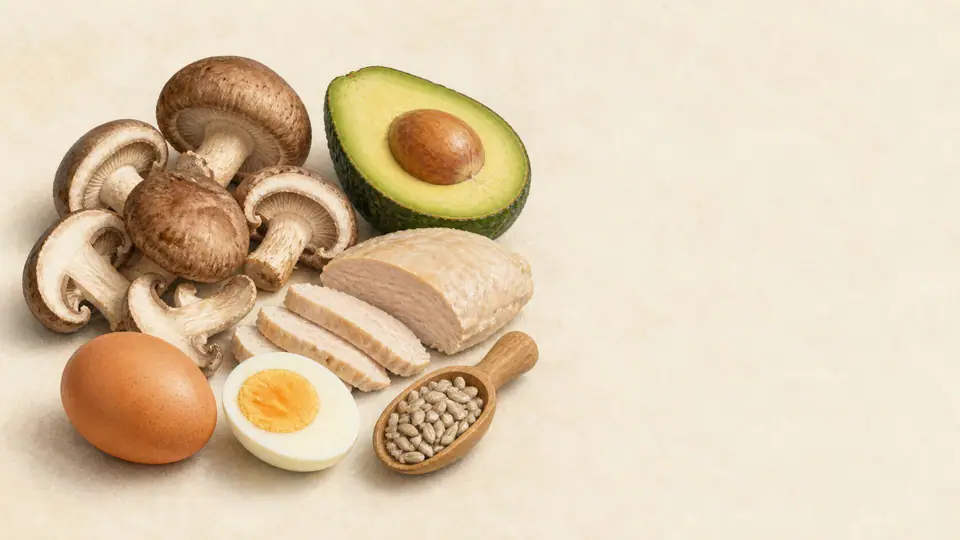
Vitamin B5 is a water-soluble vitamin called pantothenic acid. It is a necessary material for creating Coenzyme A (CoA) and acyl carrier protein, both of which are involved in the energy metabolism of fats, carbohydrates, and proteins. It is named 'everywhere' because it is widely distributed in food. Thanks to this, isolated deficiency is rarely seen unless there is severe malnutrition.
However, the familiarity of the name leads to misunderstandings. 'It is everywhere, so I can feel safe' and 'It is used everywhere, so taking more must be better' are completely different statements. Pantothenic acid is simply a material for Coenzyme A needed for energy metabolism; it does not mean it immediately adds energy to the body or eliminates stress.
The distance between 5 mg and 2.2 g
The NIH ODS suggests an adequate intake of pantothenic acid for adults as 5 mg per day. For pregnancy, it is 6 mg, and for lactation, 7 mg. This amount can be met through a general diet.
On the other hand, signals regarding acne emerged from much larger doses. This is centered on a small trial where a pantothenic acid-based complex was used at 2.2 g per day for 12 weeks in 41 subjects. A 2023 systematic review evaluated this, stating that the study is too small and requires repeated verification to replace standard treatment. The 2024 American Academy of Dermatology acne guidelines include benzoyl peroxide, topical retinoids, and certain antibiotics in their strongly recommended treatments, while B5 is not presented as a standard recommended treatment.
In other words, 5 mg is the standard for preventing nutritional deficiency. 2.2 g is the dose used in treatment experiments. There is a 440-fold difference between the two. To ignore this gap and conclude that 'vitamin B5 is good for acne' is to confuse the adequate intake with the treatment dose.
Pantothenic acid, calcium pantothenate, pantethine, dexpanthenol
Pantothenic acid, calcium pantothenate, pantethine, and dexpanthenol are distributed on the market under the name 'B5'. While they are related, they are not the same formulation or dosage.
| Form | Characteristics | Relationship with general B5 supplements |
|---|---|---|
| Pantothenic acid, calcium pantothenate | Representative oral forms | Supplements based on adequate intake standards |
| Dexpanthenol | Topical form for skin application | Other formulations for topical use |
| Pantethine | Form studied at 600–900 mg in lipid research | Different formulation and purpose than general pantothenic acid supplementation |
Lipid research using 600–900 mg of pantethine involves data with different formulations and purposes than taking the adequate intake of general pantothenic acid. Dexpanthenol research was also conducted in the context of topical skin application. Using these as evidence that 'B5 is effective in gram units' mixes up the form, dosage, and application site.
Why did it become the 'Energy and Stress Vitamin'?
It is clear that pantothenic acid is a precursor to Coenzyme A. Since energy metabolism is blocked without Coenzyme A, this raw material is essential for survival. However, as the concept of 'essential' expanded from 'needed only when deficient' to 'more vitality if taken in large amounts,' it earned the nickname 'energy and stress vitamin.'
The belief that B5 is rapidly depleted during times of high stress is common; however, in the reviewed evidence, no consistent evidence was found that additional intake exceeding the adult adequate intake of 5 mg reduces stress. Fatigue and stress are symptoms intertwined with numerous causes, such as sleep, hydration, dietary patterns, mental health, and other medical conditions. Viewing a single raw material as the solution for all those causes is an oversimplification.
Distinguishing Deficiency Symptoms from Common Discomforts
Theoretical symptoms of pantothenic acid deficiency include neurological symptoms such as numbness or burning sensations in the hands and feet, along with fatigue and digestive discomfort. However, because this raw material is present in almost all foods, isolated deficiency is rare and mostly occurs alongside other nutrient deficiencies in cases of severe malnutrition.
What should you look for then? If you have persistent numbness or burning sensations in your hands and feet, do not conclude it is a B5 deficiency; instead, you must evaluate causes such as diabetes, neurological diseases, or excess of other vitamins. Attributing symptoms to a single raw material deficiency may lead to missing necessary tests and diagnoses.
Safety of High-Dose Intake and Interference with Concurrent Treatments
Since pantothenic acid is a water-soluble vitamin, the remaining daily amount is excreted through urine, but this does not mean it is infinitely safe. Although an upper limit has not been set due to a lack of toxicity data, diarrhea and gastrointestinal discomfort have been reported at approximately 10 g/day.
Taking gram-level doses for acne purposes results in hundreds of times the adult adequate intake. If you delay standard dermatological treatment or arbitrarily stop prescription medication at this time, you may miss the optimal window for treatment. It is important to sum the pantothenic acid in multivitamins, energy, and skin products, and not to convert pantethine or dexpanthenol research into general B5 dosages.
If severe persistent diarrhea, dehydration, changes in consciousness, difficulty breathing, or facial swelling occur, stop using the product and seek immediate help from medical staff or the emergency room.
Three Things to Check When Choosing a Product
When choosing a B5 product, check the following first:
- What is the form: Is it pantothenic acid, calcium pantothenate, pantethine, or dexpanthenol?
- Is the total daily amount in mg or g: 5 mg and 2.2 g are entirely different things.
- What is the purpose: Is it for deficiency correction, acne, stress, hair, or lipids? Why are you intending to stop existing treatments?
You should also check if it overlaps with multivitamins or energy products, and if you have persistent diarrhea, abdominal pain, or unexplained numbness.
Final Decision Criteria
The standard for handling this raw material is to verify the exact form and the total amount in mg or g units rather than relying on the nickname 'energy and stress vitamin,' and not to expand its essential nutritional function into therapeutic effects for acne, hair, or lipids. Pantothenic acid is a nutrient essential for producing Coenzyme A. When expecting effects beyond that, the limitations of the formulation, dosage, and research must be considered together.
References
- NIH ODS: Pantothenic acid fact sheet for health professionals.
- Oral nutraceuticals for acne: systematic review.
- Pantothenic acid-based supplement for facial acne: randomized trial.
- American Academy of Dermatology acne management guideline.
This text explains the origin of the raw materials, the scope of research, and precautions before consumption. As this cannot replace individual diagnosis or treatment, please consult a medical professional if you are taking medication or if symptoms persist. If sudden and severe symptoms such as difficulty breathing or decreased consciousness occur after consumption, seek help from 119 or the emergency room.

Medical Staff Review
Director Choi Yeon-seung
Chief Director of Baekrokdam Korean Medicine ClinicVitamin B5 Dictionary Entry, reviewed the safety of expressions and the scope of verification before administration.
Review scope: Ingredient origin, human studies, concomitant medications, safety of intake · Last reviewed 2026-08-17
- Graduated from Kyung Hee University College of Korean Medicine
- Providing Korean medicine treatment since 2010
- Consultations for Gongjindan, Gyeongokgo, Nokyong (Deer Antler) restorative medicine, and customized restorative herbal medicine