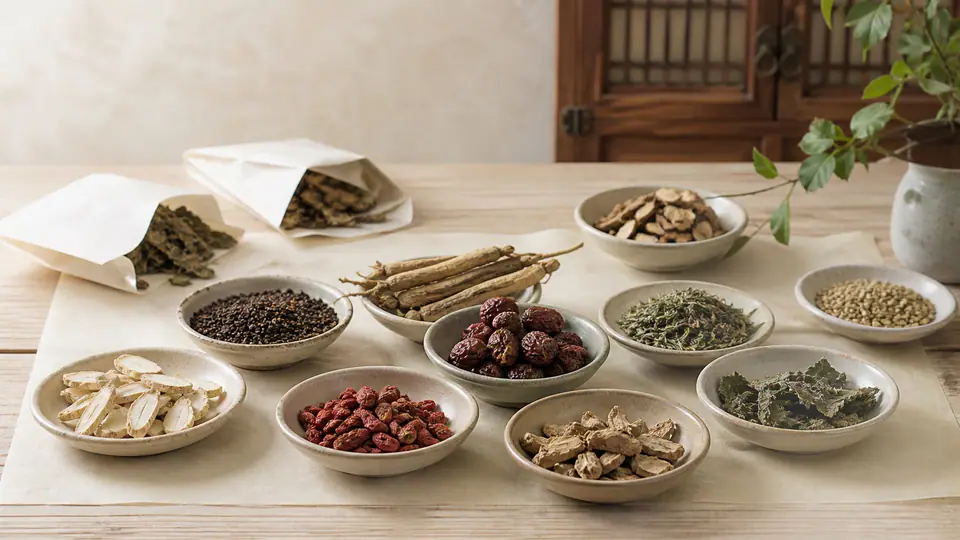
Suanzaoren: Small Seeds for Deep Sleep
The Shennong Bencaojing describes Suanzaoren (sour jujube seed) as having a "sour and neutral taste," noting its use for "cold or heat in the heart and abdomen, accumulation of pathogenic factors and qi, aching in the four limbs, and damp-bi." It records that "long-term use comforts the five viscera, lightens the body, and extends life." It is important to note that since ancient times, these seeds have been used not simply to induce sleep, but to bring comfort to the five viscera. In the Internal Medicine and Miscellaneous Diseases sections of the Dongui Bogam, Suanzaoren appears repeatedly in various prescriptions such as Cheonwangbosim-dan, modified Ondam-tang, and Samulansin-tang. In particular, Cheonwangbosim-dan is a representative prescription for those who suffer from anxiety and insomnia due to a deficiency of heart blood, and Suanzaoren plays a key role in calming the spirit (ansin) within this formula.
Many people remember Suanzaoren only as a "herb good for insomnia," but its actual role is more sophisticated. In traditional medicine, Suanzaoren is classified as a heart-nourishing and spirit-calming herb (yangsim-ansinyak), acting on the heart, liver, and gallbladder. In other words, it does not force sleep; rather, it helps the quality of sleep naturally by nourishing the energy of the heart, liver, and gallbladder. The phrase "comforts the five viscera" from the Shennong Bencaojing can be understood in the same context, it aims for a state where the entire system is stabilized, rather than simply suppressing a single symptom.
Therefore, Suanzaoren is not a universal ingredient that provides the same effect for everyone. As a rule, it should not be used for those with excess patterns or pent-up fire (siljeung-ulhwa), those prone to loose stools or diarrhea, or those with excess heat in the liver and gallbladder. Additionally, caution is required when used with alcohol or Western medications that depress the central nervous system, as the sedative effect may become excessively strong. How much is used, for whom, and how it is administered, these three factors are the keys to using these seeds safely.
Summary at a Glance
As its name suggests, Suanzaoren is easily remembered simply as a "seed that induces sleep," but in classical texts, it was used more broadly to stabilize the five viscera and lighten the body. Here is a summary of the key information at a glance.
| Category | Content |
|---|---|
| Origin | Hanja name: Suanzaoren; Ziziphus jujuba var. spinosa (Rhamnaceae) Zizyphus jujuba Mill. var. spinosaMature seeds. Listed as a standard item in the Korean Pharmacopoeia and the Korean Herbal Pharmacopoeia. |
| Properties and Meridian Tropism | Properties: Neutral, Sweet, Sour. Acts on the Heart, Liver, and Gallbladder. Classified as a heart-nourishing and spirit-calming herb (yangsim-ansinyak). |
| Representative Aliases | Common names: Madaechu-ssi (seed of the wild jujube), Suanzaoren. |
| Efficacy Recorded in Literature | Shennong Bencaojing: "Cold or heat in the heart and abdomen, accumulation of pathogenic factors and qi, aching in the four limbs, and damp-bi. Long-term use comforts the five viscera, lightens the body, and extends life." Dongui Bogam (Internal Medicine/Miscellaneous Diseases): Used for heart blood deficiency, deficiency-fire insomnia, excessive sweating, and mouth ulcers. |
| Main Ingredients | Verification required. Please inquire during your consultation. |
| Combination & Precautions | Frequently combined in prescriptions for nourishing heart blood and the heart-spleen, such as Cheonwangbosim-dan, Gwibi-tang, and Suanzaoren-tang. Not used for those with excess patterns/pent-up fire (siljeung-ulhwa), loose stools, or a constitution with excess heat in the liver and gallbladder. Caution is required when used with central nervous system depressants (sleeping pills, sedatives, anti-anxiety medications, alcohol, etc.) as the sedative effect may be intensified. |
Is this medicinal herb right for me?
Suanzaoren is one of the first herbs that come to mind for difficulty falling asleep, but that does not mean it is unconditionally suitable for all types of insomnia. The core point emphasized in classical texts is that it is used for calming the spirit (ansin) based on a "deficiency pattern (heojeung)." In other words, it addresses a state where the mind is not at peace due to a lack of vital energy in the body. Conversely, it may not be appropriate for "excess patterns (siljeung)" where heat or stagnation is filled within the body. Please consider the following three criteria first.
-
Generally suitable casesIndications: It has been traditionally considered for cases where the mind is unstable due to heart blood deficiency, making it difficult to fall asleep at night or causing frequent awakenings. It is used in this context in prescriptions such as Cheonwangbosim-dan, Gwibi-tang, and Samulansin-tang from the Dongui Bogam. Additionally, as recorded in the Shennong Bencaojing regarding comforting the five viscera through long-term use, it can be utilized for the sustained stability of those with a frail constitution.
-
Cases requiring cautionPrecautions: Caution is required when used with central nervous system depressants such as sleeping pills, sedatives, anti-anxiety medications, or alcohol, as the sedative effect may be strengthened. This guidance is based on data from the Korea Pharmaceutical Information Center and Dongui Medical Center regarding the sedative properties of Suanzaoren. However, as specific clinical interaction studies for Suanzaoren have not been confirmed to date, you must consult your attending medical staff regarding concurrent use.
-
Cases to avoidContraindications: It is best avoided by those with excess patterns or pent-up fire (ulhwa), those with excess heat (silyeol) in the liver and gallbladder, and those with a constitution prone to loose stools and frequent diarrhea (daebyeon-hwalseol). This is because Suanzaoren has a strong tendency to nourish and calm the spirit, which may actually aggravate symptoms if excess heat or dampness remains. An accurate determination of your constitution is required during a consultation.
Practical Q&A
We have gathered the most frequently asked questions from clinical practice. Contrary to the simplified perception that "Suanzaoren is good for all insomnia," this herb is meaningful only when used within the context of a person's constitution and symptoms. The following questions will help establish those criteria.
Is Suanzaoren unconditionally effective for insomnia?
No. In classical texts, Suanzaoren is primarily used for calming the spirit (ansin) based on a deficiency pattern (heojeung). This means it addresses a state where the mind is not at peace due to a lack of vital energy; it is not a universal cure for all types of insomnia. It may actually be inappropriate for those with excess patterns or pent-up fire (ulhwa).
Can I take Suanzaoren and sleeping pills together?
Caution is required as the sedative effect may be intensified when used with central nervous system depressants (sleeping pills, sedatives, anti-anxiety medications, etc.) or alcohol. Please consult your attending medical staff regarding the specific possibility and timing of concurrent use.
Can taking Suanzaoren make my stools loose?
The use of Suanzaoren is recorded as contraindicated for those with loose stools (daebyeon-hwalseol). If you have a constitution with loose bowels or a tendency toward diarrhea, please be sure to inform your provider during the consultation.
In which prescriptions is Suanzaoren most commonly used?
It is included in prescriptions such as Cheonwangbosim-dan, Gwibi-tang, modified Ondam-tang, Samulansin-tang, and Suanzaoren-tang in texts like the Dongui Bogam. As such, Suanzaoren is more frequently utilized when combined with other herbs in a prescription rather than used alone.
Is there a reason why Ziziphus jujuba seed (Sanjoin) is roasted?
Some classical prescriptions record it as "Ziziphus jujuba seed (roasted)." The roasting process is understood as a traditional processing method to mellow its properties and reduce the burden on the stomach, although the specific processing (poje) standards vary depending on the prescription and the individual's constitution.
Can Ziziphus jujuba seed be taken for a long period of time?
The "Shennong Ben Cao Jing" contains a record stating, "Long-term use stabilizes the five viscera, lightens the body, and extends life," but this is a classical description based on the premise that it fits a specific constitution and set of symptoms. In modern practice, the duration and dosage for long-term use must be adjusted according to the individual's condition, and it is safest to determine continued use through a consultation.
Relationship with Other Medicinal Herbs (Yakdae/Pairing)
Ziziphus jujuba seed's characteristics become clearer when used with other medicinal herbs rather than alone. In Korean medicine, such pairs are called "yakdae," and Ziziphus jujuba seed serves as a center in various prescriptions to help stabilize the mind (anshin). Below are some confirmed combination examples.
- Cheonwangbosim-dan A prescription included in the Internal Medicine section of the "Dongui Bogam" and "Hoichun (Manbyeong Hoichun)." It combines roasted Ziziphus jujuba seed with Ginseng, Scrophularia ningpoensis, Salvia miltiorrhiza, Angelica gigas, Asparagus cochinchinensis, Ophiopogon japonicus, Poria cocos (with hostwood), Polygala tenuifolia, Schisandra chinensis, Acorus calamus, fresh Rehmannia glutinosa, Platycodon grandiflorus, and Coptis chinensis to treat cases of inability to sleep due to deficiency of heart blood and mental distress.
- Gwibitang A prescription recorded in "Jeongche Juryeo" and other texts, containing Ginseng, Astragalus membranaceus, Atractylodes macrocephala, Angelica gigas, Poria cocos, Polygala tenuifolia, Ziziphus jujuba seed, Longan fruit, Aucklandia lappa, Licorice, Jujube, and Ginger. It has been traditionally used to treat insomnia, forgetfulness, and palpitations caused by deficiency of both the heart and spleen.
- Modified Ondamtang A modified prescription appearing in the Miscellaneous Diseases section of the "Dongui Bogam." By adding Ziziphus jujuba seed, Schisandra chinensis, Polygala tenuifolia, Ginseng, and Rehmannia glutinosa (prepared) to Ondamtang, it treats insomnia and deficiency-heat agitation caused by deficiency of qi and blood in the heart and liver.
- Samulansintang A prescription found in "Hoichun," combining Angelica gigas, Paeonia lactiflora, Rehmannia glutinosa (fresh), Rehmannia glutinosa (prepared), Ginseng, Atractylodes macrocephala, Poria cocos, roasted Ziziphus jujuba seed, Coptis chinensis, Gardenia jasminoides, Ophiopogon japonicus, and Bambusa vulgaris. It is passed down as a way to treat palpitations (jeongchung) caused by a deficiency of blood in the heart.
- Sanjoin-tang A prescription consisting of 5g Ziziphus jujuba seed, 1.67g Poria cocos, 1g Anemarrhena asphodeloides, 1g Cnidium officinale, and 0.33g Licorice, used for cases of inability to sleep due to mental fatigue and weakness. The original source requires verification.
- Hae-eo-tang A prescription included in "Seui Deukhyobang (1345)." It combines roasted Ziziphus jujuba seed with Gastrodia elata, Angelica pubescens, Stephania tetrandra, Aconitum carmichaelii, Cinnamon, Licorice, and Rhinoceros horn to treat cases where speech is slurred or half the body is paralyzed as a sequela of stroke.
As such, Ziziphus jujuba seed is a key medicinal herb for stabilizing the mind and is used in pairs with other herbs for nourishing blood, supplementing qi, clearing heat, or resolving phlegm. However, as a rule, it should not be used in cases of excess patterns, pent-up anger, loose stools, or excess heat in the liver and gallbladder. Please ensure you consult a Korean medicine doctor to determine if the combination is appropriate for your symptoms and constitution.
In what form is it consumed?
Traditionally, Ziziphus jujuba seed is most commonly used by processing it raw or roasting it (roasted Ziziphus jujuba seed) and then administering it as a decoction. In modern times, various formulations have been created for convenient use. Here are the confirmed forms.
- Professional Prescription (Decoction) Taking it in the form of a decoction prescribed at a Korean medicine clinic is the traditional and most common method. The significance of the combination becomes clearer when Ziziphus jujuba seed is decocted and taken with other medicinal herbs.
- Granule/Extract/Capsule Formulations Products such as Inspharm Sanjoin-tang Ex Granule, Jami-o Ex Granule, and Deep Sleep Capsule, found in the comedi.kr pharmaceutical information, are formulations based on the Sanjoin-tang line. However, as these are medicinal products, they must be taken only under the prescription and consultation of a medical professional.
- Tea/Food It is not common to consume Sanjoin (Ziziphus jujuba seed) consistently on its own in the form of tea or food. Even in classical texts, Sanjoin is overwhelmingly used within a prescription rather than as a single ingredient.
Regardless of the form you choose, Sanjoin is not simply a 'seed to take when you cannot sleep,' but a medicinal herb used within the context of one's constitution and symptoms. Since the form of administration, dosage, and duration vary depending on the individual's condition, it is advisable to determine these through a consultation.
Interactions and Safety During Use
While Sanjoin has been used for a long time as a medicinal herb to help calm the mind (Ansin), this does not mean it is entirely free of side effects or interactions depending on the situation. Caution is especially required when combined with other medications or certain constitutions. We provide the confirmed guidelines below and strongly recommend consulting a professional before use.
- Caution when used with central nervous system depressants Using Sanjoin with sleeping pills, sedatives, anti-anxiety medications, or alcohol may enhance the sedative effect. Please consult your medical staff regarding concurrent use.
- In cases of Excess Heat/Stagnant Fire (Siljeung-Ulhwa) As a rule, it should not be used.
- In cases of loose stools (Daebyeon-Hwalseol) This is a contraindication for use.
- Constitution or symptoms of Excess Heat in the Liver and Gallbladder (Gandam-Silyeol) It is recommended not to take it.
Direct clinical interaction studies or detailed concurrent use guidelines with specific Western medicines have not been confirmed through current searches. If you are starting a prescription containing Sanjoin or are taking existing Western medications, please decide after consulting your attending Korean medicine doctor.
If you experience these symptoms
If you experience these symptoms
Although Sanjoin has long been used to help calm the mind, you should not dismiss certain signals that appear during administration as simply 'the medicine working.' The following symptoms are recorded as precautions in classical and modern materials regarding Sanjoin or prescriptions containing it. Even for mild cases, please inform your attending Korean medicine doctor to discuss adjusting the dosage or prescription; if symptoms are severe or progress rapidly, it is safest to visit an emergency medical institution.
- Indigestion, abdominal discomfort, decreased appetite These are signals that may appear when Sanjoin exhibits excessive acidic properties. Those with a weak gastrointestinal system may experience bloating or slow digestion during administration.
- Constipation or changes to loose stools (Hwalseol) Sanjoin generally has an astringent tendency, which may cause constipation, but conversely, loose stools may occur depending on the constitution. Classical texts prohibit the use of Sanjoin for people with 'loose stools'.
- Dry mouth, throat discomfort Since Sanjoin is a seed that naturally possesses a sour taste, long-term or excessive intake may cause dry mouth or dryness in the throat.
- Heartburn, feeling of acid reflux The acidic nature of Sanjoin may irritate the stomach, leading to heartburn or a feeling of food rising.
- Increased central nervous system depression (excessive drowsiness, slowed reactions, decreased concentration) Sanjoin is known for its sedative effects; when used with sleeping pills, sedatives, anti-anxiety medications, or alcohol, the inhibitory effect may increase. Particular caution is needed before driving or operating machinery.
- Worsening of Excess Heat (Silyeol) symptoms (facial flushing, chest tightness, irritability, yellow urine) Sanjoin (Ziziphus jujuba seed) is a medicinal herb used for anxiety and insomnia based on deficiency patterns (Heo-jeung). If used when there is excess heat or pent-up fire (Ul-hwa) in the body, it may prevent the heat from subsiding and could potentially worsen the symptoms. Classical texts prohibit its use for those with excess patterns, pent-up fire, or excess heat in the liver and gallbladder.
Differences from other restorative medicines
In the broad sense of 'helping to calm the mind,' Sanjoin is often categorized alongside Jinse-type restorative medicines or traditional tonics such as Gongjindan and Gyeongokgo. However, from a Korean medicine perspective, their points of action and uses differ. Sanjoin primarily enters the meridians of the Heart, Liver, and Gallbladder, focusing on treating states where the mind is unsettled and sleep is difficult due to deficiency (Heo). As recorded in the Shennong Ben Cao Jing, "long-term intake brings peace to the five viscera," meaning it is intended to comfort the internal organs over time.
Tonics like Gongjindan or Gyeongokgo are used to supplement a broader range of Qi, Blood, and Essence (Jeong). Gongjindan is traditionally used to tonify the Kidney and consolidate Essence, while Gyeongokgo is used to nourish the Lung and Qi. While Sanjoin may be included in these prescriptions, in such cases, it does not serve as the primary 'supplement' of the tonic but rather acts as one of the pillars for stabilizing the mind.
Jinse-type products are modernized, standardized restorative supplements. Compared to Sanjoin, Jinse-type products often focus on overall fatigue recovery and boosting energy, whereas Sanjoin is more directly related to symptoms involving mental stability before and after sleep. However, this difference can vary by product and prescription, so it cannot be stated definitively.
Ultimately, whether Sanjoin is closer to Gongjindan, Gyeongokgo, or Jinse-type products depends on your constitution and current symptoms. Rather than simply dividing it into 'Sanjoin for insomnia' or 'tonics for fatigue,' it is safest to confirm the right direction for you through a consultation at a Korean medicine clinic.
References
- Evidence material 1 regarding Sanjoin: Korea Citation Index academic paper.
- Evidence material 2 regarding Sanjoin: Korea Citation Index academic paper.
- Evidence material 3 regarding Sanjoin: Korea Citation Index academic paper.
If you would like to check if this medicinal herb is right for you or which prescription it should be used with, please leave a medical inquiry. For those who find it difficult to visit the clinic, non-face-to-face consultations are available; we will provide guidance after first reviewing your current condition and current medications.

Medical Staff Review
Director Choi Yeon-seung
Chief Director of Baekrokdam Korean Medicine ClinicSanjoin Dictionary Entry, reviewed the safety of expressions and the scope of verification before administration.
Review Scope: Clinical Accuracy, Pharmacology, Contraindications, Combinations, QA · Last Reviewed 2026-08-16
- Graduated from Kyung Hee University College of Korean Medicine
- Providing Korean medicine treatment since 2010
- Consultations for Gongjindan, Gyeongokgo, Nokyong (Deer Antler) restorative medicine, and customized restorative herbal medicine