From Olive Tree Leaves on the Mediterranean Table to Blood Pressure Capsules
If you have high blood pressure or blood sugar, will taking olive leaf extract help your cardiovascular health like olive oil does? In short, it is not that simple. While olive oil and olive leaves come from the same tree, the parts consumed are different, and leaf tea or standardized extracts differ in component concentration and intake amounts. Therefore, the results of one product cannot be applied directly to another, and short-term numerical changes observed in research are at a different stage than the effect of replacing medication or preventing cardiovascular events.
It is precisely this gap that must be distinguished.
Context of the Question: When the Image of Olive Oil Shifts to the Leaf
Olives are primarily known for their fruit and oil. Since extra virgin olive oil has a repeatedly observed cardiovascular association in the Mediterranean diet, the leaves of the same tree are held to similar expectations. However, leaves contain phenolic components such as oleuropein, which is a different component matrix from the fatty acid composition of the fruit or oil. So, what should we look for? We must start by distinguishing the identity of the raw material.
What is Olive Leaf?
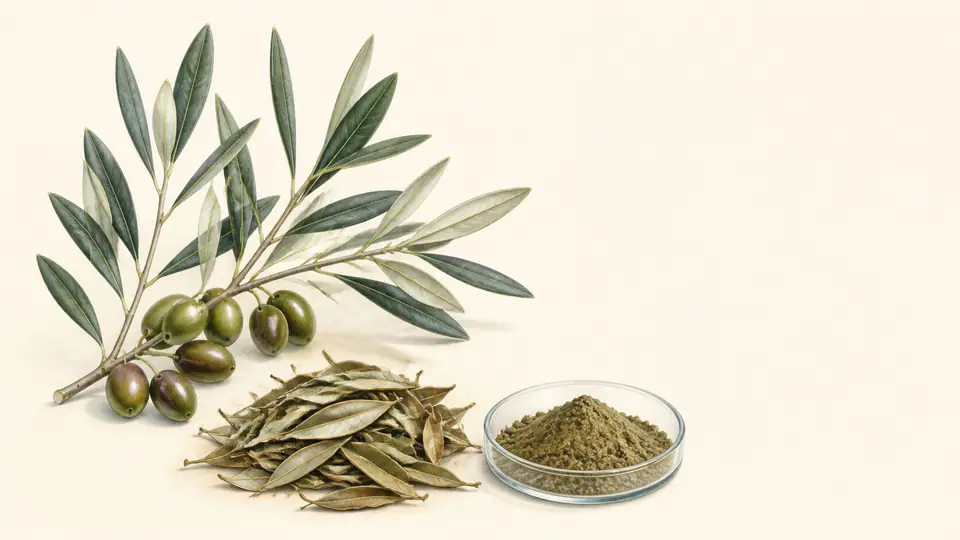
Olive leaf refers to the dried leaves or extracts of Olea europaea. It comes in various forms, such as leaf tea, powder, and standardized leaf extracts. The important point is that olive fruit, extra virgin olive oil, leaf tea, and standardized leaf extracts all differ in components and intake amounts. Under the same name 'olive,' different raw materials actually exist.
Reasons for Expectation: Phenolic Components and Limited Research
Interest in olive leaf extract stems from phenolic components like oleuropein. A 2025 meta-analysis on blood pressure included only 3 studies and 248 people; while there was a signal in systolic blood pressure, heterogeneity was high, and it stated that additional clinical trials are necessary. A 2022 randomized trial meta-analysis reported some changes in blood pressure and lipids, but there were no meaningful changes in blood glucose homeostasis, liver, kidney, or inflammatory markers. This means that while changes were observed in some numbers, overall metabolic indicators were not supported.
Leaf Tea, Powder, and Standardized Extracts: Different Products Despite the Same Name
This is because leaf tea, powder, and standardized extracts are all grouped under the name 'olive leaf'. The results of the daily extract mg in research products cannot be applied directly to teas or capsules with different oleuropein contents. Even if the extract mg is the same, the actual exposure amount varies if the oleuropein standardization, extraction solvent, or batch is different. Therefore, when choosing a product, you must check both the oleuropein content and the 1 daily intake amount rather than just the total mg.
What the EMA Traditional Use Monograph Says
The European Medicines Agency (EMA) traditional use monograph addresses olive leaf for the purpose of aiding urine excretion in cases of mild water retention. This does not mean approval for the treatment of hypertension. Traditional use and modern expectations for blood pressure management are different domains. This distinction also relates to the fact that clinical evidence has not been established that olive leaf extract reduces the risk of stroke or myocardial infarction as a replacement for blood pressure medication.
When Using with Prescription Medications
If you are taking blood pressure or blood glucose medication, you must consider the possibility of dizziness, hypotension, or hypoglycemia when using olive leaf extract concurrently. Monitor your blood pressure and blood glucose at home, but do not reduce your medication arbitrarily. Gastrointestinal discomfort, headache, or allergic symptoms may occur, and caution is advised for those with allergies to plants in the olive family. Data on the long-term use of highly concentrated extracts for pregnant or breastfeeding women, and those with liver or kidney disease, are limited.
Why Checking Your Individual Situation Comes First
The questions to check before choosing an olive leaf product are simple: whether it is a leaf tea/powder or a standardized extract, what the oleuropein content and 1 daily dose are, whether you take blood pressure medication, diabetes medication, or anticoagulants and measure blood pressure/blood glucose at home, and whether you are pregnant, breastfeeding, have liver/kidney disease, or have an allergy to plants in the olive family. These questions allow you to simultaneously consider the actual exposure amount of the product and your own concurrent medication status.
Short-term Numerical Changes vs. Cardiovascular Event Prevention
Changes in blood pressure before and after use, placebo-controlled effects, and the effect of reducing cardiovascular events by replacing blood pressure medication are different stages. Just because a signal was seen in systolic blood pressure in a few short-term trials does not mean it reduces the risk of stroke or myocardial infarction. The cardiovascular evidence for the Mediterranean diet or olive oil cannot be transferred to the effect of a single component like olive leaf extract. In other words, the complex effect of an entire diet and a concentrate of a single raw material are not comparable.
Final Decision Criteria
Rather than the image of a healthy Mediterranean diet, first check the part used, the form of the extract, and whether it is standardized for oleuropein. Also, consider the relationship with any blood pressure or blood glucose medications currently being taken. A realistic standard for approaching this material is to not extrapolate numerical changes from a few short-term trials into treatment replacement or cardiovascular prevention.
References
- EMA European Union herbal monograph on Olea europaea leaf.
- Olive leaf extract and blood pressure: systematic review and meta-analysis.
- Olive leaf extract and cardiovascular risk factors: systematic review and meta-analysis.
This text explains the origin of the raw materials, the scope of research, and precautions before consumption. As this cannot replace individual diagnosis or treatment, please consult a medical professional if you are taking medication or if symptoms persist. If sudden and severe symptoms such as difficulty breathing or decreased consciousness occur after consumption, seek help from 119 or the emergency room.

Medical Staff Review
Director Choi Yeon-seung
Chief Director of Baekrokdam Korean Medicine ClinicOlive Leaf Dictionary Entry, reviewed the safety of expressions and the scope of verification before administration.
Review scope: Ingredient origin, human studies, concomitant medications, safety of intake · Last reviewed 2026-08-17
- Graduated from Kyung Hee University College of Korean Medicine
- Providing Korean medicine treatment since 2010
- Consultations for Gongjindan, Gyeongokgo, Nokyong (Deer Antler) restorative medicine, and customized restorative herbal medicine