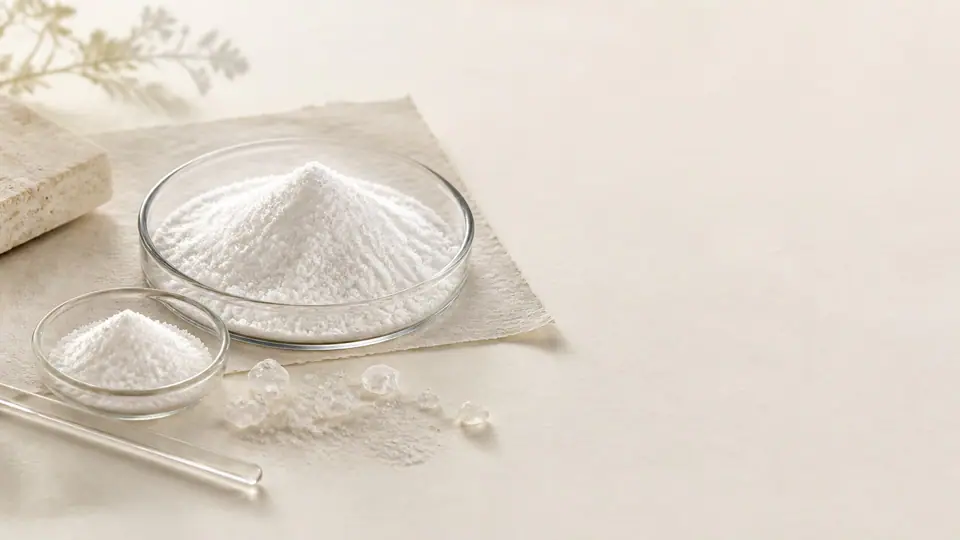
The short abbreviation called the 'Sulfur of the Joints'
Will taking MSM help reduce joint pain when my knees hurt?
Simply put, while some statistical differences were seen in pain scores, it is unclear how much of that difference is actually perceptible. There is insufficient evidence to suggest that it regenerates cartilage or slows the progression of arthritis.
The name is short and familiar: MSM, or methylsulfonylmethane. Because it contains the word 'sulfur,' it gives the impression that it would be good for the joints. However, the story changes slightly when you examine exactly what this ingredient is, what tests it has undergone, and what those test results actually indicate.
Why is this question asked repeatedly?
MSM is a common name found in osteoarthritis supplements. The image of 'sulfur' is easily linked to joint health, and the short abbreviation makes it feel as though it has been long validated. However, the familiarity of a name is separate from the depth of clinical evidence. What we need to verify is not the name, but what trials were conducted and what those trials demonstrated.
Then, what is the chemical identity hidden behind the name?
The Identity of MSM: Containing sulfur does not make substances the same
PubChem identifies MSM as an organosulfur compound called dimethyl sulfone. Methylsulfonylmethane is used as a synonym. Although sulfur is in the name, MSM is not the same as dietary sulfur in its entirety or substances like DMSO. This distinction is important because various substances within the 'sulfur' category possess different properties.
While MSM and DMSO have related names and have been studied together, they are not the same ingredient. Because they were grouped together in past papers, their names are still used interchangeably today. However, the ingredient we are examining is MSM, specifically dimethyl sulfone.
What do joint pain studies show?
There are not many osteoarthritis studies on MSM. In a 2009 meta-analysis of osteoarthritis, only one MSM trial was eligible for inclusion, and the overall pain reduction, when combined with DMSO trials, was not statistically or clinically significant. Because it was an analysis combining different ingredients and the results were mixed, it was difficult to confirm the effect of MSM.
In a 2017 review of 69 randomized trials of osteoarthritis supplements, MSM showed a statistical improvement in pain, but the clinical significance was unclear. A statistical change in pain scores must be distinguished from a change that a patient perceives as meaningful. Even if a difference appears numerically, whether that difference is actually felt in daily life is a different matter.
In a trial observing 49 patients with knee osteoarthritis for 12 weeks, changes in some function and pain indicators were small, and the clinical significance was not established. It should be kept in mind that the study size was small and the duration was short.
The gap between expectations and evidence
There is no evidence to suggest that MSM regenerates cartilage, slows the progression of osteoarthritis, or replaces analgesic or rehabilitative treatment. This statement clarifies the gap between expectations and current evidence. The effect a supplement has on a pain score is different from its effect on changing the disease itself. Claims that it can restore joint structure or replace medication or exercise rehabilitation are not supported by trials to date.
In other words, the possibility that pain may decrease slightly is not the same as the certainty that the joint is being restored.
Product Form: Single MSM or Joint Complex
There are single MSM products on the market, as well as joint complex products mixed with ingredients such as glucosamine and chondroitin. These two cannot be viewed as the same ingredient. For complex products, the dosage of ingredients other than MSM and the possibility of allergies or interactions must be checked separately. You must see which ingredients are included, in what amounts, and what evidence each of those ingredients possesses.
When comparing single MSM with joint complexes, it is risky to treat two products as identical based solely on the fact that 'they contain MSM.' The effect of a complex product should not be interpreted as the effect of single MSM, nor vice versa.
When taking with medications or supplements
Particular caution is needed for complex joint products when using MSM alongside other supplements or medications. The various ingredients in a complex product may each have different potential interactions. It is important to check your current medications, any planned surgeries, and whether you have gastrointestinal reactions.
Data on the long-term safety of MSM itself is insufficient. A safety analysis from one randomized trial using 6g for 16 weeks found no clear adverse signals, but this is the result of a single product over a short period. Data regarding large-scale long-term use, pregnancy, breastfeeding, and use in people with various diseases or those taking medications are lacking.
Individual circumstances and safety signals
Before considering supplements, you should reflect on whether the cause of the pain and an arthritis diagnosis have been confirmed. Swollen and hot joints, pain following trauma, pain that wakes you from sleep, or loss of function should not be left without evaluation in favor of supplements. These signals are cases where a medical evaluation is required first.
Whether you choose MSM or another supplement, a realistic starting point is to first check your current medications, planned surgeries, and whether you have gastrointestinal reactions.
Differences from similar ingredients: MSM and DMSO
Although MSM and DMSO have similar names and were studied together in the past, they are not the same ingredient. It is incorrect to transfer expectations for DMSO to MSM or to apply the results of MSM to DMSO. Even within the broad category of 'sulfur compounds,' each substance must be evaluated independently.
Realistic criteria to check today
When considering MSM, first check three things: whether it is a single MSM supplement or a complex product containing ingredients like glucosamine and chondroitin; whether the cause of pain and a diagnosis of arthritis have been confirmed; and whether there are current medications, planned surgeries, or gastrointestinal reactions.
Additionally, manage your expectations. Rather than relying on the general image of sulfur, it is necessary to first verify the exact single or complex ingredients, the cause of pain, the scale and duration of clinical trials versus actual perceptible changes, and the gaps in long-term safety data. While the name MSM is short, the judgment regarding it requires a more comprehensive view.
References
- PubChem: Dimethyl sulfone (MSM).
- MSM and DMSO for knee osteoarthritis: meta-analysis.
- Dietary supplements for osteoarthritis: systematic review and meta-analysis.
- MSM for low back pain: randomized-trial safety analysis.
This text explains the origin of the raw materials, the scope of research, and precautions before consumption. As this cannot replace individual diagnosis or treatment, please consult a medical professional if you are taking medication or if symptoms persist. If sudden and severe symptoms such as difficulty breathing or decreased consciousness occur after consumption, seek help from 119 or the emergency room.

Medical Staff Review
Director Choi Yeon-seung
Chief Director of Baekrokdam Korean Medicine ClinicMSM Glossary, reviewed the safety of expressions and the scope of verification before administration.
Review scope: Ingredient origin, human subject research, concomitant medications, intake safety · Last reviewed 2026-08-16
- Graduated from Kyung Hee University College of Korean Medicine
- Providing Korean medicine treatment since 2010
- Consultations for Gongjindan, Gyeongokgo, Nokyong (Deer Antler) restorative medicine, and customized restorative herbal medicine