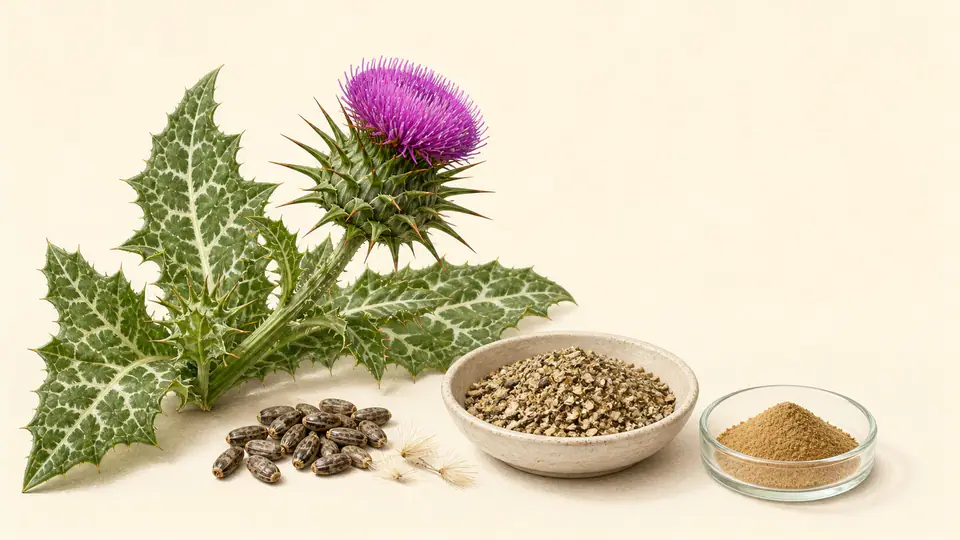
Milk Thistle: A Plant with Mixed Names
“I'm worried about my liver enzyme levels; should I try taking milk thistle?” This is a very common question.
To answer briefly, while milk thistle is a long-established plant name, the claim that it 'helps the liver' is complicated because different extracts and human study results are mixed together across various products. There is too wide a gap to choose a product based on the name alone. Once we clear up the confusion regarding the names, the differences in product forms, concurrent use, and the limitations of the evidence become much clearer.
Where the Questions Begin: Between Liver Enzyme Levels and Supplements
Abnormal liver enzyme levels can be caused by various factors, including fatty liver, alcohol consumption, viruses, and medications. However, people often search for ingredients that are 'good for the liver' before identifying the cause. Milk thistle has become a representative name for this. The question itself is not wrong. However, it is important to remember that before choosing a supplement, you must first determine why the levels rose and what medications you are currently taking.
Milk Thistle and Silymarin: They Are Not the Same
Milk thistle is a plant in the Asteraceae (daisy) family. Silybum marianumIt is also known as the western thistle, and the term 'silymarin' is frequently seen on supplement labels. However, milk thistle and silymarin are not exactly the same. Silymarin is a mixture of several flavonolignans obtained from this plant, and silymarin itself is not a single component. Seeds, teas, powders, and extracts with standardized content cannot be viewed as the same level of exposure. When names sound similar, it is easy to mistake different things for the same thing.
How It Became a Representative Term for 'Liver Supplements'
There were likely several paths that led to milk thistle becoming a symbol of 'liver protection.' Its traditional use to increase breast milk secretion is well known, and expectations regarding liver health have been attached to it for a long time. However, long-term use does not immediately equate to efficacy. Especially in the supplement market, these expectations become solidified in product names and advertising copy, often blurring the lines between raw materials and extracts, or between research-grade products and commercial products.
Raw Materials, Extracts, and Standardization
Raw milk thistle and silymarin extracts come from the same source but are in different forms. Raw materials can be consumed as seeds, powders, or teas, while extracts are concentrated or standardized versions of specific component groups. Clinical studies typically use specific extracts. Therefore, it is difficult to directly apply the results of seeds, teas, powders, or different standardized products to one another. Since research results are tied to the specific extract and dosage used, they do not guarantee the effect of all commercial products that share the same name. When choosing a product, the first step is to check if the silymarin content is labeled and what type of extract it is.
The Extent of Evidence in Human Subjects
The NCCIH states that clinical trial results for alcoholic liver disease, Hepatitis B and C, and non-alcoholic fatty liver disease are either conflicting or insufficient to draw a conclusion. Systematic reviews of liver disease clinical trials have also found it difficult to confirm significant benefits due to issues with study quality and reporting methods. While some studies have looked at the possibility of improving blood glucose markers in type 2 diabetes, caution is needed in generalization due to differences in study region, scale, and products. Although traditional use for increasing breast milk secretion is known, evidence for herbal galactagogues in general is limited, and the effect of milk thistle has not been reliably established. In other words, while some possibilities remain open, it is not yet at a stage where it can be definitively stated that it 'is effective.'
When Taking with Other Supplements or Medications
Because there is a possibility of drug interactions, you must consult a healthcare provider or pharmacist first if you are taking liver disease treatments or various prescription medications. You should also verify when your liver enzyme levels rose, whether you have received a causal evaluation, and if you are taking other liver health supplements alongside prescription drugs. Taking multiple liver health products concurrently makes it difficult to track the interactions of each ingredient. Rather than adding a new ingredient, it may be more important to organize the full list of what you are currently taking.
Individual circumstances and safety signals
If you have an allergy to plants in the Asteraceae family, you should be cautious of allergic reactions to milk thistle. This includes plants such as ragweed, daisies, and marigolds. Generally, digestive discomfort is reported. Additionally, there have been reports of silymarin content differing from the label or contamination by mycotoxins, pesticides, and microorganisms, so manufacturing quality should be verified. There is insufficient safety information for use during pregnancy or lactation, and self-administration for the purpose of increasing breast milk secretion requires separate verification of evidence and safety. Whether you are pregnant or breastfeeding, and whether you have an Asteraceae plant allergy, are essential questions to check before use.
Between Advertised 'Liver Protection' and Actual Evidence
There is a gap between the 'liver protection' claims commonly seen in advertisements and the actual evidence from human studies. This gap becomes apparent when comparing raw milk thistle and silymarin extracts, changes in liver enzyme levels versus the clinical course of liver disease, and the 'liver protection' claims in ads versus actual human evidence. Improving liver enzyme levels is different from treating liver disease. Even if a supplement temporarily changes these levels, it does not mean it alters the course of the disease.
Realistic criteria to check today
Then, what should we look for? Before adding a product, we must check the cause of the abnormal liver levels, current medications, and the standardization and quality of the extract. The name 'milk thistle' alone is not enough to know which product to choose. The silymarin content, the form of the extract, manufacturing quality, potential interactions with current medications, and an evaluation of the cause of the elevated liver levels must be sorted out first. Only after going through all these steps can a specific answer to the question 'Should I try taking this?' be provided.
References
- NCCIH Milk Thistle.
- Milk thistle for the treatment of liver disease: systematic review and meta-analysis.
- Systematic review of the efficacy of herbal galactogogues.
This text explains the origin of the raw materials, the scope of research, and precautions before consumption. As this cannot replace individual diagnosis or treatment, please consult a medical professional if you are taking medication or if symptoms persist. If sudden and severe symptoms such as difficulty breathing or decreased consciousness occur after consumption, seek help from 119 or the emergency room.

Medical Staff Review
Director Choi Yeon-seung
Chief Director of Baekrokdam Korean Medicine ClinicMilk Thistle Dictionary Entry, reviewed the safety of expressions and the scope of verification before administration.
Review scope: Ingredient origin, human subject research, concomitant medications, intake safety · Last reviewed 2026-08-16
- Graduated from Kyung Hee University College of Korean Medicine
- Providing Korean medicine treatment since 2010
- Consultations for Gongjindan, Gyeongokgo, Nokyong (Deer Antler) restorative medicine, and customized restorative herbal medicine