Iron, the synonym for fatigue: From stored iron to anemia
If I feel tired and dizzy, can I start taking iron without a test? In short, it is not recommended. Fatigue is only one possible sign of iron deficiency; the reverse is not necessarily true. Starting without a test may lead to missing the actual deficiency or, conversely, causing iron overload.
Iron is an essential mineral required for hemoglobin, which transports oxygen, and myoglobin in the muscles. Even under the same name 'iron,' the content and absorption conditions differ between heme and non-heme iron in food, single iron supplements, and iron in multivitamins, so they cannot be treated the same way. First, one must distinguish between the various forms the name refers to and the methods for confirming deficiency.
Why fatigue leads to iron supplementation and its limitations
Iron is necessary to form hemoglobin, which transports oxygen from the lungs to the tissues. While fatigue and dizziness can appear in iron deficiency, these same symptoms do not exclusively indicate iron deficiency. Therefore, choosing an iron supplement based on fatigue alone is like concluding the entire picture from a single symptom.
More importantly, iron deficiency can begin with a decrease in stored iron before anemia actually develops. In other words, even if hemoglobin levels are normal, the iron stores may already be emptying. If so, what should we look at?
Test indicators each tell a different story
Hemoglobin and hematocrit are commonly used to screen for iron deficiency, but they lack sufficient sensitivity and specificity. Ferritin reflects stored iron but is affected by inflammation. Therefore, it is difficult to judge the overall iron status based on hemoglobin alone, and ferritin should not be interpreted in isolation. This is why multiple indicators are viewed together.
When people hear 'anemia test,' they tend to think only of hemoglobin, but iron deficiency can progress stepwise from a decrease in stored iron to iron-deficiency anemia. The absence of anemia does not mean the iron status is normal, and the presence of anemia does not necessarily mean the cause is iron deficiency.
Same name, different forms: Heme iron and non-heme iron
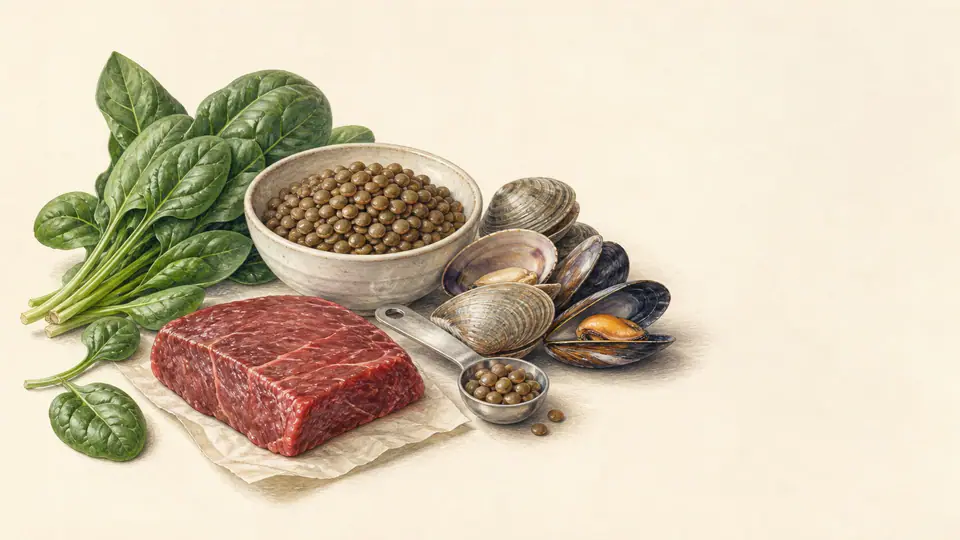
Iron in food is divided into heme iron and non-heme iron. Heme iron is primarily found in animal-based foods, while non-heme iron is abundant in plant-based foods. Their absorption pathways and conditions differ. Non-heme iron is more affected by other components in food, and gastric acid suppressants can lower the absorption of non-heme iron. Heme iron is less affected by these factors.
Iron in food, iron in multivitamins, and therapeutic iron supplements contain the same element, but their content and purpose differ. Multivitamins are for daily supplementation, while therapeutic iron supplements are for treating deficiency. The expectation when taking them for fatigue improvement without a deficiency is not the same as the effect of treating a deficiency.
Situations where iron supplements are necessary and where they are not
Situations where iron supplements are medically necessary differ from situations where they are self-administered based solely on fatigue. Once a deficiency is confirmed, medical staff select the formulation and dosage based on the cause and condition. Conversely, taking them without a deficiency may not provide the expected fatigue improvement and creates a risk of unnecessary iron accumulation.
The risk and cause of deficiency vary depending on menstruation, pregnancy, gastrointestinal diseases, bleeding, or absorption issues. For example, if there is menorrhagia (excessive menstrual bleeding), the cause of the bleeding must be evaluated first; if there is a history of gastrointestinal disease or surgery, absorption issues must be considered. Adding iron without knowing the cause can make it difficult to identify what created the deficiency.
Precautions when taking other medications
Iron can interfere with the absorption of levothyroxine and levodopa. Gastric acid suppressants can lower the absorption of non-heme iron. Therefore, if you are taking thyroid hormones, levodopa, or gastric acid suppressants, you should consult your medical staff regarding the timing and interval for taking iron supplements.
Additionally, if you are using multivitamins, iron-fortified foods, or other iron-containing products, you must calculate the total intake. Even with the same element, entering through multiple pathways can lead to unintended excess.
Gastrointestinal Reactions and Signs of Excess
Oral ferrous sulfate may increase the risk of gastrointestinal adverse reactions such as nausea, abdominal pain, constipation, and diarrhea. If digestive discomfort persists after intake, consult your medical staff regarding the administration method rather than continuing to endure it on your own.
Individuals with hereditary hemochromatosis or iron overload may need to avoid iron supplements. Accidental ingestion of iron supplements by children can be fatal, so they must be stored out of reach of children.
Consider Possibilities Other Than Iron
While fatigue and dizziness may be due to iron deficiency, this is not always the case. This is why it is necessary to check iron status alongside menstruation, gastrointestinal bleeding, diet, and absorption issues. Starting iron supplements first may delay the timing for evaluating whether a deficiency exists and what its cause is.
In other words, iron is an option after a deficiency has been confirmed, not the first step in exploring the cause of fatigue.
Criteria to Check Today
Prioritize checking the iron status confirmed by tests, the cause of deficiency, total intake, and medication intervals over the symptom of fatigue itself. Specifically, check whether anemia and stored iron were confirmed via blood tests, whether causes such as menorrhagia, gastrointestinal bleeding, diet, or absorption issues were evaluated, and whether you are using thyroid hormone medication, levodopa, gastric acid suppressants, or other iron-containing products.
Iron is an important nutrient when used correctly and when necessary. However, if you conclude the need for it based solely on symptoms, you may miss the actual cause or open the door to iron excess.
References
- NIH ODS Iron fact sheet for health professionals.
- NIH ODS Iron fact sheet for consumers.
- Ferrous sulfate gastrointestinal side effects: systematic review and meta-analysis.
This text explains the origin of the raw materials, the scope of research, and precautions before consumption. As this cannot replace individual diagnosis or treatment, please consult a medical professional if you are taking medication or if symptoms persist. If sudden and severe symptoms such as difficulty breathing or decreased consciousness occur after consumption, seek help from 119 or the emergency room.

Medical Staff Review
Director Choi Yeon-seung
Chief Director of Baekrokdam Korean Medicine ClinicIron Dictionary Entry, reviewed the safety of expressions and the scope of verification before administration.
Review scope: Ingredient origin, human subject research, concomitant medications, intake safety · Last reviewed 2026-08-16
- Graduated from Kyung Hee University College of Korean Medicine
- Providing Korean medicine treatment since 2010
- Consultations for Gongjindan, Gyeongokgo, Nokyong (Deer Antler) restorative medicine, and customized restorative herbal medicine