My cough has lasted a long time; can I keep drinking coltsfoot tea?
My cough has lasted a long time; can I keep drinking coltsfoot tea? In short, it is better to stop first and identify the cause.
Coltsfoot is a flower bud long known for soothing coughs, but concerns over hepatotoxic substances called pyrrolizidine alkaloids limit the duration of use more than the evidence for treating humans. Rather than the weight of a single cup of tea, the origin of the flower bud and the quality control it underwent are more critical factors.
Between Tea and Medical Evaluation When a Cough Persists
If a cough lasts for more than 3 weeks or is accompanied by shortness of breath, chest pain, blood-tinged sputum, or high fever, medical evaluation takes priority over drinking more tea. Coltsfoot tea is not a means of identifying or treating the cause of a cough. A cough may be a sequela of a cold or a signal of other respiratory issues. Masking symptoms with tea before knowing the cause may actually delay diagnosis.
The Identity of Coltsfoot: The Flower Bud is the Medicinal Part
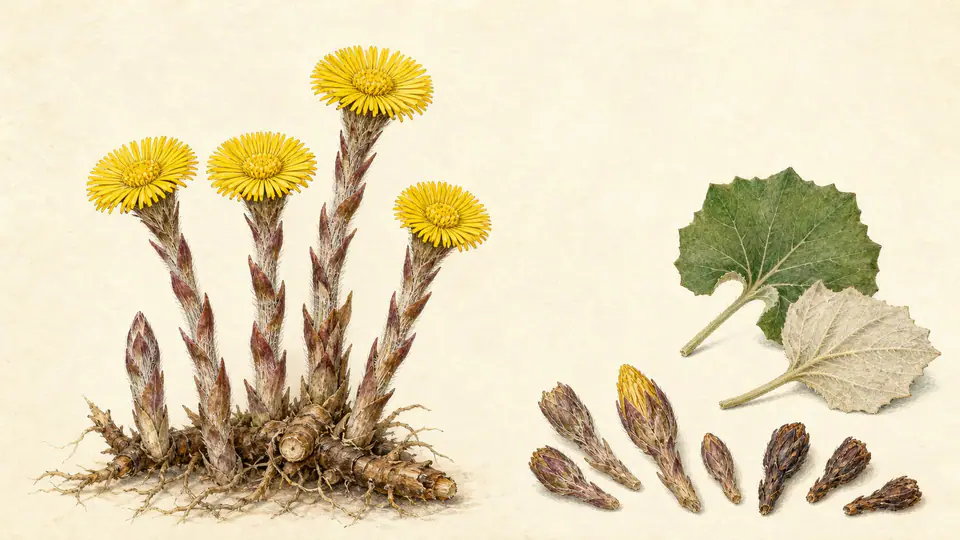
The National Institute of Food and Drug Safety Evaluation defines coltsfoot as the flower bud of Tussilago farfara. While people often think of the leaves when they hear 'coltsfoot,' the official medicinal part is the flower bud. Leaves, the whole plant, cough teas, extracts, or varieties and preparations from which pyrrolizidine alkaloids have been removed are not the same raw material and do not involve the same exposure. Using a single name for various parts and processing forms obscures the issue. When looking at a product, the name 'coltsfoot' alone does not reveal which part was used or what processing it underwent.
Reasons for Expectation: The Gap Between Traditional Use and Research
A 2021 comprehensive review summarized the traditional respiratory uses of coltsfoot. However, it concluded that a significant portion of the evidence is based on cellular and animal studies, and that more clinical research and long-term safety studies are needed. While caffeoylquinic acid isolated from flower buds showed antitussive and expectorant results in mouse models, this is not evidence that coltsfoot tea treats chronic coughs in humans. A gap still exists between preclinical signals and therapeutic effects in humans.
Different Exposure by Product Form
Even with the same raw material, exposure patterns differ between the raw flower buds, tea, concentrated extracts, powders, and capsules. In particular, concentrates or extracts can have higher concentrations of specific components than the raw material, making the management of pyrrolizidine alkaloids even more important. As a safety principle, teas, powders, or concentrates where pyrrolizidine alkaloid testing, removal, or the origin of the plant part cannot be verified should not be taken long-term. Being a 'natural raw material' does not necessarily make it less risky than a concentrate; the differences based on the form must be verified first.
Hepatotoxicity Concerns: Pyrrolizidine Alkaloids
Pyrrolizidine alkaloids such as senkirkine and senecionine have been reported in coltsfoot, and since the content varies greatly depending on the raw material, strict quality control is required. Because these components can strain the liver, limiting long-term use is reasonable. Those with liver disease or those using medications or supplements that may strain the liver should avoid self-administering coltsfoot and should consult a healthcare provider. Pregnant or breastfeeding women and children should not self-administer it due to a lack of human safety data and concerns regarding pyrrolizidine alkaloids.
When using with other medications or supplements
Using coltsfoot alongside other hepatotoxic drugs or supplements can lead to cumulative liver strain. What should you look for? First, check if any of your current medications or supplements may strain the liver. Since there are concerns that coltsfoot itself can strain the liver, the decision to use it concurrently should be made after consulting a healthcare provider. Especially in cases of liver disease, self-administration must be avoided.
Similar names, different ingredients
A systematic review of adverse events regarding coltsfoot, comfrey, and borage points out that there is significant uncertainty regarding causality due to species misidentification and unclear component attribution. Coltsfoot flower buds, coltsfoot leaves/whole plants, raw medicinal teas versus concentrated extracts, whole flower buds versus isolated caffeoylquinic acid, and preclinical antitussive signals versus the treatment of chronic cough in humans must each be viewed as distinct. Accurate identification of the raw material is part of safety. If a product label only says 'coltsfoot,' it is necessary to ask whether it is the bud or the leaf, and whether other plants are mixed in.
Criteria to Check Today
If considering coltsfoot, verify three things first: whether it is the flower bud or the leaf/blended tea/similar plant; whether pyrrolizidine alkaloid testing and removal can be verified; and whether you have liver disease, are pregnant/breastfeeding, are a child, or are using other hepatotoxic drugs/supplements. Rather than the tradition of its use for coughs, the realistic standard for using this material is to first verify the identity of the flower bud, the management of pyrrolizidine alkaloids, and the diagnosis of the cause of the cough.
References
- National Institute of Food and Drug Safety Evaluation Crude Drug Standard: Coltsfoot.
- Tussilago farfara pharmacology toxicity and quality review.
- Coltsfoot adverse-event case report systematic review.
- Tussilago caffeoylquinic acids in animal cough models.
This text explains the origin of the raw materials, the scope of research, and precautions before consumption. As this cannot replace individual diagnosis or treatment, please consult a medical professional if you are taking medication or if symptoms persist. If sudden and severe symptoms such as difficulty breathing or decreased consciousness occur after consumption, seek help from 119 or the emergency room.

Medical Staff Review
Director Choi Yeon-seung
Chief Director of Baekrokdam Korean Medicine ClinicColtsfoot Dictionary Entry, reviewed the safety of expressions and the scope of verification before administration.
Review scope: Ingredient origin, human studies, concomitant medications, safety of intake · Last reviewed 2026-08-17
- Graduated from Kyung Hee University College of Korean Medicine
- Providing Korean medicine treatment since 2010
- Consultations for Gongjindan, Gyeongokgo, Nokyong (Deer Antler) restorative medicine, and customized restorative herbal medicine