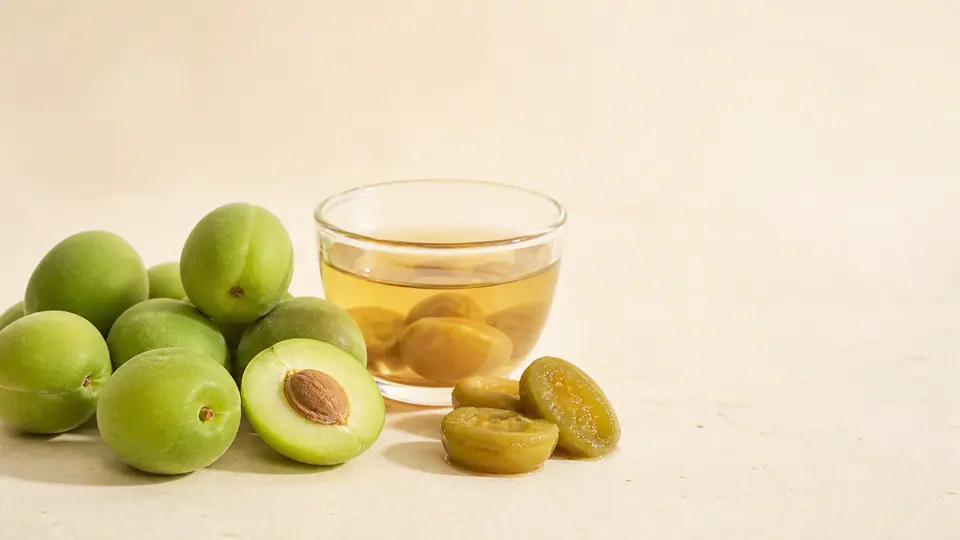
In a Sugar Jar in Early Summer: How Maesil Becomes a Digestive Aid
Does drinking Maesil-cheong or Maesil liquid really help when you have indigestion? In short, while you may experience a sour taste and personal comfort, there is insufficient evidence that Maesil-cheong or Maesil liquid treats indigestion, gastritis, ulcers, or infections. This question is frequently asked in our kitchens or at the dining table, but the experience of taste is different from the treatment of a disease.
Maesil is the fruit of the genus Prunus in the family Rosaceae, Prunus mume often called the Japanese apricot or Chinese plum. However, Kew describes this species as a stone fruit closer to the wild apricot than to the plum. Even if the name contains 'plum,' it is botanically closer to the apricot. This distinction is not just a matter of scientific naming. Prunus This is because plums, apricots, peaches, and Maesil, which belong to the same genus, have different safety discussions. This confusion regarding names becomes important especially when discussing the risks of the seeds.
Maesil is a Stone Fruit Closer to Wild Apricot Than Plum
Kew classifies it Prunus mumeIt is described as a species closer to the wild apricot than to the plum. Maesil is the fruit of the genus Prunus in the family Rosaceae Prunus mume and is a stone fruit botanically close to the apricot. This means that safety discussions can become blurred if Maesil is judged on the same line as plums or Western plums. Belonging to the same genus does not mean the safety of the fruit and seed is the same.
Why Maesil is Called a Digestive Aid
Maesil contains organic acids and various plant components. The sour taste evokes the secretion of gastric juices, and sweet Maesil-cheong can make one feel comforted after consumption. However, component analysis, cell experiments, and animal studies alone cannot prove a therapeutic effect for indigestion. Taste and feeling are not the same as therapeutic efficacy. The sourness of Maesil or personal comfort is a different result from the treatment of gastritis, ulcers, or infections. Then, what should we look at? First, we must distinguish between the product form and the scope of research.
Maesil-cheong is Called Fermented, but it is Actually a Sugar Extract
Maesil-cheong is generally a sugar-containing food where components are extracted from Maesil and sugar. Fermentation status, sugar concentration, and aging conditions vary by product. Some think of Maesil-cheong as a fermented food, but the process of soaking in sugar does not necessarily mean uniform fermentation. Therefore, a glass of Maesil-cheong is not the same as concentrated Maesil juice. Fresh fruit, Maesil-cheong, concentrates, pickles, smoked fruit, seeds, and seed extracts differ in sugar, salt, concentration, and safety.
| Form | Points to Note |
|---|---|
| Fresh Fruit | Do not crack or grind the seeds for consumption |
| Maesil-cheong / Beverages | May contain high sugar |
| Concentrated plum juice | Research-grade products differ from general commercial products |
| Pickled | May be high in sodium |
| Seeds/Seed extracts | Risk of cyanogenic glycosides |
The Gap Between Concentrated Plum Juice Research and General Plum Syrup
There are studies on concentrated plum juice regarding Helicobacter pylori. However, these are only small-scale pilot studies and are not evidence to replace formal eradication therapy. A small-scale human study on concentrated plum juice and a glass of general plum syrup are not the same in terms of product or dosage. Prunus mume Clinical application reviews also state that many antibacterial and anticancer claims remain limited to preclinical research or small observational/pilot data. Observation and possibility are different from proven evidence.
Seeds and Pulp Have Different Safety Profiles
FDA and EFSA warnings regarding apricot seeds concern the risk of amygdalin in the seeds, not the pulp. Including plums, Prunus seeds may contain cyanogenic glycosides that can produce hydrogen cyanide. Therefore, you should not crack or grind seeds to eat them, and you should avoid very bitter seeds or fruits. The key is to distinguish between the fruit and the seed. The method of seed processing, rather than the plum pulp itself, is the critical point for safety.
Those with Diabetes, Hypertension, or Reflux Should Check First
Plum syrup or plum drinks can be high in sugar, and pickled plums can be high in sodium. If you are managing diabetes, weight, or blood pressure, you should check the serving size and nutrition label for 1 serving. Additionally, those with heartburn or reflux should monitor whether their symptoms worsen after consuming acidic drinks. This is because sugar-based extracts, high-sodium pickles, concentrates, and seed extracts are all categorized under the same name, 'plum'.
Are You Drinking This Instead of Gastrointestinal Medication or Eradication Therapy?
You should consider whether you are drinking plum syrup instead of taking gastrointestinal medication or eradication therapy without identifying the cause of abdominal pain, heartburn, or diarrhea. If you experience black stools, vomiting blood, severe persistent abdominal pain, dehydration, or weight loss, you must seek medical evaluation rather than relying on plum extract. These symptoms may indicate causes different from simple indigestion. Plum syrup or plum extract cannot replace identifying the cause of gastrointestinal symptoms.
What to Consider When Taking with Other Health Foods or Medications
When using plum products alongside other gastrointestinal medications, eradication therapy, or supplements, you must first check the form of the product. Sugar content, salinity, concentration, and safety vary depending on whether it is fresh fruit, plum syrup, concentrate, pickled, or a product containing cracked or ground seeds. You should also check if you have diabetes or reflux symptoms, and whether you are relying on plum syrup instead of medication or eradication therapy without knowing the cause of abdominal pain or diarrhea. The first question to ask when combining plums with other things is, 'Exactly what is this product?'
Comparison with Similar Names and Different Ingredients
Plums Prunus mumeare compared with plums (prunes) and apricots. While all three are Prunus similar, the focus of safety discussions differs. Furthermore, even within plums, the fruit, syrup, concentrate, and seeds have different risk profiles. Finally, the experience of eating sour foods must be distinguished from the treatment of gastrointestinal diseases. The satisfaction provided by taste is not a substitute for therapeutic effect.
Criteria to Check Today
In other words, when choosing plums, you should first verify the exact product form, sugar/sodium levels, concentration, whether seeds were removed, the scope of small-scale human studies, and the cause of persistent gastrointestinal symptoms, rather than relying on the nickname 'natural digestive'. Is it fresh fruit, syrup, concentrate, or pickled? What is the serving size? Were the seeds cracked or ground? Do you have diabetes or reflux symptoms? These questions are the actual conclusion of the plum discussion.
References
- Kew Plants of the World Online: Prunus mume.
- Prunus mume juice concentrate and H. pylori: pilot study.
- Prunus mume phytochemistry and clinical applications: review.
- FDA: Natural toxins in food.
- EFSA: Apricot kernels and cyanide poisoning.
This text explains the origin of the raw materials, the scope of research, and precautions before consumption. As this cannot replace individual diagnosis or treatment, please consult a medical professional if you are taking medication or if symptoms persist. If sudden and severe symptoms such as difficulty breathing or decreased consciousness occur after consumption, seek help from 119 or the emergency room.

Medical Staff Review
Director Choi Yeon-seung
Chief Director of Baekrokdam Korean Medicine ClinicPlum Glossary Entry, reviewed the safety of expressions and the scope of verification before administration.
Review scope: Ingredient origin, human studies, concomitant medications, safety of intake · Last reviewed 2026-08-17
- Graduated from Kyung Hee University College of Korean Medicine
- Providing Korean medicine treatment since 2010
- Consultations for Gongjindan, Gyeongokgo, Nokyong (Deer Antler) restorative medicine, and customized restorative herbal medicine