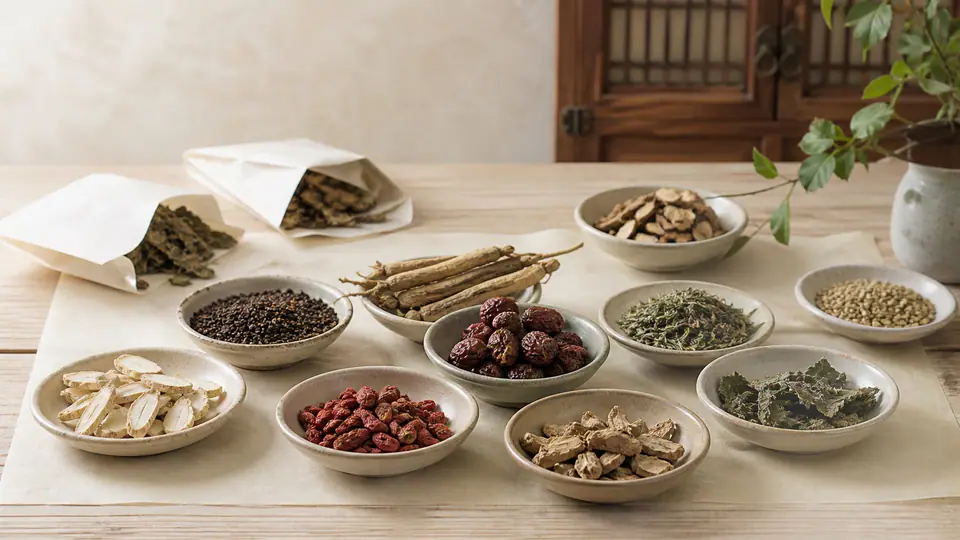
Unripe Tangerine Peel, Cheongpi, Its power to resolve stagnation and why caution is needed
The Dongui Bogam contains a prescription where Cheongpi is decocted alone, called Danja Cheongpi-tang. This prescription involves decocting 16g of Cheongpi in water for women who have developed lumps in the breasts due to prolonged depression. Here, Cheongpi refers to the peel of an unripe green tangerine, unlike Jinpi, which is the peel of a ripe tangerine. This single prescription embodies the subtle traditional distinction where medicinal properties differ based on whether the peel from the same tree is ripe or unripe.
When people think of tangerine peel, they usually think of ripe peel used for tea, known as Jinpi. While Jinpi is a mild medicinal herb that aids digestion and circulates energy, Cheongpi has a much sharper and more dispersive nature. According to the Traditional Knowledge Portal, Cheongpi is bitter, acrid, and warm in nature; it acts on the liver, gallbladder, and stomach to disperse nodules, resolve phlegm, facilitate the downward movement of food, and relieve indigestion. Although derived from the same tangerine tree, Cheongpi's usage is distinctly different because its power to 'resolve' is so strong.
However, this power to resolve is also where the precautions lie. Because Cheongpi has a strong tendency to disperse and circulate energy (Qi), it may actually worsen symptoms in people with deficient energy. The Traditional Knowledge Portal specifies that it should be used with caution for those with Qi deficiency. In other words, Cheongpi is not just a harmless cup of tea for everyone; it is a medicinal herb where the dosage, the recipient, and their condition are critical. This page provides those criteria.
Summary at a Glance
Cheongpi is distinguished from Jinpi in that it uses the unripe green peel from the same tangerine tree. The table below summarizes the origin, properties, and precautions for use at a glance.
| Category | Content |
|---|---|
| Origin | Hanja name Cheongpi, Scientific name Citrus unshiu. Unripe peel of the Citrus tree (Rutaceae family) collected in summer and dried in the sun. |
| Properties and Meridian Tropism | Taste is bitter and acrid, slightly pungent; nature is slightly warm. Acts on the liver, gallbladder, and stomach. |
| Representative Aliases | Cheongpi, meaning the peel of an unripe green tangerine. |
| Efficacy Recorded in Literature | Dispersing nodules and resolving phlegm, facilitating downward movement of food, and relieving indigestion. |
| Main Ingredients | Verification required. Please inquire during your consultation. |
| Combinations and Contraindications | Use with caution for those with a Qi-deficient constitution. Due to its tendency to disperse and circulate energy, overuse by those with deficient energy may worsen symptoms. |
Is this medicinal herb right for me?
Cheongpi is a medicinal herb with a strong tendency to disperse and circulate energy. Therefore, it can be useful when one feels slow digestion or chest tightness, but conversely, it may be burdensome for those with deficient energy. Please check the following three criteria first.
- Generally suitable casesSuitable: When the abdomen feels bloated and tight after meals, or when it feels as if food is not moving down; when there is a feeling of tightness in the chest or a dull ache in the flanks; when included in a prescription by a professional Korean medicine doctor.
- Cases requiring cautionCaution: Those who generally have weak energy and tire easily; those whose abdomen frequently bloats or who have frequent diarrhea; those taking other medications or who are pregnant or breastfeeding. In these cases, you must consult a professional before use.
- Cases to avoidContraindicated: Those with clear Qi deficiency; those who have shown allergic reactions to Cheongpi or citrus fruits; those with galactose intolerance, lactase deficiency, or glucose-galactose malabsorption should avoid lactose-containing preparations containing Cheongpi.
In particular, since Cheongpi has a stronger dispersive power than Jinpi, thinking "it's just tangerine peel, so it's fine to drink as a light tea" can be dangerous. As official safety evidence for drinking Cheongpi as a standalone tea has not been established, it is safe to follow a professional prescription for its use as a Korean herbal medicine.
Practical Q&A
We have gathered a few frequently asked questions about Cheongpi from the clinic. Since the answers below may vary depending on an individual's constitution or concurrent medications, it is best to decide on specific use after consulting with a Korean medicine doctor.
What is the difference between Cheongpi and Jinpi?
Both are similar in that they use tangerine peel as a medicinal herb, but they differ in harvest time and properties. Cheongpi refers to the peel of an unripe green tangerine and has a strong tendency to disperse energy and clear blockages. On the other hand, Jinpi is the peel of a ripe tangerine that has been dried for a long time, making it more suitable for aiding digestion and harmonizing the flow of energy. This is a representative example in traditional medicine where different roles are assigned based on whether the peel from the same tree is ripe or unripe.
Can I boil and drink Cheongpi alone like a tea?
Official safety standards and evidence for the appropriate dosage for consuming Cheongpi lightly as a tea have not been confirmed. While it is sometimes used similarly to tangerine peel tea in folk medicine, Cheongpi is a medicinal herb with a distinct energy-dispersing nature, so long-term or high-concentration consumption may not be appropriate. If you ask during a consultation, we will guide you on the form that suits your constitution.
Does Cheongpi help when I have indigestion?
Traditionally, Cheongpi has been used to disperse nodules, resolve phlegm, facilitate the downward movement of food, and relieve indigestion. However, if the cause of indigestion is deficient energy or a weak stomach, it may actually worsen the symptoms. Therefore, even for digestive issues, Cheongpi may be suitable or unsuitable depending on the cause.
Should people with Qi deficiency avoid Cheongpi (green citrus peel)?
Yes, there are records stating that those with Qi deficiency should use it with caution. Because Cheongpi has a strong tendency to break up and circulate Qi, overuse in individuals who are already Qi-deficient may worsen their symptoms. The actual decision to use it is made after evaluating the patient's overall symptoms and constitution.
Can I take this along with Western medicine?
Official clinical interaction data between Cheongpi and specific Western medicines has not been confirmed at this time. However, since herbal medicine can cause unexpected reactions depending on an individual's metabolic state or concurrent medications, please be sure to inform us of any current prescriptions or health supplements during your consultation.
Can Cheongpi be used during pregnancy or breastfeeding?
Official safety data regarding the use of Cheongpi during pregnancy or breastfeeding has not been secured. In these special circumstances, it is necessary to consult with medical staff regarding its intake. If you share your current status during the consultation, we will provide appropriate guidance.
Relationship with Other Medicinal Herbs (Yakdae/Pairing)
Cheongpi appears more frequently when used with other medicinal herbs than when used alone. The role Cheongpi plays within a prescription varies depending on the herbs it is paired with. In tradition, these pairs are called 'Yakdae' (medicinal pairs); in the case of Cheongpi, it is primarily combined with other herbs to circulate Qi or resolve phlegm and food stagnation.
Below are examples of traditional prescriptions where Cheongpi forms a core component of the formulation.
- Danja Cheongpi-tang 《Dongui Bogam·Jeongjeon》: A prescription where 16g of Cheongpi is decocted alone for cases where lumps form in the breasts due to long-term depression. This is an example where the tendency of Cheongpi to break up and circulate Qi is intended to work independently.
- Cheonggan Haeul-tang 《Dongui Bogam·Immun》: Used for breast tuberculosis (breast lumps) caused by Liver Qi stagnation; it is formulated with Angelica gigas, Atractylodes macrocephala, Fritillaria platycodon, Red Poria, White Peony root, Rehmannia glutinosa, Gardenia jasminoides, Ginseng, Bupleurum falcatum, Moutan cortex, Citrus reticulata peel, Cnidium officinale, and Licorice.
- Cheongbi-eum 《Dongui Bogam·Immun》: Used for food-related malaria; it is used together with Bupleurum falcatum, Pinellia ternata, Scutellaria baicalensis, Amomum villosum, Atractylodes macrocephala, Red Poria, Magnolia officinalis, and Licorice.
- So-cheongbi-tang 《Dongui Bogam·Deukhyo》: Used for stomach-related malaria; it is formulated with Magnolia officinalis, smoked plum, Pinellia ternata, Zingiber officinale, Amomum villosum, and Licorice.
- Ogyeok Gwanjung-san 《Dongui Bogam·Gangmok》: Used when food does not descend through the 5 diaphragms; it is used together with Magnolia officinalis, Cyperus rotundus, Licorice, Citrus reticulata peel, Clove, Amomum compactum, Aucklandia lappa, and Cardamom.
- Chijung-tang B 《Uihak Immun》(1575): Used for abdominal pain and diarrhea associated with Taiyin disease, accompanied by food stagnation and chest tightness, combining Citrus reticulata peel and Cheongpi in equal amountsis a characteristic of this prescription.
As a precaution regarding formulation, since Cheongpi has a strong tendency to break up and circulate Qi, those with Qi deficiency should use it with caution....must be done. Additionally, it is mostly used as a decoction, and official safety or dosage evidence for general use in the form of tea or food has not been confirmed. It is recommended to decide on specific combined use or usage after consulting with a Korean medicine doctor.
In what form is it consumed?
Unlike Jinpi (ripe tangerine peel), Cheongpi is generally used as a Korean herbal medicine in the form of decoctions or professional prescriptions. It is not widely used in daily life as a tea or food ingredient. The details for each form are explained below.
-
Drinking as tea, Not common Tangerine peel tea is often made by boiling Jinpi. Since official guidelines for boiling Cheongpi separately as a tea have not been secured, it is difficult to consider this a common practice.
-
Consumption as food, Not common Cheongpi is classified as a Korean herbal medicine (crude drug), and official evidence for its approval as a food ingredient has not been confirmed. Therefore, using it as a food ingredient is not common.
-
Decoction (boiling in water), Applicable Most Cheongpi-related prescriptions in the Dongui Bogam are in the form of decoctions. For example, Danja Cheongpi-tang involves decocting Cheongpi alone in water, and Cheongpi is also used in decoctions with other herbs in prescriptions such as Cheonggan Haeul-tang, Cheongbi-eum, and Socheongbi-tang.
-
Professional prescription, Applicable Due to its tendency to circulate energy and resolve phlegm and food stagnation, Cheongpi is blended by a Korean medicine doctor when composing prescriptions for various conditions such as liver qi stagnation, mammary gland tuberculosis, malaria, blockage symptoms, abdominal masses, and damp-phlegm bloating. Please ensure you decide on specific usage after consulting with a Korean medicine doctor.
Interactions and Safety During Use
Cheongpi is a medicinal herb with a strong tendency to break down and circulate energy. Therefore, particular caution is needed for those with deficient energy (Qi deficiency) or when taking it for a long period. Below are the safety-related items confirmed to date.
- Use with caution for those with Qi deficiency In constitutions with deficient energy, the breaking and circulating action of Cheongpi may actually worsen symptoms, so it is recommended to decide on usage after consulting a professional.
- Caution regarding lactose-containing preparations Cheongpi extract powder preparations contain lactose. Those with galactose intolerance, Lapp lactase deficiency, or glucose-galactose malabsorption cannot use these preparations.
- Allergic reactions If adverse reactions such as rash or redness occur, stop use immediately and consult a professional.
- Concurrent use with Western medicine, pregnancy, and breastfeeding Official clinical interaction data and safety data related to pregnancy and lactation are currently unavailable. Please discuss with a Korean medicine doctor whether to use it in such circumstances.
Cheongpi is a medicinal herb whose role becomes clear when blended with other herbs within the context of a prescription. Rather than taking it alone for a long period or using it as a daily tea, it is safer to use it under the guidance of a Korean medicine doctor within a prescription tailored to your constitution and symptoms. Please inquire about specific usage or dosage during your consultation.
If you experience these symptoms
If you experience these symptoms
Cheongpi is a medicinal herb with a strong tendency to break down and circulate energy. While this action is helpful when it aligns with the purpose of the prescription, it may place a burden on the body if it does not match your condition or method of intake. The following signals are known warning signs based on safety precautions confirmed to date regarding the intake of Cheongpi. If these symptoms appear, it is safer to first notify the attending Korean medicine doctor who provided the prescription rather than reducing the dose or stopping on your own.
- If the feeling of deficient energy worsens Because Cheongpi has a tendency to break down and circulate energy, overuse may worsen symptoms in those with a Qi-deficient constitution. If you experience accumulated fatigue or a feeling of losing energy, stop intake and consult your doctor.
- If abdominal discomfort or digestive status actually worsens As Cheongpi (unripe citrus peel) has properties that may irritate the stomach, caution is required if new symptoms such as abdominal pain, diarrhea, or loss of appetite occur or worsen.
- If allergic reactions such as skin rash or redness appear Since reactions such as rash and redness have been reported with Cheongpi preparations, stop taking the medicine immediately and consult a specialist if these symptoms occur.
- If you have lactose intolerance or related absorption disorders and are taking Cheongpi Extract Powder preparations Cheongpi Extract Powder preparations contain lactose. Administration is contraindicated for individuals with galactose intolerance, Lapp lactase deficiency, or glucose-galactose malabsorption; therefore, you must inform your provider before taking this medicine.
If symptoms worsen rapidly or are accompanied by systemic emergency signals such as difficulty breathing, severe abdominal pain, or decreased consciousness, it is appropriate to visit an emergency medical institution.
Differences from other restorative medicines
Cheongpi has different properties from medicinal herbs that have a 'tonifying' (supplementing) nuance. While restorative herbal medicines (Boyak) focus on filling the body's deficiencies, Cheongpi is closer to 'dissolving and dispersing,' meaning it releases blocked energy and clears phlegm or food stagnation (Sikjeok). Therefore, its use differs from traditional restorative tonics such as Gongjindan or Gyeongokgo.
Gongjindan and Gyeongokgo are prescriptions primarily focused on tonifying Qi and Blood and replenishing Essence (Jeong). In contrast, prescriptions containing Cheongpi are closer to relieving feelings of abdominal tightness or blockage, slow digestion, or nodular symptoms caused by Qi stagnation. Even though both come from citrus peel, Jinpi (ripe peel) is often used to harmonize the flow of Qi, whereas Cheongpi has a stronger power to break down and circulate, making it distant from restorative tonics.
Therefore, to determine whether Cheongpi or a restorative tonic is more appropriate, you must first distinguish whether your condition is one of 'deficiency' or 'blockage.' As this distinction is often difficult to make alone, it is recommended to decide on specific use after consulting with a Korean medicine doctor.
References
- Cheongpi Evidence Material 1: Korea Citation Index academic paper.
- Cheongpi Evidence Material 2: Korea Citation Index academic paper.
- Cheongpi Evidence Material 3: Korea Citation Index academic paper.
If you would like to check if this medicinal herb is right for you or which prescription it should be used with, please leave a medical inquiry. For those who find it difficult to visit the clinic, non-face-to-face consultations are available; we will provide guidance after first reviewing your current condition and current medications.

Medical Staff Review
Director Choi Yeon-seung
Chief Director of Baekrokdam Korean Medicine ClinicCheongpi Dictionary Entry, reviewed the safety of expressions and the scope of verification before administration.
Review Scope: Clinical Accuracy, Pharmacology, Contraindications, Combinations, QA · Last Reviewed 2026-08-16
- Graduated from Kyung Hee University College of Korean Medicine
- Providing Korean medicine treatment since 2010
- Consultations for Gongjindan, Gyeongokgo, Nokyong (Deer Antler) restorative medicine, and customized restorative herbal medicine