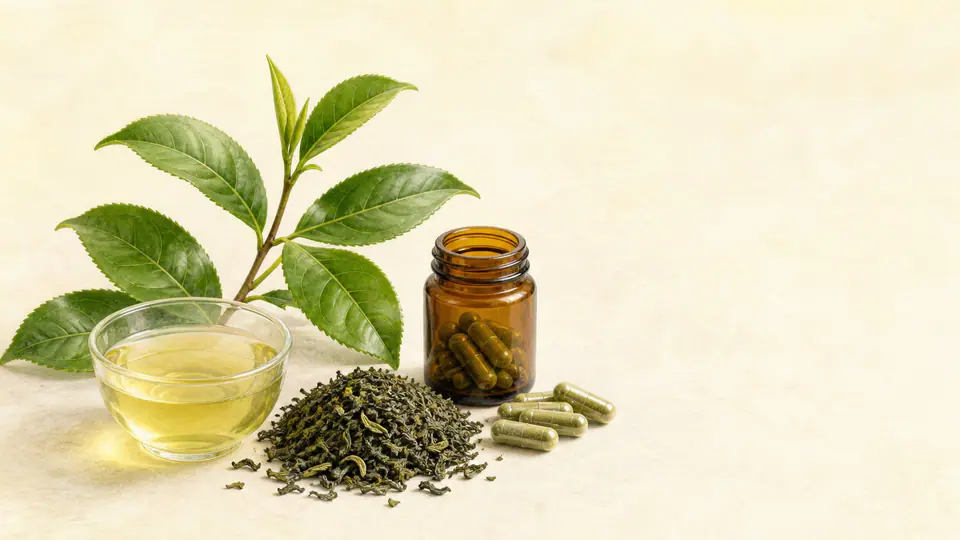
Three Cups Split from the Same Leaf: The Distance Between Tea and Capsules as Told by Catechins
Is taking catechins or EGCG more effective for body fat and cholesterol than drinking green tea? In short, a higher concentration does not necessarily mean greater health benefits. Even if they start from the same raw material, a cup of tea and an extract taken on an empty stomach have different exposure methods; the changes in weight and cholesterol shown in research are small, and high-concentration products carry the potential for liver damage.
We will trace how tea leaves are divided into green, oolong, and black tea, and how the astringent polyphenols within them became a symbol of fat burning. However, the ultimate question is the difference hidden beneath the names. We will unravel one by one whether catechins and EGCG are the same thing, whether tea and capsules provide the same experience, and whether small numerical changes equate to actual health benefits.
Why Do Questions Focus on Catechins or EGCG?
Catechins are a group of flavan-3-ol polyphenols found in green tea, cocoa, and some fruits. This includes EC, EGC, ECG, and EGCG. Among these, EGCG is frequently cited as the representative catechin of green tea. However, catechins and EGCG are not complete synonyms. 'Catechin' and 'EGCG' on a product label may be different items, and total catechins, EGCG, and caffeine must be viewed separately.
One misconception arises as the name narrows down to EGCG: the feeling that high-concentration EGCG is simply a 'compressed version of green tea's effects.' However, a cup of green tea, catechin-fortified beverages, decaffeinated extracts, and high-concentration EGCG capsules all differ in composition, caffeine content, single-dose exposure, and safety. Saying they come from the same raw material does not mean they are the same product.
Same Tree, Different Cups: The Starting Point of Green, Oolong, and Black Tea
Green, oolong, and black teas all start from the leaves of Camellia sinensis. The difference lies in the degree of processing and oxidation. The catechin composition changes depending on how the leaves are roasted, dried, and oxidized. Therefore, even within the single category of 'tea,' the polyphenol profiles are not the same.
It is easy for people to simplify it as 'Green Tea = Catechin = EGCG,' but in reality, the processing method of the leaves intervenes. Since catechins are modified during the oxidation process in oolong and black teas, you cannot expect the same levels as in green tea. At this point, the simple advice to 'just drink tea' already falters.
Why the Expectations: Weight and Cholesterol
Expectations for catechins generally fall into two categories: reducing body fat and lowering LDL cholesterol. The NCCIH states that while green tea products may have an effect on weight, it is small and varies depending on composition and activity levels. Total cholesterol and LDL may be slightly lowered, but changes in HDL and triglycerides have not been confirmed.
A Cochrane review covering 15 weight loss trials and 3 weight maintenance trials found that the weight difference created by green tea preparations was very small and not clinically significant, and there was no benefit in maintaining weight after loss. In other words, while the studies showed a consistent direction, the magnitude was not at a level that would be noticeable in daily life.
To Whom Can the Research Results Be Attributed?
Research on green tea beverages and extracts often includes caffeine. Therefore, it is difficult to attribute the results solely to the effects of catechins or EGCG. Since caffeine itself affects metabolism, the conclusion that 'green tea reduced weight' becomes an interpretation mixed with catechins, caffeine, water intake, and dietary control.
Additionally, it is important which product the research subjects used. Brewed tea, catechin-fortified beverages, decaffeinated extracts, and high-concentration EGCG capsules are all different exposure conditions. The context of water, food, and caffeine when drinking brewed tea is not the same exposure as a standardized extract capsule swallowed on an empty stomach. If this difference is ignored, the general belief that 'green tea is good' is wrongly transferred to 'high-concentration EGCG is safe and effective.'
The Other Side of High-Concentration Capsules: Potential for Liver Damage
The EFSA considered catechins in brewed green tea to be generally safe. However, it evaluated that more than 800 mg of EGCG per day from supplements could be associated with early signs of liver damage and that a safe supplement dose could not be determined from the data. A crucial point follows: the fact that high doses with safety concerns were identified does not mean those doses are more effective targets for reducing body fat.
Green tea extract capsules have been rarely associated with liver damage. It is advisable to avoid taking high concentrations on an empty stomach, and those with liver disease or those taking multiple weight loss products should not start them arbitrarily. If severe fatigue, loss of appetite, pain in the upper right abdomen, dark urine, or jaundice occur, stop use immediately and receive a liver evaluation.
When taking with other medications and supplements
Green tea beverages contain caffeine. This may worsen insomnia, throbbing, anxiety, or reflux. During pregnancy or breastfeeding, the total caffeine intake from coffee, tea, and energy drinks must be combined. Tannins and polyphenols in tea can affect the absorption of non-heme iron; therefore, if you are undergoing treatment for iron deficiency, you should verify the timing between iron supplements, meals, and tea with your medical staff.
Green tea and its extracts may affect the systemic exposure of certain medications, such as nadolol, atorvastatin, and raloxifene. If you are taking prescription medication, it is necessary to inform your pharmacist or medical staff of the product name and dosage. This applies not only to extracts but also to fortified beverages or powders.
Similar names, different selection criteria
Total catechins vs. EGCG; green tea, oolong tea, and black tea; brewed tea, catechin-fortified beverages, and highly concentrated extracts; small changes in weight/LDL vs. long-term weight maintenance and cardiovascular disease prevention. These four pairs represent different questions.
First, total catechins must be distinguished from EGCG. Second, the catechin composition varies by type of tea. Third, caffeine levels and exposure amounts differ depending on the product form. Fourth, small changes in metabolic markers do not automatically lead to long-term health outcomes. Green tea extracts are not substitutes for obesity medication, lipid-lowering drugs, or cancer prevention treatments.
Criteria to Check Today
Rather than focusing on terms like 'antioxidant' or 'fat burning,' you should first check whether it is a tea or an extract, the content of total catechins, EGCG, and caffeine, and whether it is taken on an empty stomach. You must prioritize looking at the actual health outcomes versus small metabolic markers, as well as liver and drug interactions.
What should you check first before choosing? Determine whether it is tea, a fortified beverage, powder, or extract capsules, and examine the amounts of total catechins, EGCG, and caffeine. Ask whether the goal is weight, LDL, blood sugar, or antioxidants, and whether it is intended to replace diet, exercise, or prescription medication. Also, check for liver disease, iron deficiency, pregnancy, breastfeeding, the use of medications such as nadolol, atorvastatin, or raloxifene, and whether it will be taken on an empty stomach.
Even if they start from the same leaf, what ends up in the cup is ultimately a different story. Catechins only become meaningful ingredients when those differences are understood.
References
- NCCIH: Green Tea usefulness and safety.
- NIH ODS: Dietary supplements for weight loss.
- EFSA: Safety assessment of green tea catechins.
- Cochrane: Green tea for weight loss and weight maintenance.
- Green tea extract and liver safety: systematic review of randomized trials.
This text explains the origin of the raw materials, the scope of research, and precautions before consumption. As this cannot replace individual diagnosis or treatment, please consult a medical professional if you are taking medication or if symptoms persist. If sudden and severe symptoms such as difficulty breathing or decreased consciousness occur after consumption, seek help from 119 or the emergency room.

Medical Staff Review
Director Choi Yeon-seung
Chief Director of Baekrokdam Korean Medicine ClinicCatechin Dictionary Entries, reviewed the safety of expressions and the scope of verification before administration.
Review scope: Ingredient origin, human studies, concomitant medications, safety of intake · Last reviewed 2026-08-17
- Graduated from Kyung Hee University College of Korean Medicine
- Providing Korean medicine treatment since 2010
- Consultations for Gongjindan, Gyeongokgo, Nokyong (Deer Antler) restorative medicine, and customized restorative herbal medicine