If you thought the spiciness of chili peppers burns fat and soothes pain
Does taking capsaicin burn fat, and does applying it to a painful area reduce pain? Is it more effective the spicier it is? This question takes a single ingredient into three completely different worlds. Chili peppers on the dining table, capsules in oral supplements, and 8% patches in clinics all stimulate a sensory nerve called TRPV1, but the meaning of that heat differs for each. In short, the spicy sensation is not proportional to actual weight loss, and the pain relief from topical products does not apply identically to oral products or muscle pain.
Many people perceive the spiciness of chili peppers as a 'feeling of using energy.' Because they sweat and their mouths burn, it feels as if body fat is melting away. It is similar regarding pain. It seems that if a hot ingredient covers a painful area, it will numb the nerves for a while. This intuition leads to questions about capsaicin. However, there is always a gap between sensation and therapeutic effect.
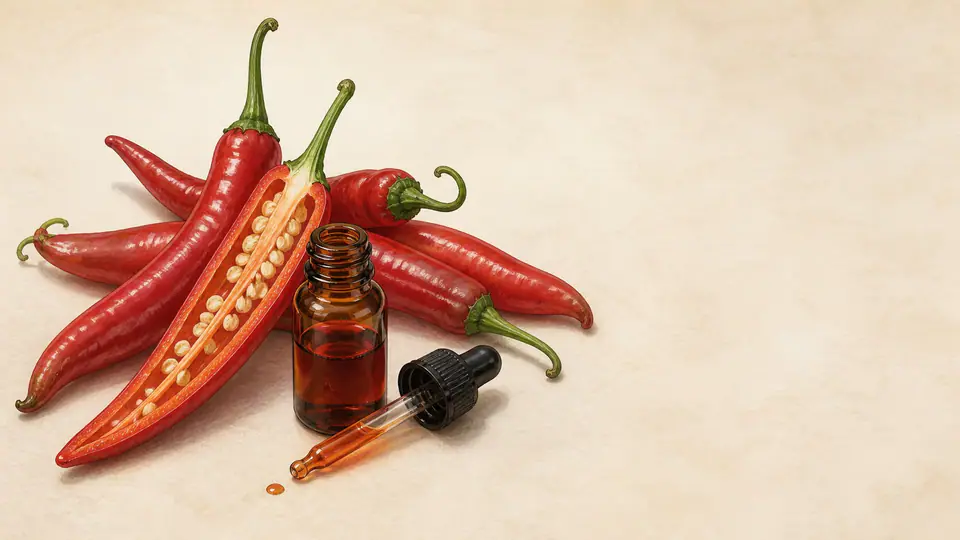
Capsaicin is the component that gives chili peppers their spicy taste. To be precise, spiciness is a sensation closer to pain than to taste. Capsaicin stimulates the TRPV1 receptors of the sensory nerves. This receptor is originally a pathway for detecting heat stimuli, and capsaicin tricks it to create a burning sensation. Therefore, spiciness is a phenomenon where the realm of 'enjoying taste' and the realm of 'nerve reaction' overlap.
Identity of the ingredient: Three worlds touching the same nerve
This single definition explains why capsaicin is divided into food, supplements, and medical patches. Although they touch the same nerve, they become completely different products when the pathway, concentration, and purpose change. The spiciness in food, oral capsaicinoid supplements, low-concentration topical creams, and 8% patches applied by medical staff differ entirely in dosage, pathway, and purpose. Even if the name is the same, the context of each is different.
Reason for expectations: Heat interpreted as metabolism
Research suggesting that TRPV1 stimulation can increase energy expenditure has raised expectations for weight loss. In reality, the body does react to spicy stimuli, and feelings of heat and sweating are signals of that reaction. However, the existence of a mechanism does not necessarily mean the effect is significant.
In a 2023 meta-analysis of 15 randomized trials involving 762 people, the average weight difference for oral capsaicin was approximately -0.51 kg, and the waist circumference difference was -1.12 cm. While there may be a statistical change, it was not at a level that is practically noticeable. The single term 'capsaicin' often leads people to equate the physiological response of energy expenditure with the clinical result of weight loss. While there was a sensation of heat, the amount of fat burned by that heat was minimal.
Differences in Product Form: Food, Capsules, Creams, and Patches
When discussing capsaicin, the first thing to distinguish is the form. Eating spicy peppers as food is not the same as the research dosages used in standardized oral capsules. Peppers in meals are consumed with seasonings, and their capsaicin content varies. Oral supplements used in research are designed based on specific capsaicinoid content. Even if they contain the same raw material, the two are not comparable.
Topical products are a different category. Low-concentration creams generally aim for temporary changes in pain perception through local stimulation. However, 8% capsaicin patches are in a completely different class. FDA-approved 8% patches are intended to be applied only by medical professionals for postherpetic neuralgia and diabetic peripheral neuropathy pain in the feet. In terms of concentration, they are approximately 100 times higher than general creams. The reason medical professionals wear protective gear and perform the procedure under pain management is that the intensity exceeds what can be handled at home. Therefore, the term 'topical capsaicin' should not be used to place creams and 8% patches on the same shelf.
Pain Relief: For Whom and What Kind of Pain
Evidence for high-concentration 8% patches in treating chronic peripheral neuropathic pain showed limited benefits for some patients and does not apply to all types of pain. They were studied as a limited option for pain caused by nerve damage under specific diagnoses, such as postherpetic neuralgia or diabetic peripheral neuropathy. This should not be extended to muscle pain, general joint pain, or post-exercise soreness.
The mechanisms of muscle pain and peripheral neuropathic pain are different. Just because capsaicin plays a limited role in some symptoms of the latter does not mean there is evidence it works the same way for the former. In other words, accurately identifying the type of pain is the first step in choosing capsaicin.
Combination Use and Individual Circumstances: Who Needs Caution
Oral intake can worsen heartburn, abdominal pain, diarrhea, and reflux. People with gastroesophageal reflux disease (GERD) or gastrointestinal sensitivity should be especially cautious. Topical agents should be kept away from the eyes, mucous membranes, wounds, and irritated skin, and hands must be washed after use. Avoid using heat packs concurrently, as they can increase irritation.
8% patches are not used at home like general patches due to the risk of severe burning pain, temporary increase in blood pressure, coughing, and mucous membrane irritation. If shortness of breath, chest pain, fainting, severe eye exposure, or extensive skin burn reactions occur, you must seek immediate emergency evaluation. Adverse reactions vary by product form: oral products affect the gastrointestinal tract, topical products affect the skin and mucous membranes, and high-concentration patches require consideration of systemic reactions.
Before choosing capsaicin, there are questions to verify first: Which one are you considering, food, oral supplements, general topical creams, or 8% medical patches? Do you have reflux, gastrointestinal disease, a cough, asthma, damaged skin, or decreased sensation? Is your goal weight loss or local neuropathic pain from a specific diagnosis? Failure to distinguish these three points can lead to the wrong choice, even with the same raw material.
The Gap Between Research Evidence and Expectations
Research on capsaicin certainly exists. However, the evidence is limited and the results were measured in specific forms under specific conditions. For weight, there were slight changes at the 0.5 kg level; for pain, there were limited benefits for some patients with peripheral neuropathic pain. Expanding these two results to label it as a 'fat burner' or 'pain reliever' would be an exaggeration of the evidence.
It cannot be recommended to replace a specific treatment or to discontinue one arbitrarily. Capsaicin is not a raw material that replaces existing treatments under any circumstances, but rather a subject to be considered as a supportive option in some situations.
Differences Between Things That Seem Similar
Chili-based foods vs. capsaicin supplements, oral intake vs. topical creams or 8% patches, feelings of heat/metabolic changes vs. actual weight loss, and muscle pain vs. peripheral neuropathic pain. These four pairs are the primary points where the discussion about capsaicin becomes blurred. Just because one side is true does not mean the other is also true. Eating chili frequently does not replicate the effects of research-grade capsules. Feeling a sensation of heat does not mean body fat is decreasing. Just because an 8% patch is used for specific neuropathic pain does not mean it can be used the same way for muscle pain.
Criteria to Check Today
If you are considering capsaicin, check the administration route, concentration, and indications first, rather than focusing on fat burning or the feeling that 'the hotter it feels, the stronger it is.' Oral intake refers to slight changes in weight, topical application refers to limited relief of specific neuropathic pain, and the 8% patch is a prescription tool applied by medical staff under a specific diagnosis. A realistic approach to this ingredient is to avoid expanding small weight differences and some neuropathic pain relief into a treatment for obesity or all types of pain. Spiciness is merely a sensation, and the intensity of that sensation does not guarantee the magnitude of the effect.
References
- FDA QUTENZA capsaicin 8% topical system label.
- Capsaicin intake and weight loss: systematic review and meta-analysis.
- High-concentration topical capsaicin for chronic neuropathic pain: Cochrane review.
This text explains the origin of the raw materials, the scope of research, and precautions before consumption. As this cannot replace individual diagnosis or treatment, please consult a medical professional if you are taking medication or if symptoms persist. If sudden and severe symptoms such as difficulty breathing or decreased consciousness occur after consumption, seek help from 119 or the emergency room.

Medical Staff Review
Director Choi Yeon-seung
Chief Director of Baekrokdam Korean Medicine ClinicCapsaicin Dictionary Entry, reviewed the safety of expressions and the scope of verification before administration.
Review scope: Ingredient origin, human studies, concomitant medications, safety of intake · Last reviewed 2026-08-17
- Graduated from Kyung Hee University College of Korean Medicine
- Providing Korean medicine treatment since 2010
- Consultations for Gongjindan, Gyeongokgo, Nokyong (Deer Antler) restorative medicine, and customized restorative herbal medicine