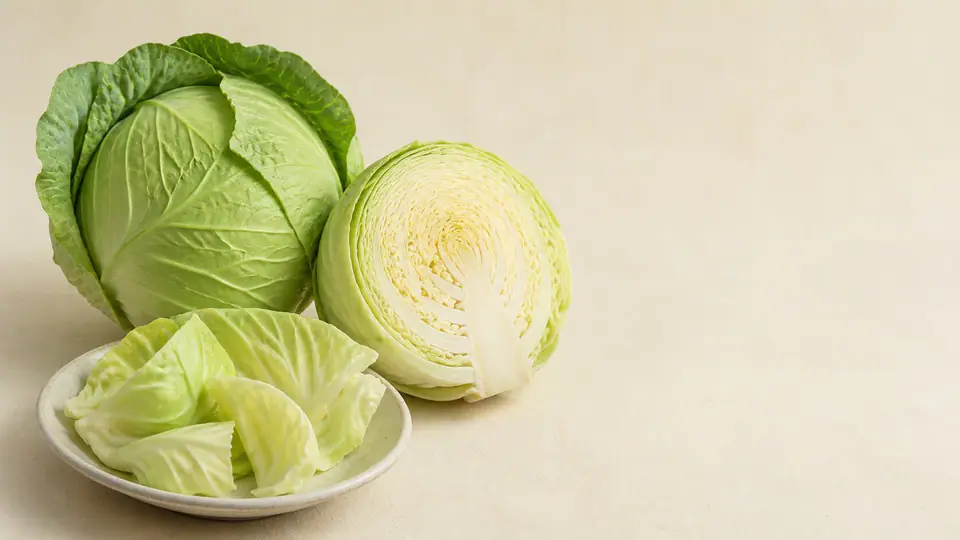
Cabbage: A glass of juice to soothe the stomach, how old is the evidence?
If you have heartburn or gastritis, will drinking cabbage juice improve your stomach? In short, the image that cabbage juice treats gastric ulcers relies on very old, small-scale clinical trials from the 1950s.
This is not sufficient evidence to replace modern standard diagnosis and treatment. Therefore, it is important to distinguish that gap.
Various vegetables created within a single species
Cabbage belongs to the Capitata Group of Brassica oleracea. According to Kew, several cultivation groups, such as kale, broccoli, and cauliflower, were selected in different forms from the same species, Brassica oleracea. Cabbage was developed so that the leaves and terminal buds form a tight sphere. This is important because claims that 'Brassica vegetables are healthy' are often mixed with research on broccoli sprouts or stories about kale and then attributed to cabbage juice. Even within the same species, they are different cultivation groups, and the composition and exposure levels differ between raw cabbage side dishes, cabbage juice, and concentrated extracts.
Where did the image of 'juice that is good for the stomach' come from?
The famous link between cabbage juice and gastric ulcers stems from old data, such as a 1954 clinical trial. That study was conducted in a context different from today's diagnostic criteria and treatment environments, and its scale was small. A 2023 systematic review of food-based gastritis treatments found 28 clinical studies, but most involved garlic, turmeric, chili peppers, broccoli sprouts, cranberries, honey, and probiotics. It concluded that more rigorous research is needed due to a high risk of bias across the studies. In other words, there is a lack of modern evidence to definitively conclude that cabbage juice treats gastritis or ulcers.
Whole foods, juices, and concentrated extracts are not the same cabbage
Side dishes made from raw cabbage, cooked cabbage, fermented foods, cabbage juice, and concentrated extracts all fall under the name 'cabbage,' but they are different product forms. The exposure amount and fiber when eaten as food, the level of concentration when drunk as juice, and the component composition in capsules or extracts are not the same. Therefore, it is not valid to directly transfer the results of Brassica food or broccoli sprout research to the treatment effects of cabbage juice on gastritis or ulcers. This is why the form must be checked first.
Heartburn, gastritis, ulcers, and H. pylori are different stories
Heartburn, gastritis, peptic ulcers, and Helicobacter pylori infections differ in their causes, confirmation methods, and treatment approaches. Having heartburn does not necessarily mean you have gastritis, and having gastritis does not necessarily mean you have an ulcer. Attempting to soothe persistent heartburn or gastrointestinal symptoms with cabbage juice alone may delay the evaluation of conditions such as H. pylori infection, ulcers, or bleeding. Black stools, vomiting blood, difficulty swallowing, unexplained weight loss, and severe persistent pain are signals that medical evaluation is needed, rather than a situation to experiment with foods.
How to coordinate intake when taking warfarin or managing thyroid disease
General cabbage foods are mostly safe. However, sudden high intake or drinking concentrated juice may cause intestinal discomfort such as gas or bloating. Safety reviews of cruciferous vegetables have identified cases of allergies and warfarin resistance. If you are taking warfarin, rather than stopping vegetable intake, it is better to consult your medical provider and avoid making sudden, large changes to your usual vegetable intake. A 2024 systematic review did not support concerns that general Brassica vegetable intake is harmful to thyroid function when iodine intake is sufficient. However, if a person with thyroid disease or a risk of iodine deficiency consumes extreme amounts of raw Brassica concentrates or juices, this needs to be discussed separately from a general diet.
Why research on other ingredients should not be directly applied to cabbage juice
Cabbage, broccoli, and kale all originate from Brassica oleracea, but they are not the same food. Research results for broccoli sprouts or kale cannot be directly applied to cabbage juice. Similarly, caution is needed when attributing the overall image of 'Brassica vegetables' to cabbage juice alone. One must look at what the research subject was, what the product form was, and what the limitations of the study were.
Realistic criteria to check today
So, what should you look for? First, check what form of cabbage you are consuming rather than relying on the image that it is 'good for the stomach.' Exposure differs depending on whether it is food, juice, or a concentrated extract. Next, check for an actual diagnosis and warning signs. You must distinguish between simple heartburn and signals such as black stools, vomiting blood, or weight loss. Also, remember that the direct evidence for cabbage juice is old and limited. Finally, check for warfarin use, thyroid disease or iodine deficiency risk, and consistency in usual vegetable intake. Together, these criteria serve as a starting point for reading cabbage not simply as a 'stomach health food,' but as a specific ingredient.
References
- Kew Plants of the World Online: Brassica oleracea.
- Clinical trial of cabbage juice in gastric ulcer.
- Food-derived products in gastritis: systematic review.
- Safety of cruciferous plants in humans: systematic review.
- Brassica vegetables and thyroid function: systematic review.
This text explains the origin of the raw materials, the scope of research, and precautions before consumption. As this cannot replace individual diagnosis or treatment, please consult a medical professional if you are taking medication or if symptoms persist. If sudden and severe symptoms such as difficulty breathing or decreased consciousness occur after consumption, seek help from 119 or the emergency room.

Medical Staff Review
Director Choi Yeon-seung
Chief Director of Baekrokdam Korean Medicine ClinicCabbage Dictionary Entry, reviewed the safety of expressions and the scope of verification before administration.
Review scope: Ingredient origin, human studies, concomitant medications, safety of intake · Last reviewed 2026-08-17
- Graduated from Kyung Hee University College of Korean Medicine
- Providing Korean medicine treatment since 2010
- Consultations for Gongjindan, Gyeongokgo, Nokyong (Deer Antler) restorative medicine, and customized restorative herbal medicine