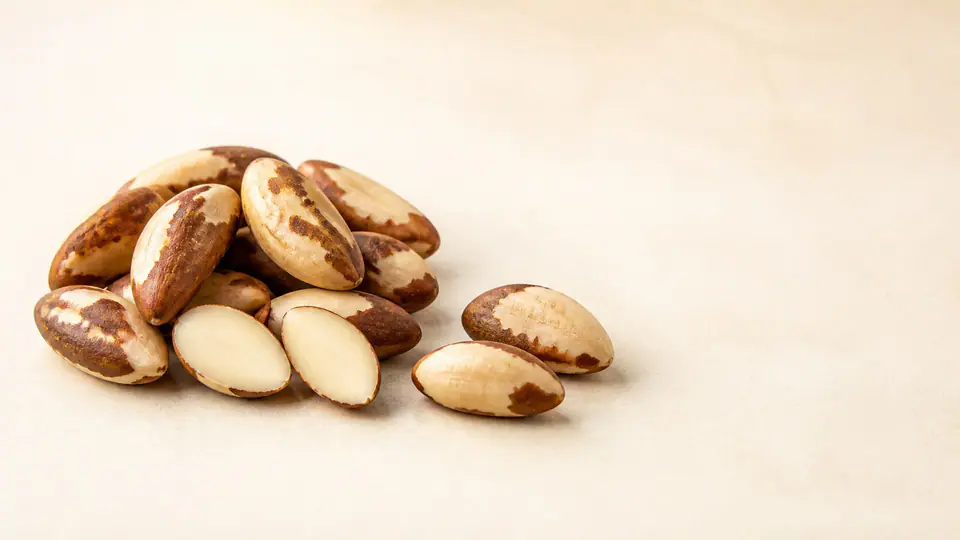
The tree that packs the selenium of Amazonian soil into a single nut
I heard selenium is good for the thyroid; is it okay to eat one or two Brazil nuts every day?
It is difficult to recommend counting and eating one or two nuts daily as if they were a standardized supplement. This is because the amount of selenium in a single nut varies greatly depending on the origin and the size of the nut, and it is difficult to estimate the total intake when combined with other supplements.
Brazil nuts are the seeds of a giant tree Bertholletia excelsafrom the South American rainforests. Despite the name 'Brazil', the most significant characteristic of this ingredient is not that you consume selenium along with fats and proteins, but that the selenium content fluctuates from nut to nut. Whole nuts, chopped products, oil, partially defatted powder, and selenium tablets all have different compositions. Under the same name, essentially different products are being offered.
The uncertainty of content hidden behind the name
How much selenium is in one Brazil nut? The National Institutes of Health (NIH ODS) states that one nut may contain approximately 68–91 μg. However, they explain that this is only an average estimate and that the actual content varies so significantly that it cannot be viewed as a consistent daily dose. In other words, there is no guarantee that the nut you eat today contains the same amount of selenium as the one you eat tomorrow.
This uncertainty is not a simple margin of error. The selenium in Brazil nuts is not determined by the name of the tree alone; it varies greatly depending on the soil and region where it grew, as well as the size of the nut. The formula 'Brazil nut = one nut's worth of selenium per day' masks the gap between the origin and the actual content of each individual nut.
Between the fact that selenium is necessary and the logic of consuming large amounts
Selenium is a nutrient required for thyroid hormone metabolism and antioxidant enzymes. This physiological fact is separate from claims that Brazil nuts prevent thyroid disease or replace prescription medications. The fact that it is necessary does not mean that thyroid function improves the more you consume.
In a trial where 59 adults consumed two nuts a day for 12 weeks, blood selenium and glutathione peroxidase levels increased. However, the number of participants was small, and it was not a study testing disease treatment or long-term clinical outcomes. A meta-analysis of randomized trials found that Brazil nuts could increase selenium status and some antioxidant markers, but results for blood lipids and inflammation varied by study.
There is an important distinction here. Improving selenium status is a different matter from treating thyroid or cardiovascular disease. There is still an unfilled gap between the rise of nutritional status markers and the improvement of a disease.
Whole nuts, oil, partially defatted powder: how product form changes things
A specific trial using partially defatted powder on 77 patients with hypertension and dyslipidemia failed to confirm improvement in blood lipids between groups. Based on this result, one cannot say that 'eating whole nuts treats cholesterol.' Studies on whole nuts and studies on selenium-concentrated partially defatted powder differ in calories, fats, and selenium dosage, making it difficult to group them as the same result.
Whole Brazil nuts and selenium tablets, whole nuts and oil, and whole nuts and partially defatted powder are different options despite having similar names. Whole nuts are a food form where selenium is consumed with fats and proteins, while tablets have a standardized amount of selenium. Oil and partially defatted powder have yet other compositions. Caution is needed when shifting expectations while changing the product form.
| Comparison Target | Key Difference |
|---|---|
| Whole nuts vs. Selenium tablets | Whether the amount of selenium is standardized |
| Whole nuts vs. Oil | Different ratios and compositions of fat and selenium |
| Whole nuts vs. partially defatted powder | Research results cannot be directly applied as calories, fat, and selenium dosages differ |
Between two nuts a day and the upper limit
The upper limit for selenium for adults in the US is 400 μg per day. Combining several Brazil nuts with supplements can make it easier than expected to approach or exceed this limit. Chronic excess can cause breath that smells like garlic, a metallic taste, nausea, diarrhea, fatigue, hair loss, changes in nails, and neurological symptoms.
What should you look for? First, check whether it is a whole nut, powder, or oil, and how many nuts are consumed and how often. You must also check the total daily amount and the label content, including multivitamins, thyroid products, and single-ingredient selenium supplements. Even if you think you are 'only eating Brazil nuts,' selenium from other products can accumulate.
When adding total selenium with other supplements and medications
When consuming Brazil nuts along with medications or supplements, the total amount of selenium is key. You must check the total daily amount and label content, including multivitamins, thyroid products, and single-ingredient selenium supplements. In particular, if you have thyroid or kidney disease, or are pregnant or breastfeeding, you must verify the total amount of selenium supplements and Brazil nuts with your medical provider. Please also remember not to reduce your medication arbitrarily.
If you have a nut allergy, even a small amount can cause a systemic reaction, so check for cross-contamination labels. If allergy signs such as difficulty breathing or facial swelling, persistent hair loss or nail changes, or sensory abnormalities appear, stop consumption and seek medical evaluation. Adverse reactions should always be considered in conjunction with the total amount and individual health status.
How do we measure the distance between expectations and evidence?
Expectations for Brazil nuts are largely divided into three categories. First, the point that selenium status improves has been confirmed in some studies. Second, meta-analyses have shown that some antioxidant markers may improve. Third, there is still insufficient evidence that they resolve thyroid diseases or cholesterol problems.
In other words, the role of Brazil nuts as a 'nutrient-supplementing food' and their role as a 'means of managing a disease' are separate. When considering the difference between average content and actual content per nut, and the difference between the increase in blood selenium/glutathione peroxidase and thyroid/cardiovascular outcomes, judgment regarding this ingredient must be cautious.
Final Decision Criteria
When choosing Brazil nuts, check these three things before considering the nickname 'a natural selenium pill': the origin and the content that varies by nut, the total amount combined with other supplements, and the distance between the increase in nutritional status markers and the treatment of thyroid or cholesterol issues.
This is an ingredient that can approach excess if you eat several nuts or combine them with selenium supplements. It is impossible to know if the nut eaten today contains the same amount of selenium as yesterday. Given that uncertainty, it is more realistic to view Brazil nuts as a food rather than a precision supplement and monitor the total intake.
References
- NIH ODS: Selenium fact sheet for health professionals.
- USDA selenium content of selected foods.
- Brazil nuts and selenium status: systematic review and meta-analysis of randomized trials.
- Two Brazil nuts daily and selenium status: randomized trial.
- Partially defatted Brazil nut flour in dyslipidemic and hypertensive patients: randomized trial.
This text explains the origin of the raw materials, the scope of research, and precautions before consumption. As this cannot replace individual diagnosis or treatment, please consult a medical professional if you are taking medication or if symptoms persist. If sudden and severe symptoms such as difficulty breathing or decreased consciousness occur after consumption, seek help from 119 or the emergency room.

Medical Staff Review
Director Choi Yeon-seung
Chief Director of Baekrokdam Korean Medicine ClinicBrazil Nut Dictionary Entry, reviewed the safety of expressions and the scope of verification before administration.
Review scope: Ingredient origin, human studies, concomitant medications, safety of intake · Last reviewed 2026-08-17
- Graduated from Kyung Hee University College of Korean Medicine
- Providing Korean medicine treatment since 2010
- Consultations for Gongjindan, Gyeongokgo, Nokyong (Deer Antler) restorative medicine, and customized restorative herbal medicine