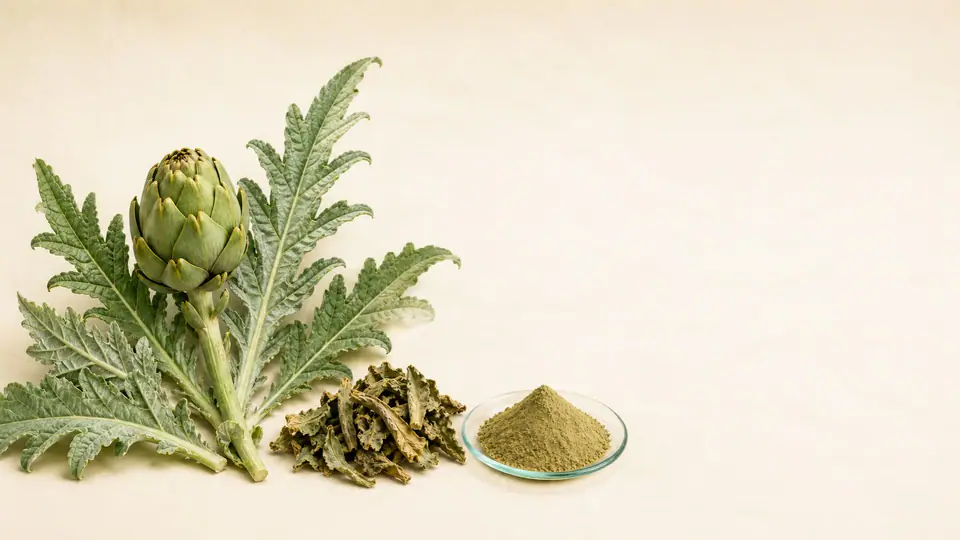
Bitter leaves and tender hearts: Same plant, different stories
If I feel bloated after eating greasy food, will taking artichoke leaf extract help with digestion or cholesterol?
Simply put, it might help, but you must first verify which part of the plant, which form of the medicine, and which condition the evidence refers to. This is because the name 'artichoke' lumps together cooked flower buds, bitter leaf extracts, traditional digestive uses, and cholesterol research.
A question about bloating
Post-meal bloating is a common discomfort. This is why people often look toward plant extracts that are said to aid digestion, and artichoke leaf is one of them. However, when choosing this ingredient, the image that 'artichoke is good for digestion' is not enough. Even for the same plant, the part used, concentration, and formulation vary, and the subjects of the studies differ.
What this ingredient is: Leaves of a perennial in the Asteraceae family
Artichoke leaf refers to the leaves of a perennial plant in the Asteraceae family Cynara cardunculus(Synonym C. scolymus). Kew classifies this plant as a recognized species and explains that it is native to the Mediterranean with a history of edible and medicinal use. While it is the same plant as the tender flower bud hearts we eat at the table, the part primarily studied for medicinal or supplemental use is the bitter leaf. There are leaf teas, powders, and water or ethanol extracts, and combination products containing ingredients like ginger are also sold. The part used, concentration, and evidence differ for each.
Why it is expected to work: Bile flow and digestion
The interest in artichoke leaf extract for digestion stems from its potential involvement in bile flow. Since bile is necessary for fat digestion, this possibility leads to the expectation that it may reduce discomfort after greasy meals. However, this possibility is only a hypothesis regarding the mechanism of action and does not mean it will improve an individual's symptoms. The artichoke leaf preparations reviewed by the EMA consist of dried leaves, powder, or water/ethanol extracts; combination products and edible flower buds are not subject to those conclusions.
Flower buds, leaf tea, or extracts: Which one are you looking at?
Edible flower buds and artichoke leaves in supplements differ in part and concentration, even from the same plant. Leaf teas, powders, and concentrated water or ethanol extracts also differ in formulation. Single-ingredient artichoke leaf products must be distinguished from combination products containing ginger and other ingredients. Applying the results of a specific leaf extract used in a study directly to flower buds on a dinner table or to combination products is an overinterpretation of the evidence.
What do the studies show, and to what extent?
The EMA recognizes the relief of bloating, abdominal distension, and gas as traditional uses. However, it evaluates that firm conclusions are difficult because clinical trials are small and short. In a 6-week trial of 247 patients with functional dyspepsia, a specific leaf extract improved symptoms and quality of life scores more than a placebo, but this was the result of a single preparation. A 2017 meta-analysis of 702 people across 9 trials reported an average decrease in total cholesterol, LDL, and triglycerides, but because the trials and preparations differed, it cannot replace lipid-lowering medications or be applied to all products.
In other words, while artichoke leaf extract may potentially help with digestive discomfort or cholesterol levels, the evidence is limited and restricted to specific products.
Who should be cautious?
Artichoke leaf is not suitable for everyone. It may cause loose stools, abdominal cramps, nausea, or heartburn, and should be avoided by those with allergies to Asteraceae plants. It must not be used in cases of biliary obstruction or specific liver and biliary diseases listed as contraindications by the EMA. Those with gallstones or gallbladder disease should first consult a medical professional. There is insufficient data regarding medicinal dosages for pregnancy, breastfeeding, and children under 12. If symptoms persist for more than 2 weeks or if you intend to use it alongside lipid-lowering medication, it is advisable to inform your medical provider about the product and your testing plan.
What signals indicate you should stop?
Jaundice, dark urine, gray stools, right upper abdominal pain accompanied by fever, and persistent vomiting are signals that require immediate evaluation. If these symptoms occur, you must prioritize an evaluation of the cause rather than taking more supplements.
Concurrent Intake and Screening Questions
When choosing an artichoke leaf product, check these three things first: whether the part used is the flower bud or if it is a leaf tea, powder, or extract; the scientific name, extraction solvent, daily dosage, and whether it contains complex ingredients like ginger. Check if you have simple post-meal bloating or if you have pain lasting more than 2 weeks, weight loss, black stools, jaundice, fever, or vomiting. Check if you have gallstones, biliary obstruction, cholangitis, liver disease, Asteraceae allergies, or if you are taking lipid-lowering medication.
Between Traditional Use and Cholesterol Research
The EMA classifies the use of artichoke leaf preparations for digestive discomfort, such as bloating, abdominal distension, and gas, as traditional use based on over 30 years of experience, rather than clinically established efficacy. Cholesterol research is a separate area. It is inappropriate to view traditional digestive use and cholesterol level research as the same product with the same expectations.
Criteria to Check Today
Do not rely solely on the image of artichoke as a food; first verify the actual part used, the extraction method, and the condition of your biliary tract. If digestive discomfort lasts more than 2 weeks or if warning signs appear, it is correct to prioritize an evaluation of the cause over taking supplements. What should you look for? The part and formulation on the product label, your biliary and liver condition, current lipid-lowering medications, and allergy history. Artichoke leaf becomes a more prudent choice when all four of these factors are aligned.
References
- Kew Plants of the World Online: Cynara cardunculus.
- EMA: Cynarae folium herbal medicinal product.
- Artichoke leaf extract for functional dyspepsia: randomized trial.
- Artichoke extracts and blood lipids: systematic review and meta-analysis.
- Cochrane review: artichoke leaf extract for hypercholesterolaemia.
This text explains the origin of the raw materials, the scope of research, and precautions before consumption. As this cannot replace individual diagnosis or treatment, please consult a medical professional if you are taking medication or if symptoms persist. If sudden and severe symptoms such as difficulty breathing or decreased consciousness occur after consumption, seek help from 119 or the emergency room.

Medical Staff Review
Director Choi Yeon-seung
Chief Director of Baekrokdam Korean Medicine ClinicArtichoke Leaf Dictionary Entry, reviewed the safety of expressions and the scope of verification before administration.
Review scope: Ingredient origin, human studies, concomitant medications, safety of intake · Last reviewed 2026-08-17
- Graduated from Kyung Hee University College of Korean Medicine
- Providing Korean medicine treatment since 2010
- Consultations for Gongjindan, Gyeongokgo, Nokyong (Deer Antler) restorative medicine, and customized restorative herbal medicine