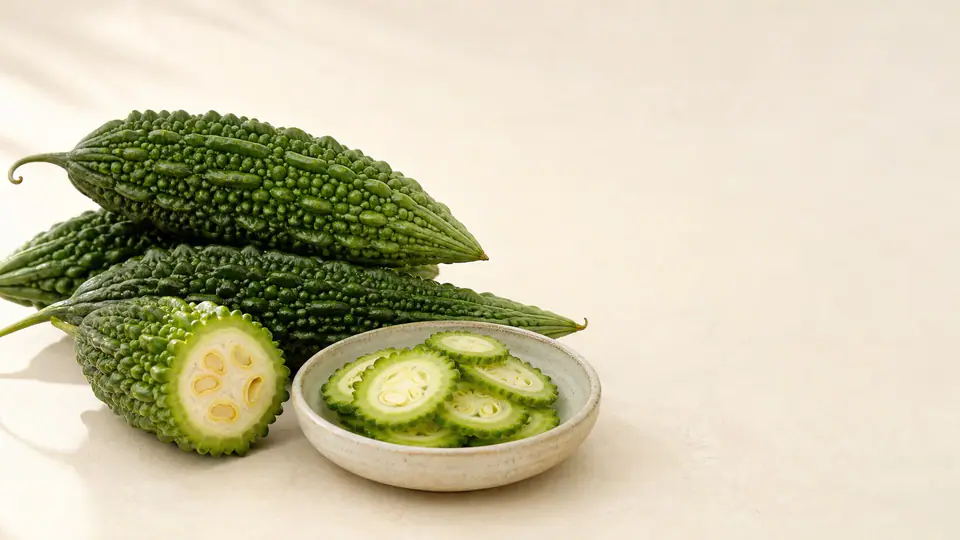
From a bitter fruit to a diabetes-related ingredient
Can I drink bitter melon juice while taking diabetes medication? In short, bitter melon juice should not be treated like diabetes medication or used as a substitute for treatment. While fresh bitter melon eaten as a vegetable and those in the form of juice, tea, powder, or extracts share the same name, the exposure levels differ, and there is a gap between expectations and human-based evidence.
The first thing to consider here is the form of the product. Even for the same ingredient, the exposure level differs between a food and a concentrated product, and the points to check when taking it with diabetes medication also change. In other words, you must look at the form, the medications you are taking, and your body's reaction, rather than the bitterness.
1. Where the question begins: The moment a vegetable becomes an ingredient
Bitter melon is the fruit Momordica charantiaof the Cucurbitaceae family and is also known as bitter melon, bitter cucumber, or goya. In the National Standard Food Composition Table of the Rural Development Administration, fresh bitter melon (goya) is listed as a food. In other words, bitter melon is recognized as an edible vegetable in Korea.
The problem begins when that vegetable is transformed into juice, powder, or extracts and acquires the label of a 'diabetes ingredient.' There is a difference in exposure levels between bitter melon as a food and bitter melon as a concentrated supplement. They may share the same name, but the way they interact with the body is not the same.
2. Why expectations exist: Why bitterness cannot be evidence of efficacy
The process by which bitter melon gained an image as a diabetes-related ingredient involves its bitterness and concentrated products. However, the bitterness of a food itself is not evidence that it lowers blood sugar.
The NCCIH (National Center for Complementary and Integrative Health, under the US National Institutes of Health) explains that research on bitter melon regarding diabetes is limited in number, scale, and quality, and its effectiveness has not been proven. Both a 2014 meta-analysis of 4 randomized trials and a 2024 meta-analysis of 9 studies failed to confirm a distinct improvement in blood glucose or metabolic markers. While there were expectations, clinical evidence in humans is inconsistent.
3. Differences by form: Fresh bitter melon, juice, tea, powder, and extracts are not the same
Bitter melon is distributed in the form of vegetables, teas, powders, and extracts. However, the exposure levels for food intake and concentrated supplements are different. Eating fresh bitter melon as a side dish, drinking bitter melon juice daily, taking powder capsules, and consuming non-standardized extracts are each different patterns of exposure.
The National Standard Food Composition Table only lists fresh bitter melon as a food; the concentration level or specific ingredient content of juices or extracts cannot be determined by this table alone. Therefore, the statement 'bitter melon is good' only becomes meaningful once you first ask what form of bitter melon is being referred to.
| Form | Points to consider for judgment |
|---|---|
| Fresh bitter melon | Consumed as part of a meal, relatively low exposure level |
| Bitter melon juice/tea | Concentration level, intake amount, and interval from diabetes medication |
| Powder · capsule | Differences in ingredients by product, unclear dosage |
| Extract | Research subjects may differ from everyday products |
4. When taking with diabetes medication: The first combination to check
If you are taking diabetes medication, consuming bitter melon products, especially concentrated products, may affect blood glucose management. The NCCIH recommends informing your medical provider and monitoring your progress, as taking concentrated products alongside diabetes medication can impact blood glucose control.
The key to monitoring progress is tracking blood glucose changes and suspected symptoms of hypoglycemia. It is necessary to record the type of medication you are taking, the form of the bitter melon product, the intake amount, and the timing to discuss with your medical provider. Bitter melon must not be used as a substitute for diabetes treatment or prescription medication.
5. Individual circumstances and safety signals: Who should be more cautious
Concentrated bitter melon extracts should not be taken arbitrarily by those who are pregnant, breastfeeding, awaiting surgery, or have liver or kidney disease. This is because safety data for concentrated products is not as well-established as it is for general foods.
Additionally, if gastrointestinal discomfort such as abdominal pain or diarrhea, or suspected symptoms of hypoglycemia occur, you should stop intake and seek verification. These signals can appear even in people without specific diseases; if symptoms persist, consult a medical provider.
6. Between human-based evidence and expectations: What meta-analyses have shown
Meta-analyses from 2014 and 2024 serve as points that bring expectations regarding bitter melon back to reality. Neither analysis confirmed a distinct improvement in blood glucose or metabolic indicators. The results were not overturned simply because the number of studies increased.
This does not mean that bitter melon is completely useless, but rather that the effects cannot be concluded based on human-based research to date. It cannot be assumed that possibilities found in animal experiments or cell research will manifest identically in humans.
7. Differences from similar ingredients: Is this a problem unique to bitter melon
Within bitter melon, a distinction must be made between fresh bitter melon, bitter melon juice, teas/powders, and extracts. This is because the intake amount and ingredient exposure differ even if the same name is used.
In the case of bitter melon, the difference between fresh bitter melon, juice, tea/powder, and non-standardized extracts is particularly distinct. Food forms can be accepted as part of a daily diet, but there is insufficient evidence to expect concentrated products to act like 'medicine' in themselves.
8. Criteria for today: Do not equate bitterness with medicinal efficacy
So, what should be checked first today?
When choosing bitter melon, do not equate bitterness or food imagery with medicinal efficacy; instead, consider the product form, diabetes medication, and changes in symptoms together. If you are taking diabetes medication, inform your medical provider before starting bitter melon juice, powder, or extracts, and record blood glucose changes and gastrointestinal symptoms after intake.
If you are pregnant, breastfeeding, scheduled for surgery, or have liver or kidney disease, do not take concentrated extracts arbitrarily. Eating fresh bitter melon as food and taking concentrated products as supplements are different decisions, even if the name is the same. The criteria for that decision are not bitterness, but the medication you are currently taking, the symptoms you are currently experiencing, and what form of bitter melon the product is.
References
- Rural Development Administration National Standard Food Composition Table.
- NCCIH: Diabetes and Dietary Supplements.
- Bitter melon for type 2 diabetes: systematic review and meta-analysis.
- Momordica charantia and metabolic outcomes: systematic review.
This text explains the origin of the raw materials, the scope of research, and precautions before consumption. As this cannot replace individual diagnosis or treatment, please consult a medical professional if you are taking medication or if symptoms persist. If sudden and severe symptoms such as difficulty breathing or decreased consciousness occur after consumption, seek help from 119 or the emergency room.

Medical Staff Review
Director Choi Yeon-seung
Chief Director of Baekrokdam Korean Medicine ClinicBitter Melon Reference Entry, reviewed the safety of expressions and the scope of verification before administration.
Review scope: Ingredient origin, human subject research, concomitant medications, intake safety · Last reviewed 2026-08-16
- Graduated from Kyung Hee University College of Korean Medicine
- Providing Korean medicine treatment since 2010
- Consultations for Gongjindan, Gyeongokgo, Nokyong (Deer Antler) restorative medicine, and customized restorative herbal medicine